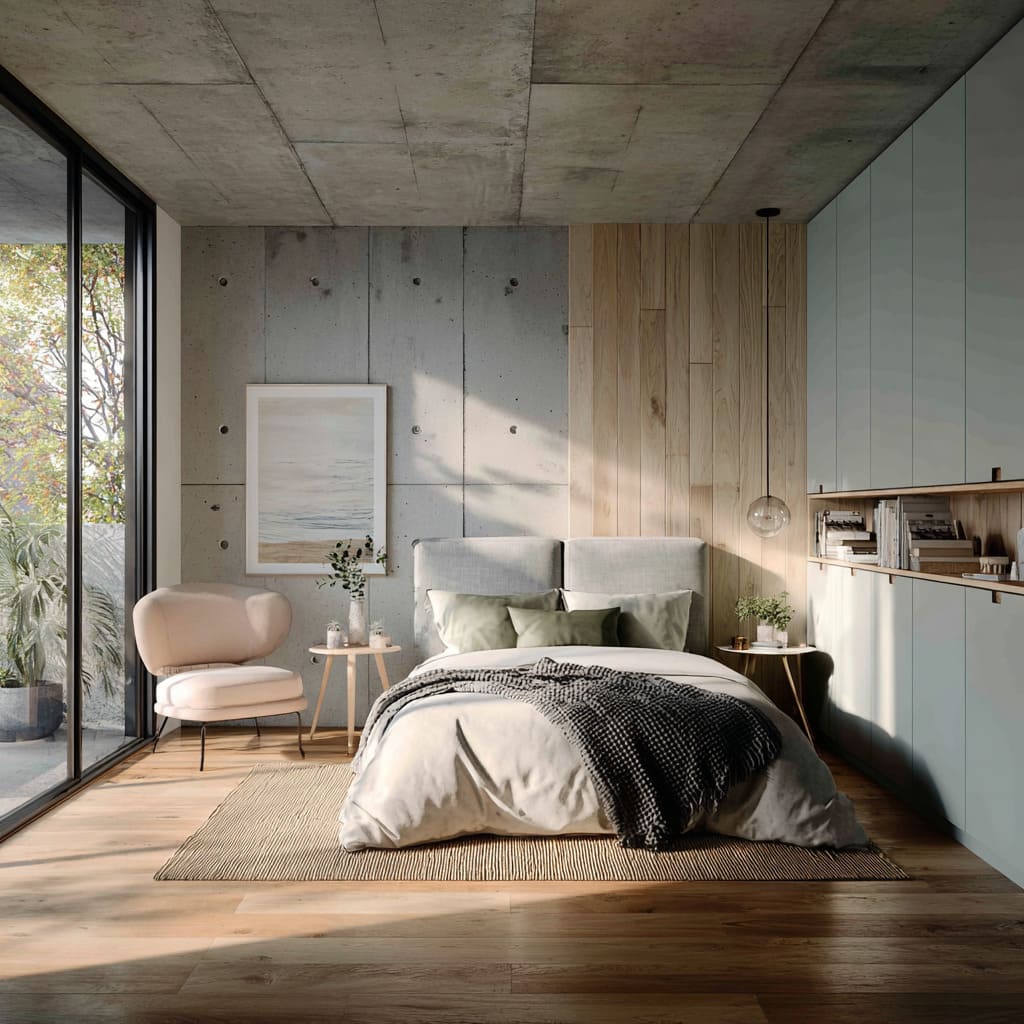
The strongest concrete bedroom ideas don’t treat concrete as a look to apply. They treat it as a behavior that changes with light, edges, and what touches it.
Concrete can read calm, warm, and finished in one interior design solution, yet dull, cold, or unfinished in another—even when the concrete itself is similar. The difference is usually not the concrete; it’s the supporting system built around it: where warmth sits, how outlines are drawn, how softness is zoned, and how pattern is created without busy decor.
What follows is a deep read of several concept types—loft shells, panel feature walls, lattice screens, concrete pillars, concrete ceilings—showing how concrete wall bedroom design becomes decorative through rhythm, value control, and a few quiet but high-impact contrasts.
Concrete becomes decorative when it’s given a job
Concrete turns decorative when it is assigned one clear role, instead of being asked to do everything at once.
A. Concrete as the base layer (quiet, reflective, steady)
Polished concrete floors and raw concrete ceilings are treated like a neutral stage: reflective enough to carry light, calm enough to hold minimal decor. The finished feeling comes when the interior design refuses to repeat raw concrete at eye level.
A mid-grey wall (not bright white, not charcoal) often acts as a stabilizer—close enough in temperature to concrete that the space reads controlled, but smooth enough that the concrete still feels intentional.
This is a key move in cement bedroom design: concrete sits as the quiet backbone, while comfort and personality happen in the zones your body actually uses—beside the bed, at the headboard line, and at the foot landing.
B. Concrete as a feature plane (seams become a grid)
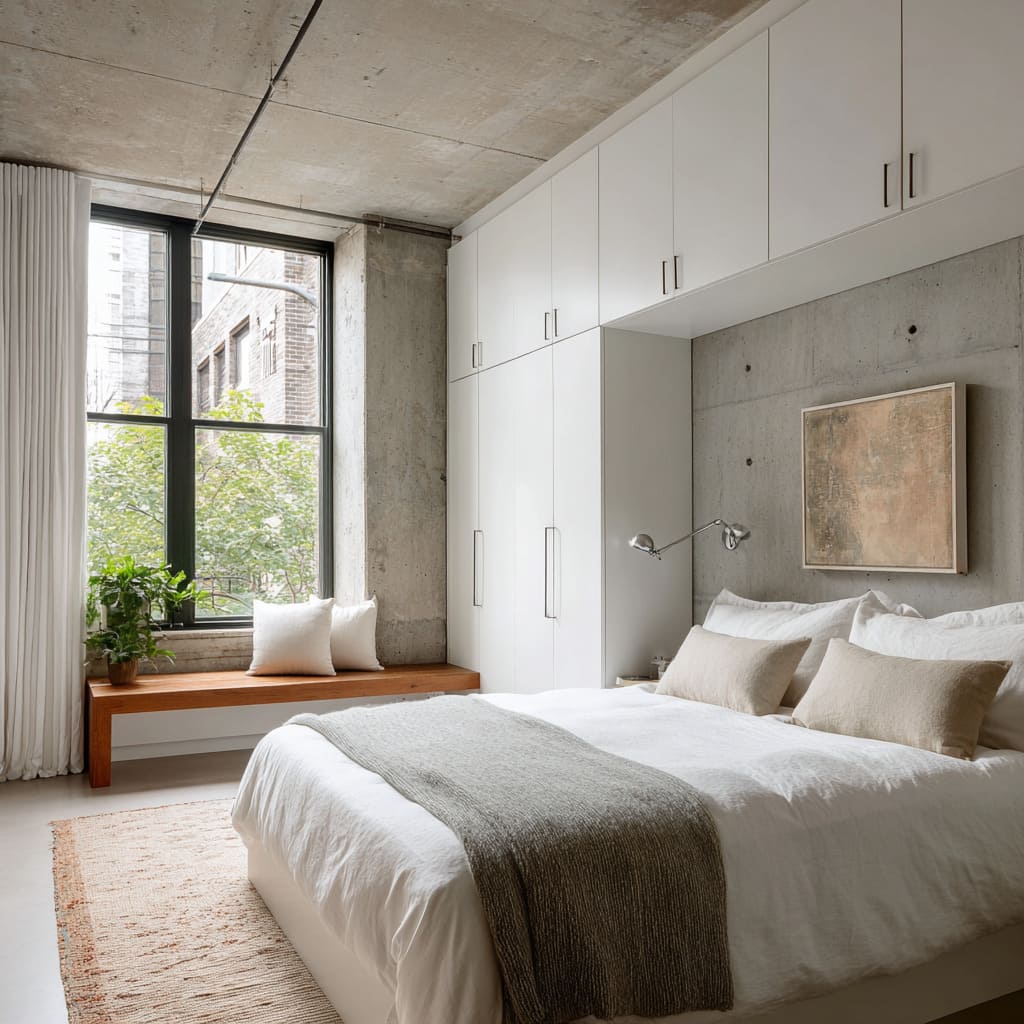
Concrete panel walls become decorative when seams and tie holes are treated like a deliberate grid rather than construction traces. When large panels are framed by bright cabinetry or clean white planes, the wall reads like a centered artwork panel.
The framing doesn’t need to be dramatic; it can be as simple as smooth white storage planes on both sides. The eye understands the hierarchy instantly: the concrete is the center plane.
That hierarchy is one of the cleanest answers to the typical Why does my concrete wall look unfinished? problem in concrete bedroom design—unfinished often means no hierarchy.
C. Concrete as a sculptural object (pillar logic)
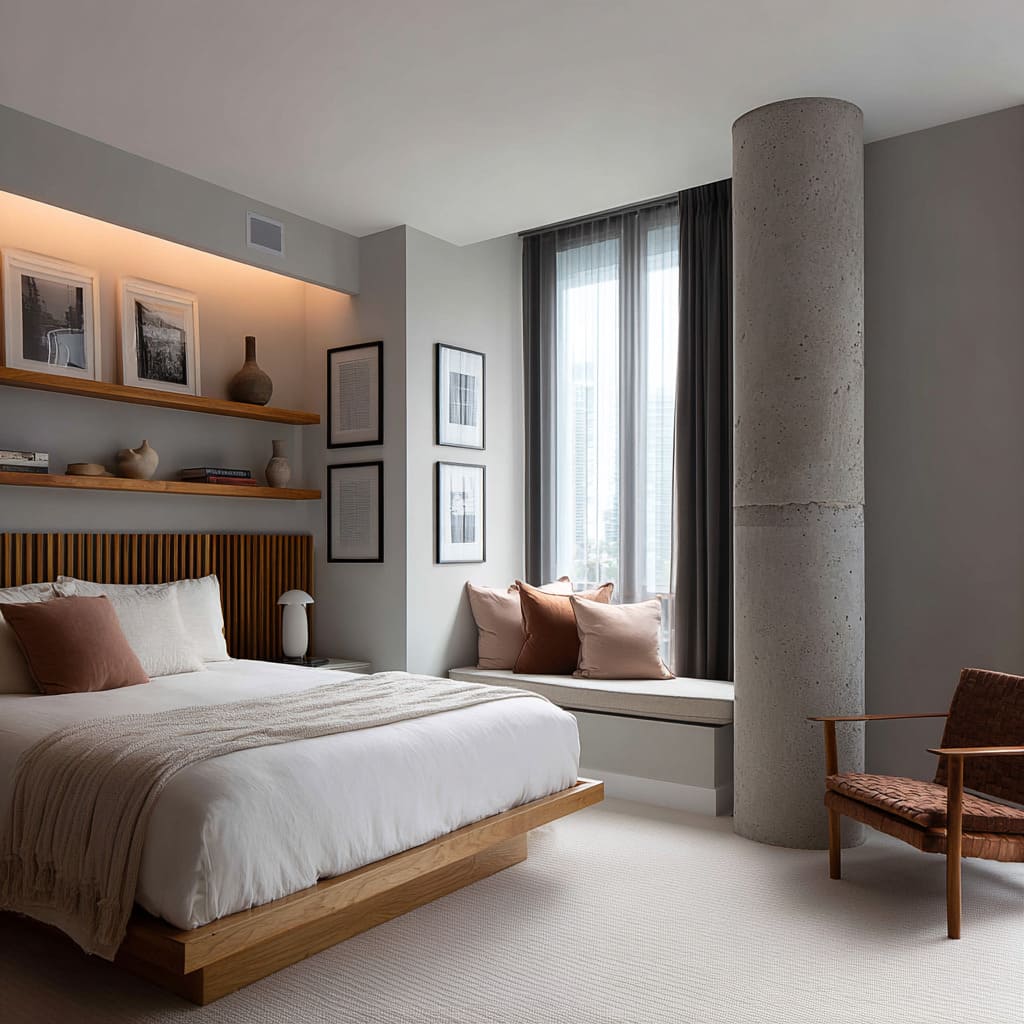
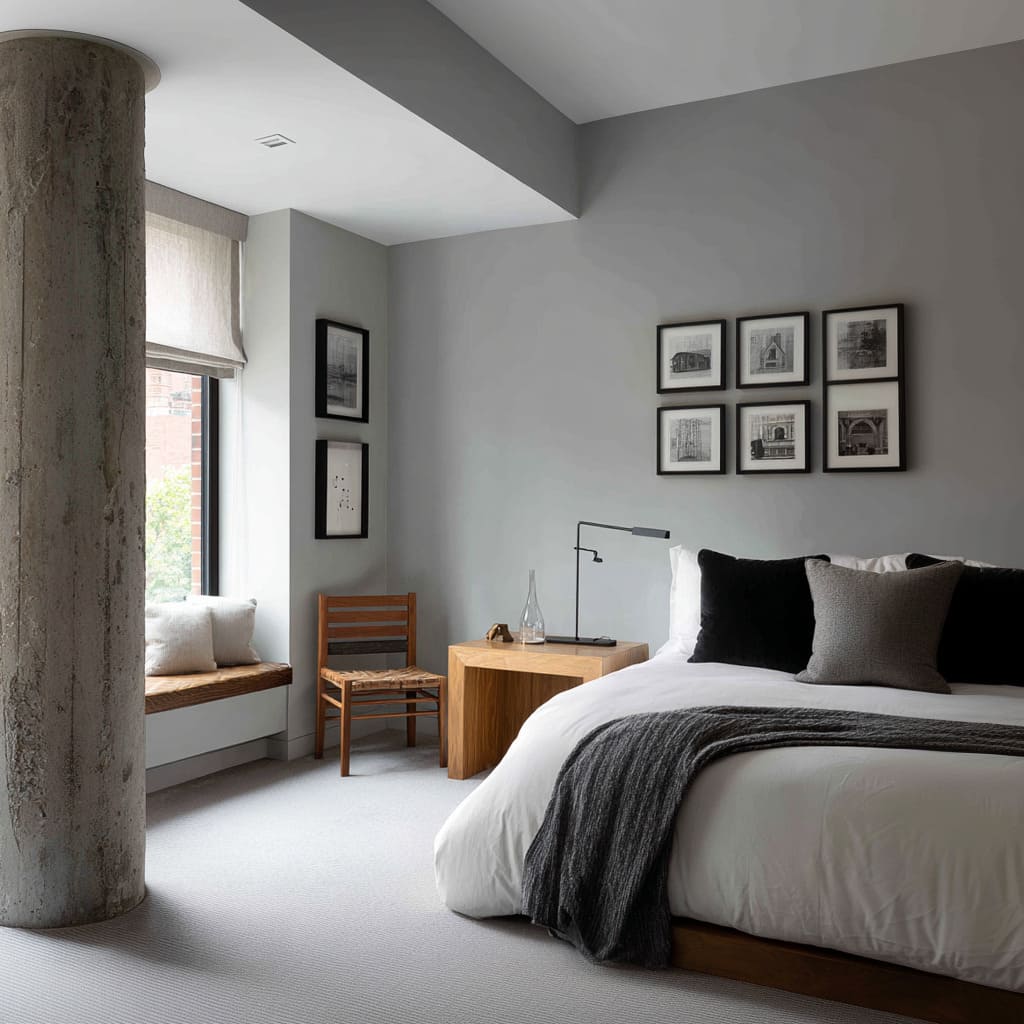
A single concrete pillar can function like a quiet sculpture. When the room’s design limits concrete to one strong vertical element, it can stay minimal and still feel layered.
The pillar’s mottling and pores become texture content, but only because the things surround it with calmer surfaces: soft painted walls, clean textiles, smooth storage, and a large soft rug island. Concrete becomes a focal point without turning the design into a raw industrial box.
This is a high-control form of bedroom cement design: fewer concrete surfaces, but stronger composition.
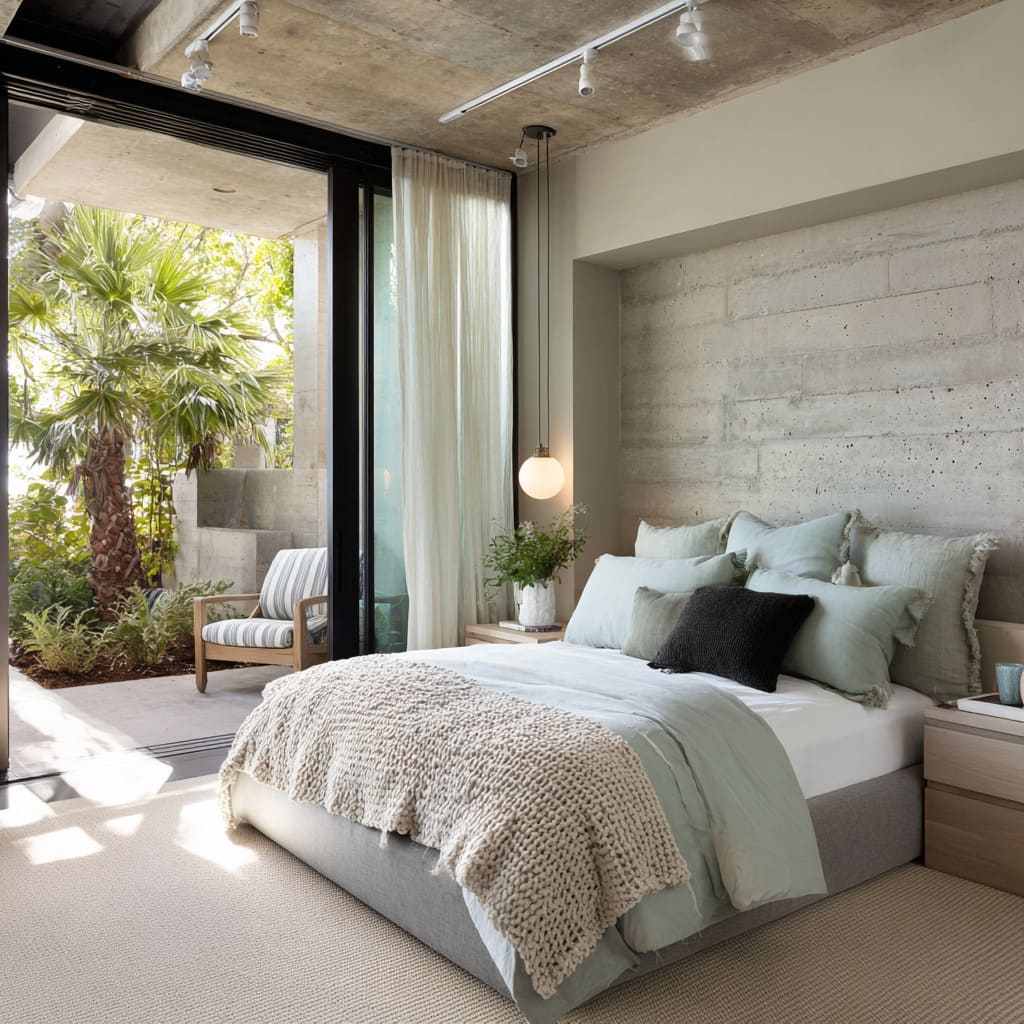
Temperature is controlled at eye level
Warmth can be placed where the eye rests naturally—roughly headboard height and the first meter above it.
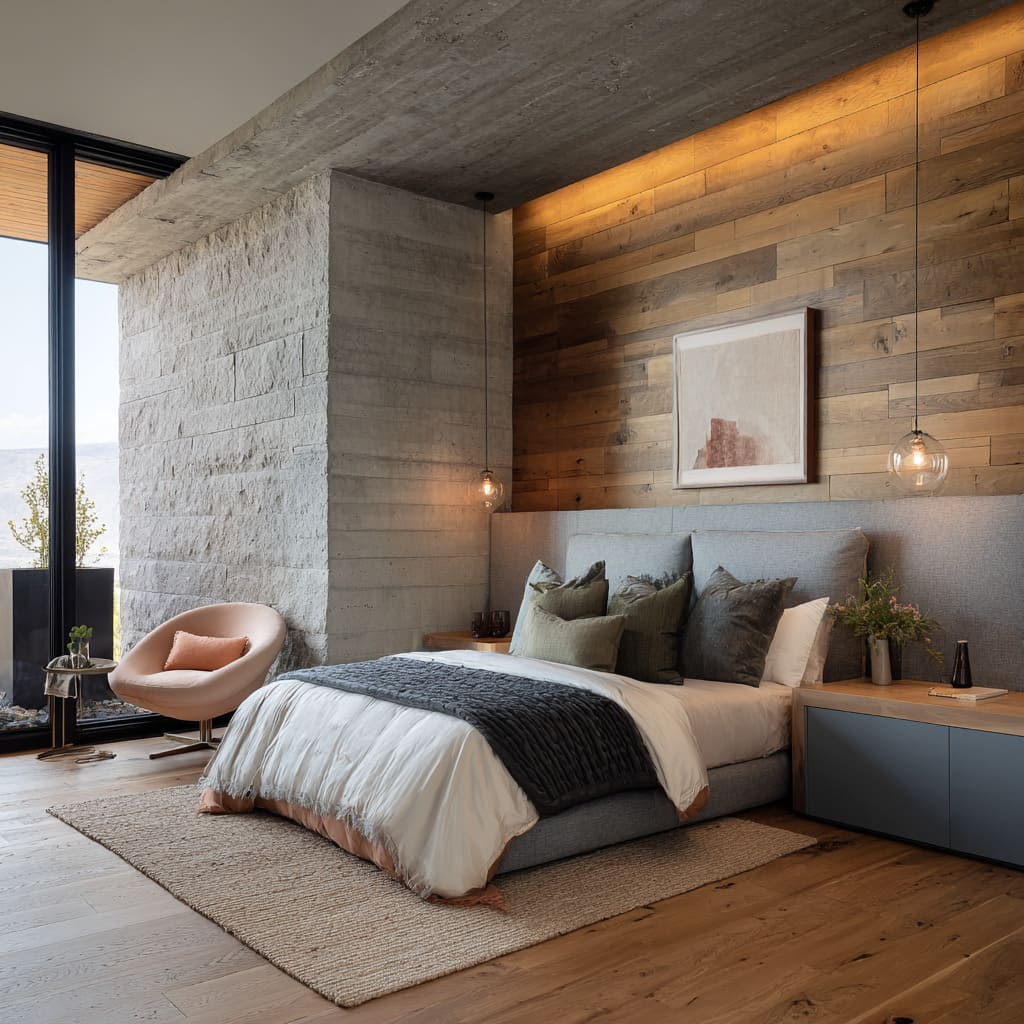
A. Warmth as a plane: wood backdrops and wood spines
Wood behind the bed is often used as a temperature switch. It doesn’t need ornate patterning.
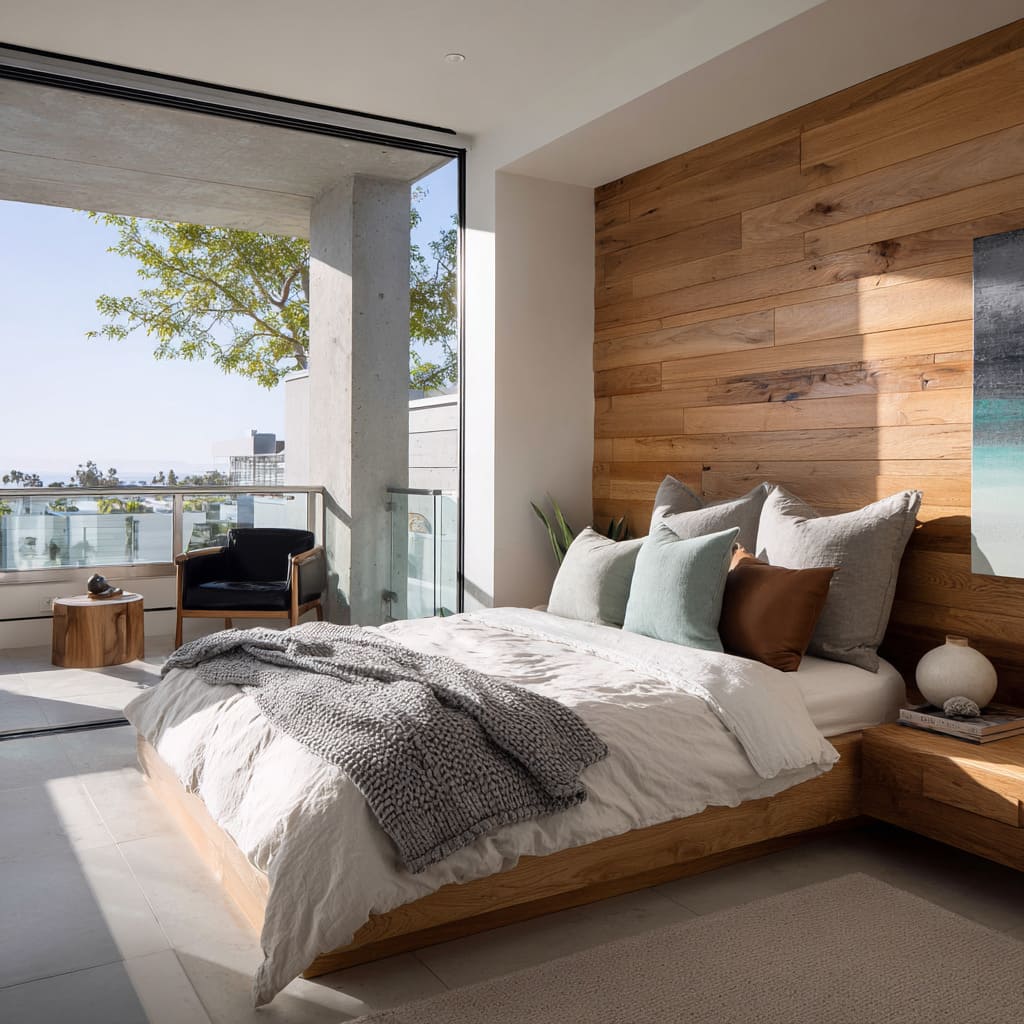
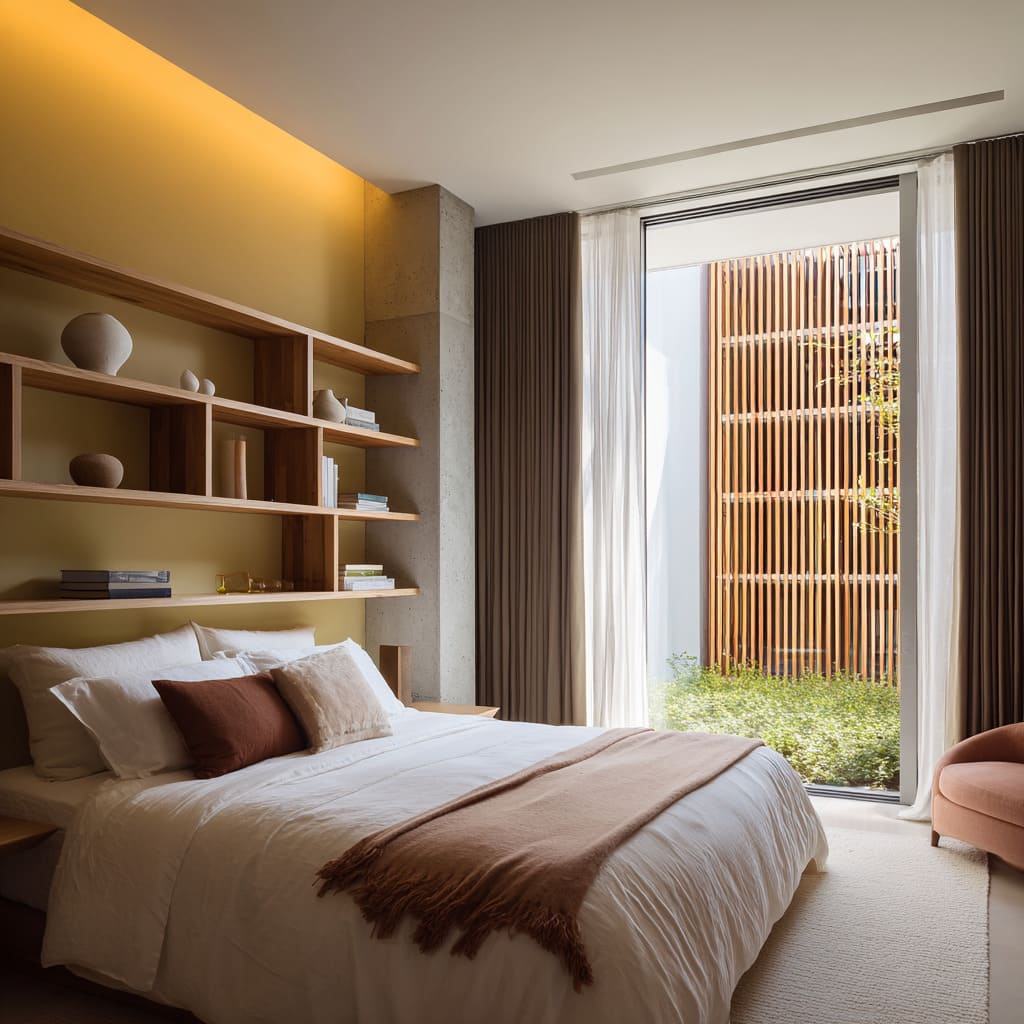
Long horizontal planks or vertical slats work because they behave like calm landscapes: grain variation reads rich, but not noisy. The wood also changes how concrete reads beside it—concrete appears cooler, cleaner, and more intentional when paired with a warm grained plane.
A subtle but powerful version is the wood spine next to a concrete panel wall: concrete holds the grid; wood introduces warmth and a second rhythm. The design feels composed because there are two different kinds of order—mineral grid + organic grain.
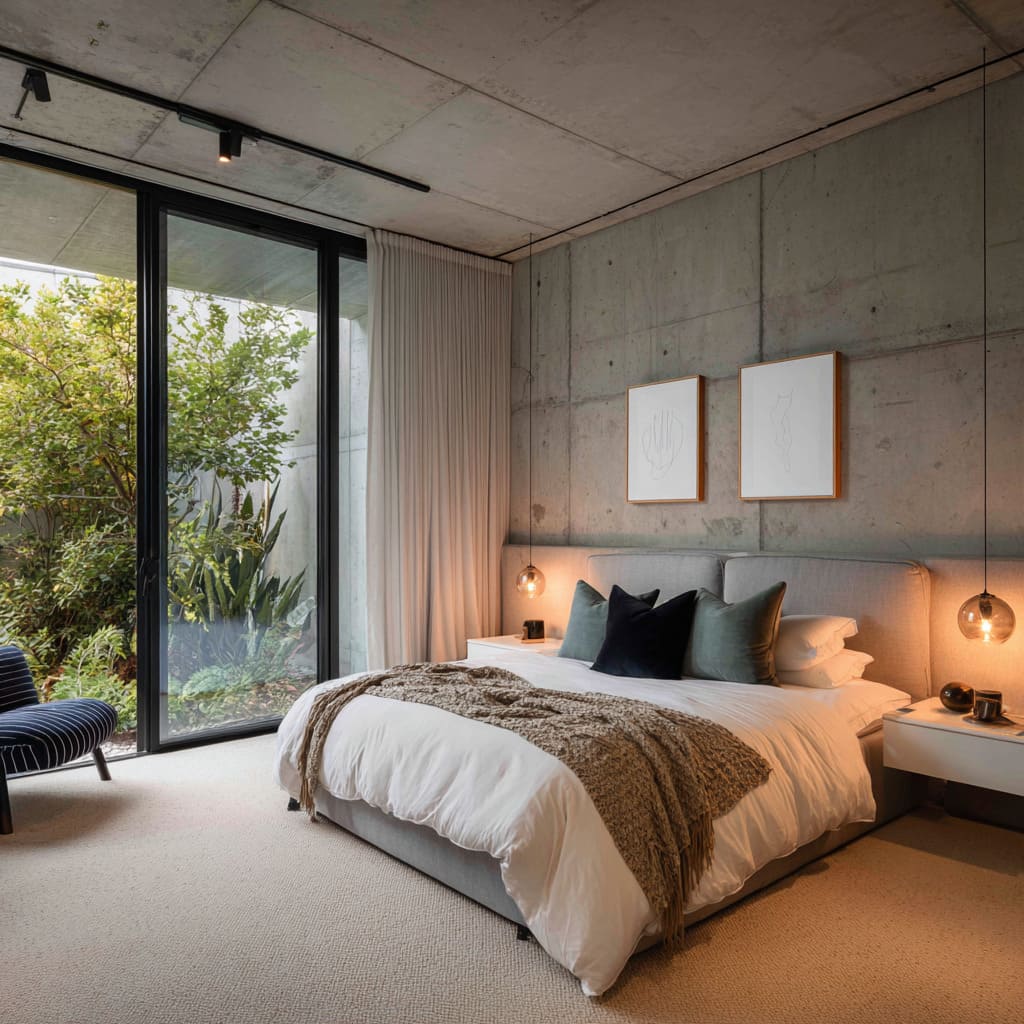
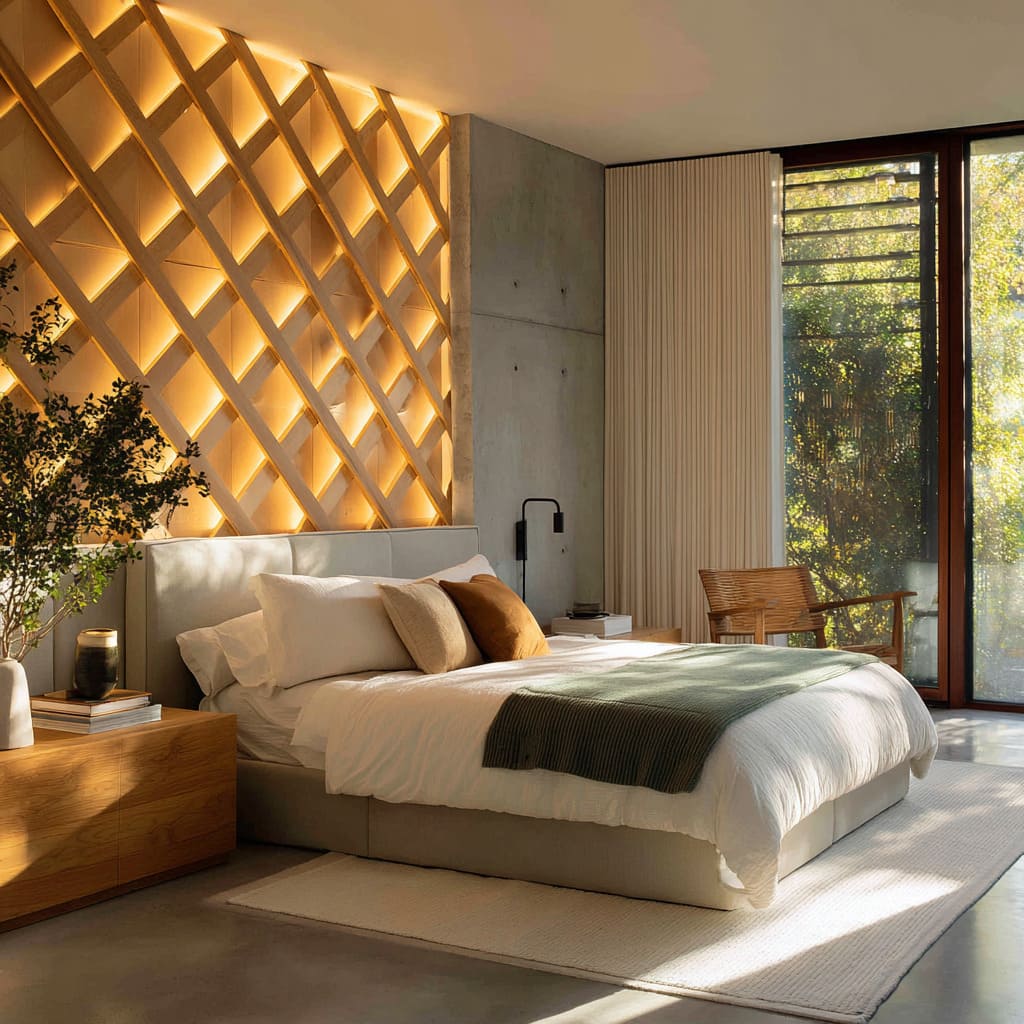
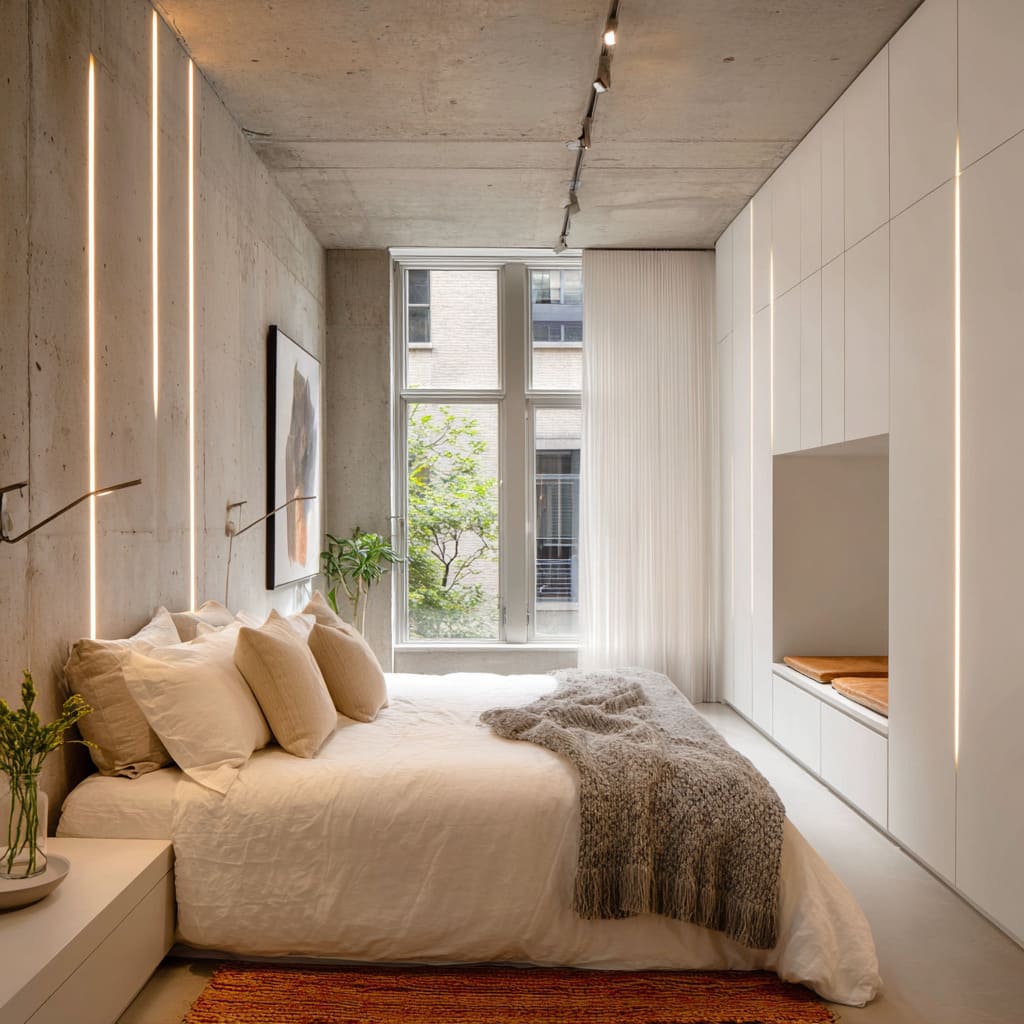
B. Warmth built into the wall: thin vertical glow lines and ceiling washes
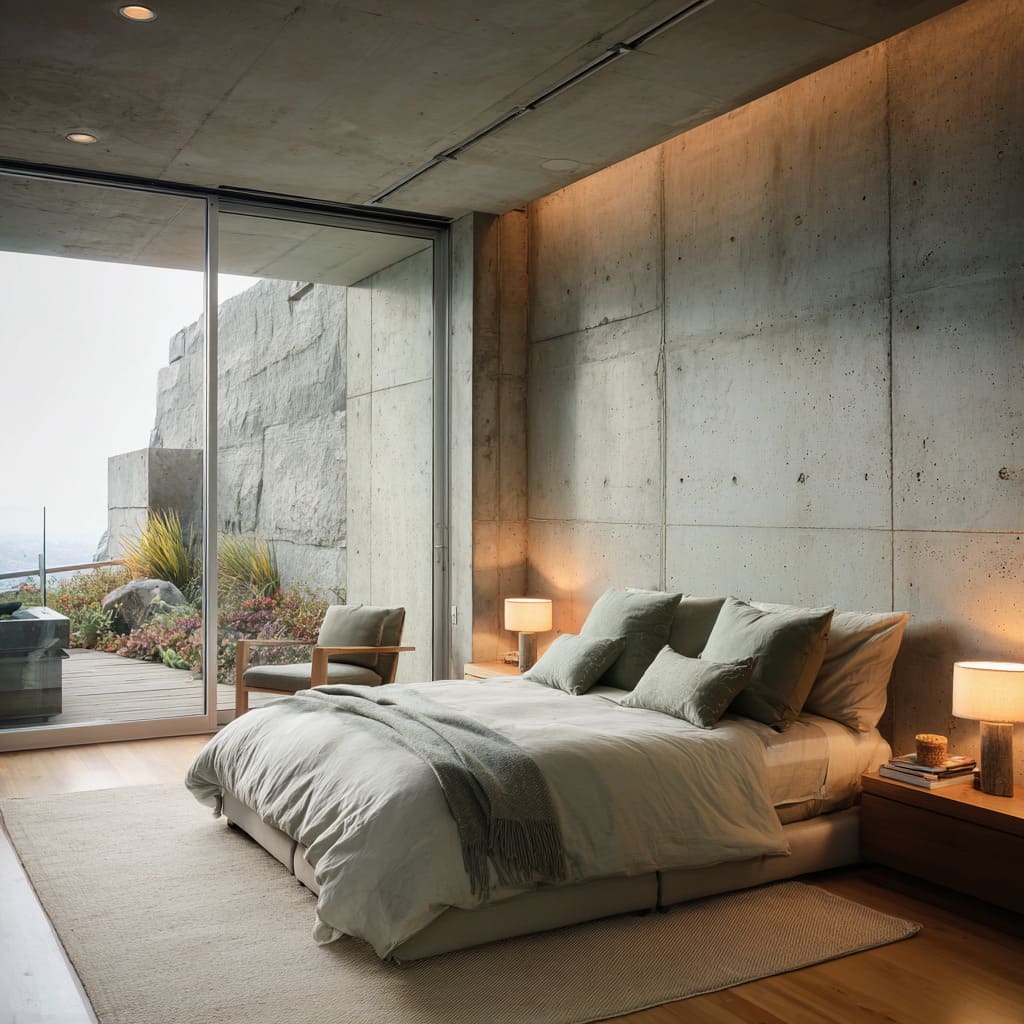
The most planned concrete feature walls often include narrow vertical warm light lines or a warm wash at the ceiling edge. The point isn’t drama; it’s to stop concrete from tipping bluish or flat after sunset. A thin warm glow makes concrete feel deeper and calmer because it creates gentle gradients that reveal pores and seams without harsh contrast.
This is a major psychological fix in concrete bedroom ideas: the wall itself carries warmth, so the design doesn’t need extra objects to feel inviting.
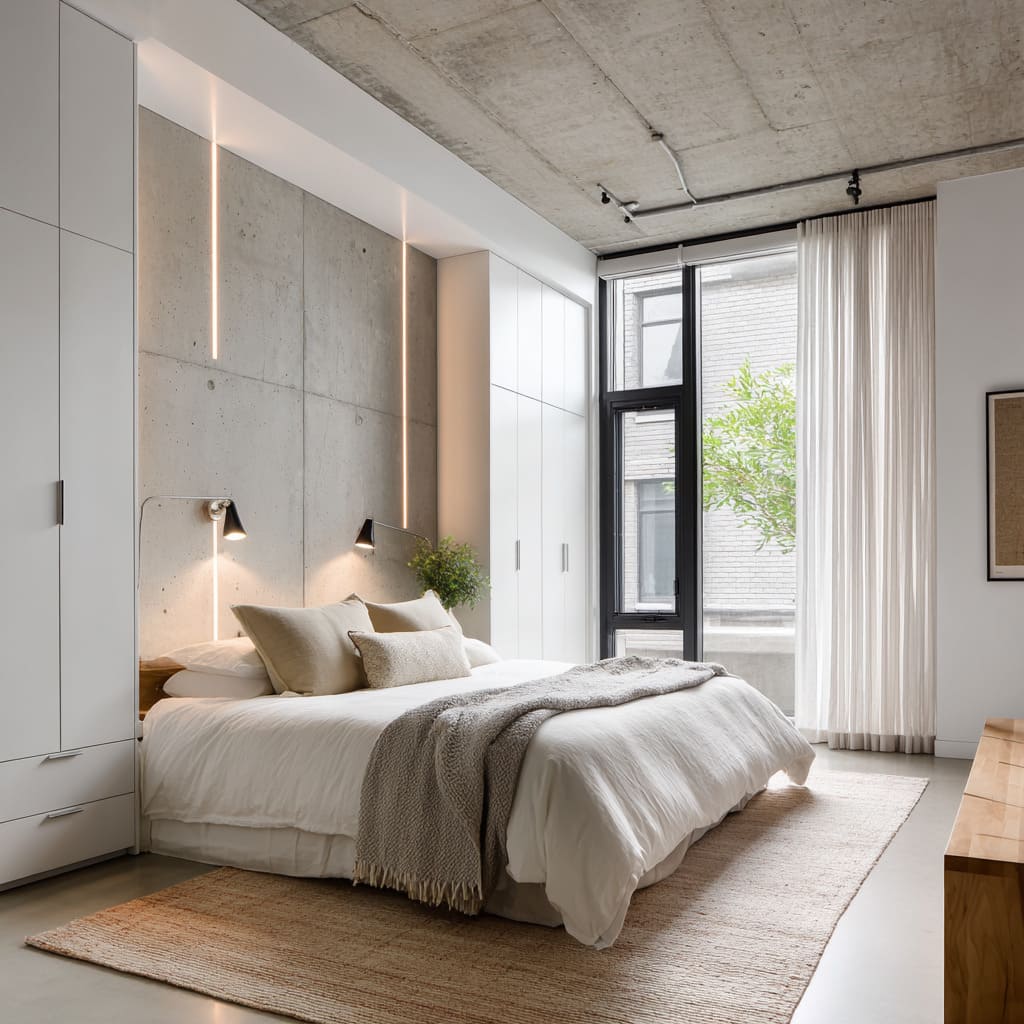
C. Warmth as a small object cluster (curves, matte surfaces, earth tones)
Concrete-heavy interior designs often avoid shiny styling. Instead, they lean on rounded pottery-like pieces, dried stems, matte vessels, and small clusters of neutral objects.
Those items do quiet work: curves counter the right angles of seams and ducts, and matte surfaces soften the hard crispness concrete can create.
When concrete feels cold, it’s often because everything near it is also sharp-edged and glossy.
Such interior designs choose the opposite.
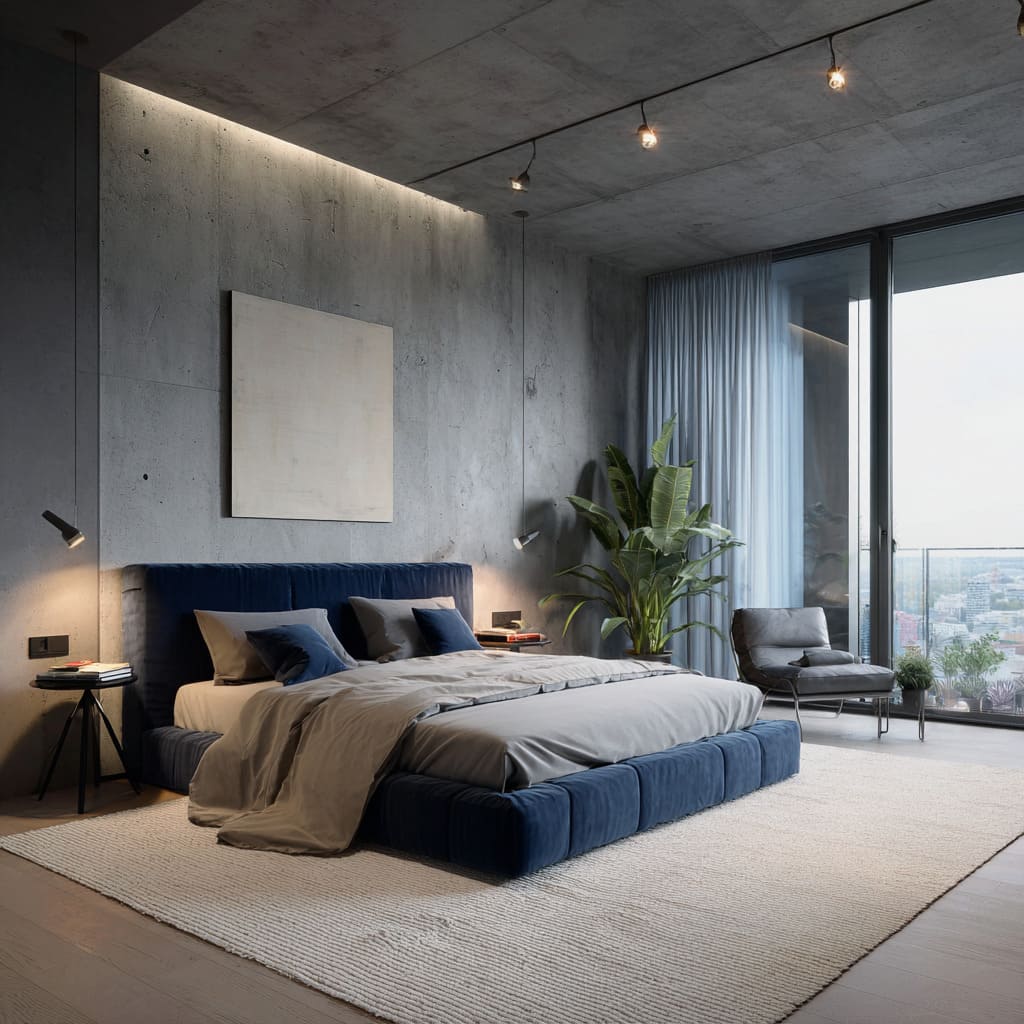
Edge-definition makes concrete feel finished
Concrete interior designs can blur when everything sits in the same grey value range. The most successful setups build an outline system—thin, controlled, repeated.
A. Black as a line, not as a mass
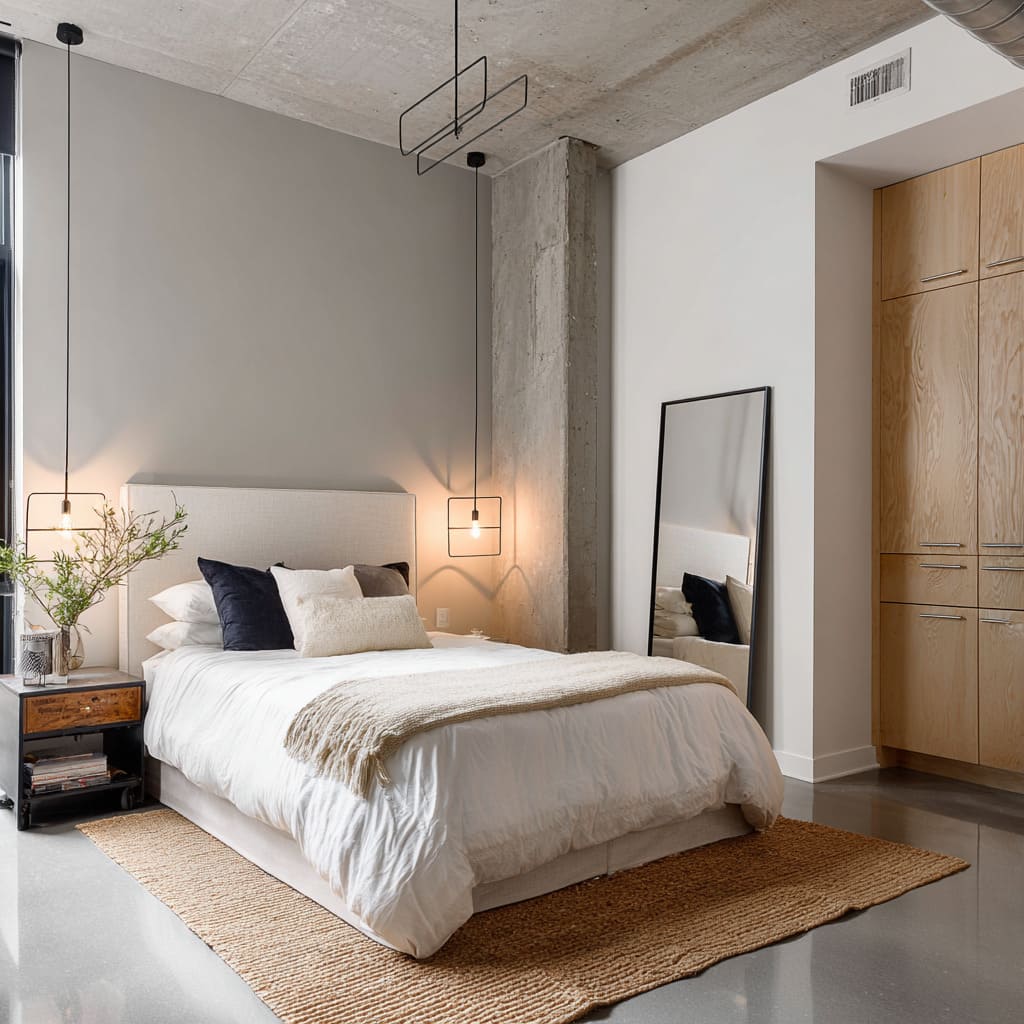
Black appears here as narrow frames and fine outlines: a geometric pendant, a mirror frame, a window frame, a reading light arm, small cabinet pulls. Because the black is thin, it doesn’t make the design harsh; it simply sharpens boundaries so the eye can read the architecture.
That’s why a concrete design can feel crisp with very little decor. The outline system replaces busyness.
B. The stop point trick: one dark anchor so the room doesn’t float
A concrete palette can feel endless if nothing lands the composition. Many interior design concepts solve this with a single dark anchor: charcoal pillows, a dark lumbar pillow, deep curtains, a moody end wall, or a darker throw at the foot.
The anchor prevents the concrete from reading like a flat backdrop because the eye now has a clear place to stop.
This is one of the most important moves in concrete wall bedroom design: not add contrast everywhere, but place one reliable anchor.
C. Mirrors and glass as edge multipliers
A leaning mirror in a concrete space doesn’t only add brightness. It repeats the floor sheen vertically, which makes polished concrete read like a deliberate design choice.
Glass objects and clear vases do something similar: they add life and light without adding color clutter, so the design stays calm while still feeling inhabited.
Softness is zoned, not sprinkled
Such interior design ideas rarely rely on cozy decor scattered around. They create comfort zones with clear borders.
A. The landing-strip rug (comfort where feet land)
A frequent move is placing a warm natural-fiber rug as a landing strip beside or under the bed—sometimes not centered, but positioned where the body interacts with the space first. That placement quietly communicates intention: concrete floor is the design base, rug is the comfort zone.
The design feels finished because comfort has a map.
B. Upholstered headboards as a buffer layer
Concrete walls and concrete ceilings can feel visually heavy. A tall upholstered headboard creates a calm vertical plane that changes everything: it stops bedding from being swallowed by grey, softens the wall at the body zone, and introduces a controlled texture that humanizes the interior design without adding extra colors.
A key detail: headboards are often in creamy beige or soft grey—bridge colors that sit between concrete coolness and wood warmth.
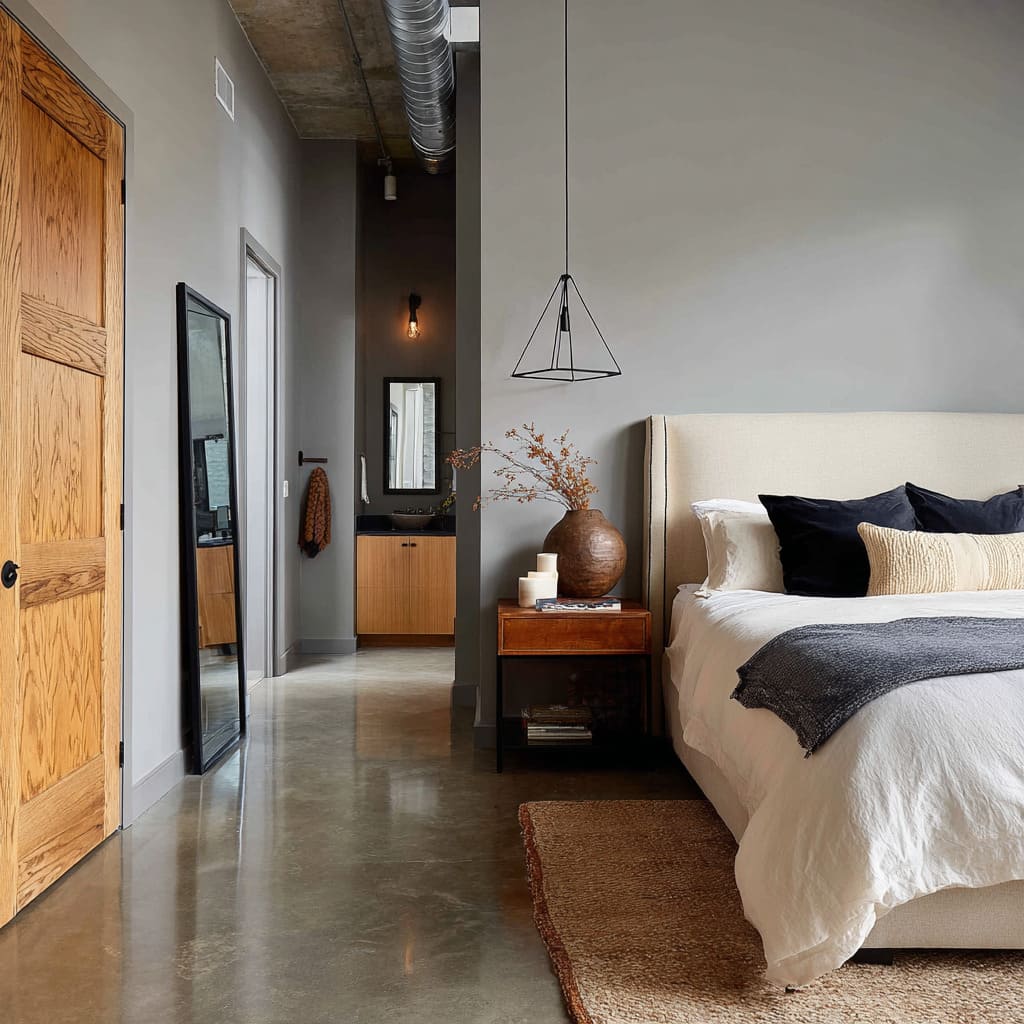
C. Texture ladders: hard → soft → hard (in a controlled sequence)
A clear tactile sequence:
- concrete or painted wall as the hard plane
- upholstered headboard as the buffer
- crisp bedding as the light plane
- textured throw as the grain plane
- large woven rug as the quiet base
This ladder keeps concrete present while preventing the hard-on-hard feeling that makes designs read severe.
Concrete becomes decorative through light behavior
The most striking decorative concrete moments come from light shaping.
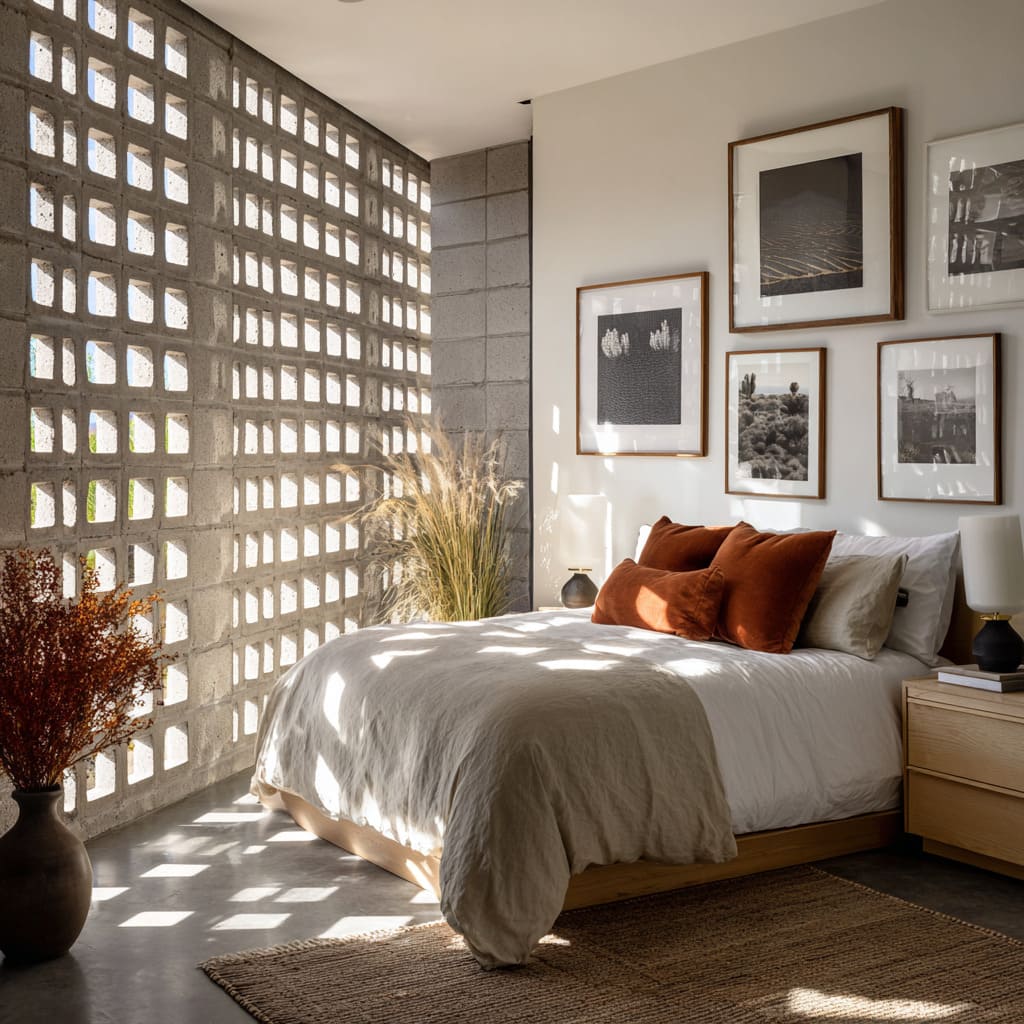
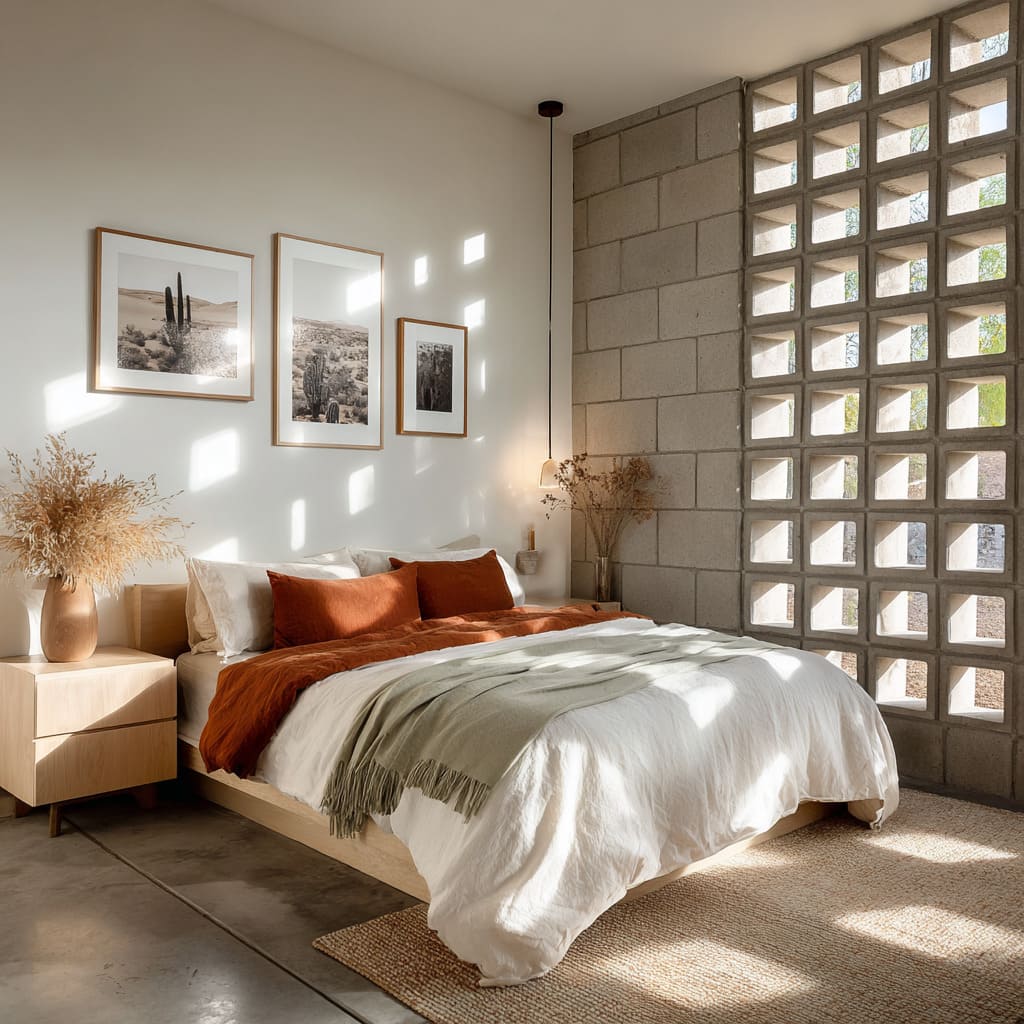
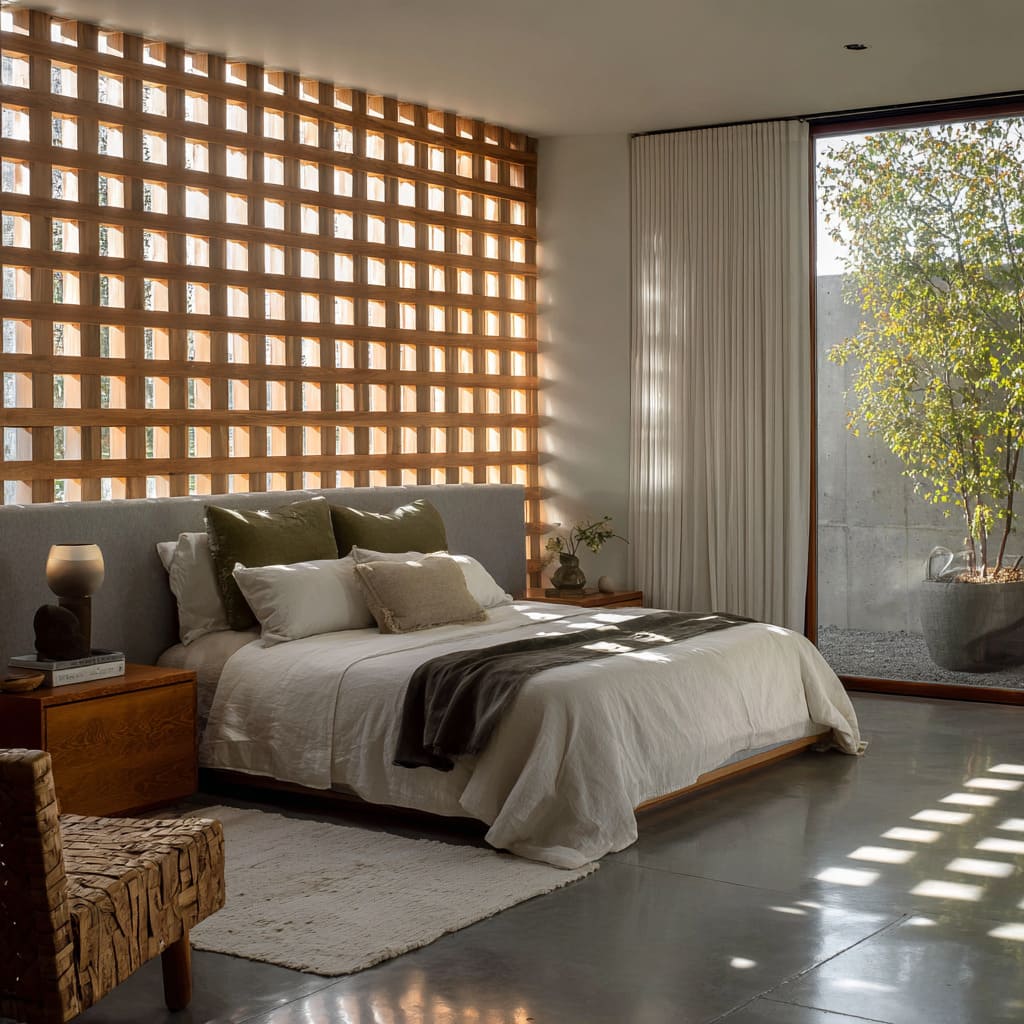
A. Perforated concrete screens as shadow wallpaper
Concrete lattice walls act like daylight editors. They generate repeating squares of light that slide over bedding and floors.
The wall becomes decorative without any applied pattern. The pattern is time-based: morning looks different from late afternoon, and that changing grid adds richness while staying calm.
This solves a hidden goal behind concrete bedroom ideas: wanting visual interest without clutter.
B. Concrete that looks rich at night (gradient logic)
Concrete often looks best when it’s not evenly lit. Warm lines and low lamps create gradients—soft transitions that reveal pores, seams, and mottling.
That gradient is what makes concrete feel deep instead of flat grey. The wall looks intentional because the light shows its character in a controlled way.
C. Filtered daylight as a mood stabilizer
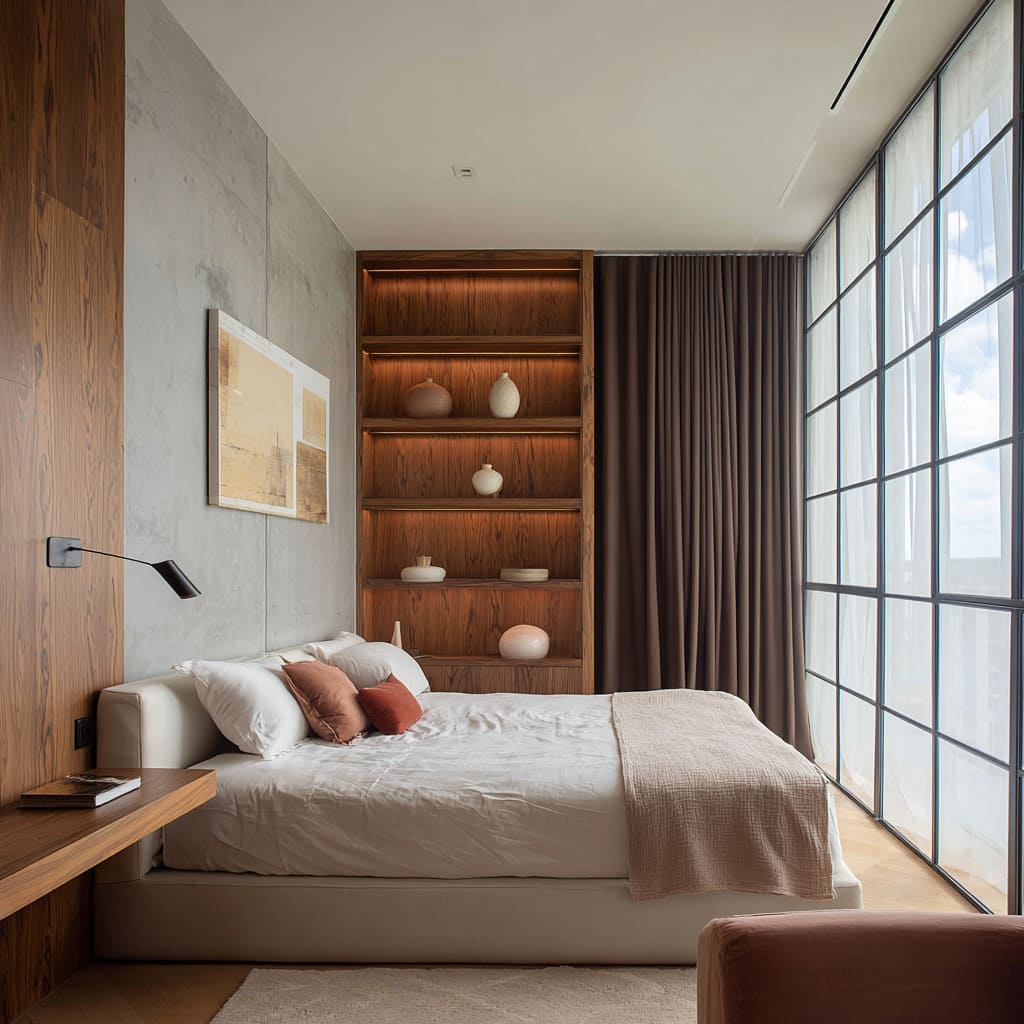
Sheer curtains are doing more than softness. They stabilize concrete’s tone by preventing harsh sun contrast that can make concrete feel aggressive.
Filtered light keeps the surface calm, and the interior design reads restful instead of stark.
Nature completes the concrete story
They can use the exterior view as part of the interior composition: trees, palms, rock masses, greenery beyond black-framed glass. The outdoor scene can become a third texture that keeps concrete from feeling urban-hard.
A. Green and blue accents are not color decor; they’re view echoes
Muted sea-glass pillows, soft greens, misty blues—these aren’t random. They pull a small piece of the exterior into the bed zone so the concrete reads calmer and more grounded.
The interior design looks intentional because interior and exterior share a quiet color family.
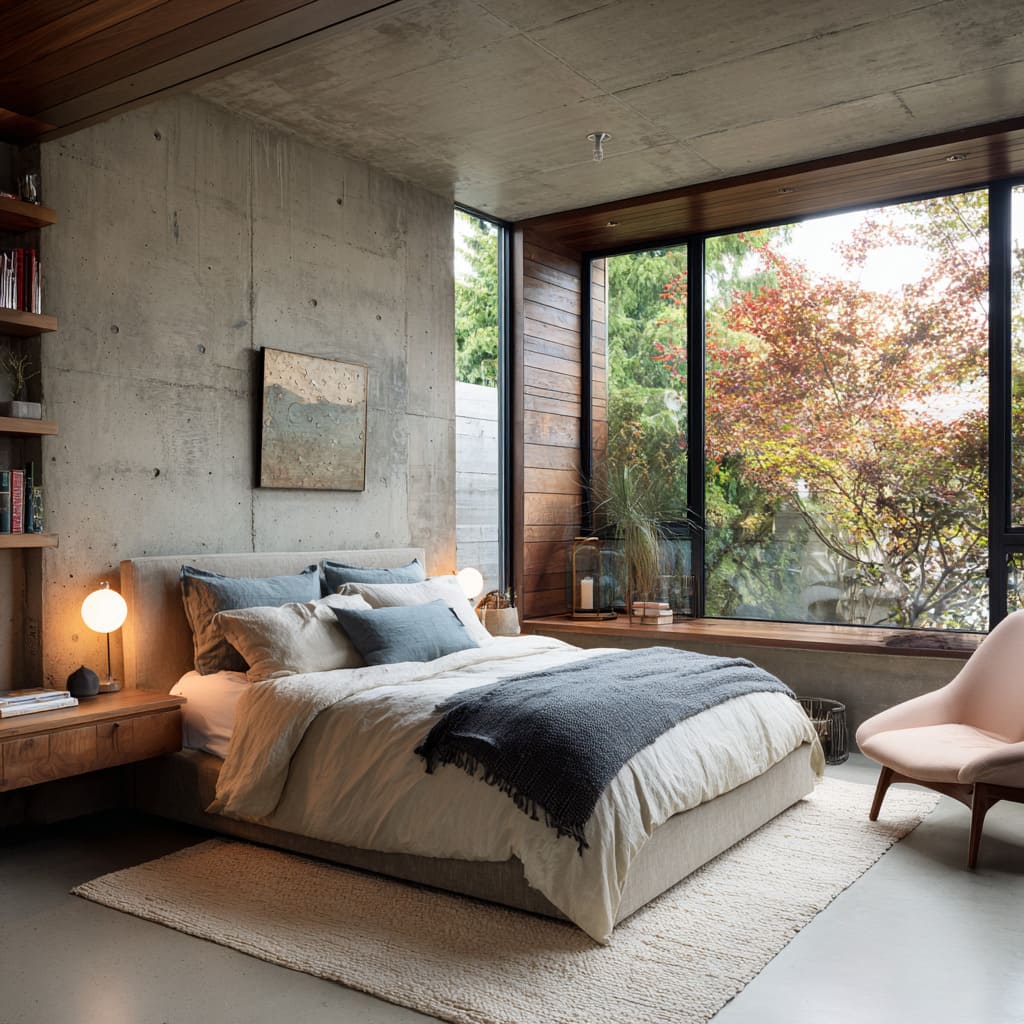
B. Wood window surrounds act like warm frames for the outside world
A deep timber casing around a window behaves like a picture frame. It warms the daylight softens concrete’s perceived temperature.
The outdoor foliage then tints the light subtly, so the concrete wall can read slightly warmer and more dimensional without any added color on the wall itself.
This is a strong, often overlooked mechanism inside cement bedroom design: the view doesn’t only provide scenery; it modifies how the concrete is perceived.
Minimal style with silhouette and spacing
Often, the decor count is low in such interior design concepts. The richness comes from the shape language and the gaps between items.
A. Curves are used as relief, not as theme
Round globe lamps, rounded vases, a soft curved lounge chair—small curves appear inside rigid concrete geometry. They prevent the room from feeling strict without changing the modern mood.
The curve is a pressure-release valve.
B. Tight grids vs soft interruptions
A controlled frame grid over the bed can give personality without mess—especially when the images are monochrome or low contrast. The grid mirrors architectural discipline, while a plant or branches break the rigidity with irregular living edges.
C. Negative space is treated like a material
Open shelving and ledges are styled with breathing ideas. This is not empty; it’s a way to keep concrete readable. Concrete already carries micro-detail. If the design fills every surface, the concrete starts to look noisy.
Sparse styling lets concrete feel refined.
This restraint is one of the clearest signatures of a calm concrete bedroom design: concrete is allowed to be seen.
The 5 finish cues that make concrete bedrooms feel complete
Without adding build talk or product talk, these patterns create the finished signal:
- A warm reference at eye level (wood backdrop, warm glow line, warm art, earth-tone pillow note)
- A thin outline system (black frames, window trim, slim pendant geometry, small pulls)
- A comfort boundary on the floor (large woven rug island, landing strip placement)
- A bridge layer between concrete and bedding (upholstered headboard, soft grey wall plane)
- One controlled dark anchor (charcoal pillow, deep curtain, moody end wall)
These cues appear in different combinations, but they solve the same emotional problem: concrete can feel unfinished when it lacks hierarchy, warmth placement, and readable edges.
That’s why the best bedroom cement design isn’t about making concrete disappear. It’s about giving concrete a supporting cast that controls how the surface reads in daylight and at night, how the bed stands out, and how the design lands emotionally as calm instead of severe.
Where the decorative effect really comes from
Concrete becomes decorative when it is treated like a surface that needs editing, not decorating. Editing happens through light gradients, edge control, texture zoning, and a small set of warm planes placed exactly where the eye and body register comfort.
That’s why these concrete bedroom ideas can stay quiet and minimal yet still feel rich: the decoration is built into the room’s visual behavior—how it outlines itself, how it warms itself, how it filters daylight, and how it organizes softness against a mineral backdrop.
Related Posts




Harmony Home Design brings 10+ years of residential interior design experience to the ideas shared here. We publish design concepts, layout thinking, and practical styling notes.