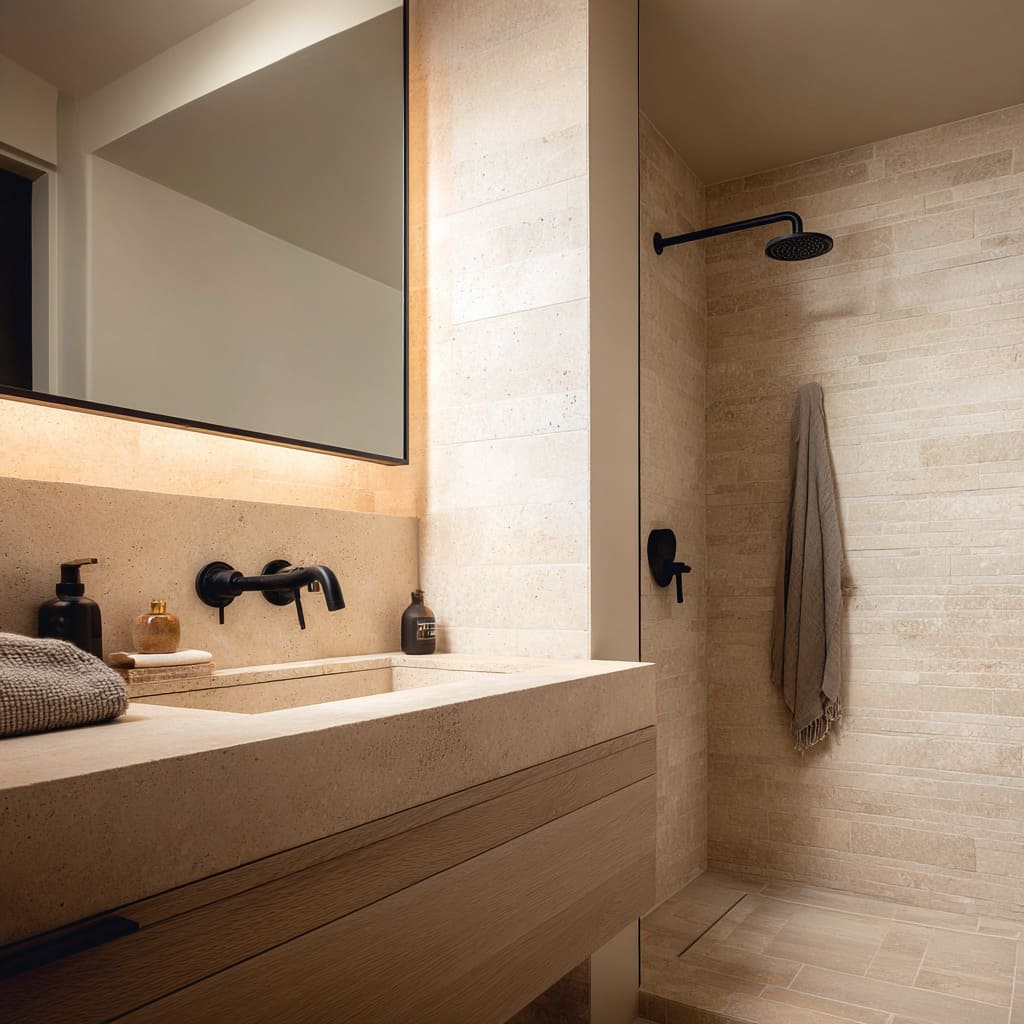
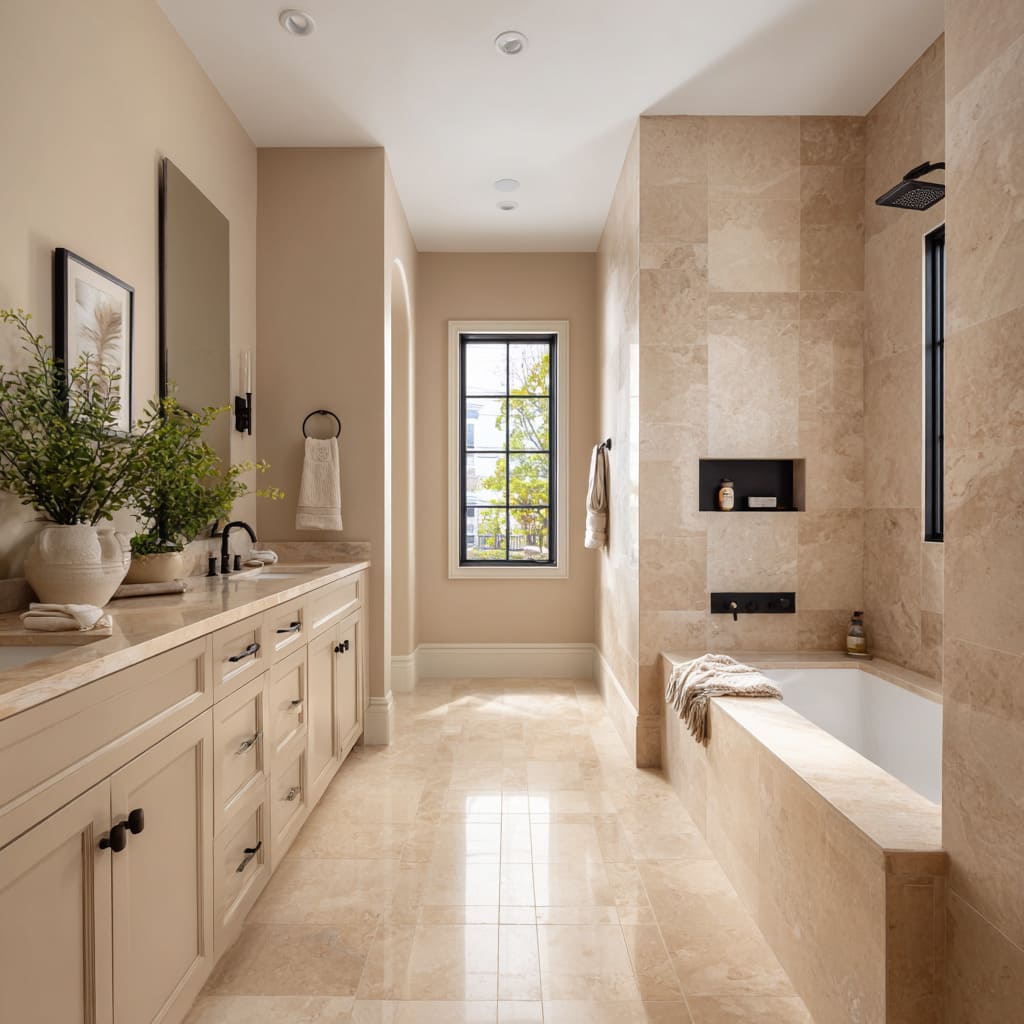
A beige bathroom with black fixtures often appears simple at first glance, yet this combination supports a surprisingly rich design language when handled thoughtfully. Beneath its calm surface lies a set of visual strategies that shape mood, perception, and spatial balance without relying on color contrast, ornament, or technical complexity.
This article examines how beige and black work together at a deeper level, revealing design principles that go far beyond surface styling.
Beige as an Enveloping Visual Field
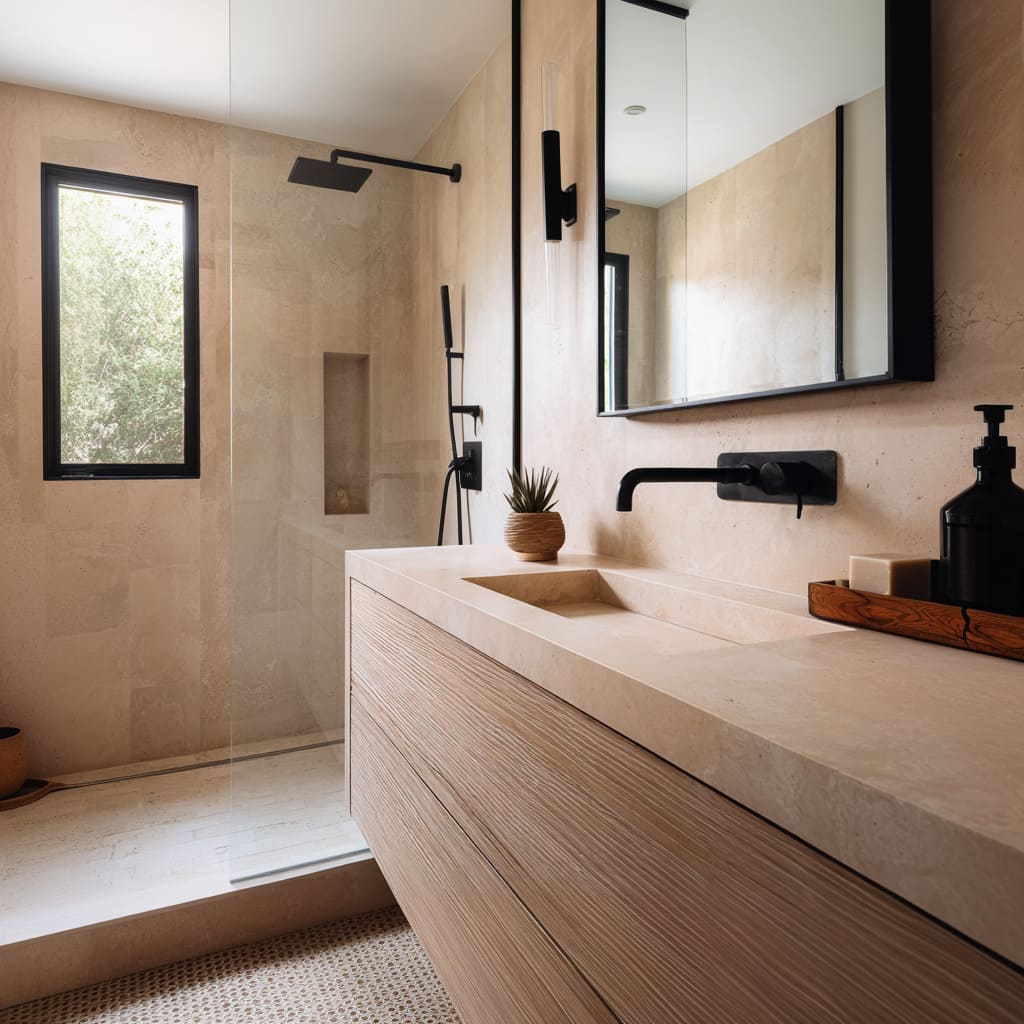
In modern bathroom design, beige is rarely treated as a single flat color. Instead, it functions as a continuous visual field that wraps the space, allowing the room to feel cohesive and composed.
Designers often rely on subtle internal variation rather than contrast.
Large-format stone or tile establishes a calm base, while smaller-scale patterns—such as narrow strips, mosaics, or fluted textures—introduce quiet movement. Painted surfaces are sometimes used above stone-clad lower walls, softening the space and preventing the envelope from feeling overly heavy.
These transitions allow beige to feel layered rather than monotonous.
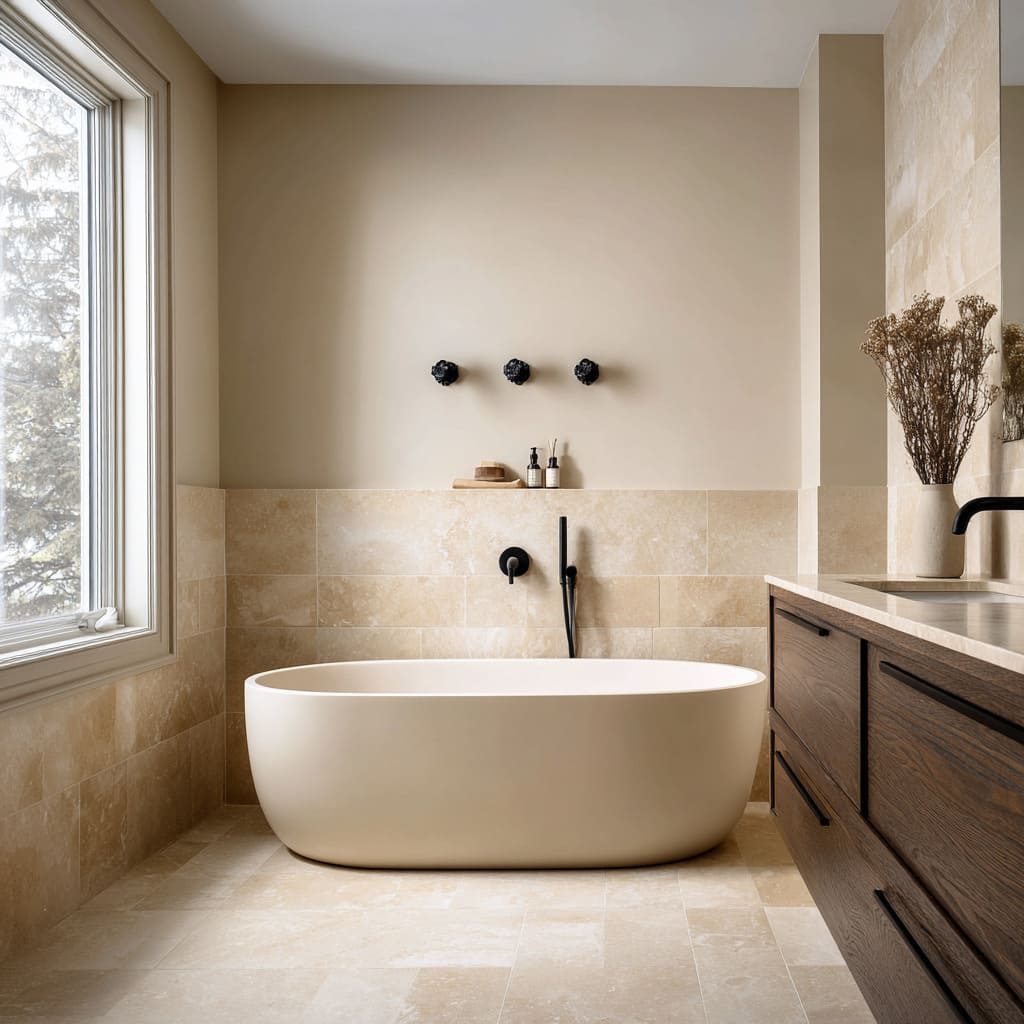
Temperature plays an equally important role. Warmer beige tones create a relaxed, spa-like atmosphere where black reads as soft and muted, while cooler beige shifts the mood toward a more urban, structured feel.
The fixtures remain the same, but the emotional reading of the space changes subtly with undertone alone.
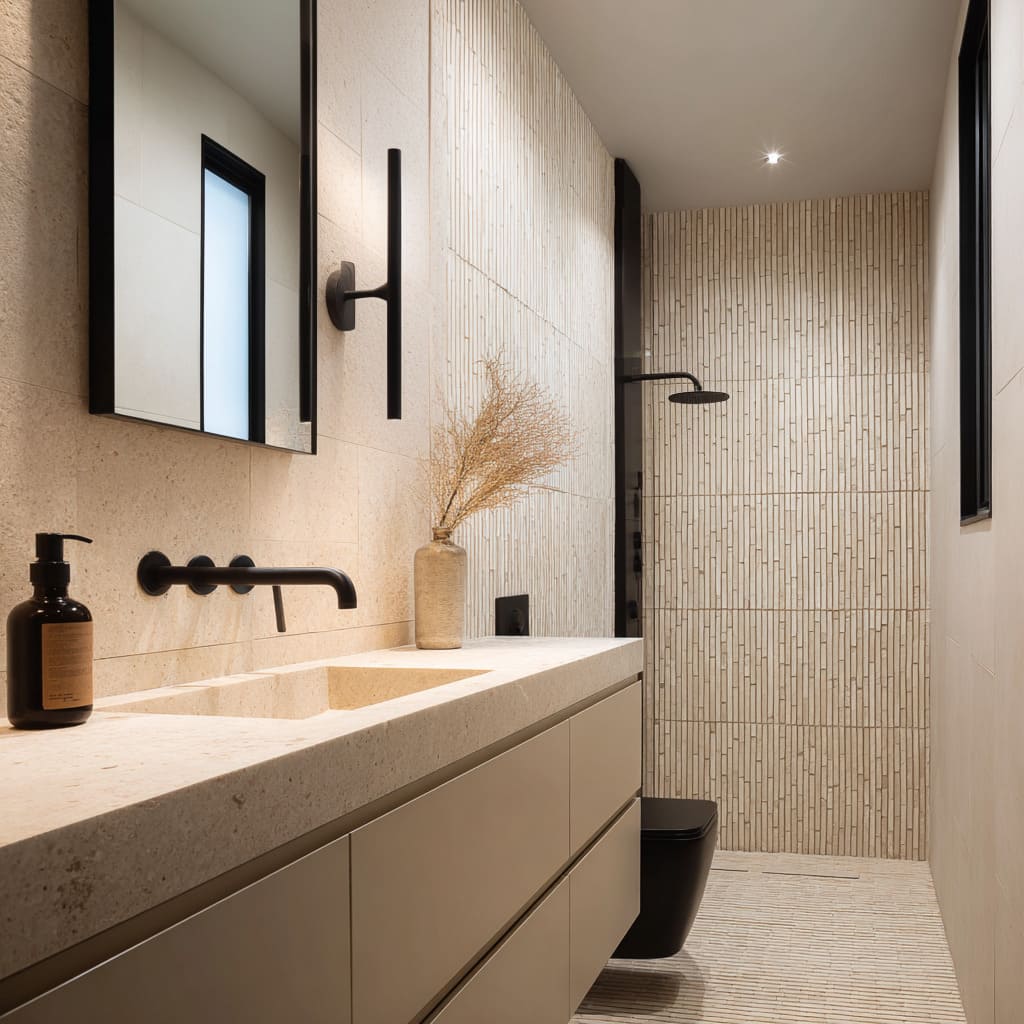
Black Fixtures as Visual Structure
Black fixtures in a beige bathroom design are most effective when treated as a system rather than individual accents. Their purpose is not decoration, but structure.
Instead of dominating the room, black elements act as visual punctuation—small, deliberate marks that guide the eye.
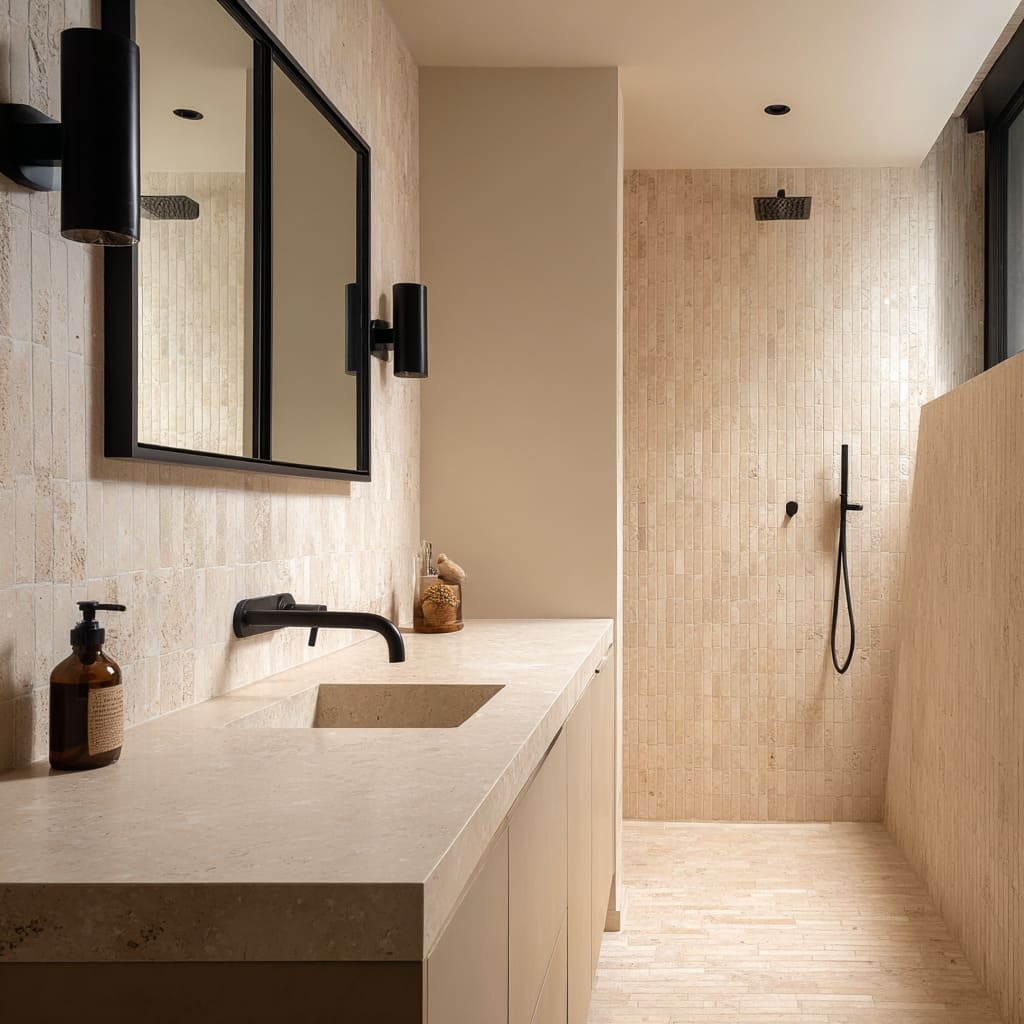
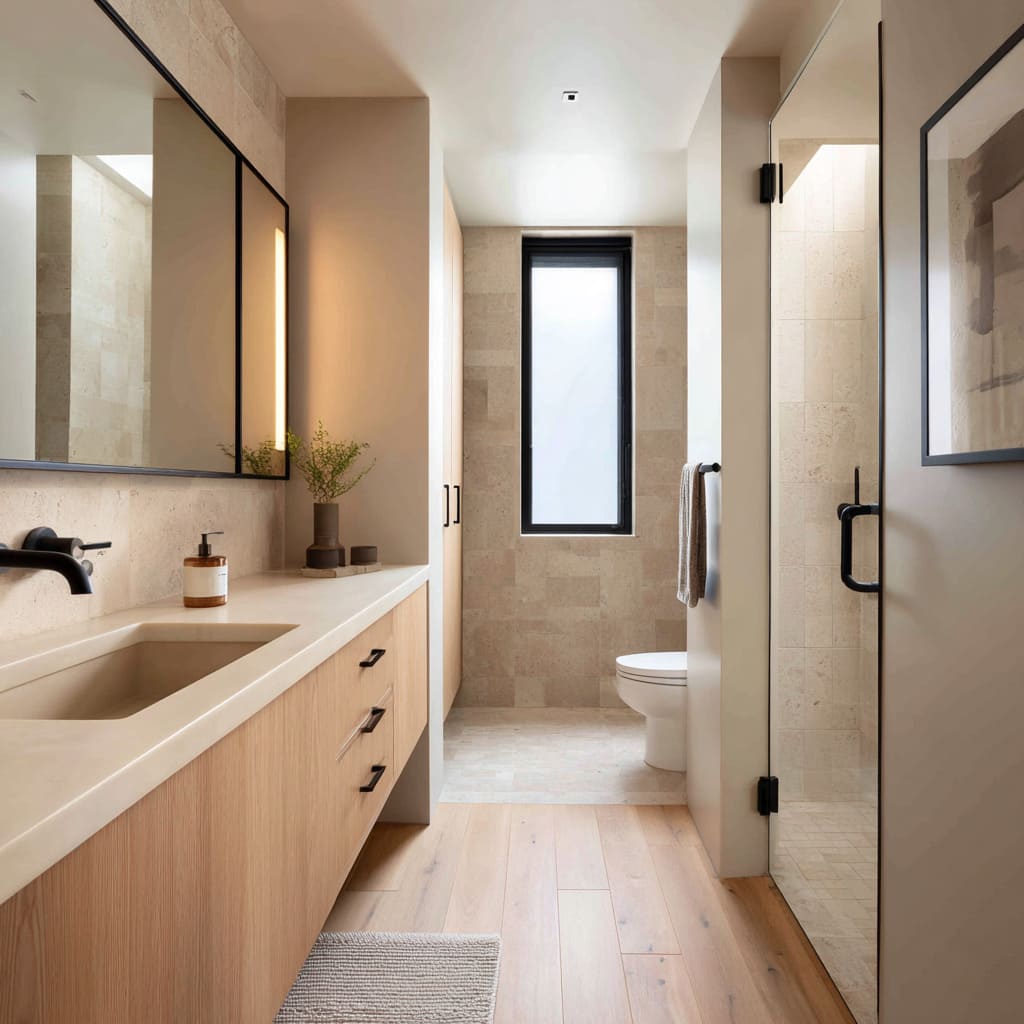
Fixtures are often arranged in sequences that follow the length or height of the space, creating a slow rhythm rather than isolated contrast. Wall lights, taps, controls, shower hardware, and window frames are positioned to form readable paths through the room.
This is especially important in narrow or elongated layouts, where black elements help the eye move comfortably rather than becoming overwhelmed by repetition. Black also acts as connective stitching.
When mirror frames, lighting, door frames, window profiles, and even ceiling details share the same tone and finish, the space reads as a single, cohesive composition. Beige provides continuity; black provides clarity.
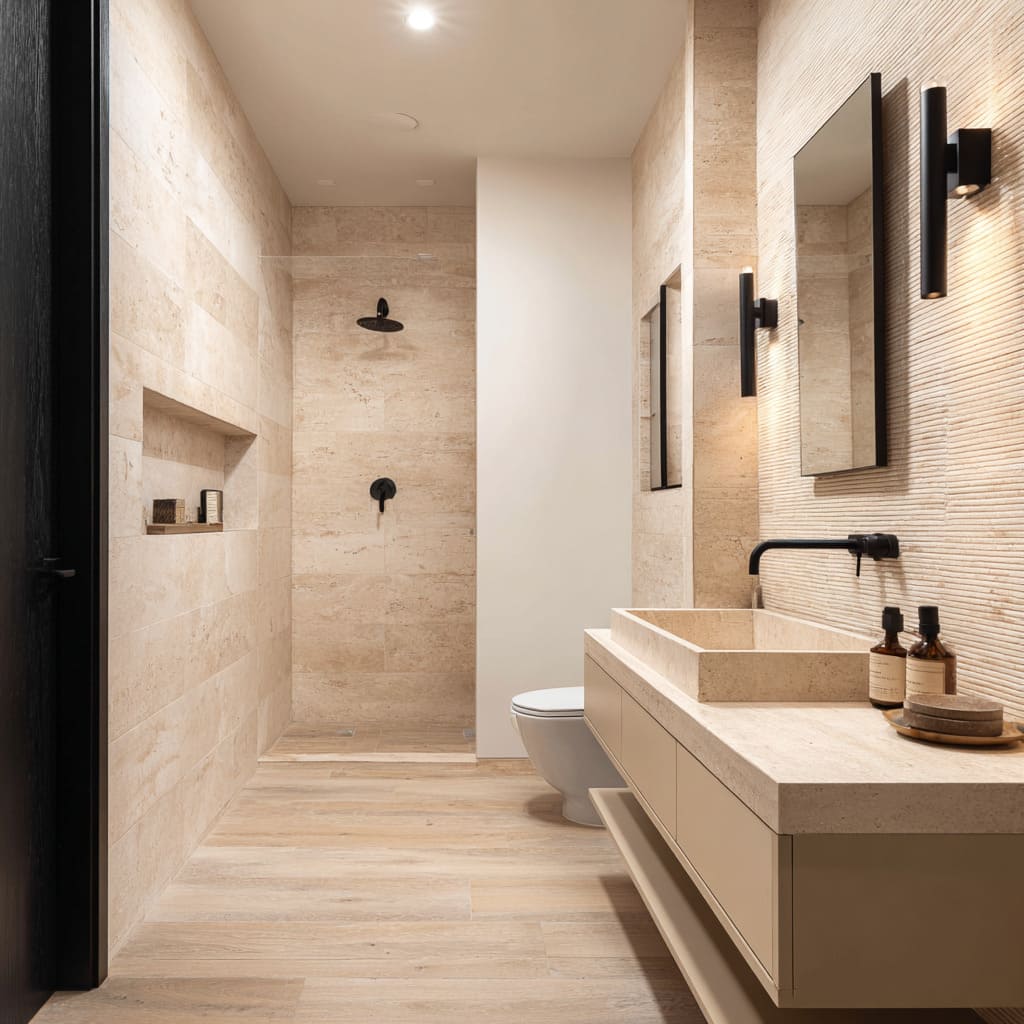
Shape Discipline: Why Form Matters More Than Finish
One of the least obvious but most important strategies in beige bathrooms with black fixtures is shape consistency. Rooms typically favor one dominant shape language—rounded or angular—and repeat it quietly throughout the space.

Rounded fixtures paired with circular mirrors, soft-edged basins, and curved accessories produce a gentle, approachable atmosphere. Angular fixtures combined with rectangular mirrors, squared niches, and linear windows create a sharper, more architectural impression.
Mixing shapes without intention tends to disrupt the calm, while controlled repetition strengthens visual order even in minimal rooms.
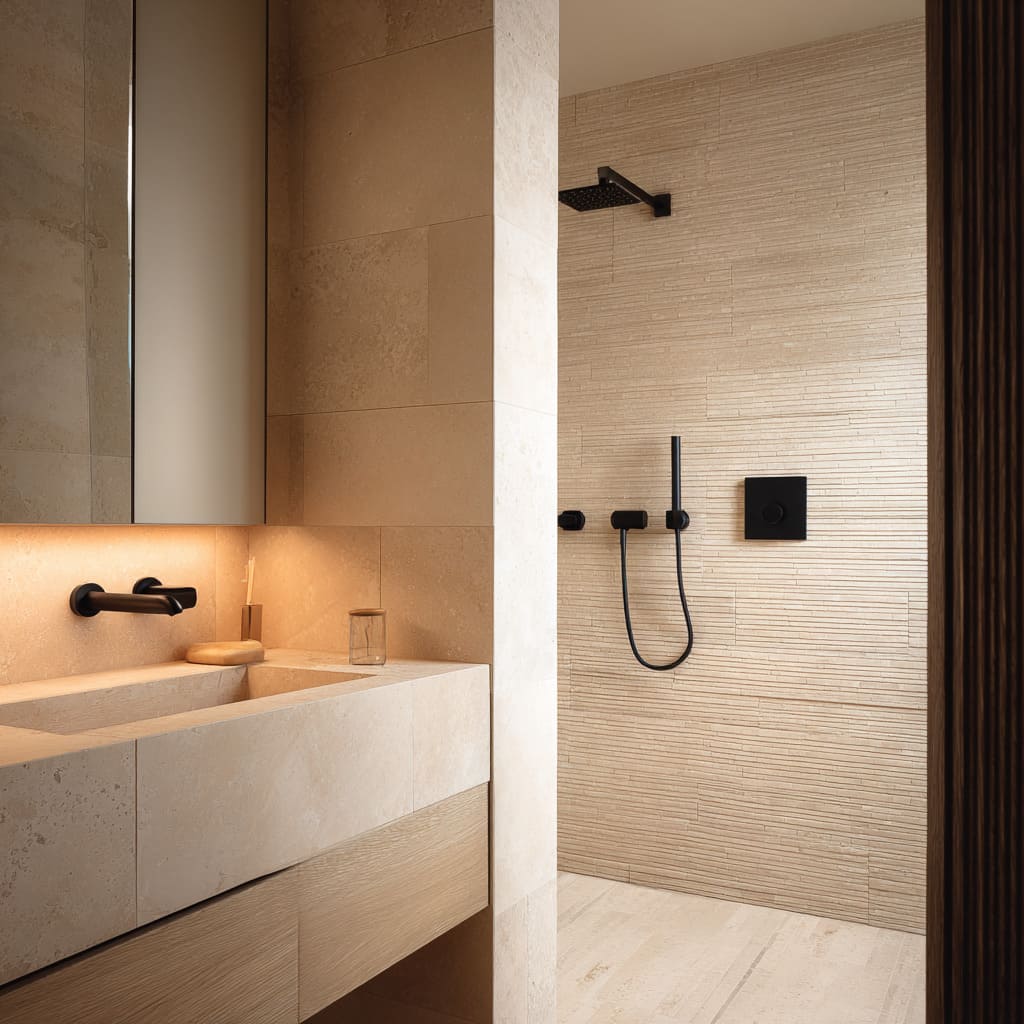
Hard Surfaces That Behave Like Soft Materials
A recurring strategy in successful beige bathrooms is the use of hard finishes that visually behave like fabric. Vertical ribbing, fluted stone, narrow tile strips, and directional veining create texture that reacts to light in a way similar to pleated drapery.
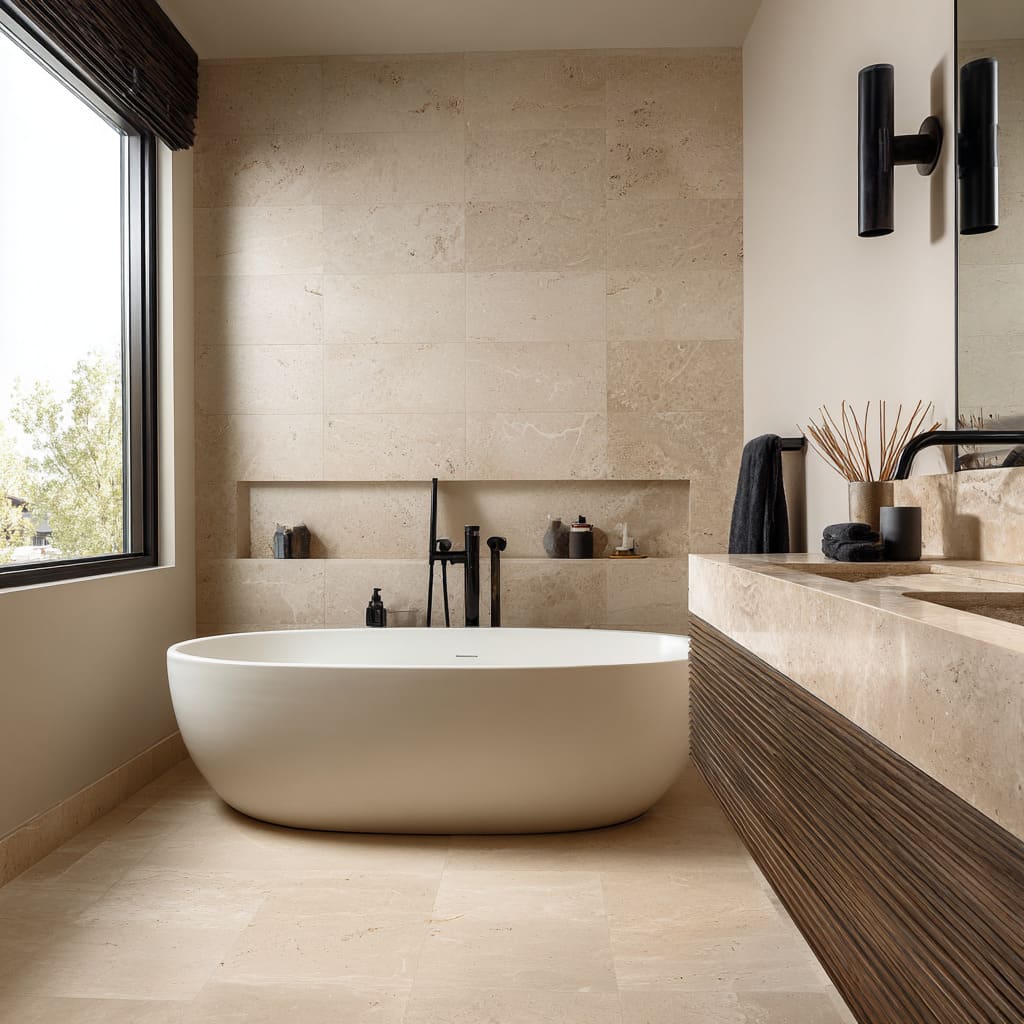
These surfaces introduce depth, rhythm, and softness without actual fabric. Light grazes their surfaces, producing gentle shadow patterns that change throughout the day.
In this way, stone and tile take on roles normally associated with textiles, allowing the bathroom to feel warm and layered while remaining practical. Small textile elements—towels, bench cushions, or baskets—are used sparingly but intentionally.
Rather than acting as decoration, they function as soft vertical or horizontal accents that relieve the dominance of hard surfaces.
Light as a Design Element
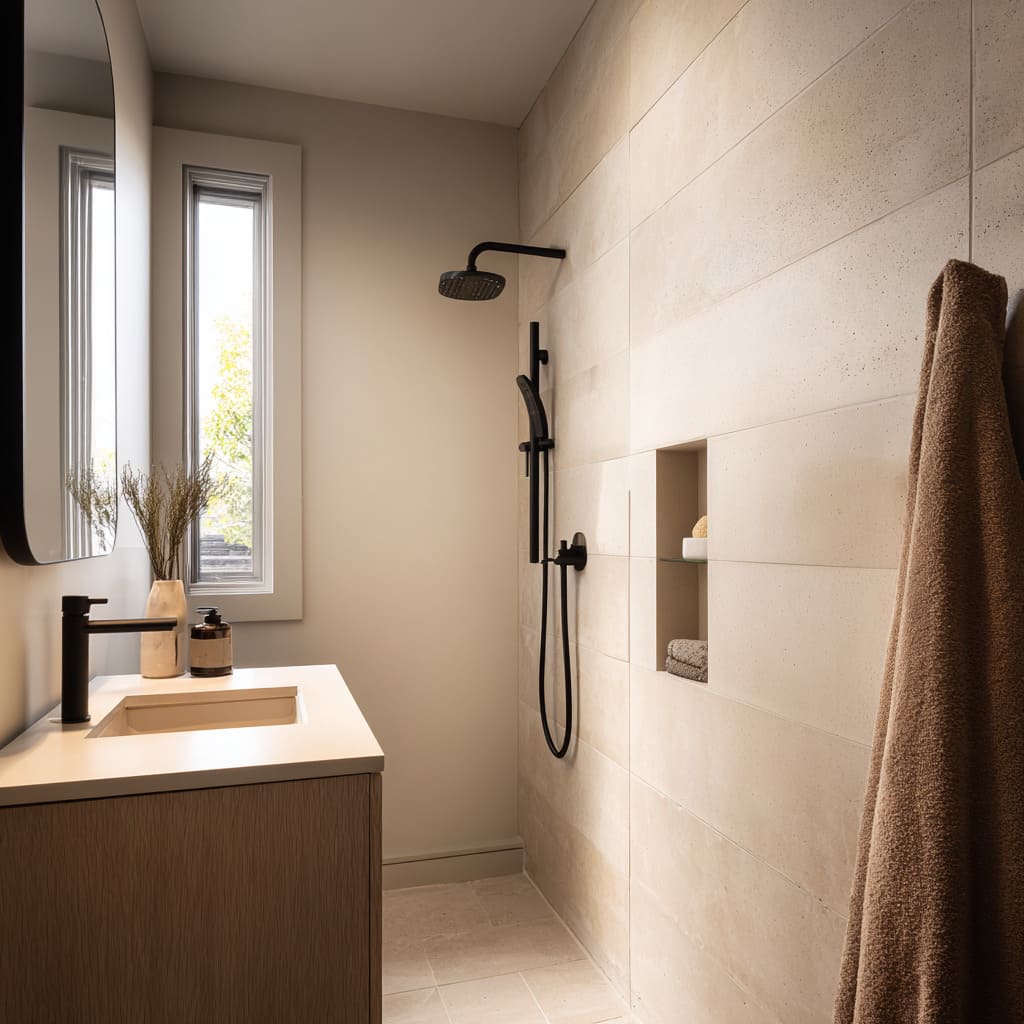
Lighting in beige bathrooms with black fixtures is rarely treated as a purely functional layer. Instead, light becomes a visual component of the composition.
Slim windows often act as luminous panels rather than view-focused openings, diffusing daylight into soft vertical or horizontal bands. Concealed light strips around mirrors or along walls provide gentle borders that replace the need for decorative contrast.
Wall-mounted lights are chosen for their shape and proportion as much as their glow, often reinforcing the same black geometry used throughout the room. The result is a space where light reinforces texture and form rather than drawing attention to itself.
Managing Visual Weight
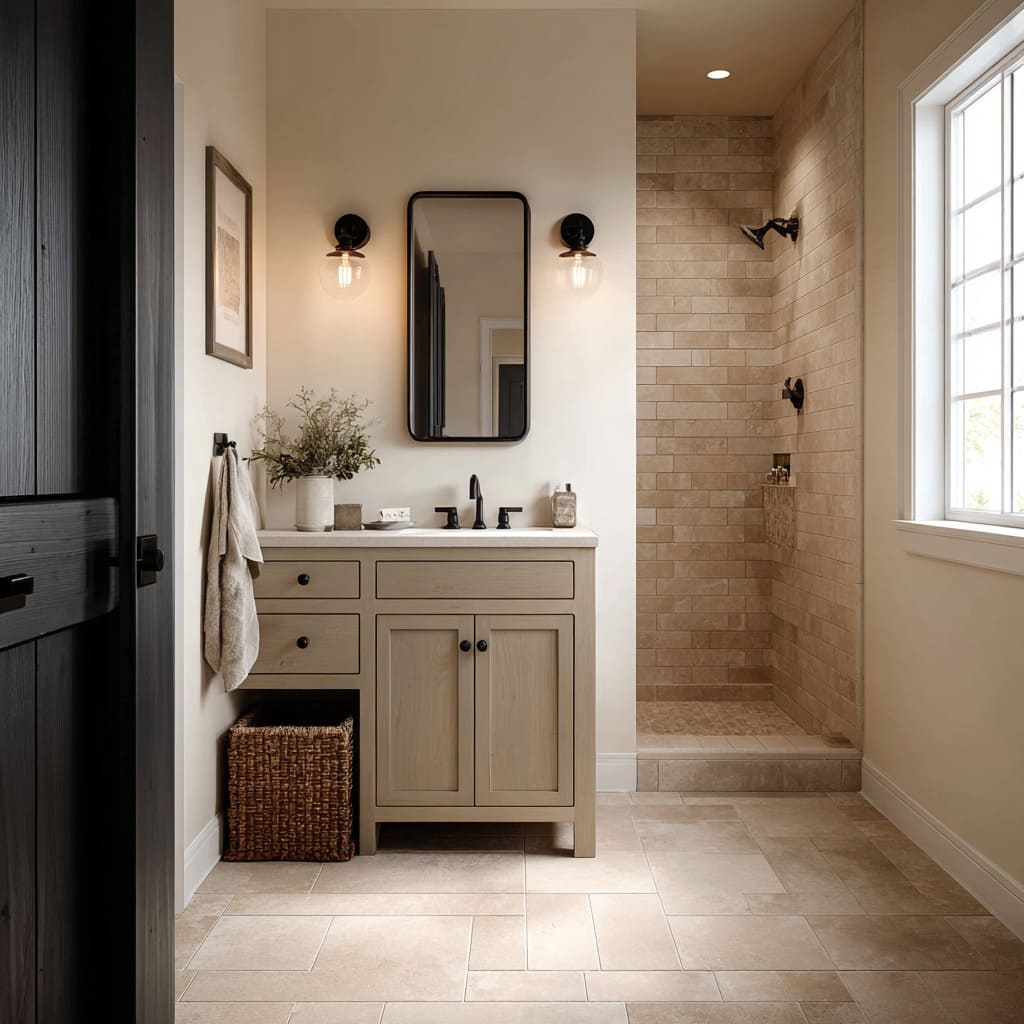
Beige bathroom designs frequently use substantial materials—thick stone counters, deep vanities, full-height tile walls—yet successful designs avoid heaviness through careful visual relief.
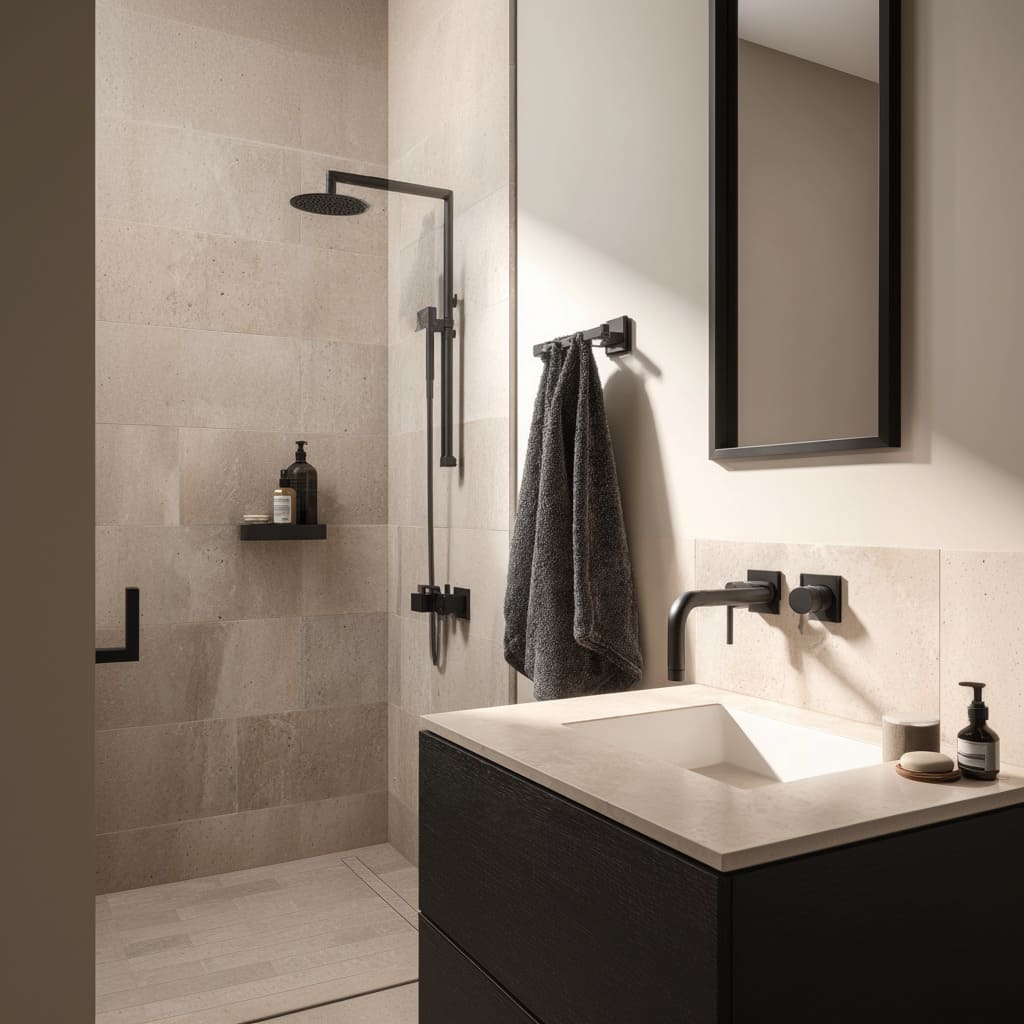
Floating elements, recessed shadow lines, and slight separations between planes introduce air and lightness. When sinks are carved from the same material as their counters or tubs are fully wrapped in stone, visual noise is reduced.
This simplicity allows black fixtures to stand out clearly without competing with joints, trims, or decorative transitions.
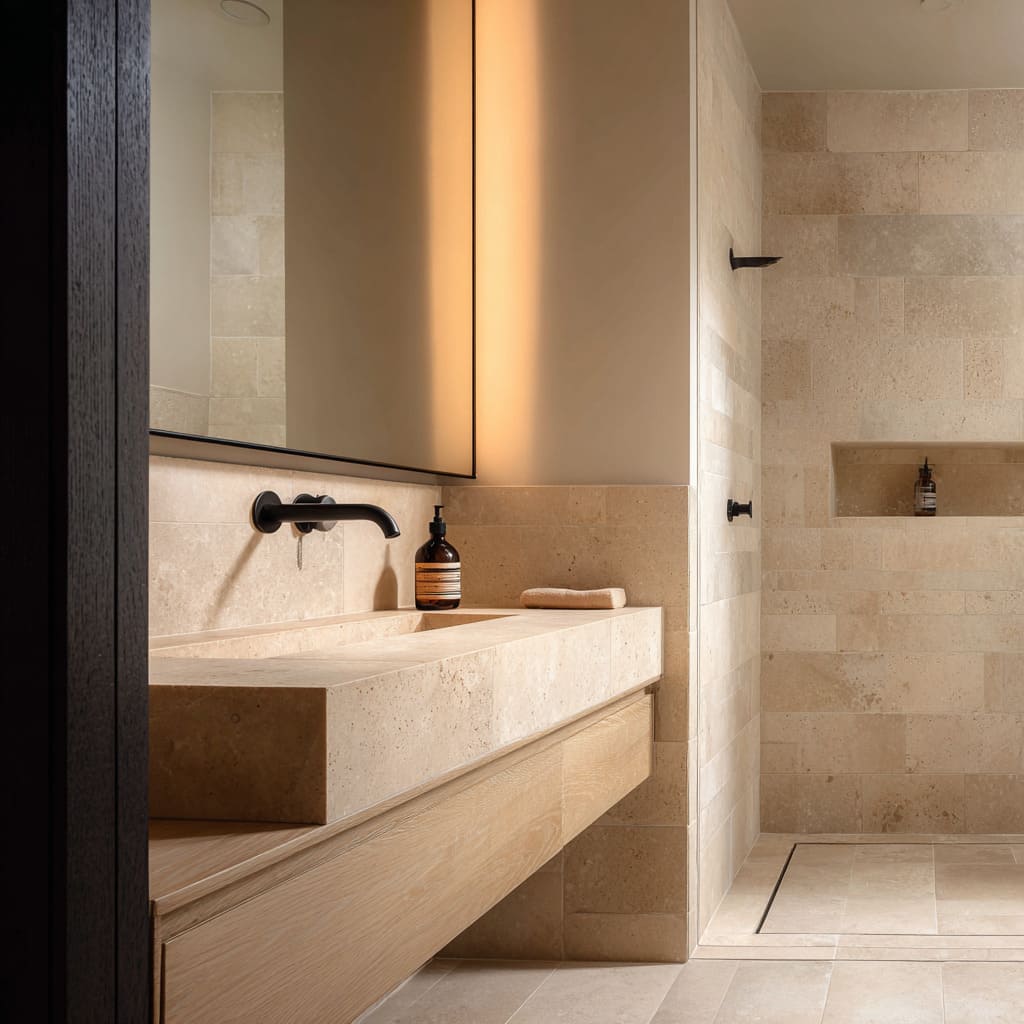
Controlled Color Expansion
Although beige and black form the core palette, most spaces introduce one or two additional tones to maintain warmth and balance. Natural wood adds depth and domestic character.
Greenery—either through plants or exterior views—acts as a living counterpoint to stone. Amber and brown accessories soften transitions between light and dark.
These additions are never scattered. They are grouped, restrained, and carefully chosen so that silhouette and material matter more than color variation.
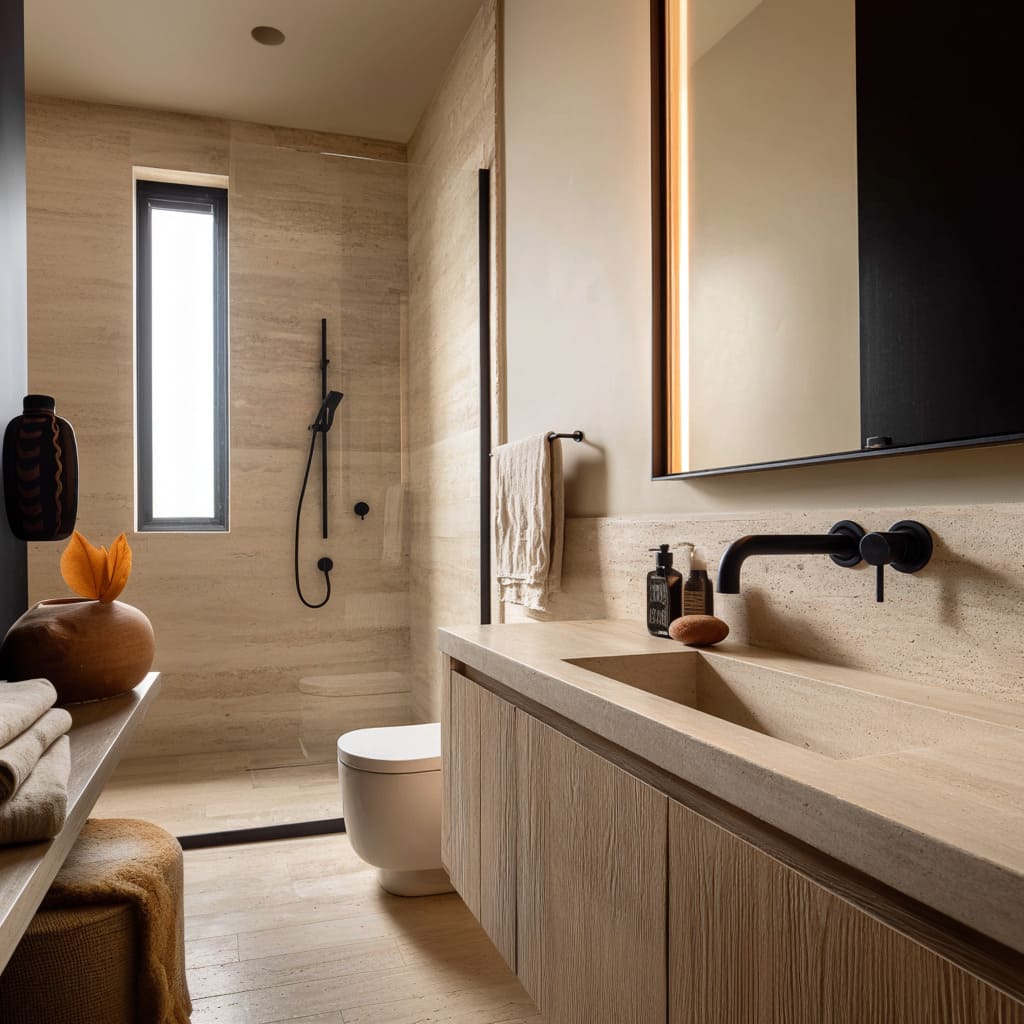
Editing as a Styling Strategy
A defining characteristic of refined beige bathrooms with black fixtures is restraint. Niches, shelves, and counters are styled with intention, often holding only one or two objects.
Accessories are grouped rather than spread, allowing negative space to play an active role in the composition. This edited approach prevents visual clutter from undermining the calm created by beige surfaces and black structure.
Each object earns its place, reinforcing the room’s overall clarity.
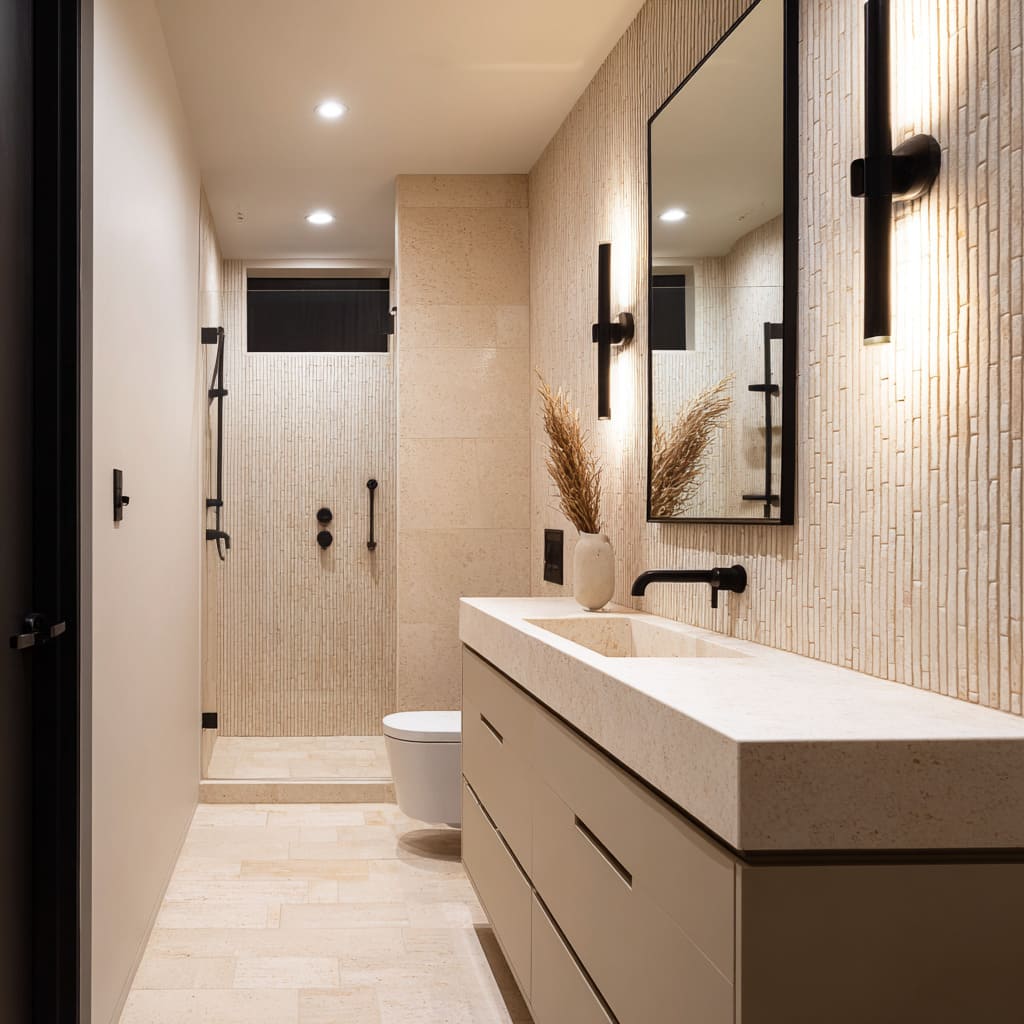
Spatial Perception and Proportion Control
Black elements subtly correct spatial challenges. Vertical fixtures and frames encourage the eye upward, improving perceived height.
Horizontal lines in stone or niches emphasize length, turning narrow rooms into composed corridors rather than awkward passages. Because black is used consistently and sparingly, these adjustments feel natural rather than forced.
The room reads as measured and intentional, even when the footprint is modest.
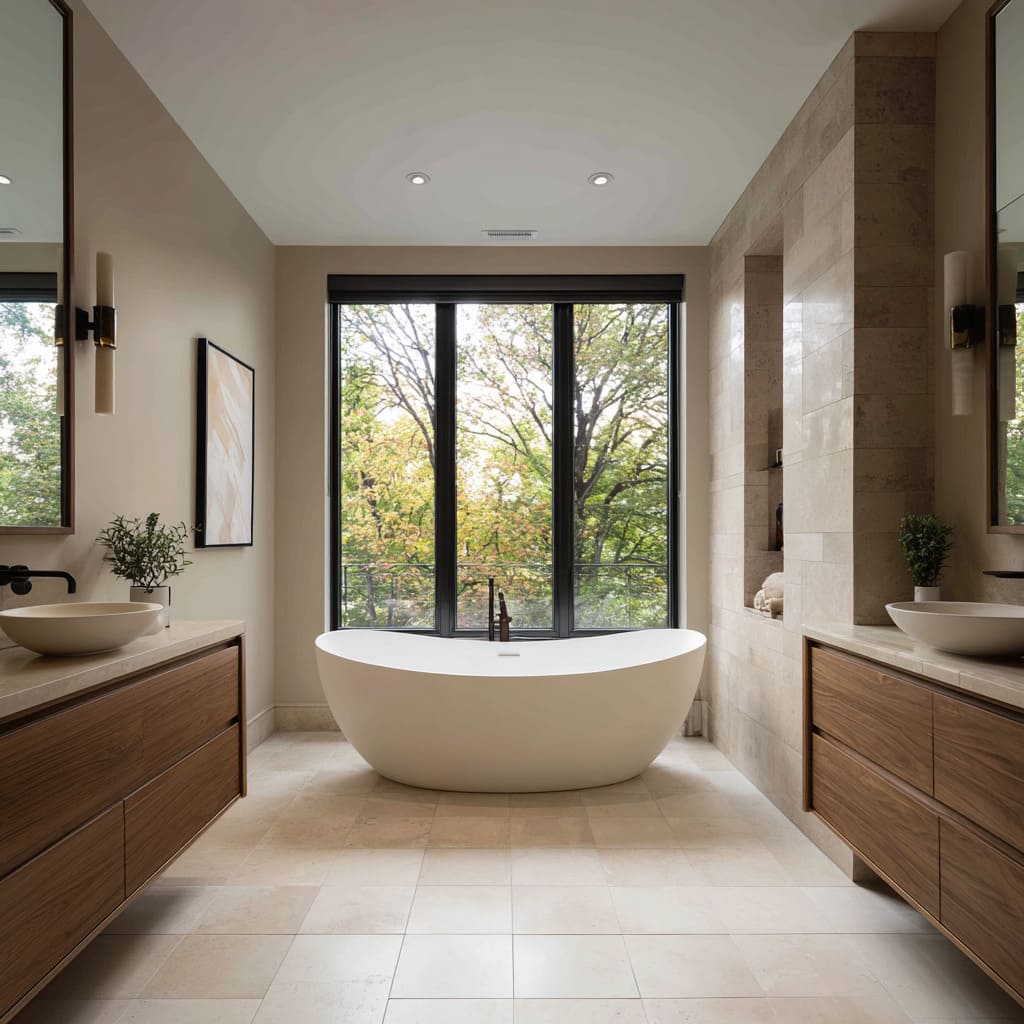
Borrowing Ideas from Living Spaces
Many beige bathroom interior designs quietly borrow ideas from bedrooms and living areas. Feature walls behind vanities echo headboard compositions.
Vertical textures replace fabric panels. Lighting choices resemble bedside or dressing-area lighting rather than traditional bathroom fixtures.
This crossover explains why such designs feel calm and personal rather than strictly utilitarian. The bathroom becomes part of the home’s emotional landscape, not an isolated zone.
Key Ideas for Beige Bathrooms with Black Fixtures
- Beige works best as a layered visual field, not a single flat finish
- Black fixtures should be treated as a coordinated system of lines and points
- Shape consistency is more important than decorative detail
- Stone and tile can provide softness through texture and light interaction
- Lighting should define edges and surfaces, not compete with them
- Large elements feel lighter when lifted, recessed, or visually edited
- Accessories should support structure, not distract from it
When applied with discipline, beige bathrooms with black fixtures achieve a rare balance: calm without blandness, contrast without aggression, and comfort without excess. The result is a space that feels thoughtful, grounded, and quietly refined—built on visual logic rather than trend-driven decoration.
Related Posts

Harmony Home Design brings 10+ years of residential interior design experience to the ideas shared here. We publish design concepts, layout thinking, and practical styling notes.