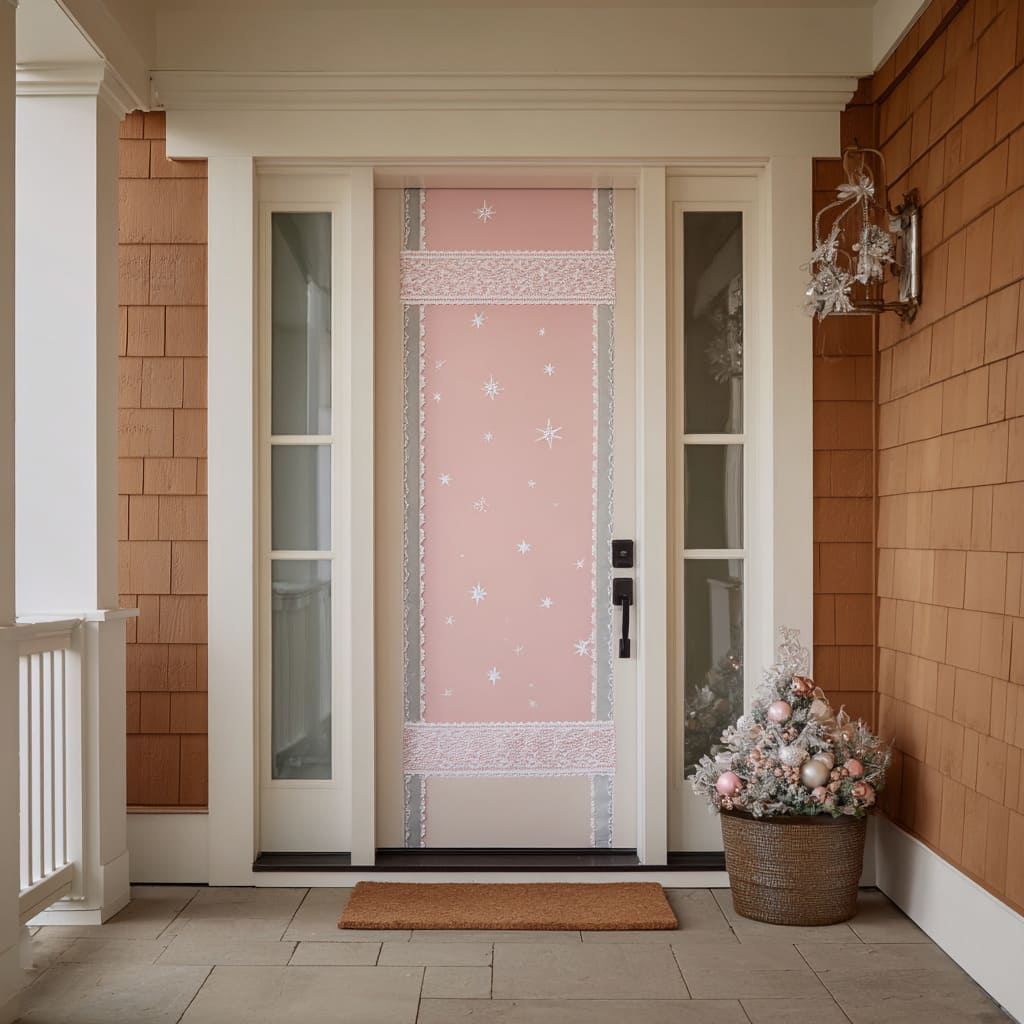
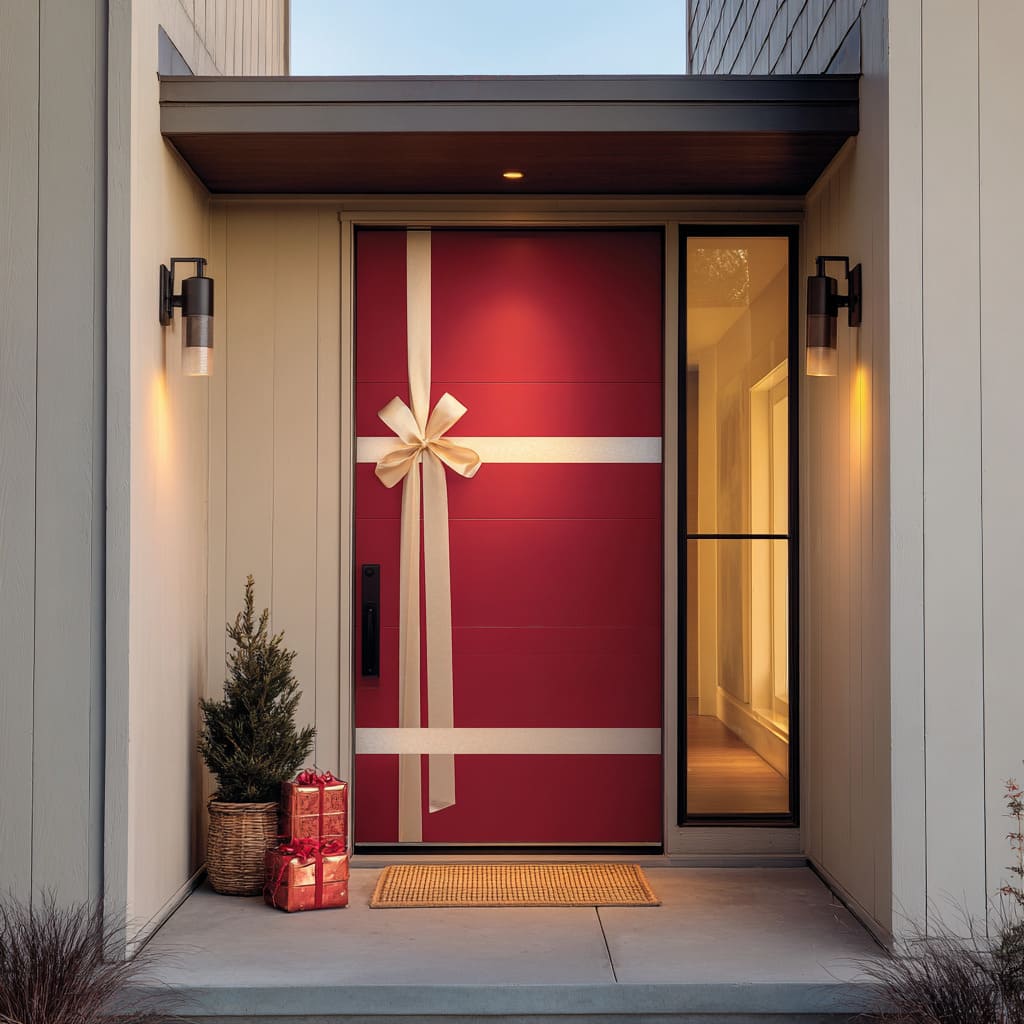
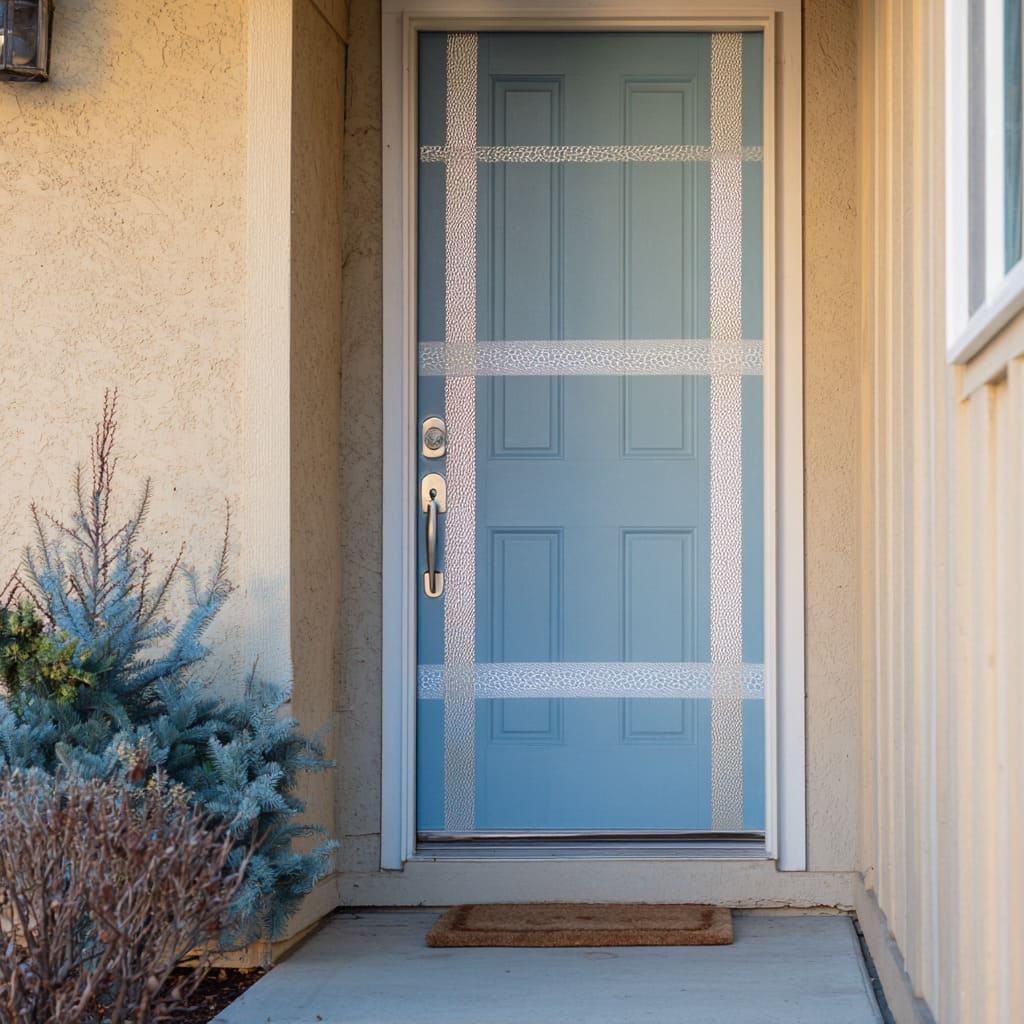
Holiday thresholds often fall into three distinct visual personalities, and recognizing these broad families reveals why certain entrances feel soft, bold, or storybook-like even when the components remain minimal. First, there are the door decorating ideas that behave like full-scale wrapped gifts—broad vertical and horizontal bands, generous bows, large fields of clear color.
These doors treat the entrance plane as a single, dramatic surface that becomes the holiday message. Second, there are the door ideas that adopt the smaller attitude of accessories—slim ribbon stripes, small textile details, and delicate lace borders.
These feel like scarves, sashes, or soft trims added to the architecture, drawing attention without overpowering it.
Third, there are the door ideas where the surface itself becomes a decorative panel. Here the holiday story is embedded in star motifs, gingerbread borders, snowflake patterns, mesh frames, or pastel skies.
These three personalities form the conceptual backbone for many simple front door Christmas decorations ideas, helping shape not only the door’s mood but the entire porch atmosphere.
Lace as a Quiet Architectural Device
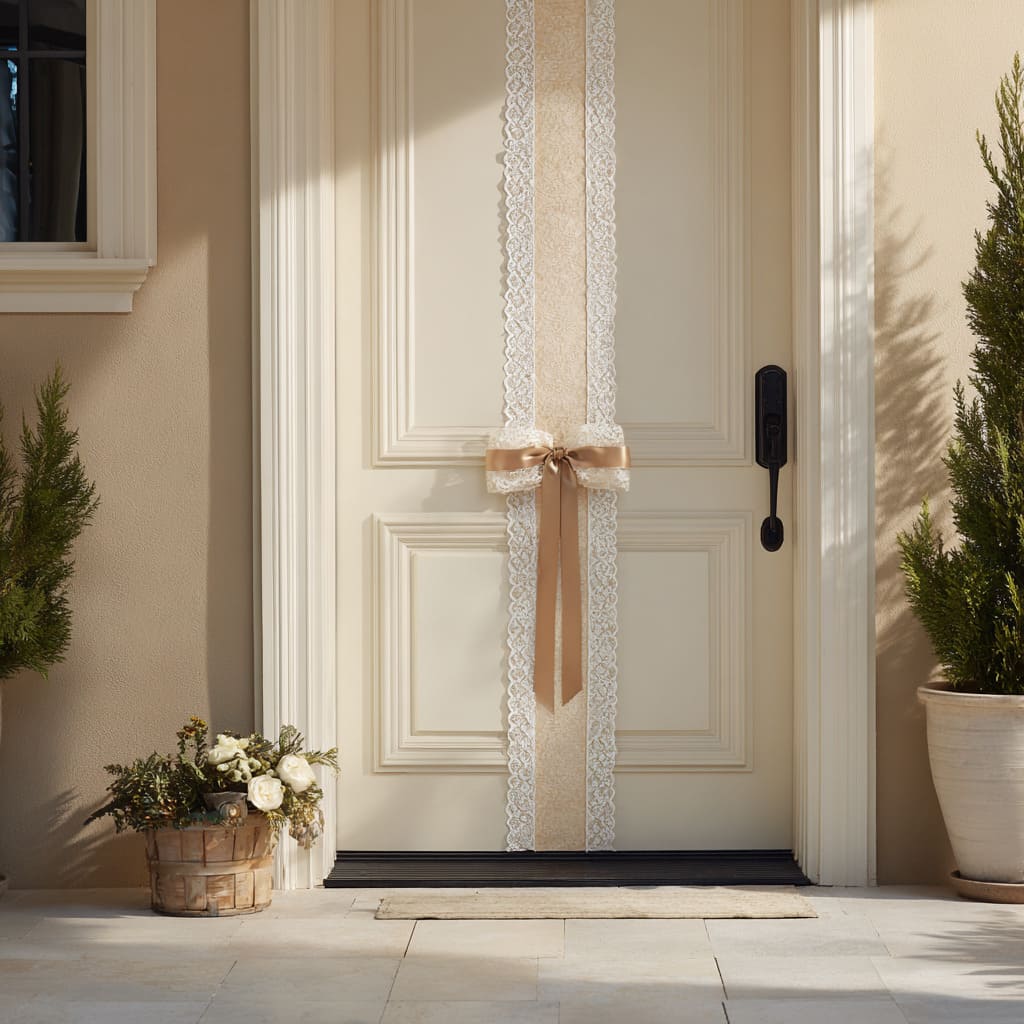
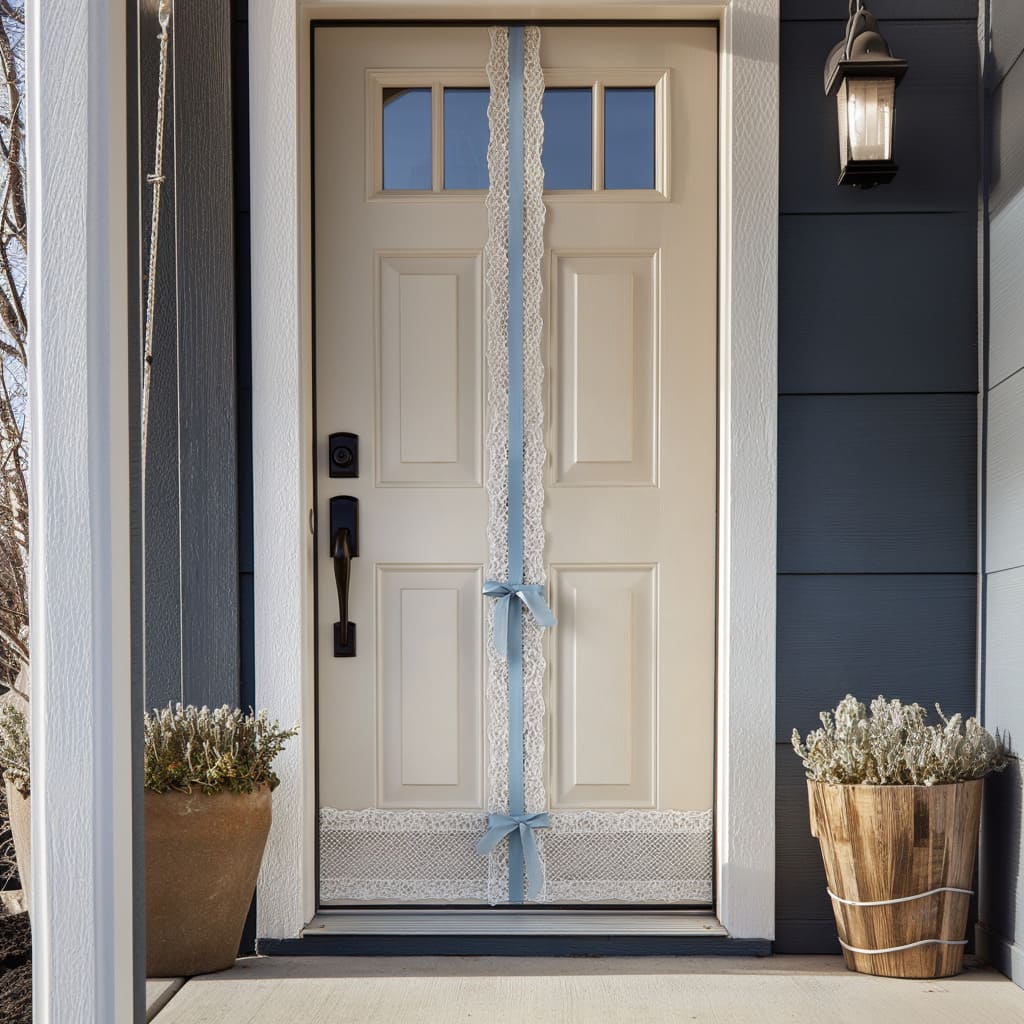
Though lace often appears ornamental, it can behave visually like a form of temporary architecture. Its placement often echoes classical elements: a horizontal lace band acts like a soft cornice, a bottom strip becomes a frosty baseboard, and twin vertical lace lines imitate slender pilasters.
Because lace catches daylight and expands into a bright edge from afar, it can outline panel geometry without relying on high contrast.
Visual Work Lace Performs
- Framing: Lace borders create inner frames that sit just inside the existing trim, intensifying the sense of depth.
- Softening: Scalloped or openwork lace softens rigid siding lines, giving the threshold a delicate winter glow.
- Pattern Rhythm: Lace patterns often mirror the door’s panel rhythm, turning strict geometry into something more textile-like. This architectural role explains why lace-based simple Christmas front door decorations ideas feel surprisingly structured rather than frilly—lace turns into a visual anchor rather than a decorative afterthought.
Vertical Bands as Height Managers and Mood Shapers
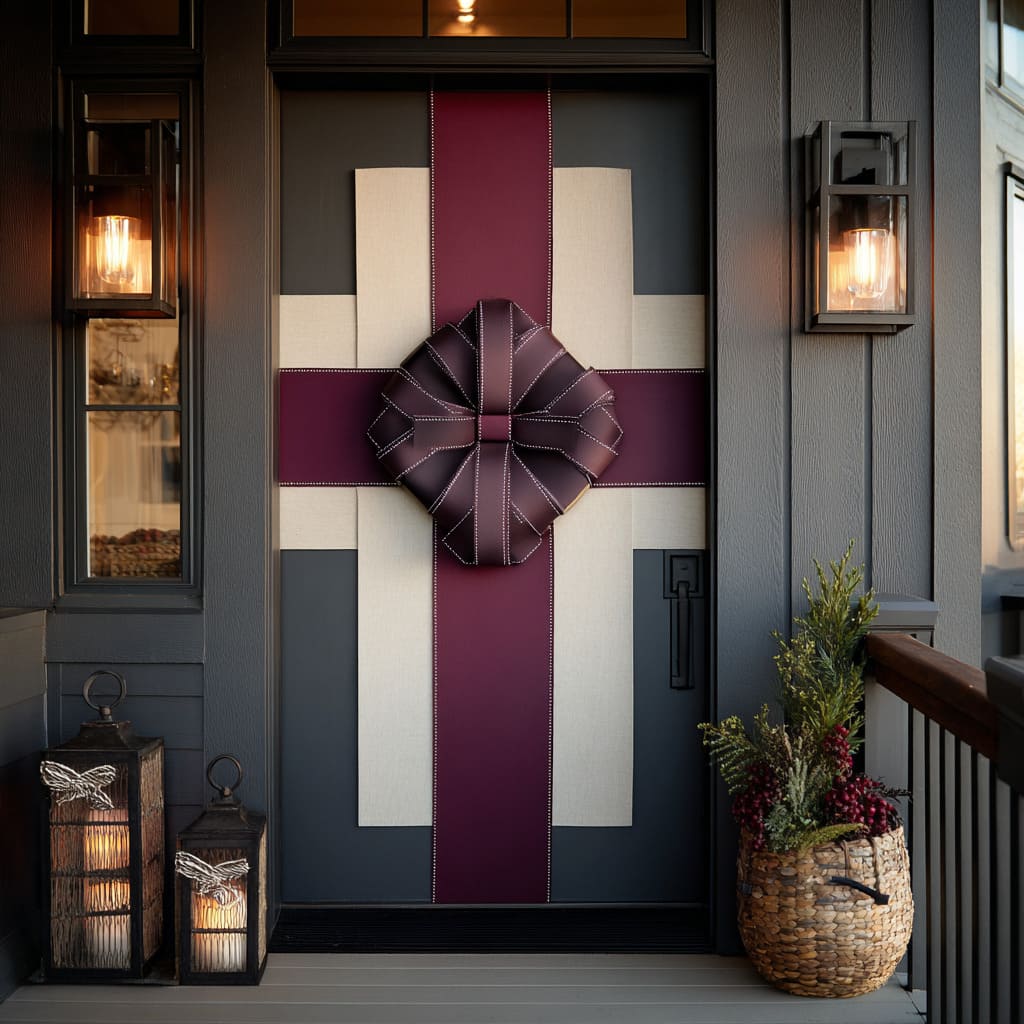
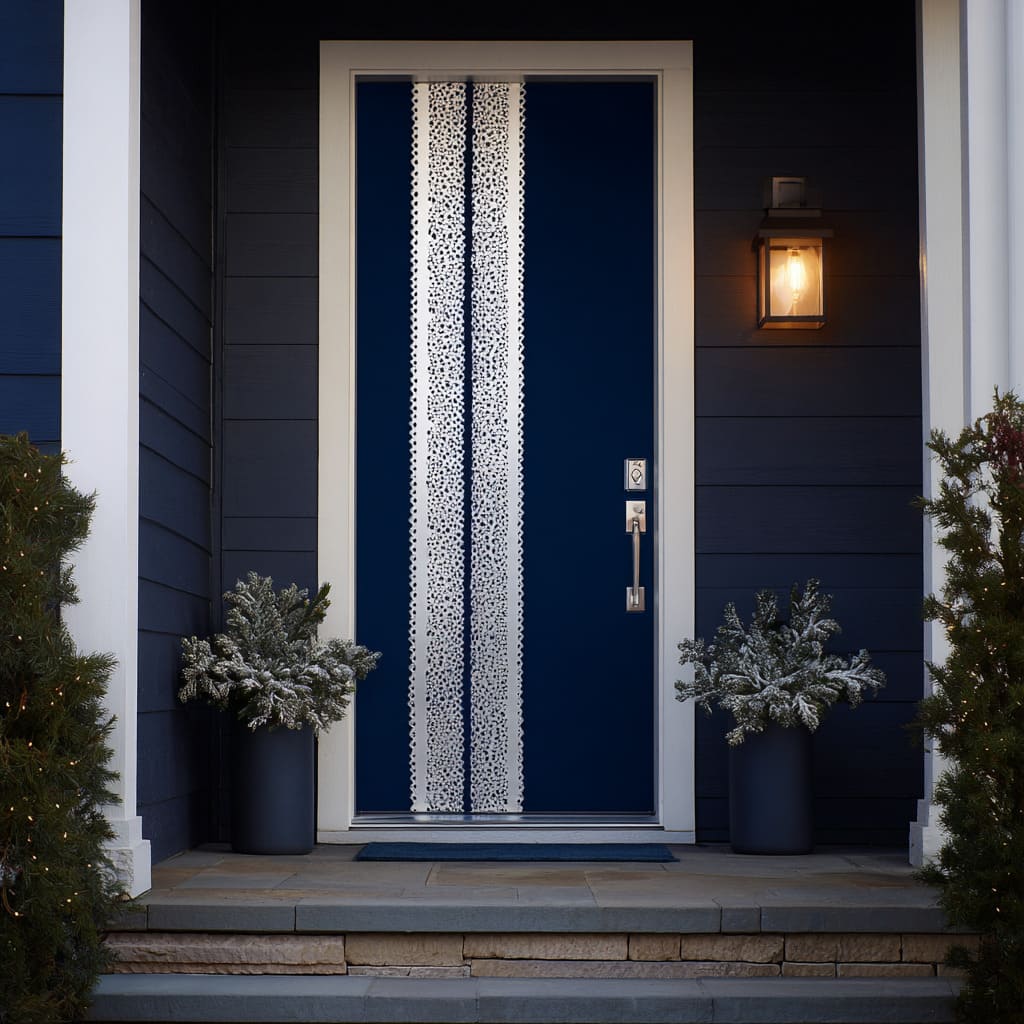
Vertical stripes—wide, narrow, centered, or asymmetrical—shape the emotional reading of a door long before one notices pattern or texture. A broad vertical band on a tall door slows the viewer’s gaze, stretching the height and giving the entrance a calm, elongated presence.
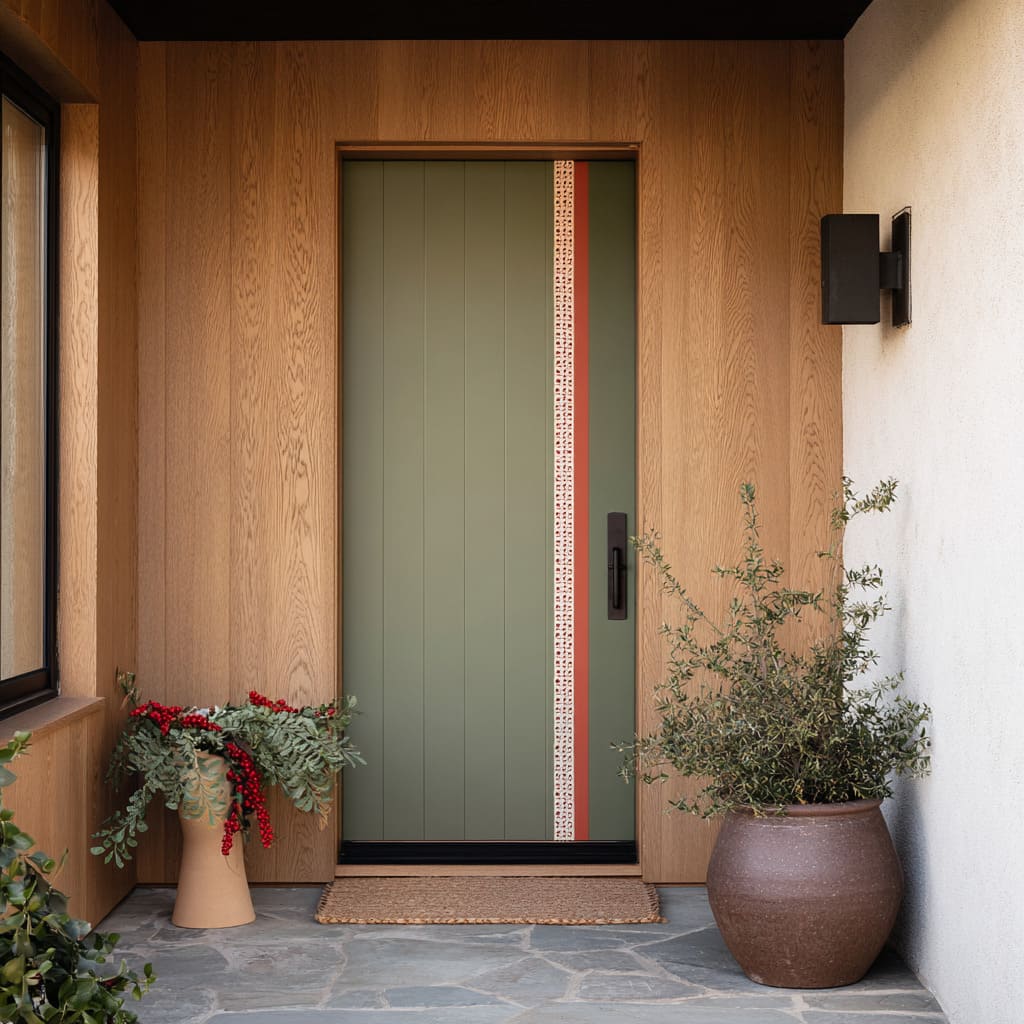
A slim off-center stripe adds contemporary tension, making the door feel like a fashion piece rather than a holiday package.
Why Vertical Bands Matter
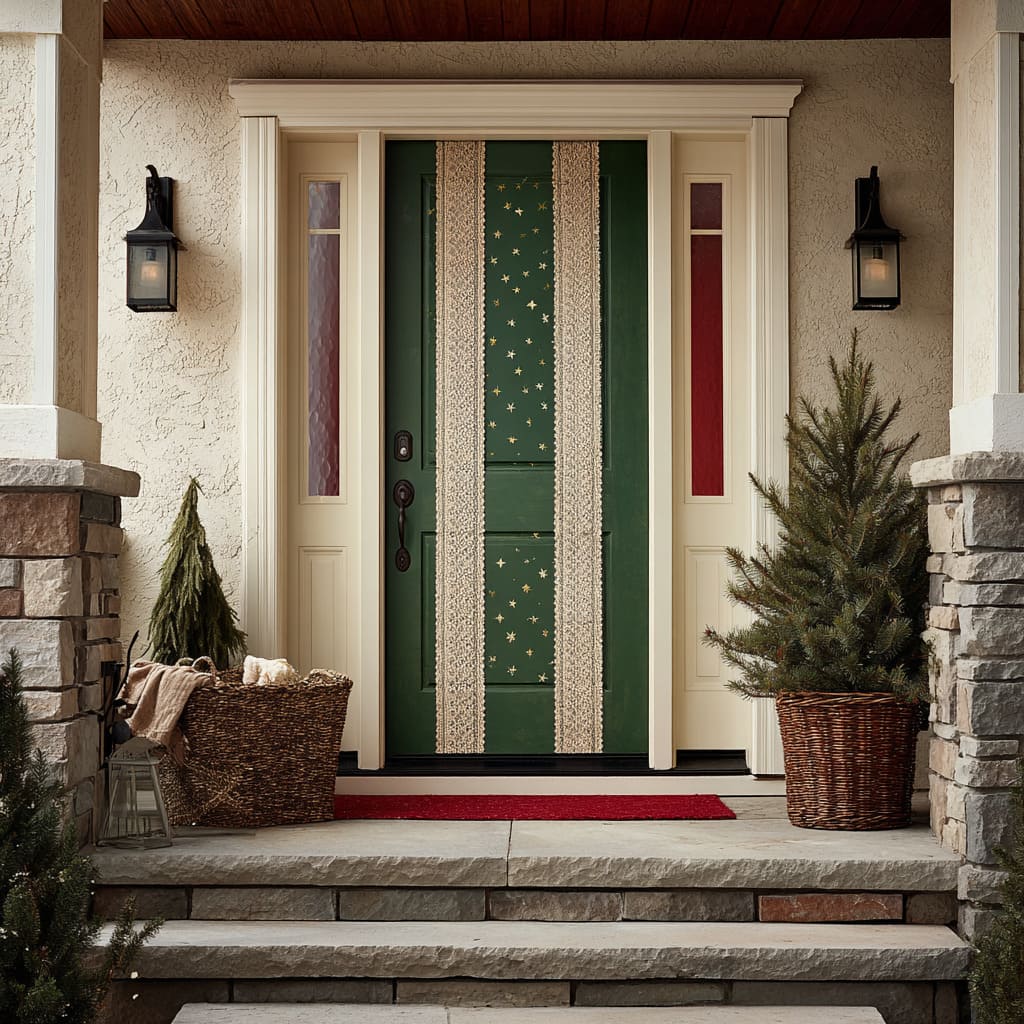
- They balance wide porch elements, especially when sidelights or large trim risk making the door appear small.
- They create visual ceremony, guiding the eye from threshold to top rail, especially when paired with matching mats or plants.
- They focus the composition, ensuring the rest of the porch—planters, lanterns, rails—feels like supporting cast.
This is the subtle power behind many Christmas front door ideas: a single line becomes the main mood, while supporting objects quietly harmonize with that central gesture.
Palette Logic and the Influence of Regional Light
Many holiday door schemes reveal an unspoken relationship with climate and regional light. Soft neutrals—creams, sand tones, warm whites—often appear in areas where winter light is golden and mild, creating calm, sun-washed entrances that rely on lace, fabric, and natural greenery for seasonal impact.
Meanwhile, cooler palettes—blues, icy whites, silver hardware—suggest crisp winter air even when real frost is absent.
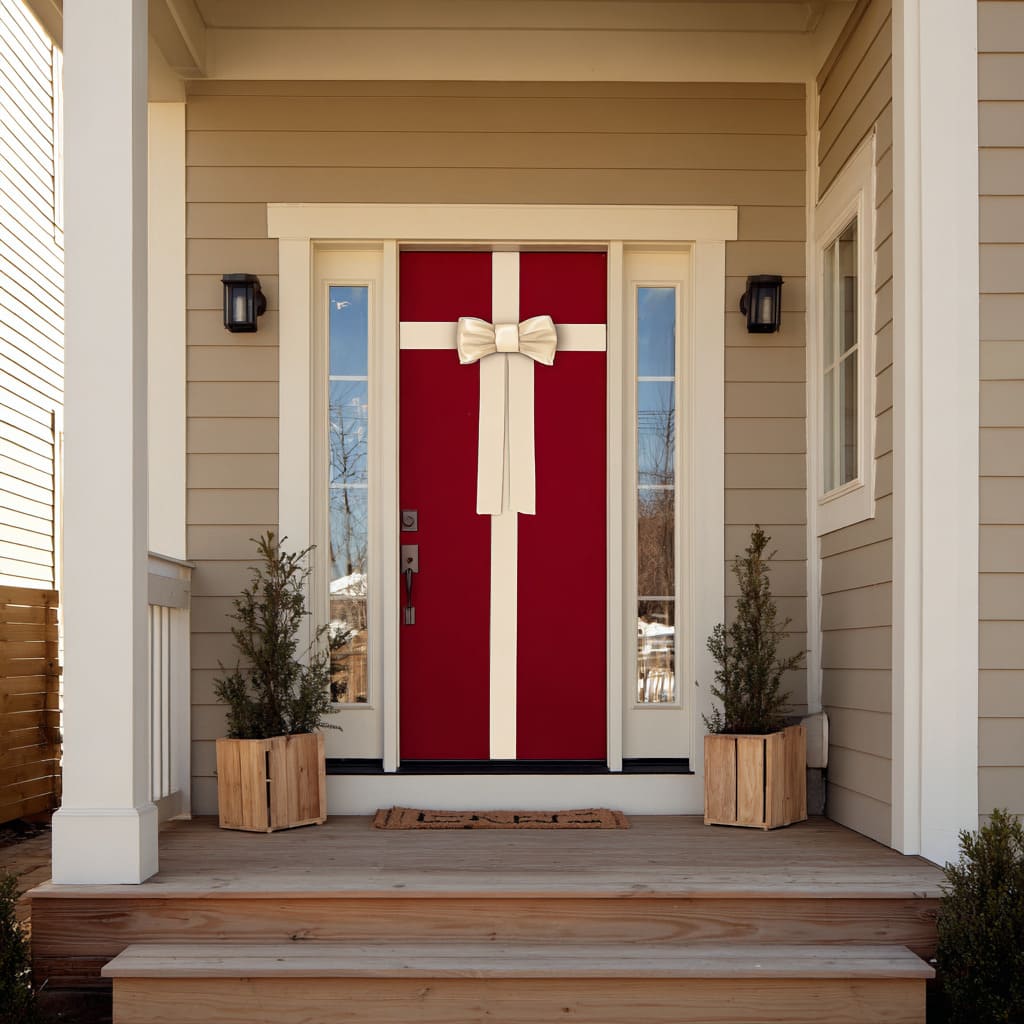
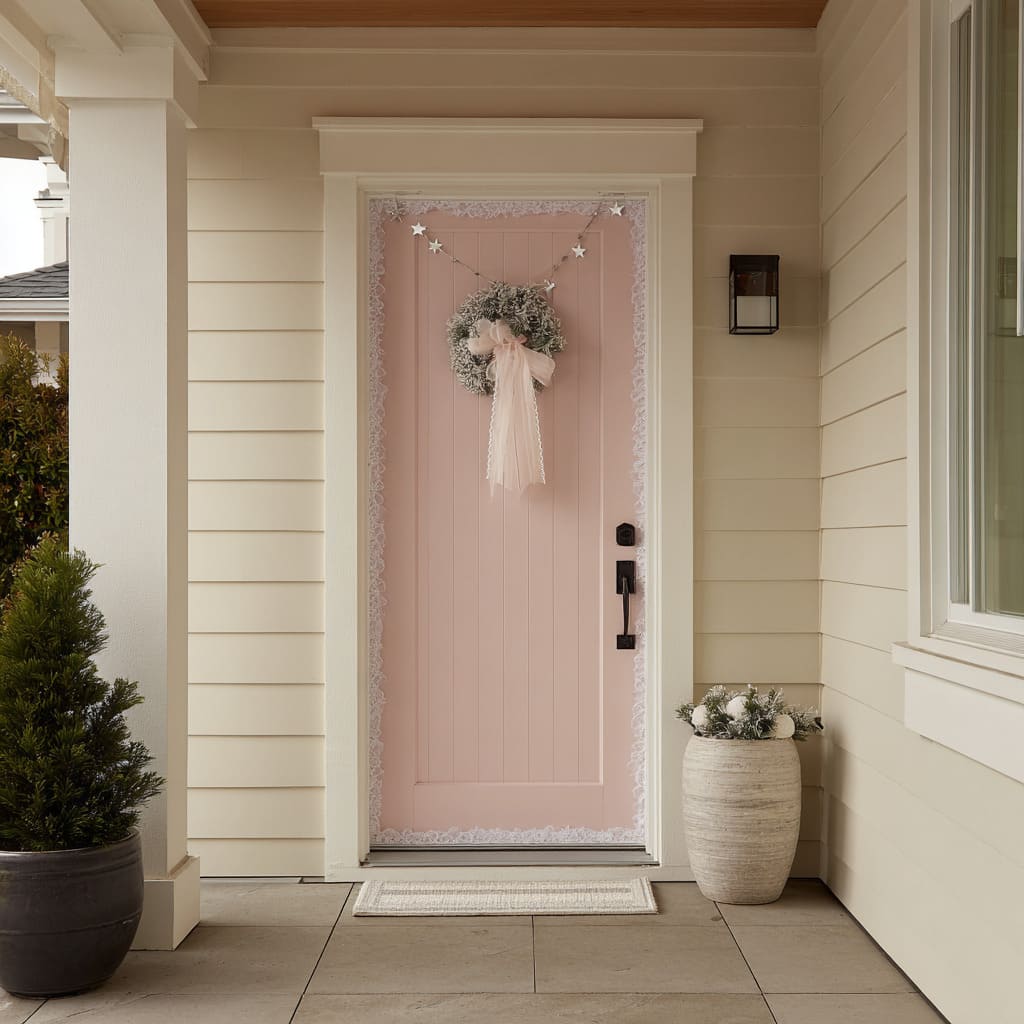
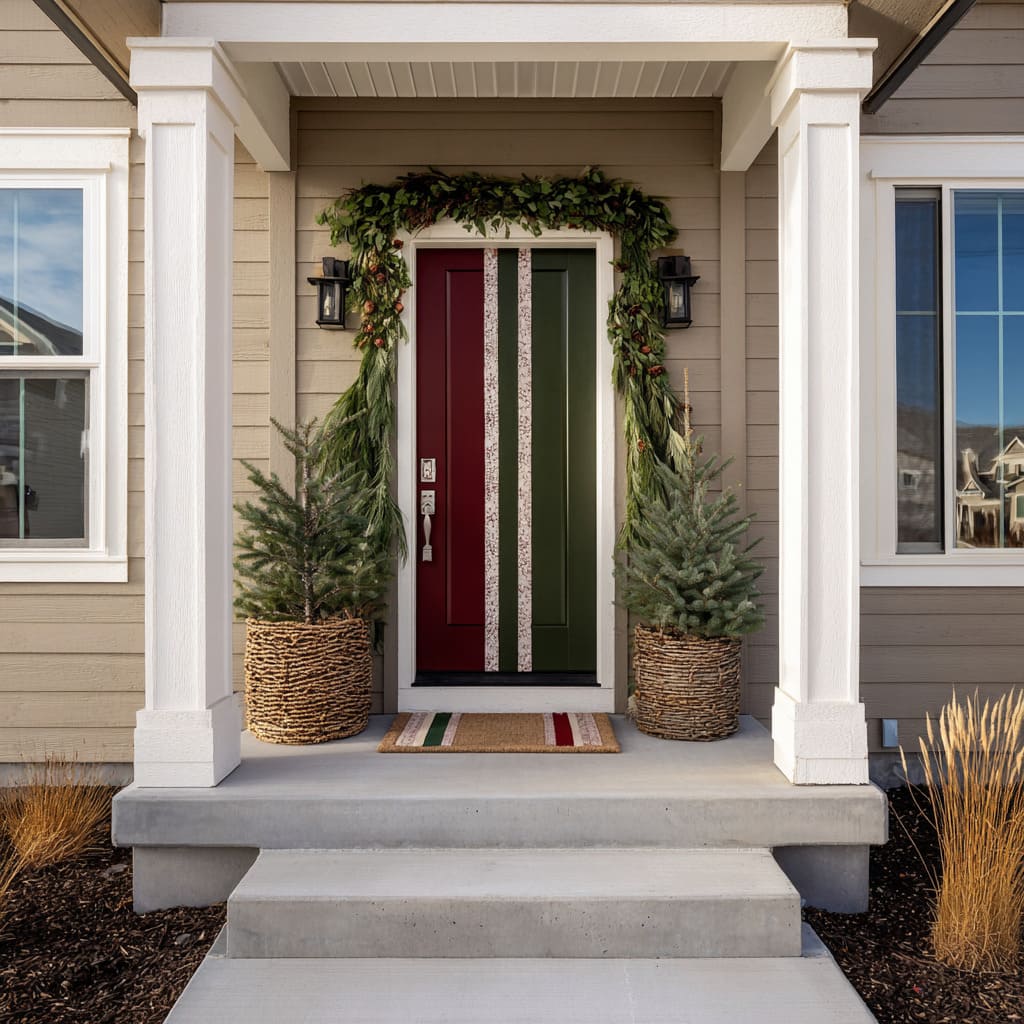
Some door ideas explore pastel storytelling, using blush fields or pink panels dusted with white stars to create a gentle confection-like mood that still feels grounded thanks to cedar shingles, textured stone, or warm siding. Others prefer disciplined classic colors—deep greens paired with narrow stripes of red, or red doors wrapped with cream ribbons—retaining tradition while avoiding visual heaviness.
This palette awareness transforms ordinary setups into cohesive front door Christmas decorations, shaped not by climate constraints but by an intuitive reading of light and tone.
Storytelling Doors and Symbolic Surface Languages
Beyond color, several doors use holiday motifs as surface narratives. Starry doors turn recessed panels into vertical night-sky windows.
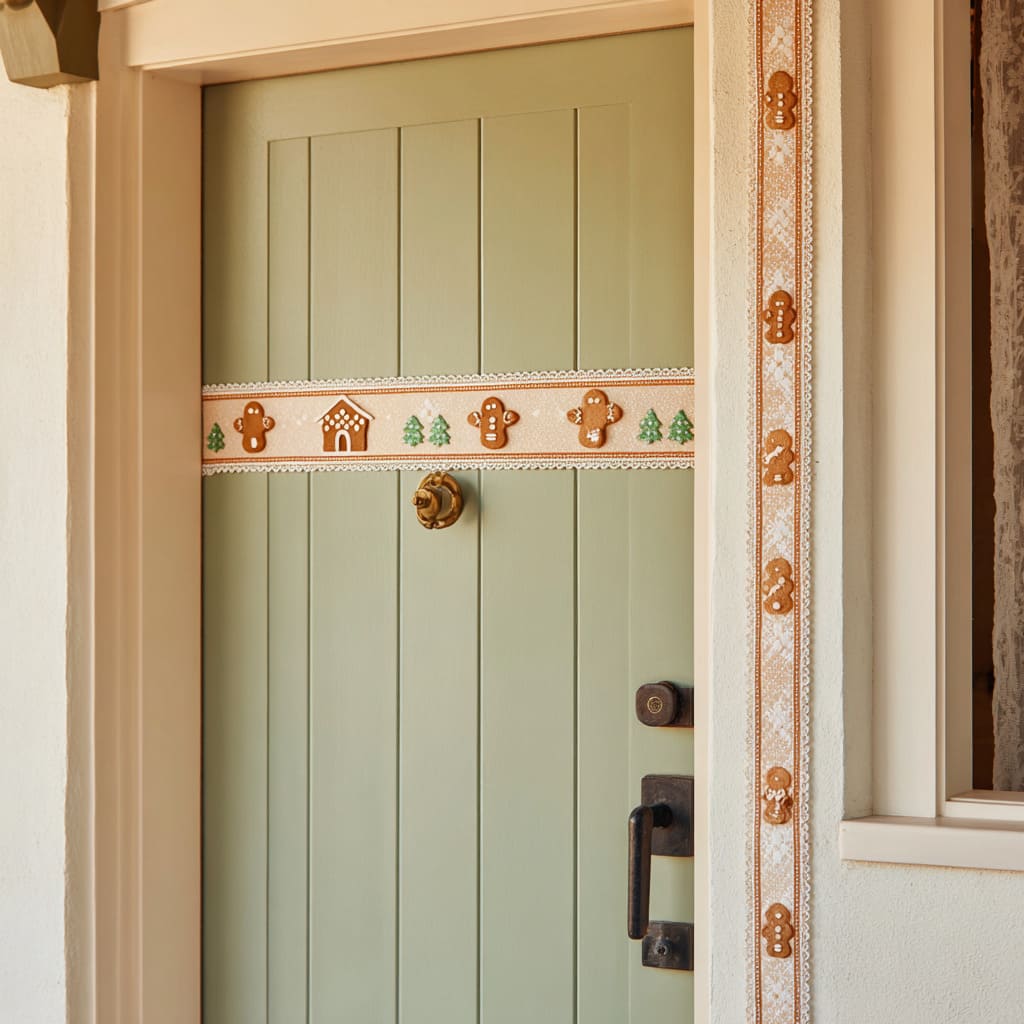
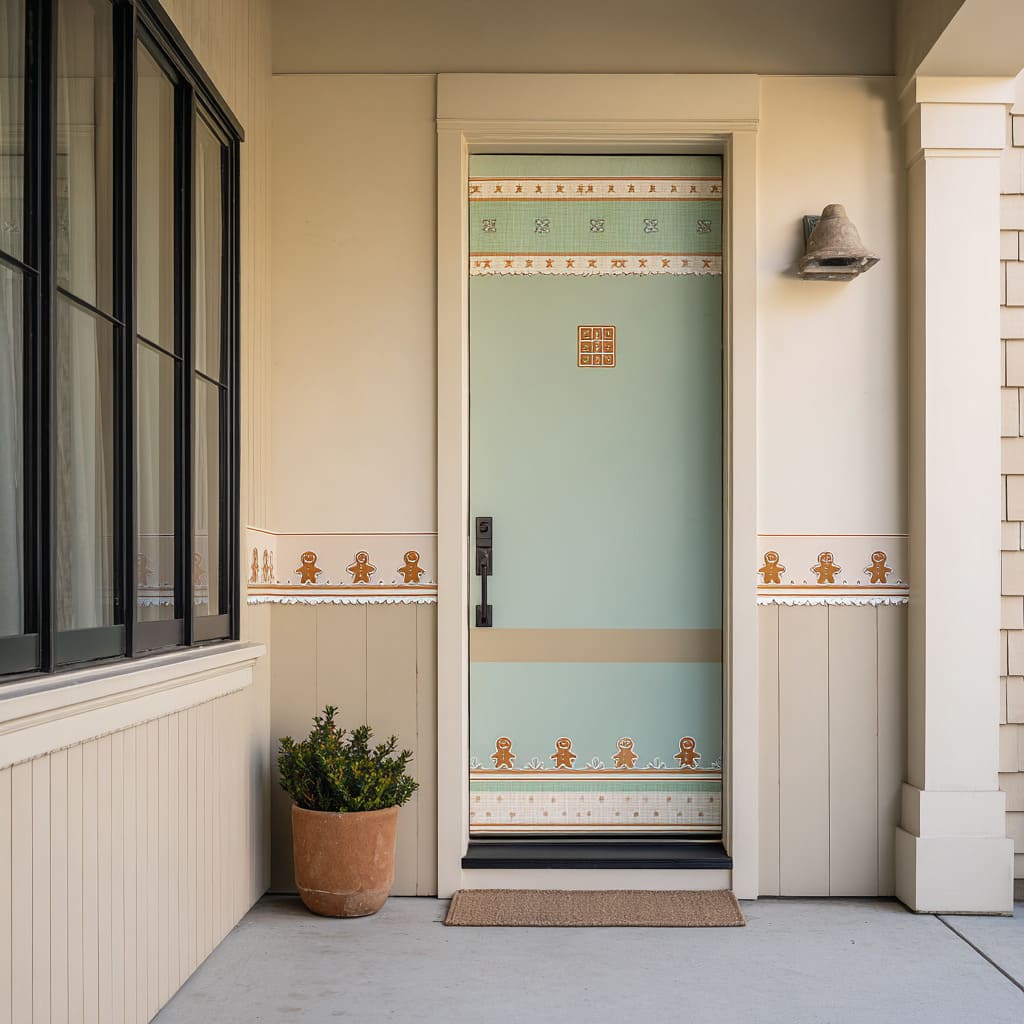
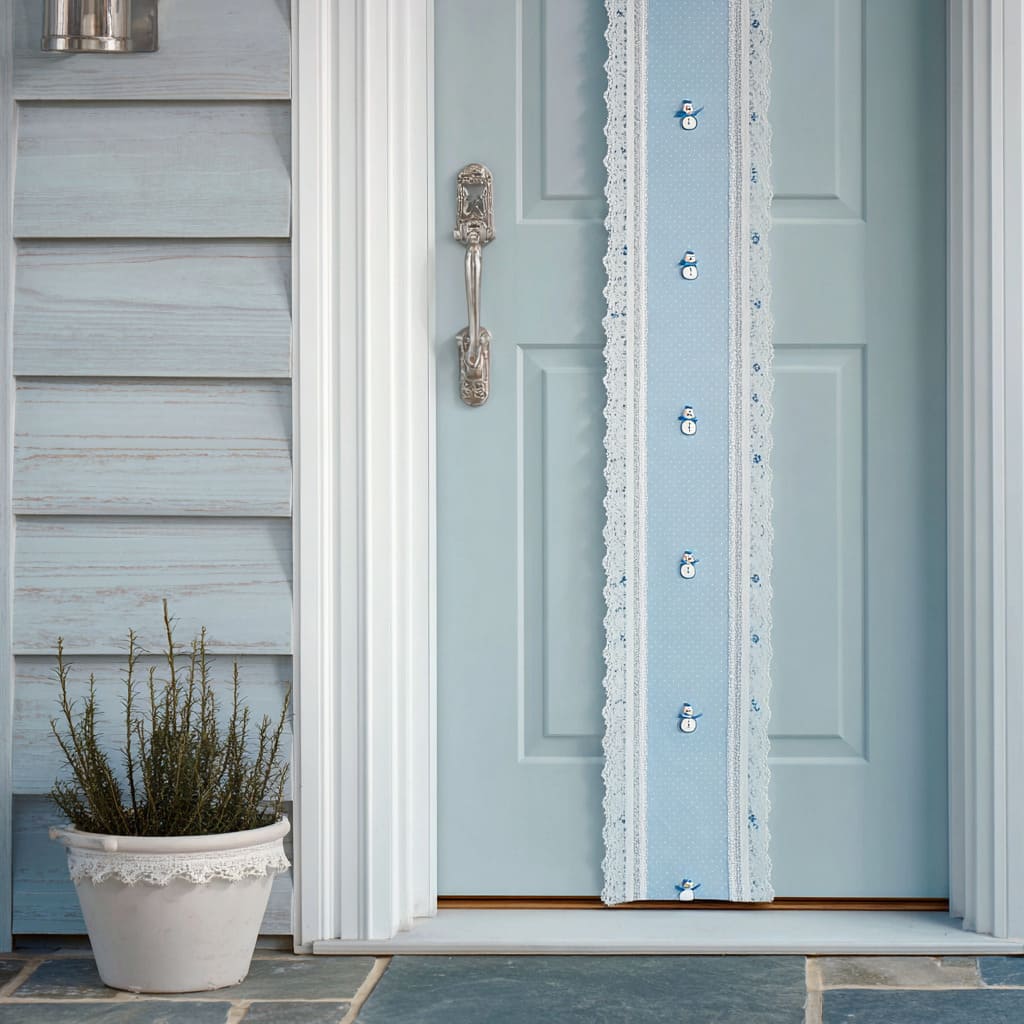
Gingerbread figures march along wainscot lines like miniature friezes. Snowmen appear in a neat vertical procession, acknowledging each panel step as though the door were a page in a seasonal storybook.
Three Main Narrative Modes
- Celestial Stories: Stars sprinkled across green or navy fields create a gentle nighttime scene framed by lace columns.
- Folklore Bands: Gingerbread borders wrap around walls and frames, turning architecture into a continuous illustrated strip.
- Miniature Characters: Snowmen motifs add playful rhythm while keeping the overall scheme visually disciplined.
Such surface languages show how simple Christmas door decorations can carry rich storytelling without many objects—just repetition, scale control, and a willingness to treat the door as a canvas instead of a mere backdrop.
Supporting Elements as Visual Punctuation
Every well-balanced holiday porch relies on supporting elements—plants, baskets, lanterns, textiles—that behave like punctuation marks in a sentence. Their presence clarifies the grammar of the door’s visual story.
Plants as Echoes
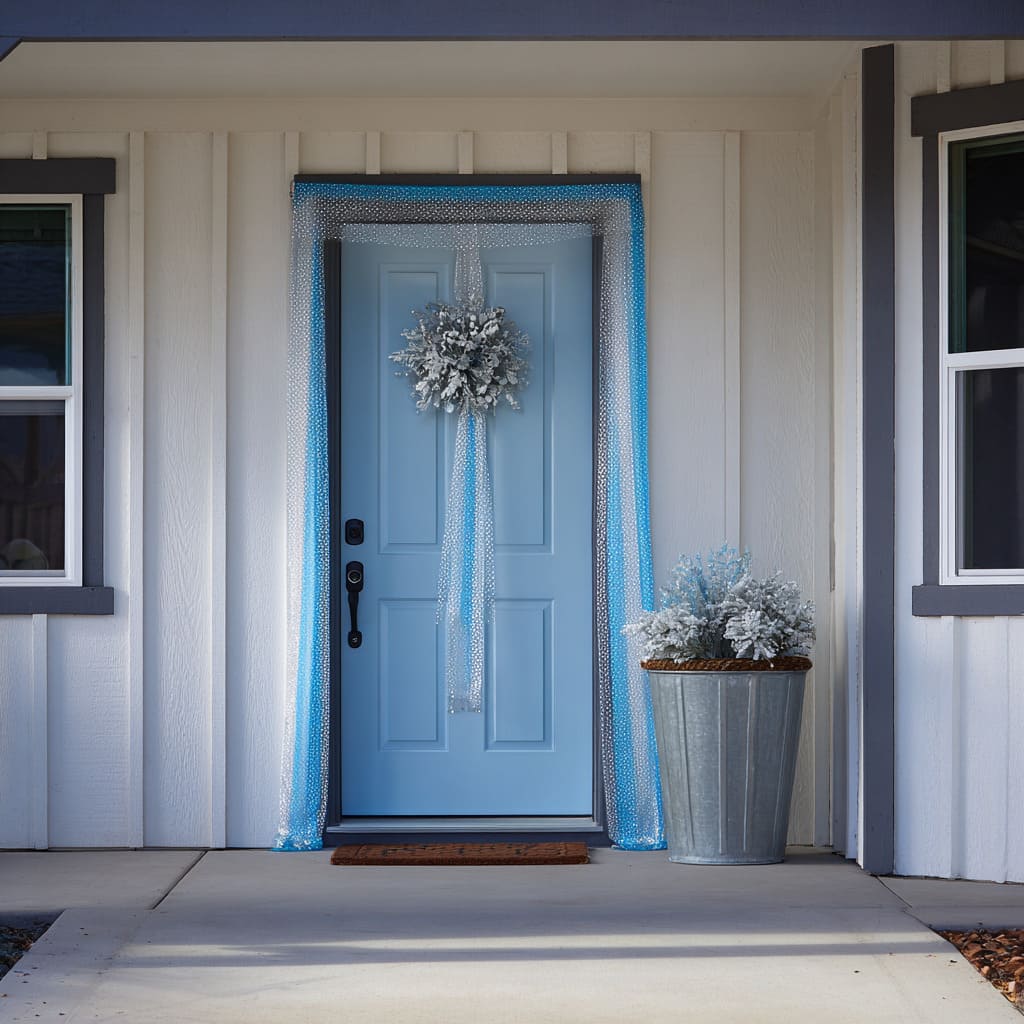
Greenery is seldom random. Frosted branches echo lace; silvery spruce mirrors cool blue door panels; loose organic shapes sit opposite strict grids to maintain equilibrium.
Containers as Grounding
Woven baskets, crate-style planters, and clean ceramic pots echo the material register of the porch—wood floors, stone steps, stucco textures—linking decorations to the architectural shell.
Lanterns as Mood Carriers
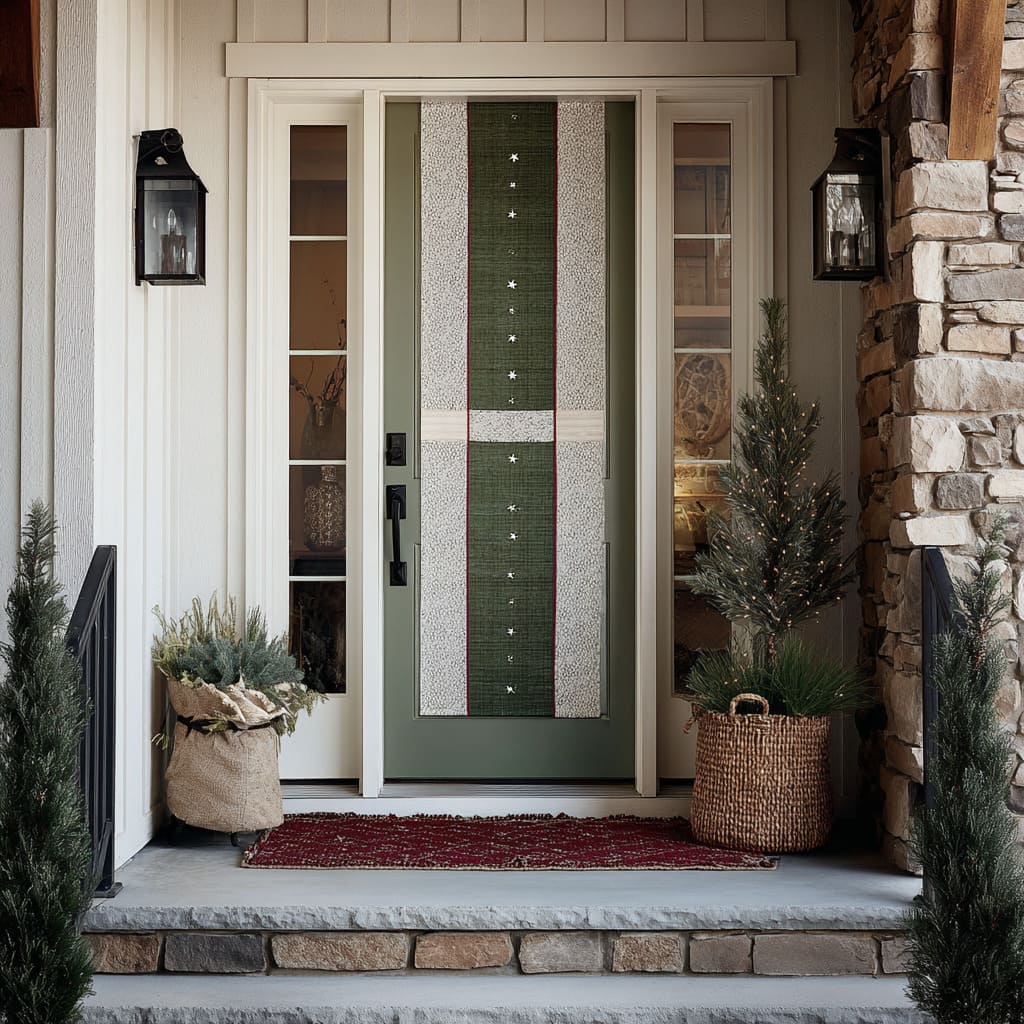
Lantern shapes often echo the geometry of the door or siding: tall rectangular lanterns align with strong stripes, while rounder lantern bodies soften sharp edges. Even unlit, they hold the visual role of evening atmosphere, forming part of the threshold’s winter character.
These additions give structure to simple door decorations for Christmas, reinforcing the door’s gesture rather than competing with it.
Layered Readability: Street, Path, Threshold
A sophisticated holiday entrance works in three viewing distances.
From the Street:
Only the big moves read—large crosses, wide stripes, bold color fields, or mesh frames. Doors become graphic objects: red rectangles, navy slabs, pastel panels.
From the Path:
Medium-scale rhythm becomes visible—gingerbread bands, snowflake sprinkling, lace edges, supporting greenery, alignment between mats and door stripes.
From the Threshold:
Tiny details come forward: stitching on ribbon, scalloped lace edges, miniature motifs, texture of mesh, reflective qualities of metal hardware. This layered legibility explains why many simple Christmas door decoration ideas feel surprisingly complete.
The entry reveals itself slowly, offering a broader drama from afar and intimate charm only when a visitor stands close enough to knock.
Textiles as Clothing for Architecture
Much of the charm in such entrance decorations comes from reading the door as if it were dressed. A vertical ribbon, for example, becomes a scarf; a bottom lace band becomes a hemline; a mesh frame becomes a shawl draped around the threshold; small textile panels behave like pockets or decorative seams.
How This Clothing Logic Works
- Vertical textiles elongate the door the way a long scarf elongates an outfit.
- Bottom bands act like grounding hems that stabilize the composition.
- Full door frames turn the entrance into an outlined garment piece, crisp and deliberate.
This perspective gives distinctly architectural meaning to simple door decorating ideas for Christmas, showing how the right textile proportion can dress a door with elegance, calm, or whimsy.
The Power of Restraint and the Single Gesture
What unifies all these varied thresholds is a shared philosophy: one main gesture supported by a few quiet notes. A single vertical band can define the entire seasonal identity.
A lone wreath framed by mesh or lace can anchor the composition. A subtle gingerbread border can transform ordinary siding into a thematic backdrop.
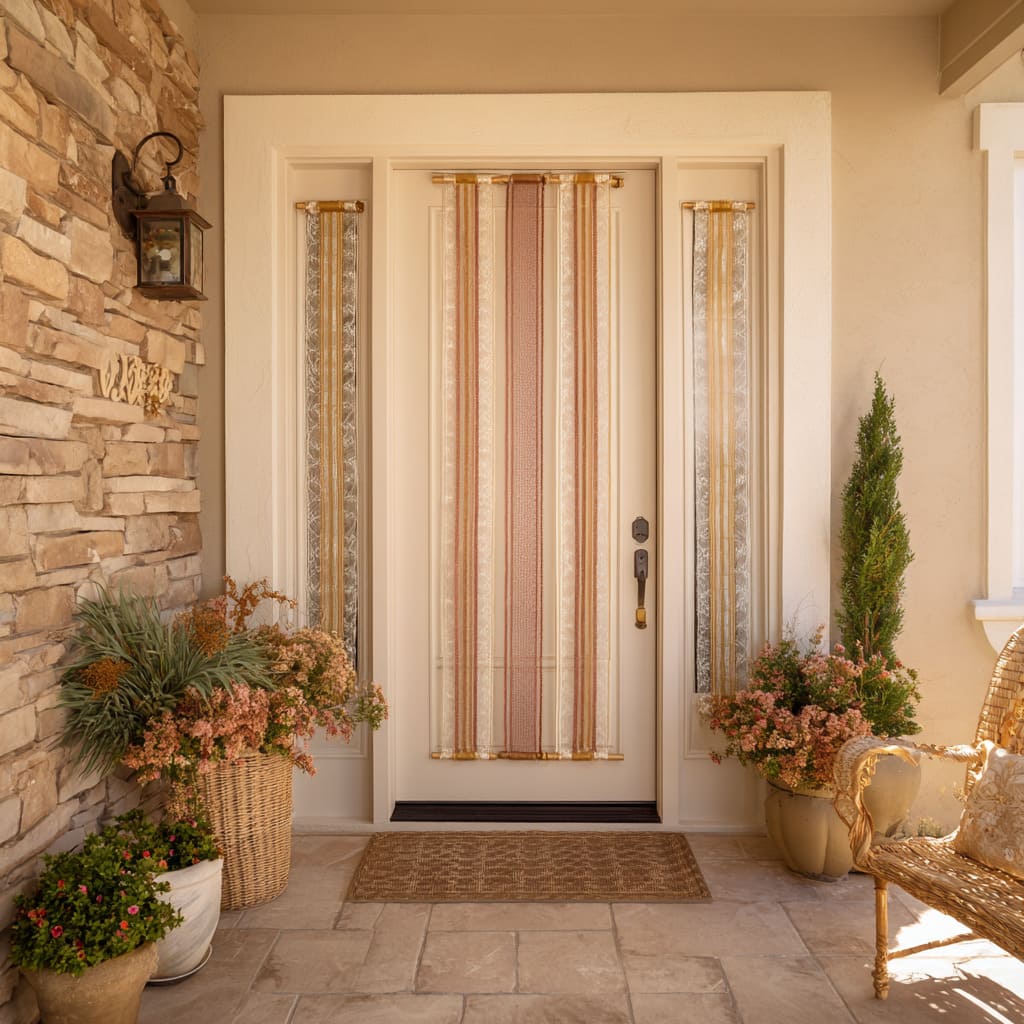
The supporting cast—planters, mats, lanterns—never overwhelms the central move. Space is treated with intention: empty siding, calm steps, or quiet trim become necessary breathing areas.
This minimalist—but articulate—approach is what turns understated entrances into memorable simple Christmas front door decorations ideas, letting a small number of elements shape an entire December mood.
Geometry, Light, and the Door as a Seasonal Canvas
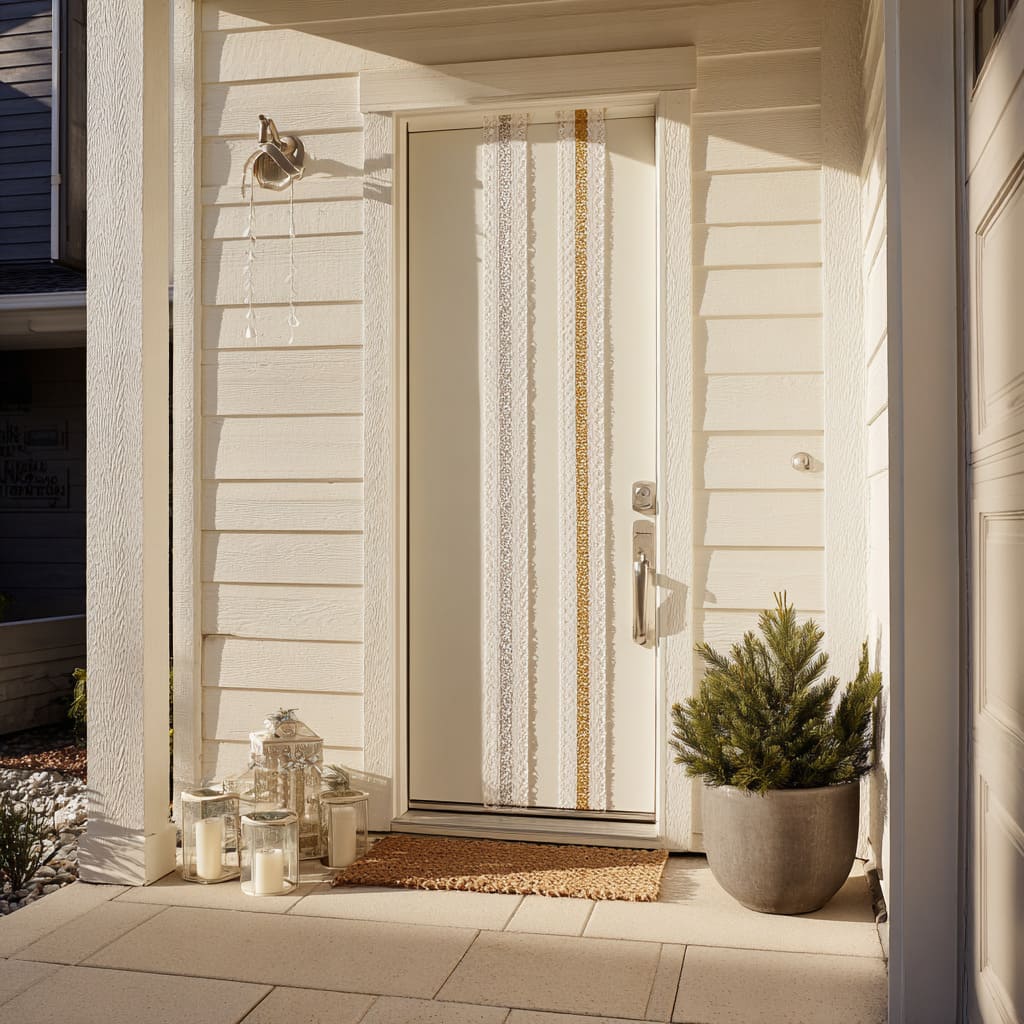
All decorations ultimately relate back to geometry and light. Doors with strong panel divisions invite star fields, lace grids, or gingerbread borders that echo their rectangles.
Flat slab doors invite bold crosses or single ribbons that treat the surface like a graphic poster. Mesh frames soften the doorway into a glowing halo as daylight moves across dotted patterns.
Indirect sunlight turning lace into illuminated edges, lanterns casting warm highlights on ribbon folds, and frost-toned plants lifting cool colors into the frame—all of these interactions give the entrance a living quality. This interplay allows even simple Christmas front door decorations ideas to feel layered and dynamic, shaped by daylight, shadow, and the textures of winter foliage.
Seasonal Identity Through Shape and Restraint
Such design approaches demonstrates how holiday identity can be shaped through only a few lines, textures, and motifs without ornament overload. Vertical stripes create ceremony, lace borders generate softness, cool palettes evoke winter atmosphere, and motif bands create miniature stories.
Together they illustrate the versatility of simple front door Christmas decorations, proving that a quiet doorway can still carry strong seasonal character through focus, alignment, and thoughtful visual language.
Related Posts

Harmony Home Design brings 10+ years of residential interior design experience to the ideas shared here. We publish design concepts, layout thinking, and practical styling notes.