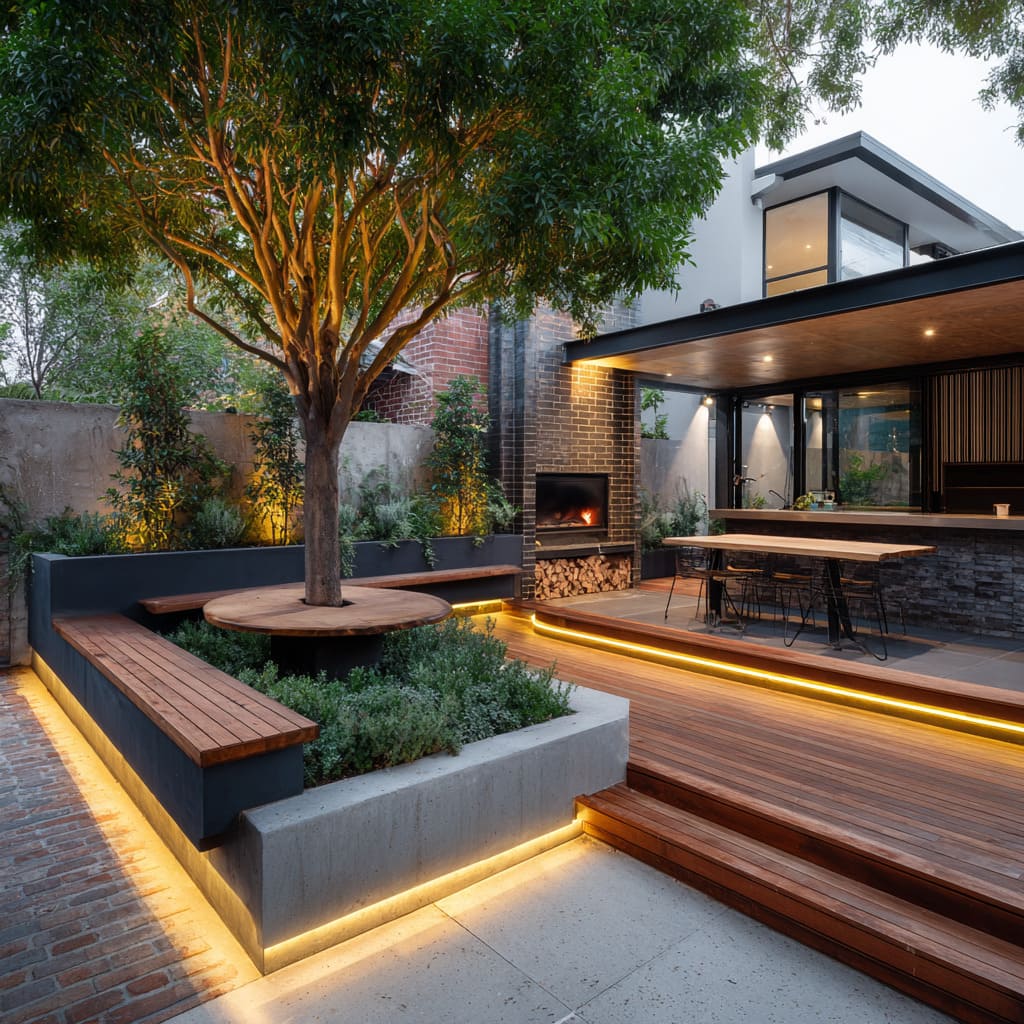
The floating deck effect is a visual illusion created when light appears to come from the architecture rather than from visible objects. A thin glow under a deck edge, step lip, bench base, or planter rim makes the ground plane feel intentional and the forms feel carefully arranged, even if the furniture and styling stay minimal.
Because the light source itself is visually quiet, the eye focuses on what the glow reveals: clean boundaries, crisp silhouettes, richer surface texture, and a calm hierarchy. The backyard design begins to read like an outdoor living room with an interior mindset—clear zones, controlled emphasis, and a gentle sense of luxury that comes from discipline rather than decoration.
Lighting concepts here are for visual inspiration only; for any electrical or fire feature work, consult a qualified professional and follow local rules.
A “drawn line” that replaces nighttime confusion
In daylight, shadow explains geometry for free: a person can understand where a step begins, where a platform ends, where a bench sits, and how the patio connects to the garden. After sunset, many yards lose that clarity and everything collapses into one dark field with a few bright points.
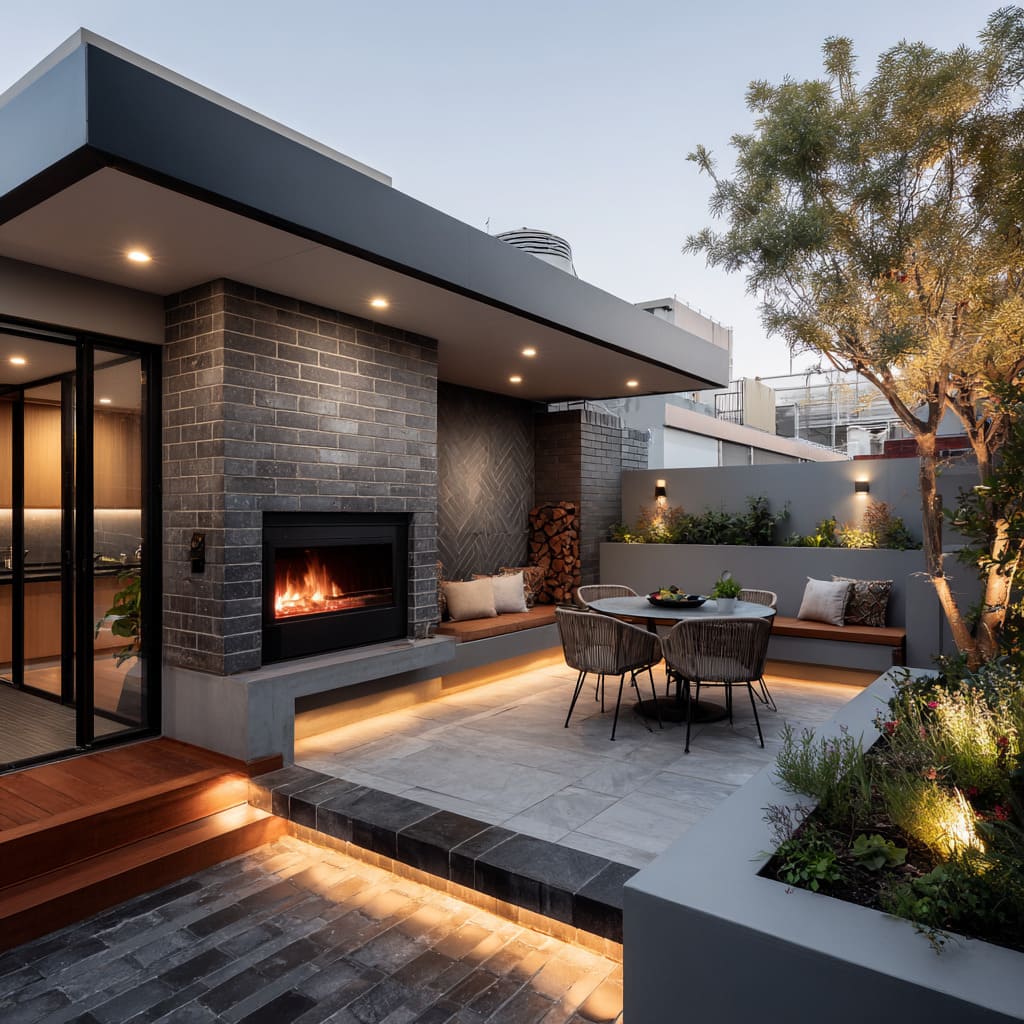
The floating deck approach changes the whole reading by treating light as a drawn line that outlines the most important edges. When the glow sits low and continuous, it acts like a calm seam between planes, keeping level changes legible and keeping the layout readable without adding visual clutter.
The most important shift is psychological: the yard feels organized, safe to move through, and visually “edited,” because the geometry stays understandable even in low light.
Visual weight control that makes heavy things feel refined
A major reason the effect feels premium is that it changes how mass is perceived. Thick benches, solid planters, masonry features, and raised platforms can look blunt when they meet the ground with a hard contact line.
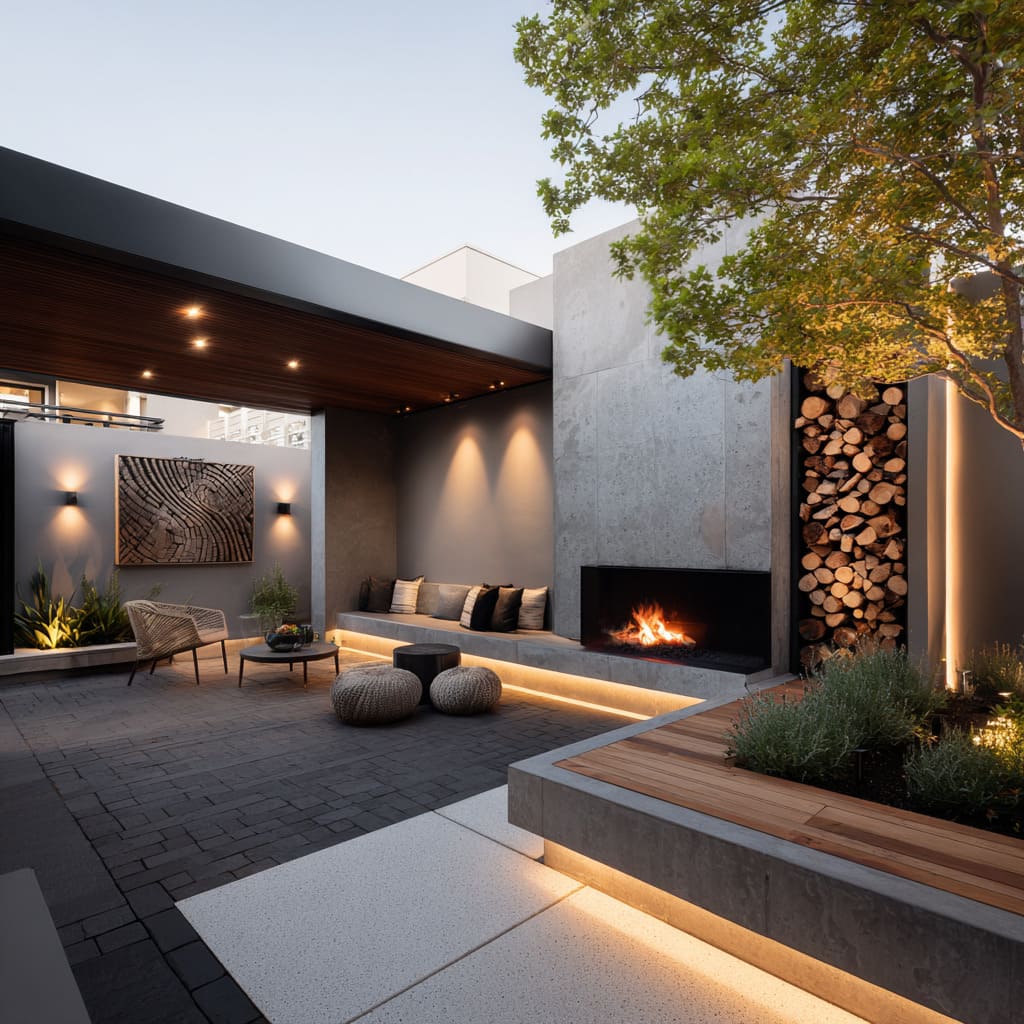
A hidden glow at the base introduces a delicate separation that makes the same forms look lighter and more intentional. The eye stops reading them as heavy blocks and starts reading them as sculptural planes hovering above the ground plane.
This is a style trick: it allows strong architectural materials to stay present without feeling overpowering. The yard can keep a bold, modern structure while still feeling comfortable and relaxed, because the “lift” removes visual heaviness at the exact spot where heaviness is usually felt most.
The baseline that quietly becomes the organizer of everything else
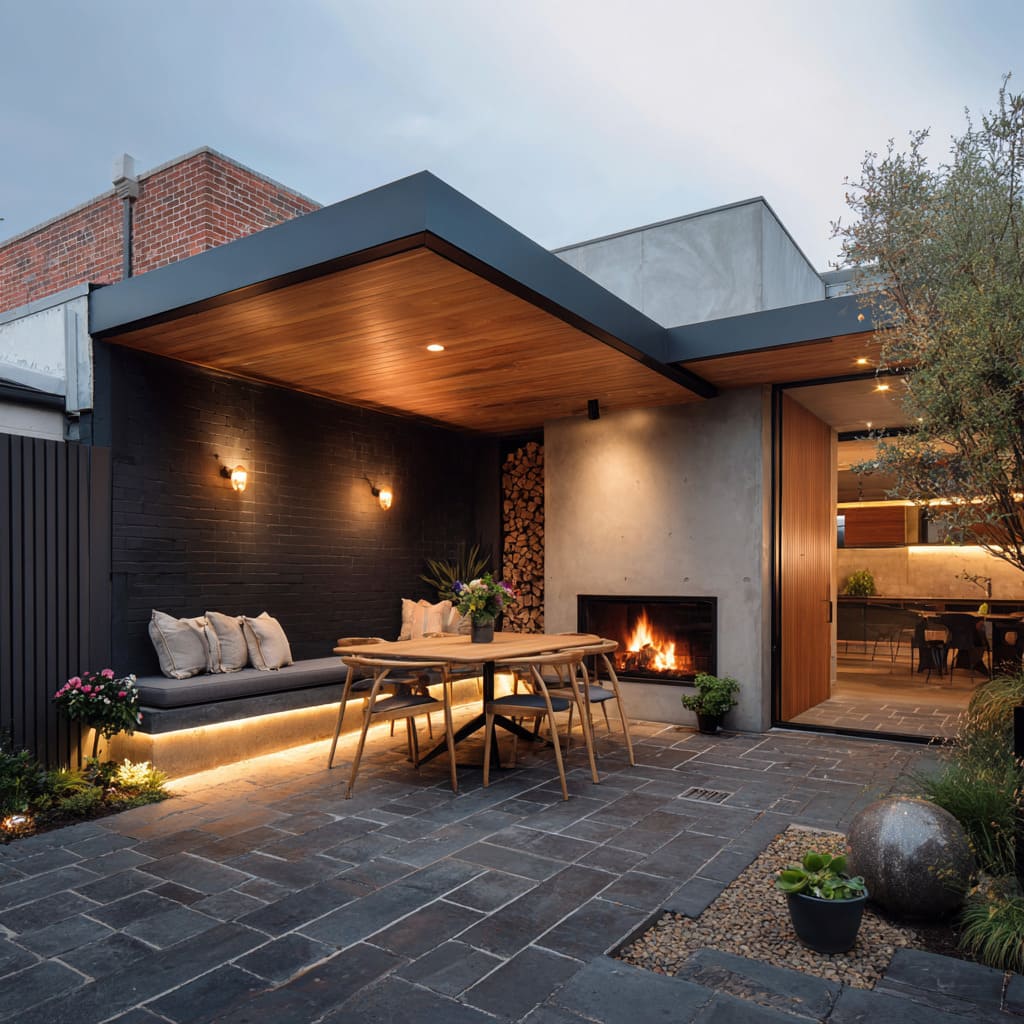
One of the most underestimated outcomes is how a single continuous glow line can organize the entire composition. When there is one long, uninterrupted band at the base of seating or along the deck perimeter, it becomes a visual spine—an anchor that holds the scene together.
Once that spine exists, many other elements can be simpler without looking unfinished. Furniture can be understated, decor can be minimal, and even playful accents can feel unified because the base glow sets a shared tone along the bottom of the scene.
The space gains a sense of order that comes from a clear underlying rule: the eye always knows where to rest and how to travel through the layout.
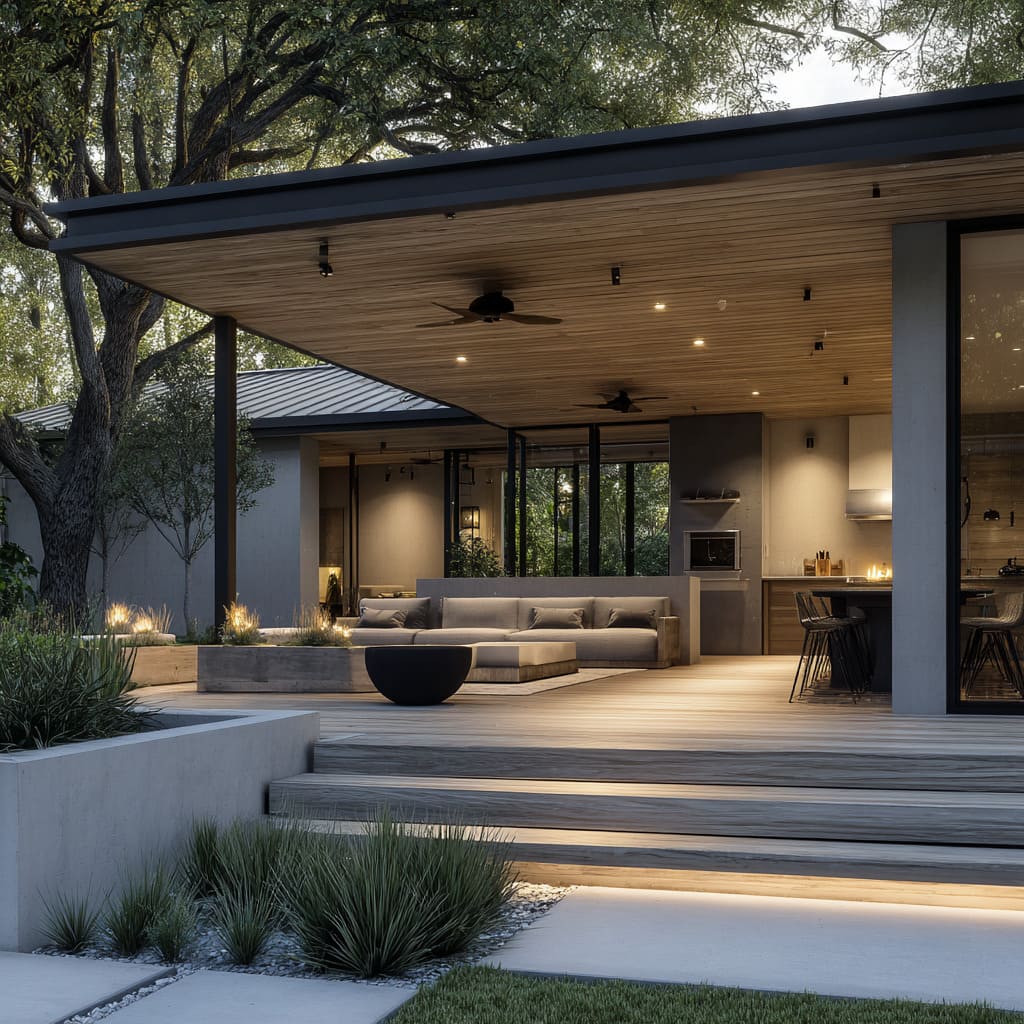
Boundaries without barriers: zoning that feels natural, not forced
Outdoor space designs often use physical separators to define zones—screens, railings, changes of paving, or large planters placed like dividers. The floating deck effect can achieve similar clarity with far less visual noise.
A glowing deck edge can quietly separate the walking path from the seating platform. A lit step lip can mark transitions without interrupting openness.
A glowing planter rim can define a center feature without fencing it off. The boundary is soft, but the brain treats it as real because the edge is consistently visible.
This creates an interior-like plan outdoors: a lounge area that feels “contained,” a dining area that feels “set,” and transitions that feel intentional rather than accidental.
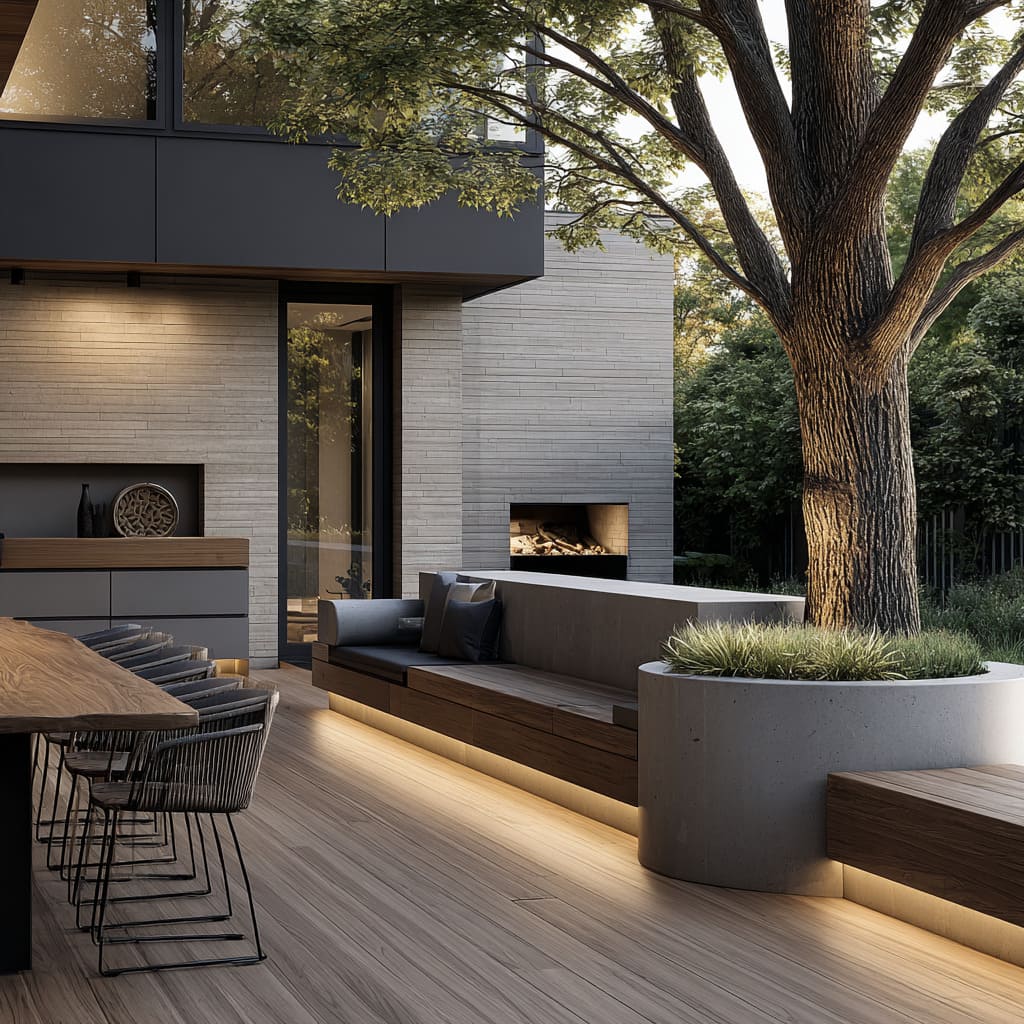
Silhouette styling: when simple furniture starts to look curated
Low concealed light changes the way furniture reads. Instead of relying on bright overhead light that flattens forms, a glow near the floor creates crisp outlines at the bottom of objects—chair legs, table bases, and small gaps between pieces.
That silhouette clarity makes even basic furniture feel chosen and placed with purpose, because spacing becomes visible and rhythm becomes readable. It also encourages a certain kind of visual discipline: lighter profiles tend to look better because they allow the glow to remain continuous behind them, while bulky pieces interrupt the line and create heavy shadow blocks.
The effect is subtle but powerful: the yard starts to feel curated, not because it is filled with decor, but because the shapes are clearly expressed.
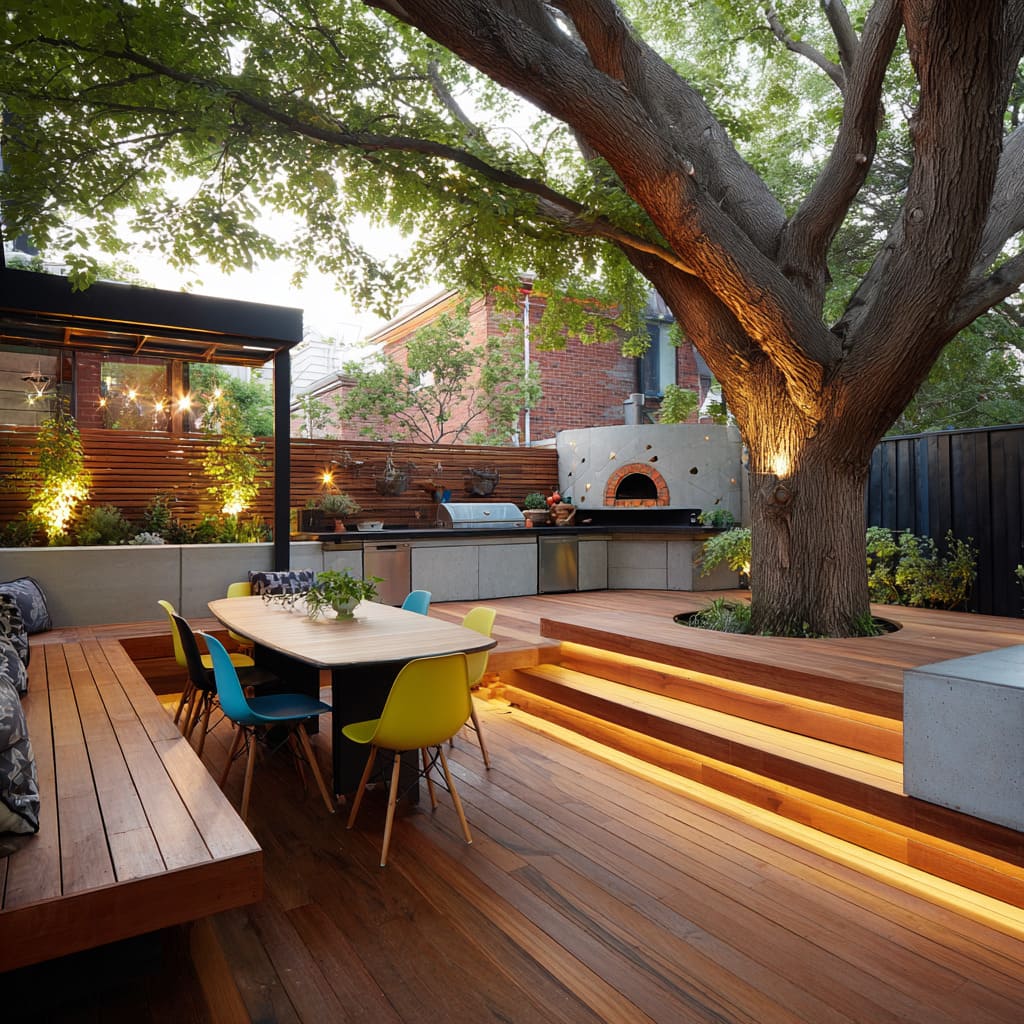
Surface richness: the ground plane becomes part of the atmosphere
The floating deck look depends heavily on what the glow reveals on surfaces. When light is low and indirect, it tends to skim along paving and timber rather than hitting objects head-on.
That skimming makes texture feel richer: stone joints show depth, matte paving looks smooth and calm, and timber grain becomes visible in a way that feels warm and lived-in. The atmosphere often comes from reflection rather than brightness.
Pale surfaces can make a small yard feel larger because the glow softly extends the visible ground plane. Darker surfaces can make the glow feel deeper and more intimate, as if the light is concentrated into a refined band rather than scattered.
In both cases, the floor stops being a background and becomes a key emotional layer of the scene.
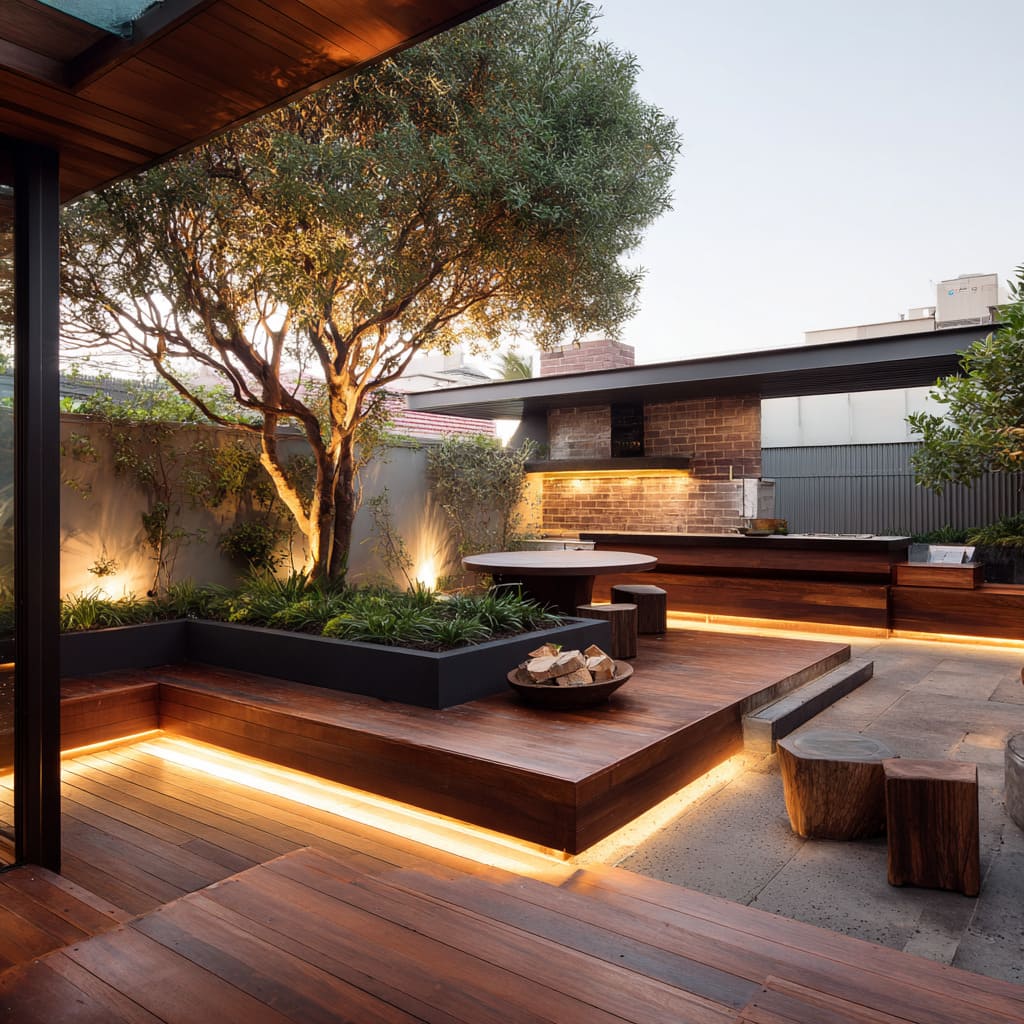
Curves as a soft counterbalance to modern grids
Modern courtyard designs often lean on straight lines—fence rhythm, roof edges, bench runs, deck board direction, and paver grids. A curved glow line changes the emotional temperature immediately.
A lit ring around a tree planter or a curved perimeter bench base introduces a gentler geometry that softens strict architecture without adding clutter. The curve creates a calm center of gravity, so the space feels welcoming while still staying clean and structured.
It also influences how the eye moves: instead of scanning only in straight runs, the gaze circulates, which makes the yard feel more cohesive and less rigid. A single curve paired with long horizontals often produces a refined balance: structured but not severe.
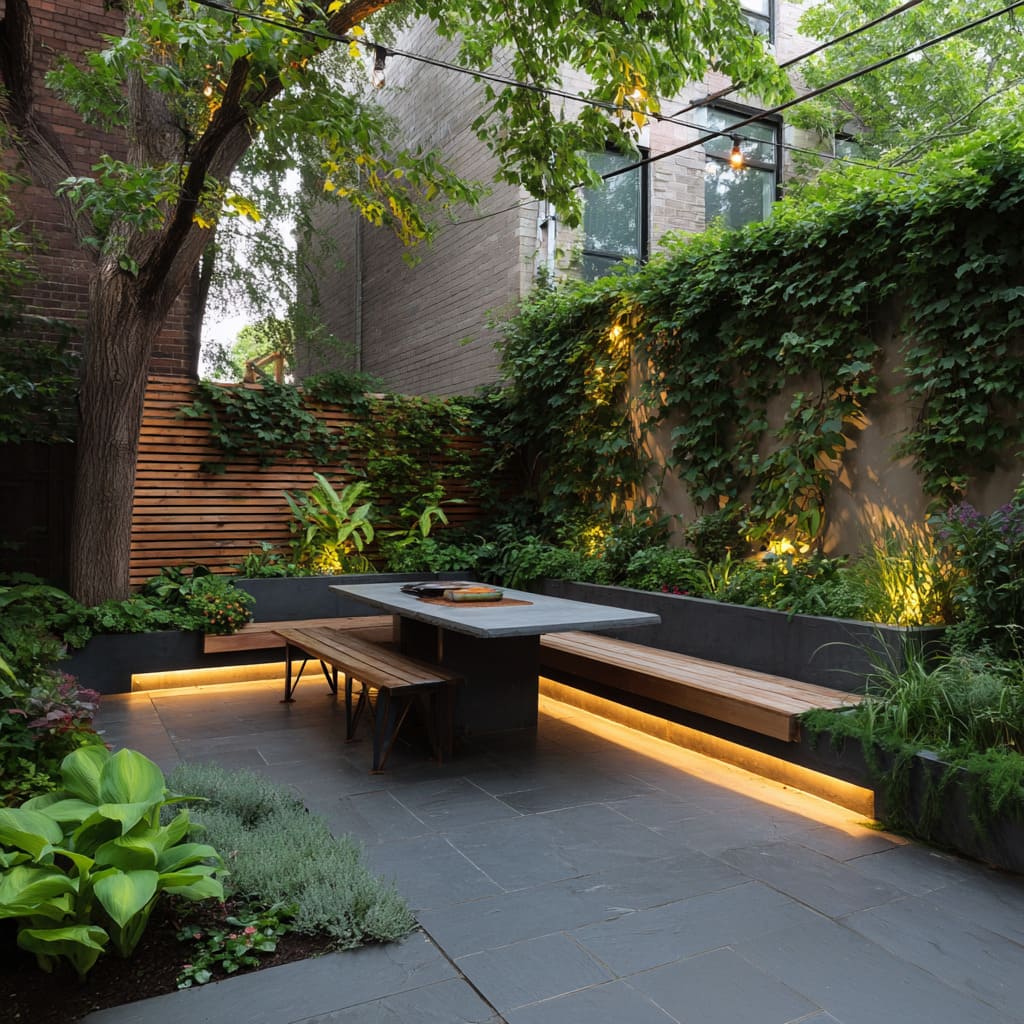
Depth building with quiet backgrounds, not dramatic spot effects
In compact yards, the perimeter wall can feel like a hard limit at night. The floating deck effect gains sophistication when the background is treated softly, so the yard reads in layers rather than as a flat stage.
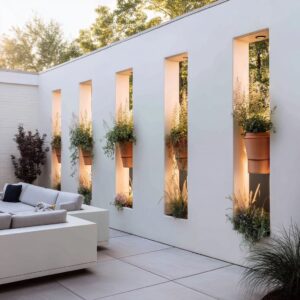
A gentle vertical glow on boundary surfaces can create a calm gradient that lifts the background just enough for depth, while the low edge glow keeps the foreground clear. The key is the relationship between layers: the ground plane is legible, the seating zone is readable through silhouette, and the boundary feels present without becoming loud.
This creates a sense of privacy and spaciousness that is more emotional than literal, because the wall stops feeling like a stop sign and starts feeling like a calm backdrop.
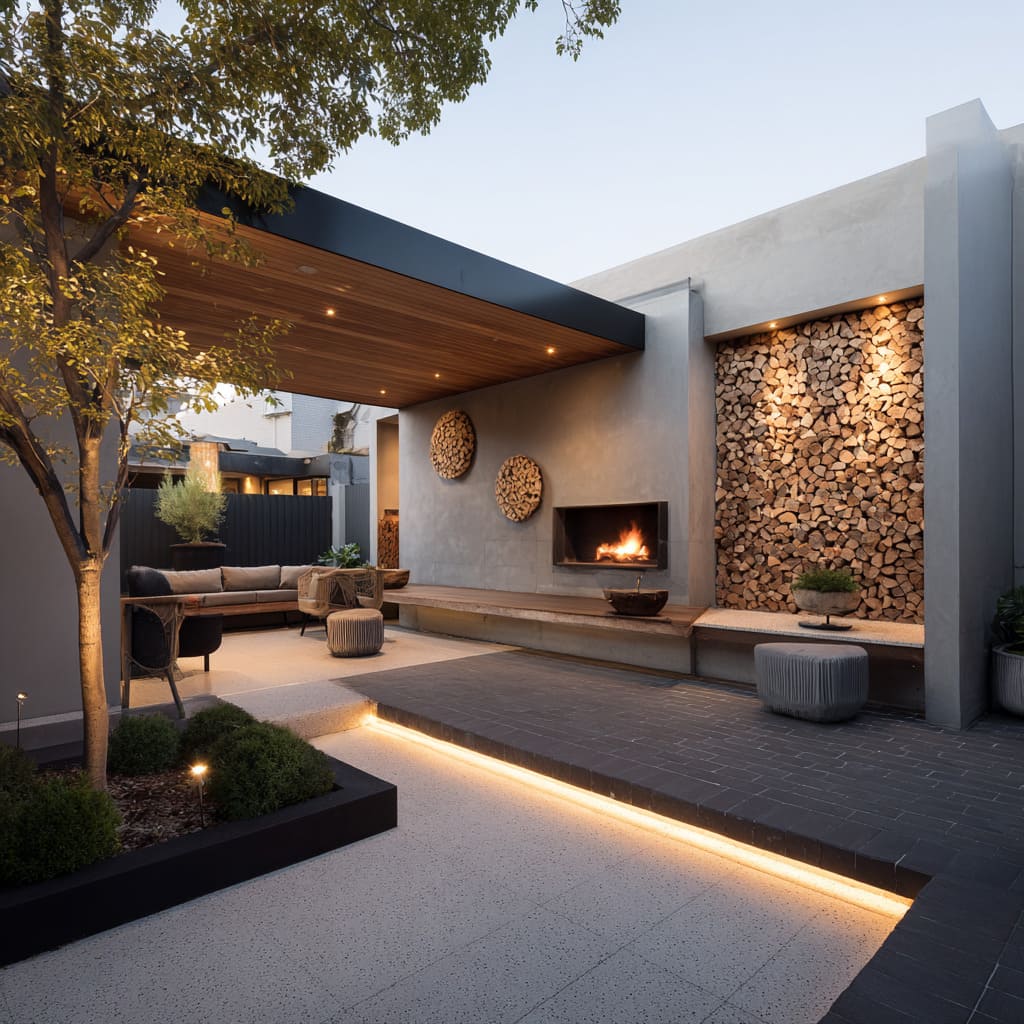
Planting as a finishing tool that makes the glow feel intentional
Greenery plays a special role in this style because it can either support calm or create visual chaos through messy shadow shapes. The most effective approach treats planting as a soft border that helps the glow line end gracefully.
Leaves catching small highlights can soften the hard stop of an architectural line, making the lighting feel integrated rather than added.
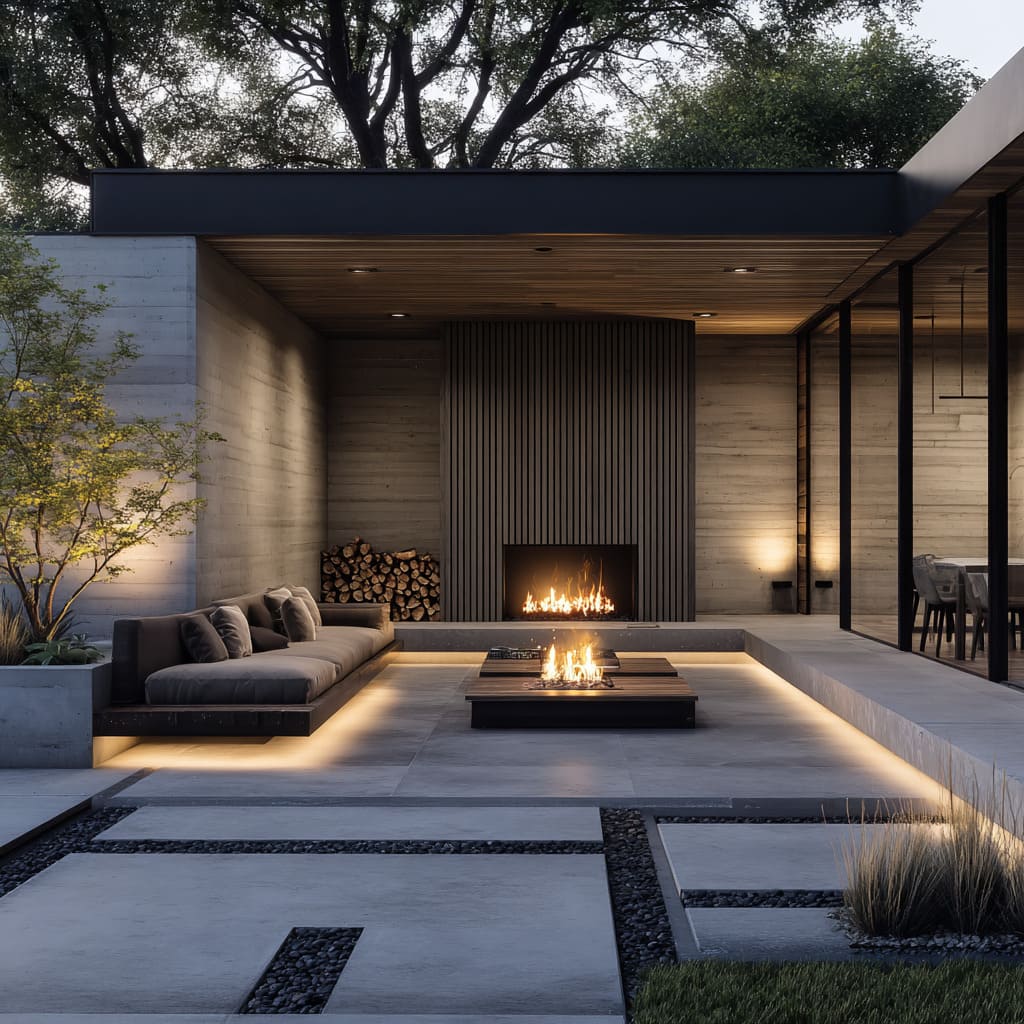
Controlled planting also helps with clarity: low, edited foliage tends to read as texture and silhouette rather than as a loud object. In garden-heavy settings, small pockets of brightness within greenery can create depth, allowing the eye to travel inward instead of seeing one dark mass.
Either way, planting becomes part of the visual composition: not a separate “garden zone,” but a quiet partner that completes the edge language.
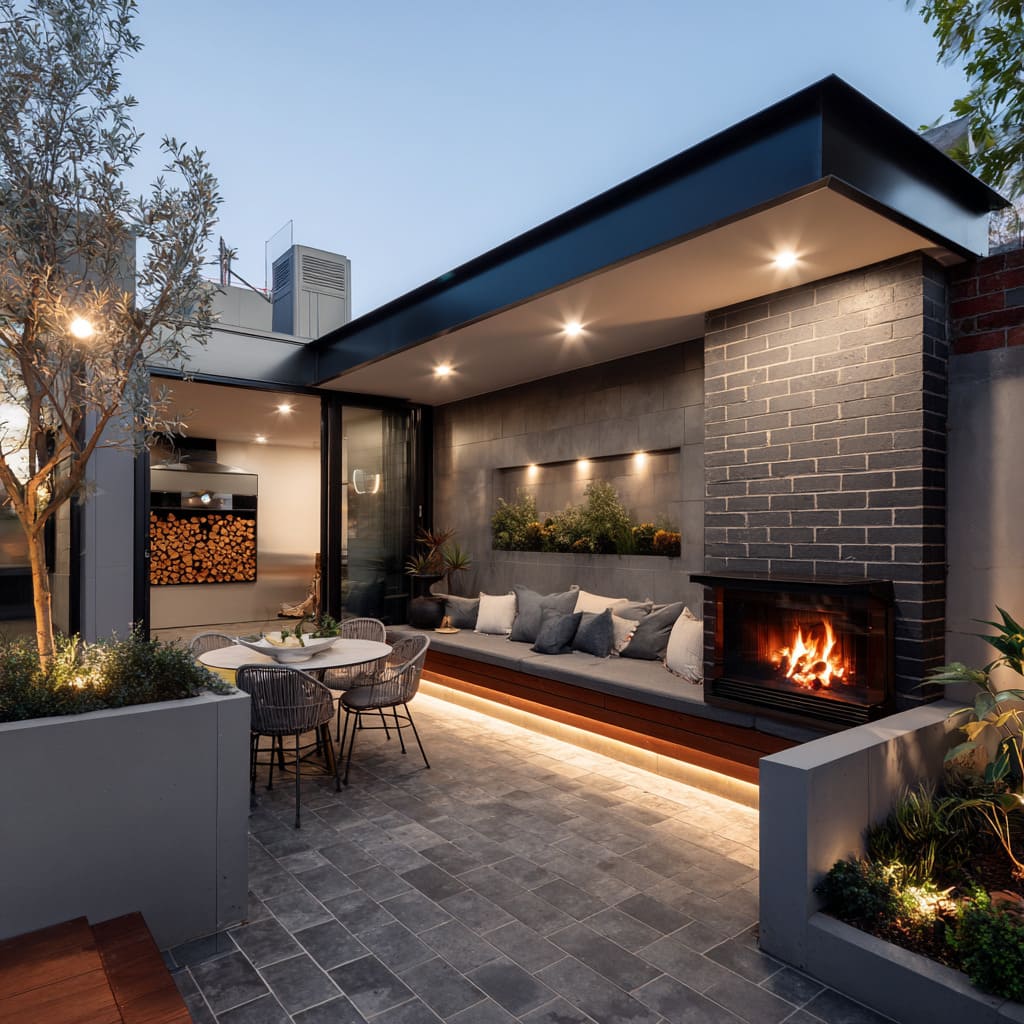
Controlled drama: steady glow paired with living flame
The floating deck effect often becomes especially compelling when it sits near fire. A steady linear glow at the base provides calm structure, while flame adds movement and life.
The pairing works because it creates contrast without chaos: one warmth is stable and architectural, the other is shifting and emotional. The yard gains atmosphere without needing extra decor because the light itself provides the sense of occasion.
The most refined version of this idea keeps the overall mood controlled—warmth feels concentrated and deliberate rather than scattered—so the scene stays restful even when it has a focal point.
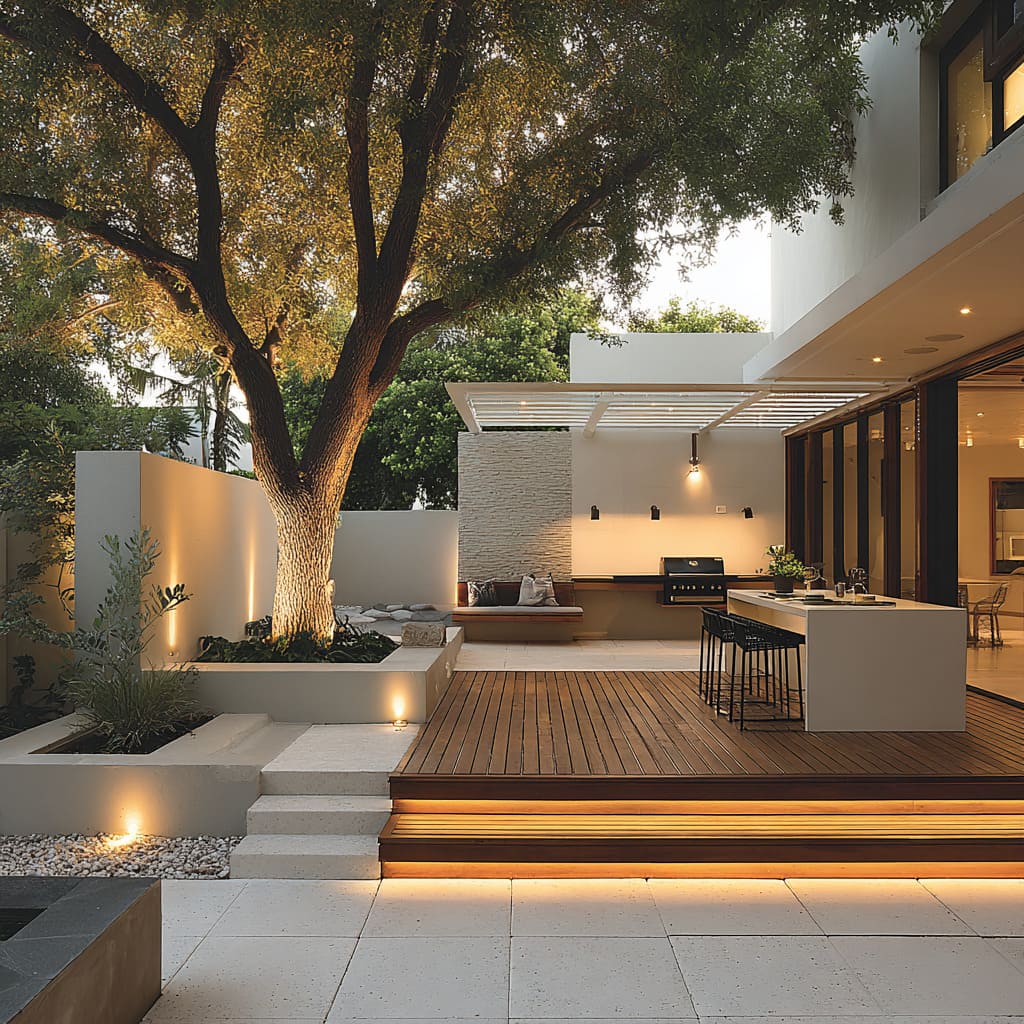
The thickness paradox that reads as luxury
A particularly interesting outcome is the way lit edges change the perceived thickness of platforms. When the edge is clearly outlined, the platform can feel more substantial, as if it has presence and depth.
Yet the glowing gap beneath makes the same platform feel weightless, as if it hovers.
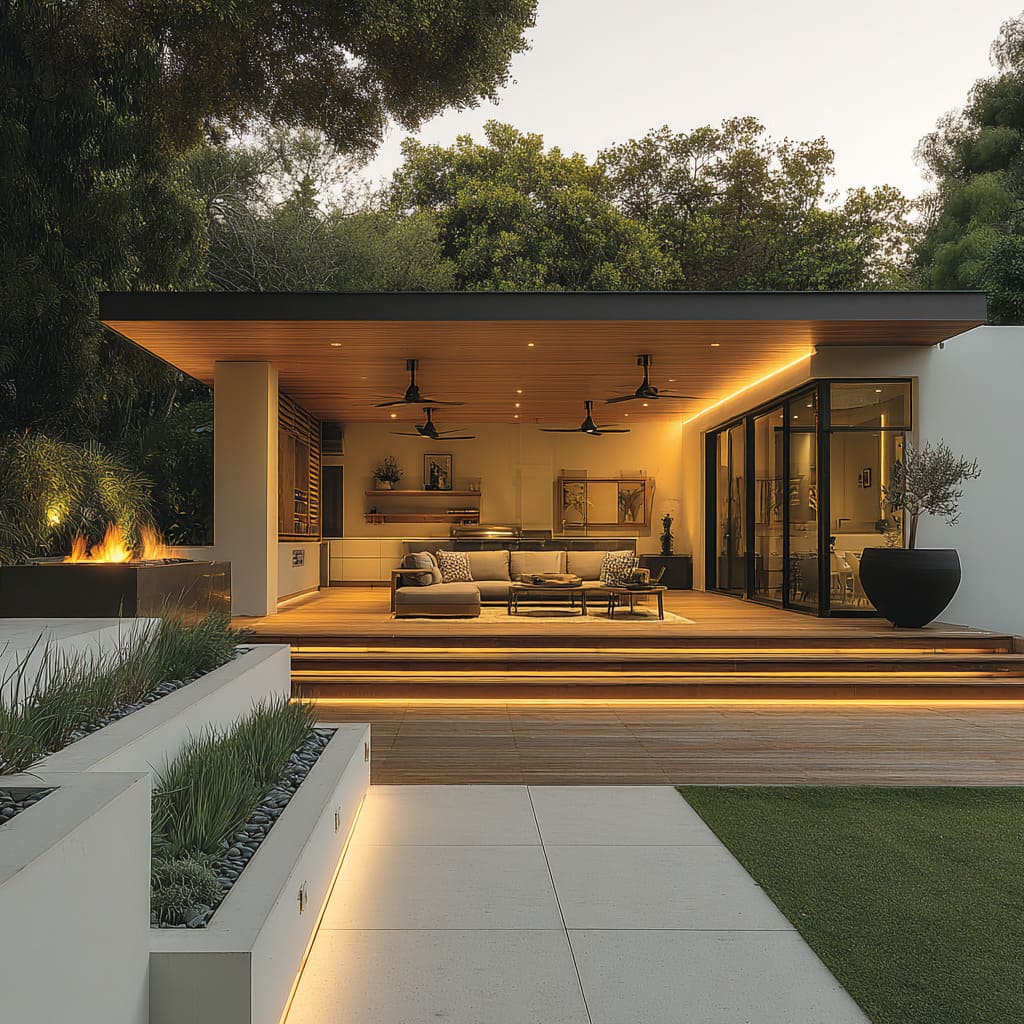
Holding both impressions at once—solid and floating—is one of the reasons this effect reads as high-end. It suggests confidence in the composition: the yard does not need extra layers of decoration to feel complete, because the primary planes already feel intentional and visually resolved.
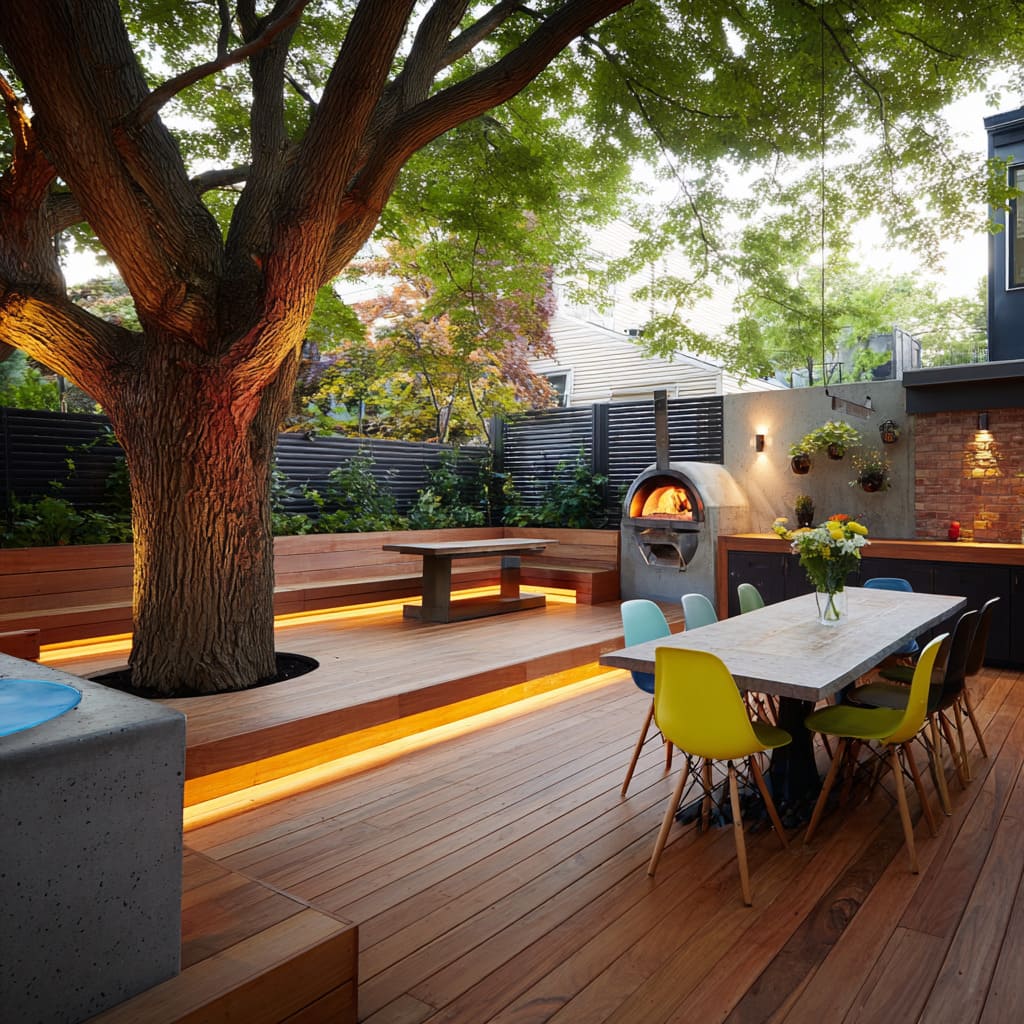
A consistent visual language from day to night
The most polished version of this style feels coherent at different times of day. In daylight, pergola slats, fence rhythm, and architectural overhangs often create stripe shadows and clean geometry.
At night, the glow lines continue that same graphic language in a softer form. The yard does not turn into a different place after sunset; it becomes a calmer version of the same composition.
This continuity is a quiet marker of sophistication because it makes the space feel designed as a whole experience, not as a daytime layout with nighttime lighting added later.
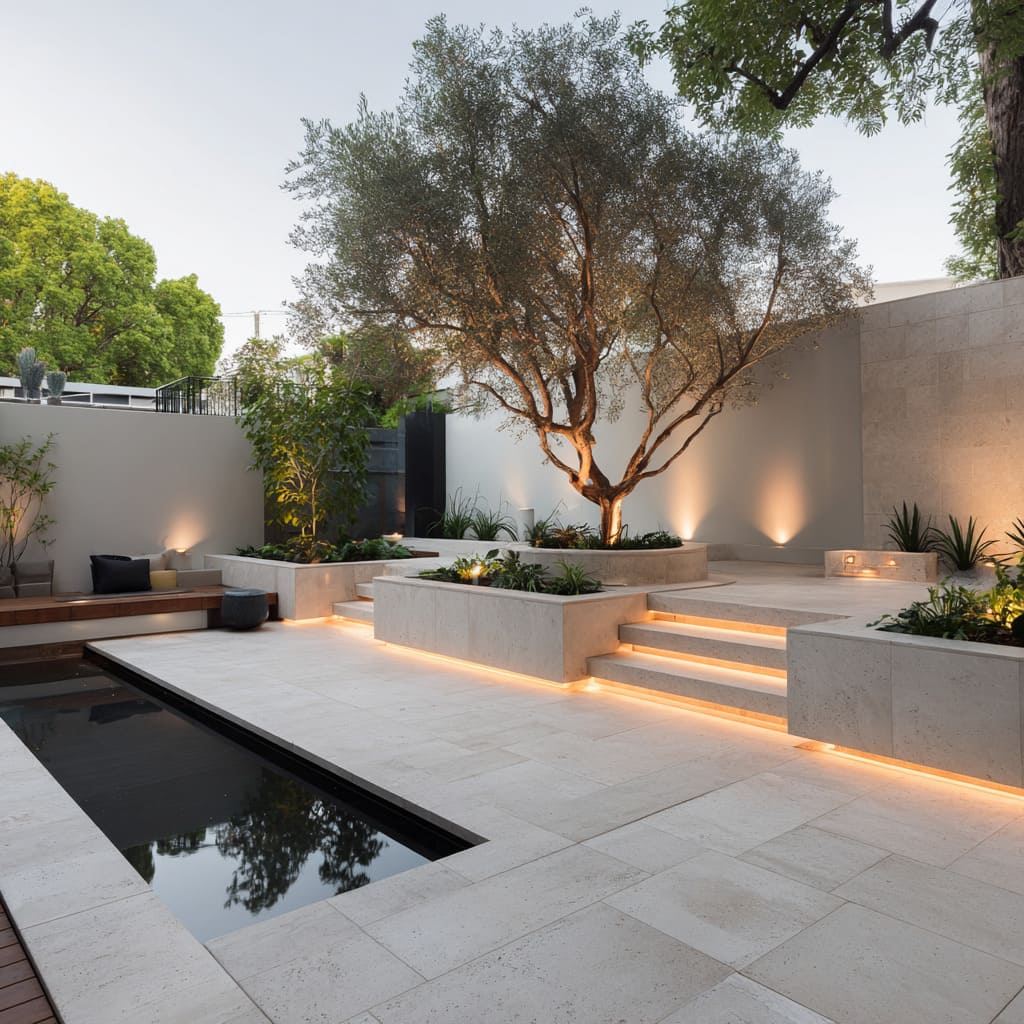
Social clarity without harsh brightness
Beyond aesthetics, the floating deck effect quietly shapes how people use the space. A glowing bench base signals where seating is, even when the yard is empty.
A lit step edge signals transitions naturally, reducing hesitation and making movement feel easy.
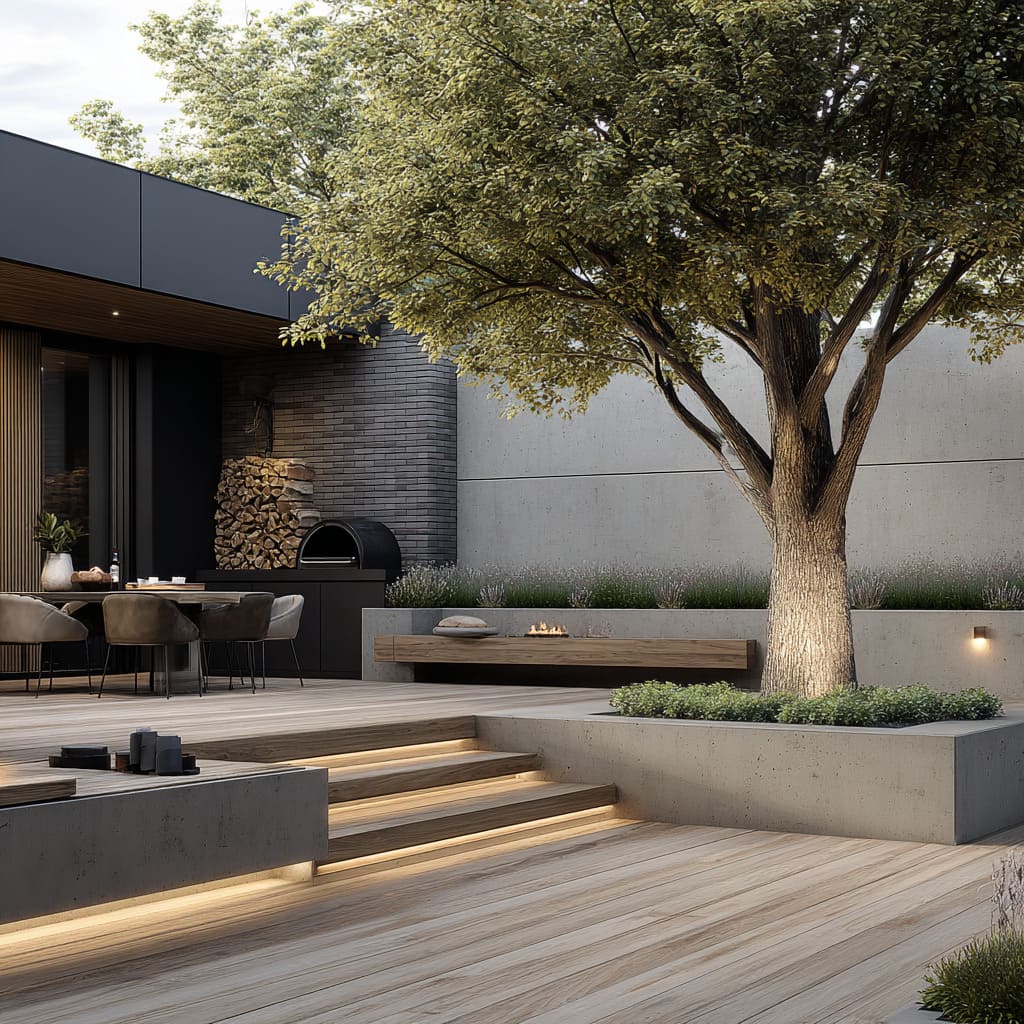
A deck perimeter line suggests where the main zone begins, encouraging gathering without forcing it. Because the light is low and indirect, the mood tends to feel comfortable and flattering rather than exposed.
The space becomes inviting in a calm way, like a lounge area that naturally draws people in without demanding attention.
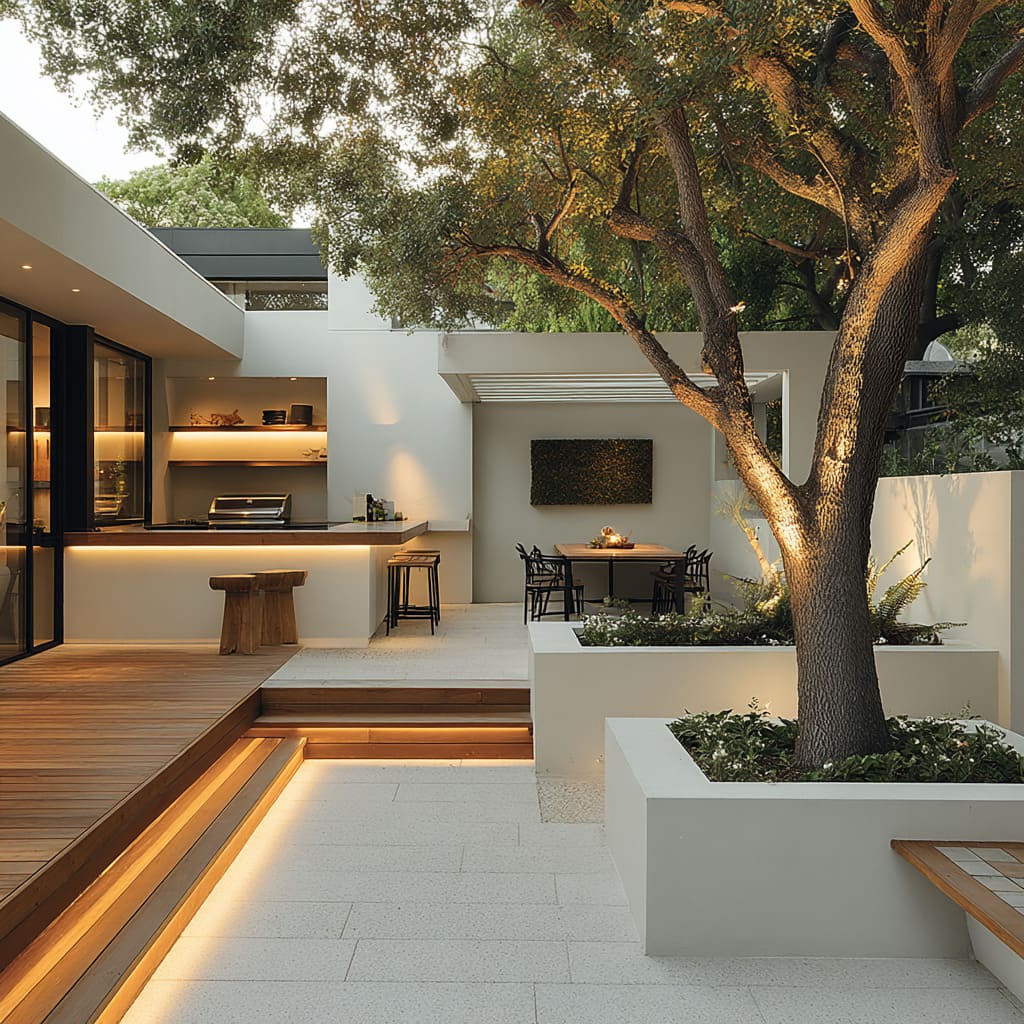
Why the mood often feels like a boutique terrace
This look is often associated with a boutique terrace or a hotel courtyard feel because it relies on the same visual priorities: concealed sources, continuous lines, gentle gradients, clean silhouettes, and a controlled amount of visual information. The space looks “edited” because surfaces remain readable, shadows stay soft, and the eye is not overwhelmed by many competing points of light.
The feeling of luxury comes from restraint and clear hierarchy: the edges guide the scene, texture adds richness, and the layout remains legible without being overlit.
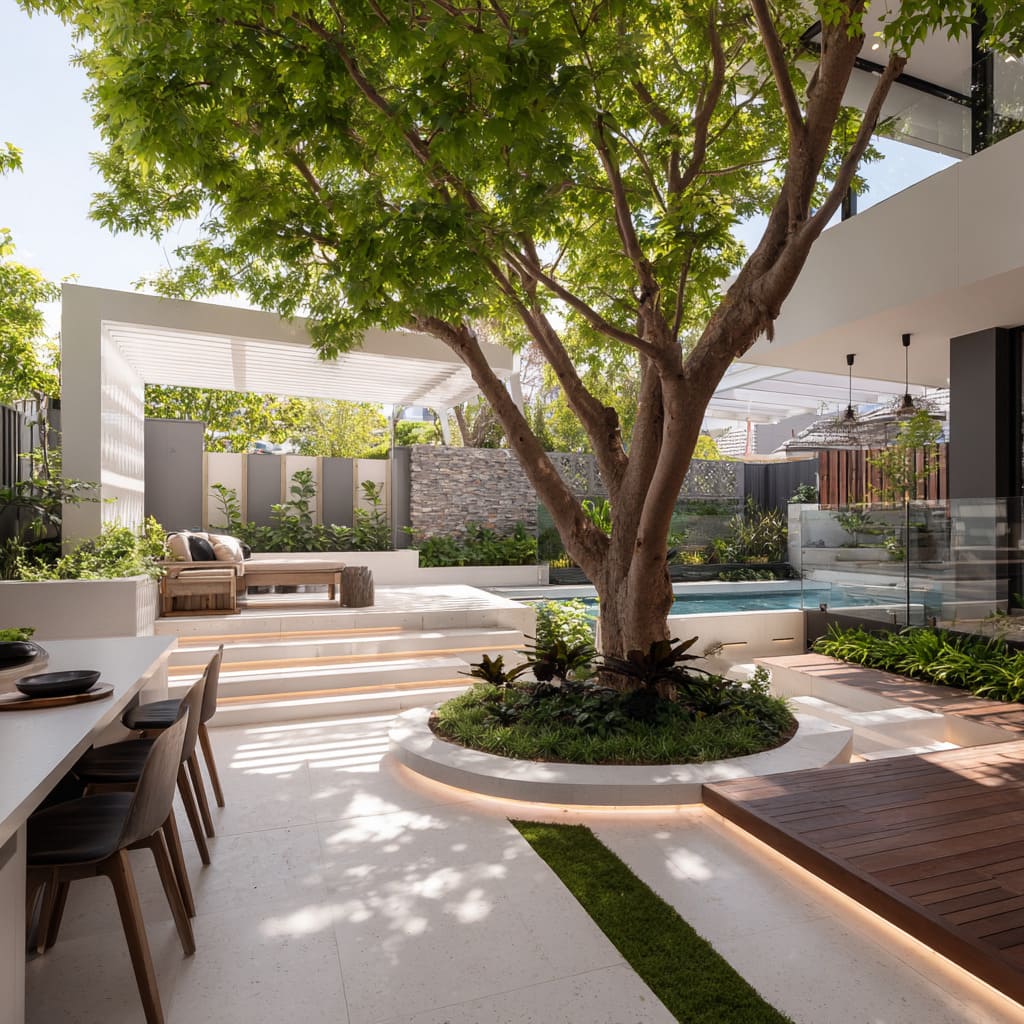
Recognizable approaches that create different visual outcomes
Different approaches within the floating deck effect have a slightly different mood.
- A perimeter spine approach uses one long base glow as the main organizer, creating strong structure and calm rhythm.
- A stage boundary approach outlines a platform so the lounge zone reads like a room footprint, giving a subtle sense of destination.
- A terrace runway approach emphasizes level changes so movement feels graceful and the yard feels deeper.
- A halo center approach uses a curved glow around a tree or planter to soften the grid and create a gentle anchor.
- A gallery backdrop approach pairs low glow with soft background gradients so the courtyard gains depth and privacy.
- A texture-led approach lets wood grain, bark, masonry, or slatted surfaces carry the decoration through soft highlights and fine shadow relief.
The understated payoff: minimal styling can still feel complete
A restrained backyard design can feel unfinished at night when the layout disappears and objects lose definition. The floating deck effect solves that by turning geometry into the decorative layer.
When edges remain legible, planes feel light, and silhouettes stay clean, the yard can feel complete with very few objects. The design gains atmosphere through placement, proportion, and visual control—so the design reads as intentional, calm, and quietly luxurious long after sunset.
Related Posts


Harmony Home Design brings 10+ years of residential interior design experience to the ideas shared here. We publish design concepts, layout thinking, and practical styling notes.