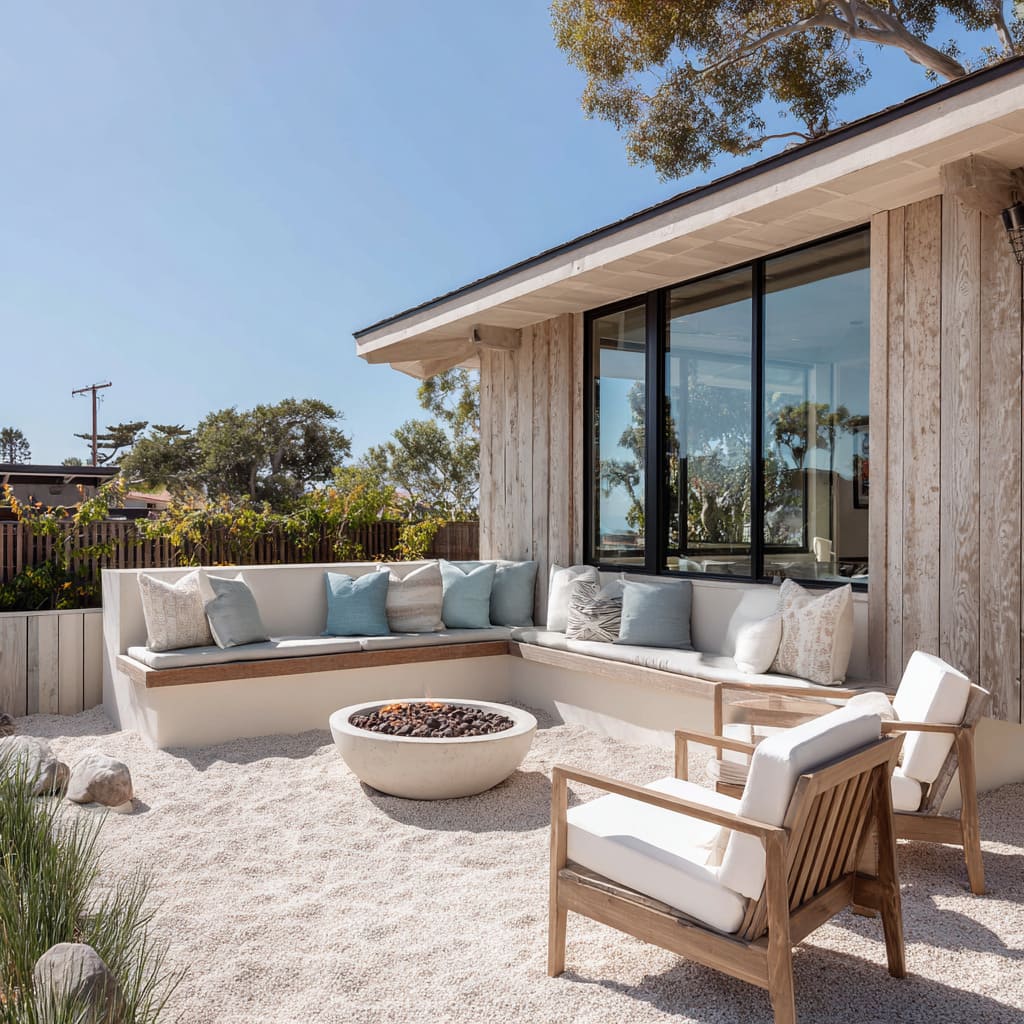
Modern backyard design often treats sand as more than a surface—sand becomes a way to shape the backyard into subtle architectural zones. Instead of confining sand to a tiny corner, they often use it as a full flooring material that defines rooms under open sky.
A recessed circular bed carved into a terrace forms a natural gathering hub. A long sand band stretched along a house acts like a shoreline path for loungers and reading spots.
A broad sand field pressed against a façade works like an outdoor carpet for seating and low tables. These shapes do not rely on construction complexity; the layout of the sand itself directs the entire spatial rhythm.
This is where sand patio ideas start: drawing quiet spatial boundaries with texture rather than walls.
Layout Families: How Sand Organizes an Outdoor Space
There are popular layout types, which shape a backyard with sand. These can be read as conceptual approaches rather than rules.
Recessed Bowls
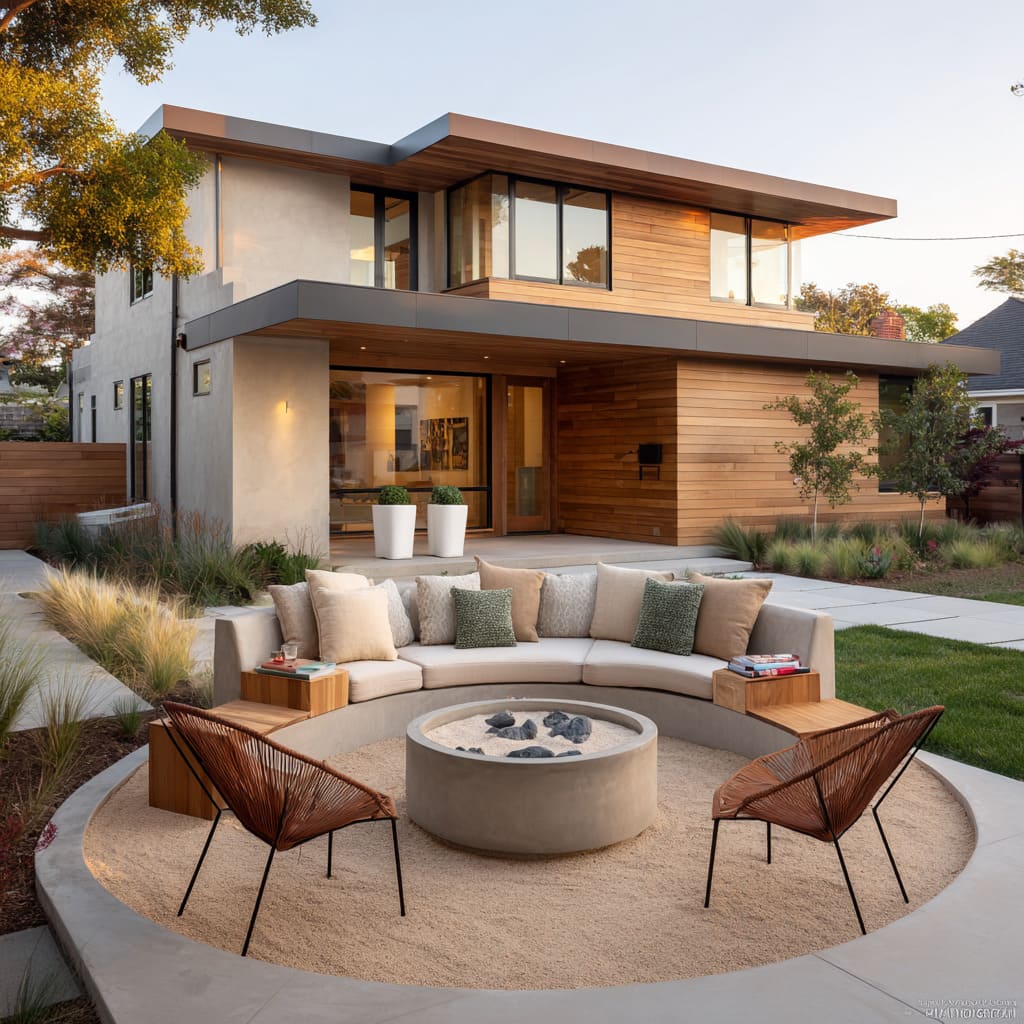
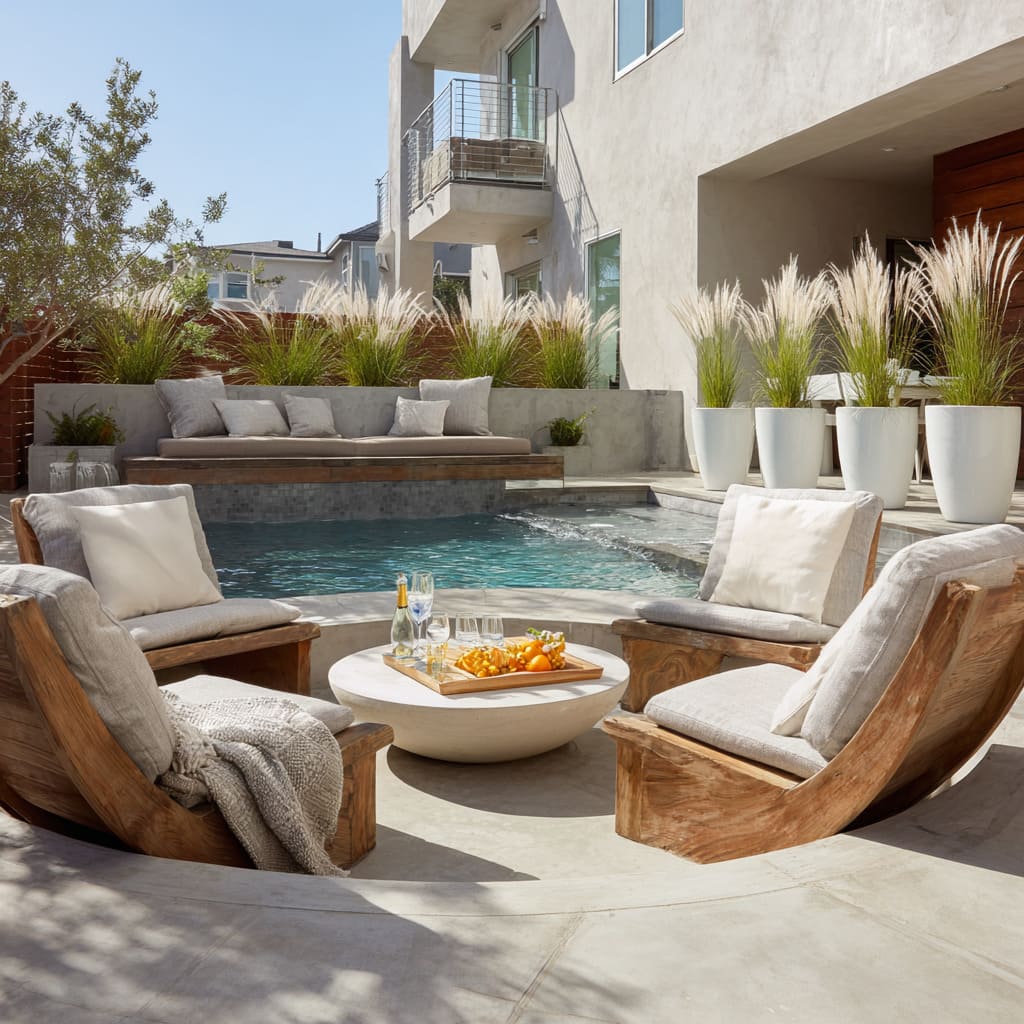
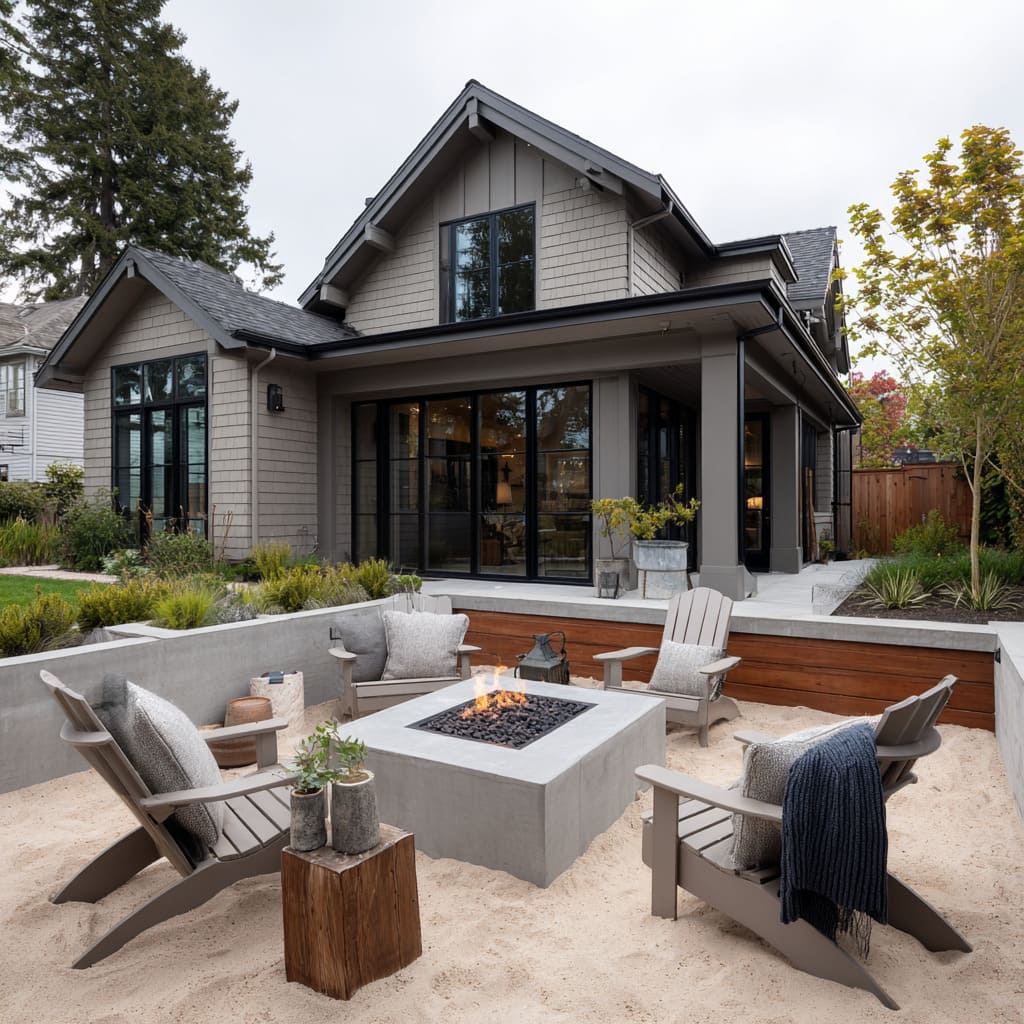
Sunken sand pits create sheltered social pockets, often centered around a fire feature or low table. Their rounded geometry encourages circular furniture arrangements that feel instinctively conversational.
Sand Carpets
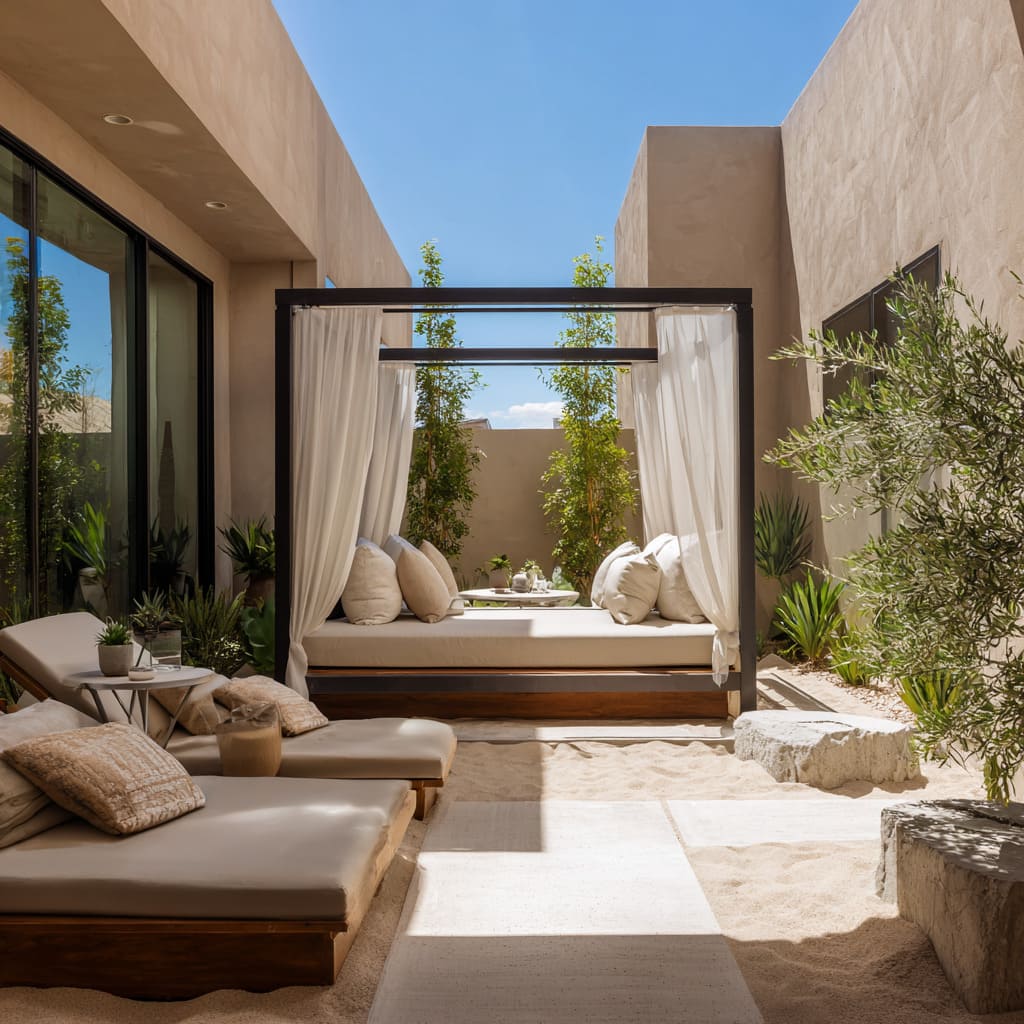
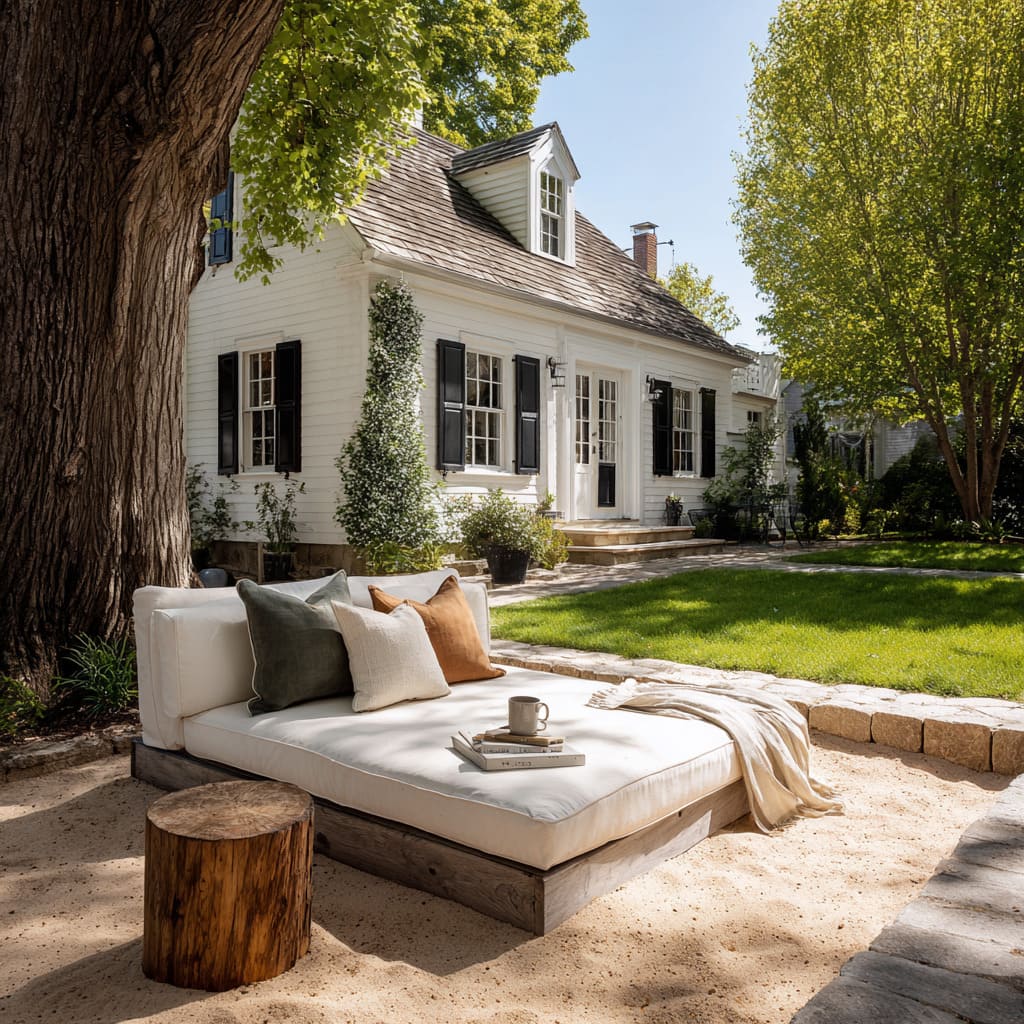
Flat sand planes right against a house or deck act like oversized outdoor rugs, inviting seating, daybeds, or a low dining set. These layouts blur the boundary between interior and exterior zones.
Linear Sand Lanes
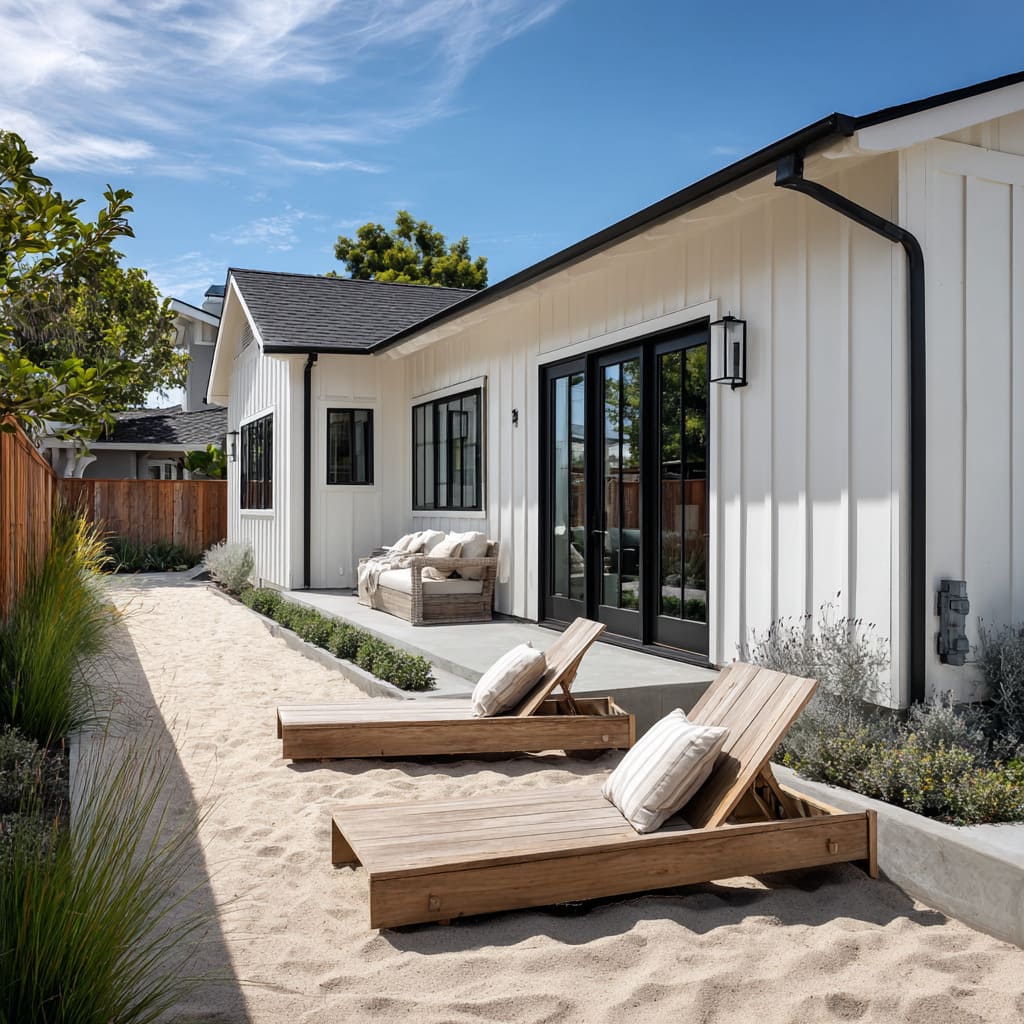
Long, narrow stretches of sand transform side yards or unused corridors into tranquil barefoot walkways paired with simple benches or low planters.
Hybrid Zones
Sand can also serve as a cushion between planted borders and timber platforms, giving decks a natural, relaxed grounding. Together, these layout families show how sand can fill small, medium, or large areas depending on the overall composition of the yard and the intended atmosphere of the space.
The Art of Sand Color and Mood
Sand tone may seem subtle, but it controls the emotional climate of the entire setting. Today, it can be chosen with the same care given to wall paint or flooring indoors.
Oat, wheat, and oatmeal shades create calm transitions between wood structures and neutral facades. Deep honey tones add warmth around timber posts or textured stone.
Greige sand supports softer climates by aligning with grey clouds and diffused light. Very pale sand works well when the goal is a luminous, airy atmosphere, especially near light facades.
The chosen tone often sits at the midpoint between vertical surfaces and furniture finishes. Walls may be cooler, wood elements warmer, and sand becomes the mediator that ties them together.
By shifting just a little cooler or warmer, the sand subtly alters the feeling of brightness, grounding, and comfort without announcing itself.
Light Behavior: Why Sand Is a Natural Amplifier
Sand acts as a quiet lighting companion both during the day and at night. During daylight, the matte surface bounces softened light upward, brightening shaded areas without the harshness of glare.
This effect is especially valuable in compact or enclosed backyards, where the ground needs to carry more of the ambient brightness.
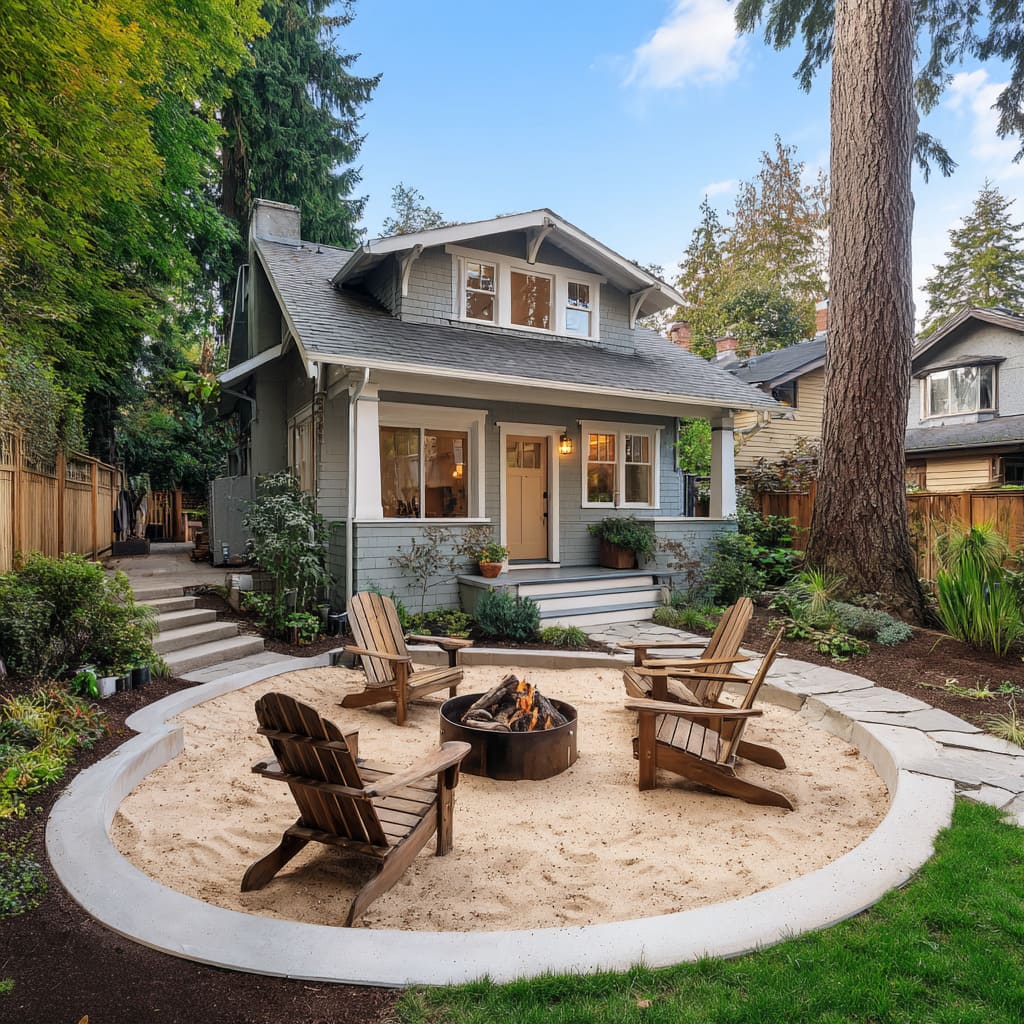
At night, sand amplifies warm points such as lanterns, candles, and fire bowls. Pale sand reflects the glow efficiently, giving the impression that the fire is larger and softer than it actually is.
A layer of fine sand around low lighting creates a delicate halo that spreads across seating areas. This interplay between fire and sand forms the core of many fire pit ideas with sand, where the ground works as a natural reflector rather than neutral background.
Geometry and Soft Form: Balancing Curves and Straight Lines
Modern outdoor designs often rely on a balance between crisp architectural lines and soft, organic forms. Sand is the material that allows both to coexist comfortably.
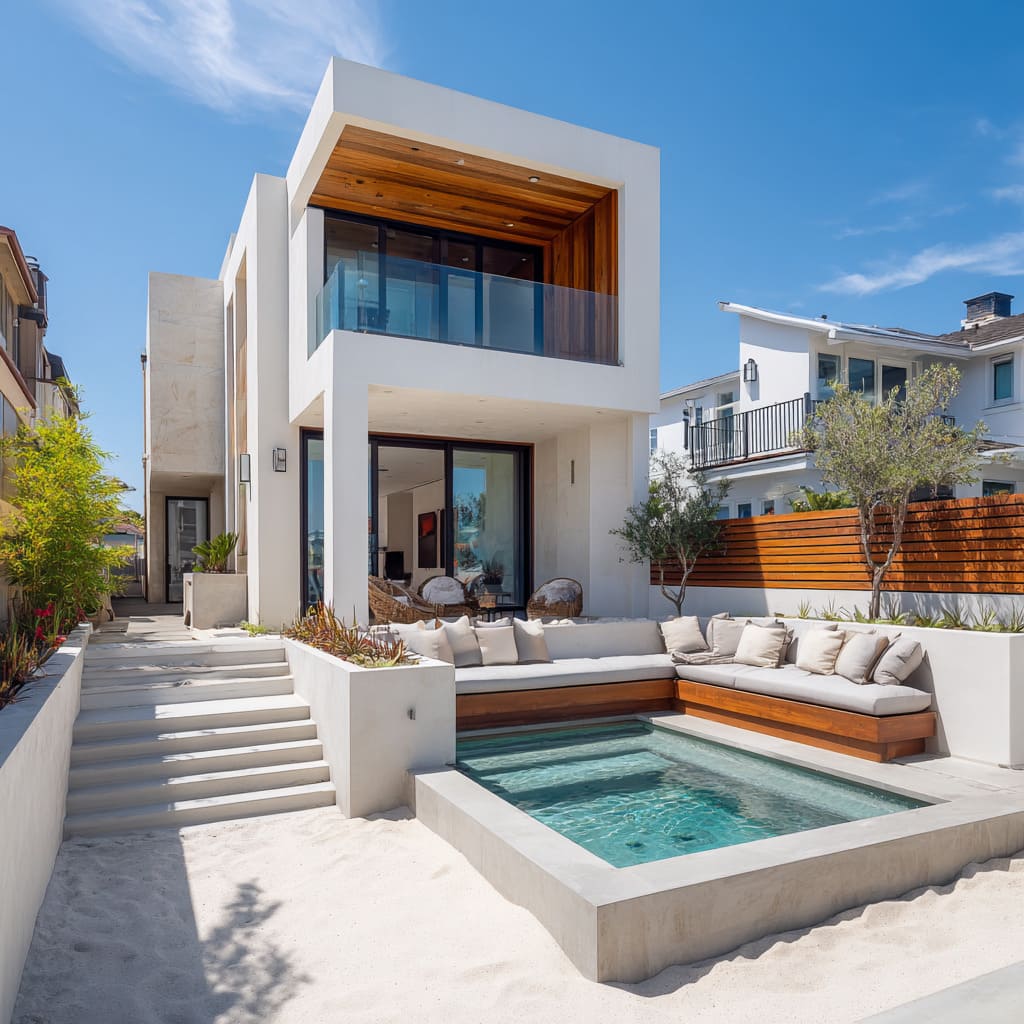
A circular fire pit set within a rectangular patio creates a striking contrast without visual competition. A curved sand pocket carved against a straight fence introduces gentle movement into an otherwise linear setting.
When sand is shaped into smooth arcs or ovals, the result feels welcoming rather than formal.
This balance becomes a defining tone for many backyard ideas with sand: clean structure above, soft texture below. Whether the surrounding elements are timber beams, metal pergolas, or stucco walls, the interplay of geometry ensures that the sand feature feels intentional and visually anchored.
Fire Features and Intimate Gathering Zones
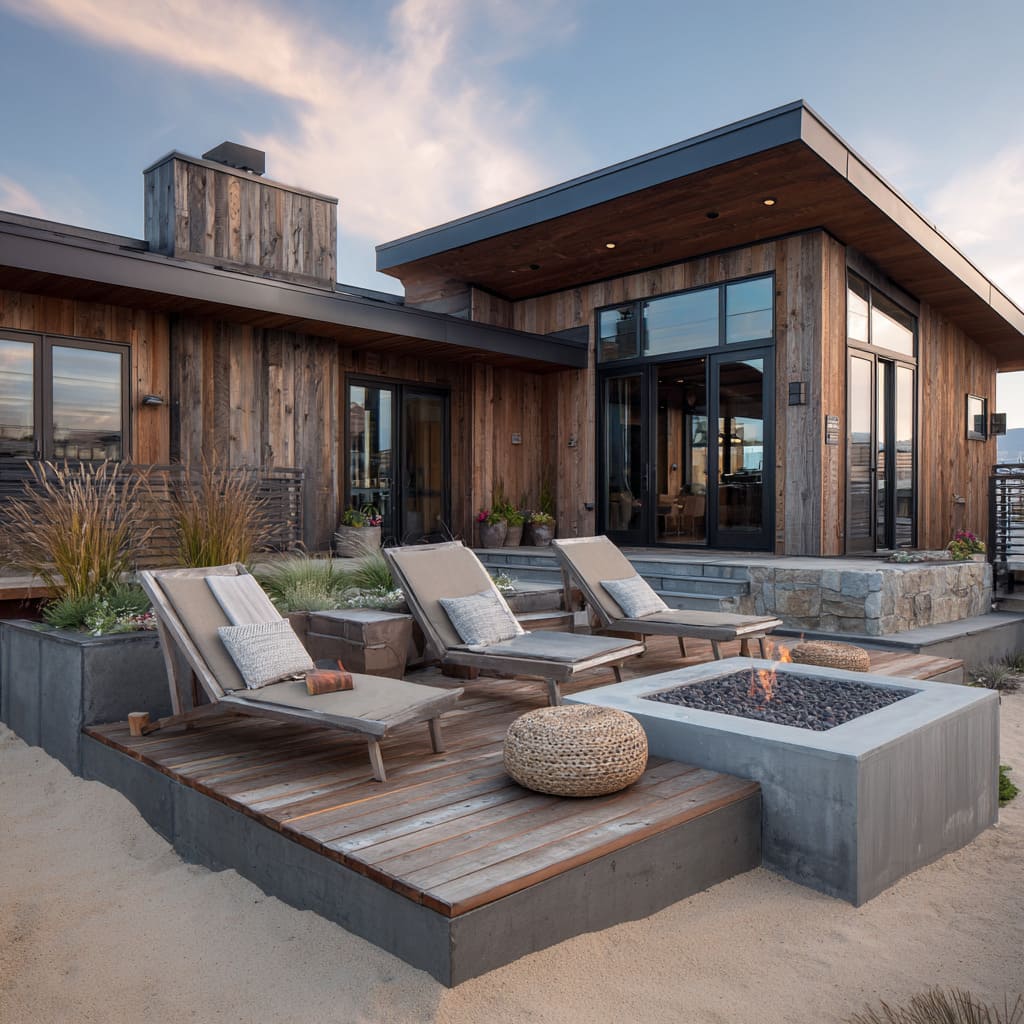
Sand and fire naturally complement each other, which explains the popularity of backyard sand fire pit ideas in modern outdoor planning. Sand tempers the brightness of flames while giving the space an immediate sense of coziness and openness.
Circular pits lend themselves to communal arrangements, where low chairs or cushioned benches wrap around the flame. Square or elongated fire tables set over sand can shift the atmosphere to something more serene and refined.
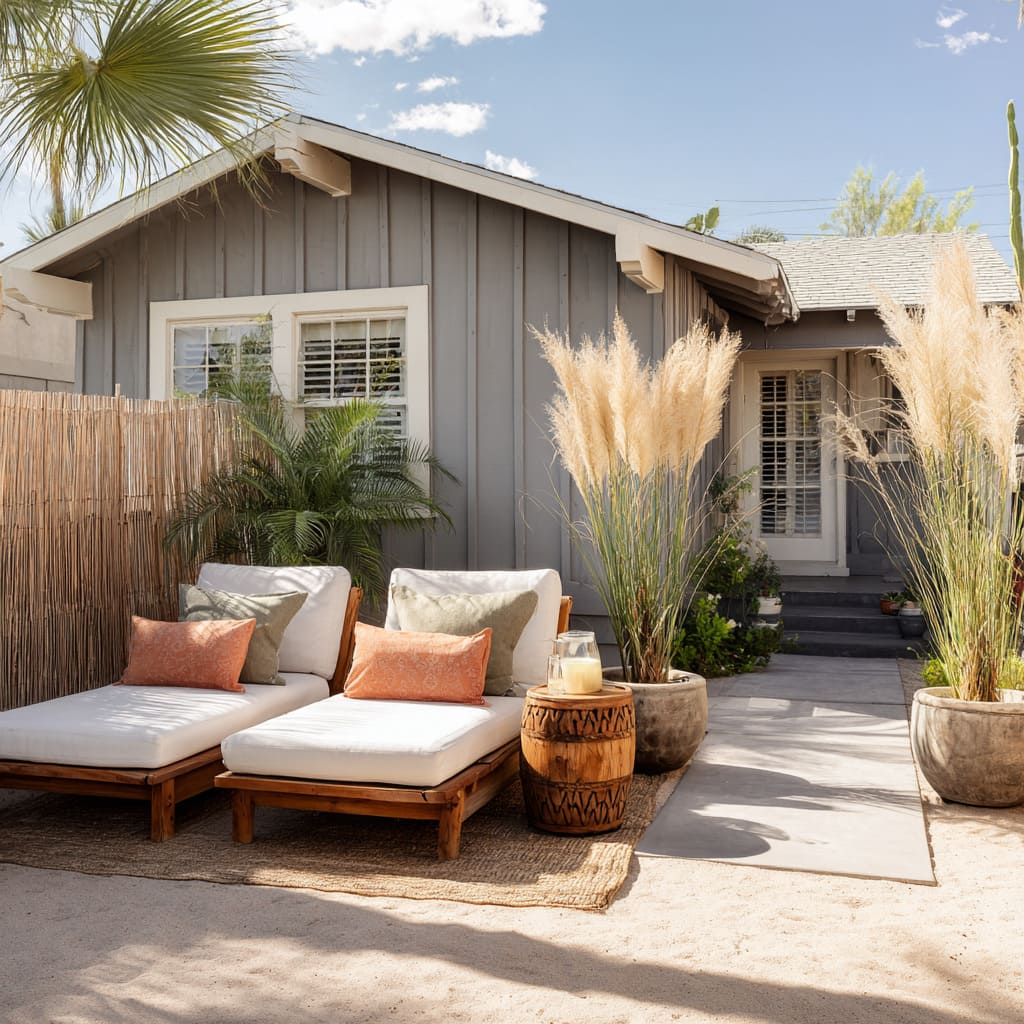
Common Fire Zone Configurations
- Low lounge chairs circling a recessed sand pit for casual evenings.
- Deep daybeds surrounding an elongated burner for a spa-like ambiance.
- Curved built-in benches hugging a round pit to maximize seating without crowding furniture.
Sand underfoot encourages a slower pace—people naturally remove their shoes, shift into relaxed postures, and settle deeper into the fire-lit moment.
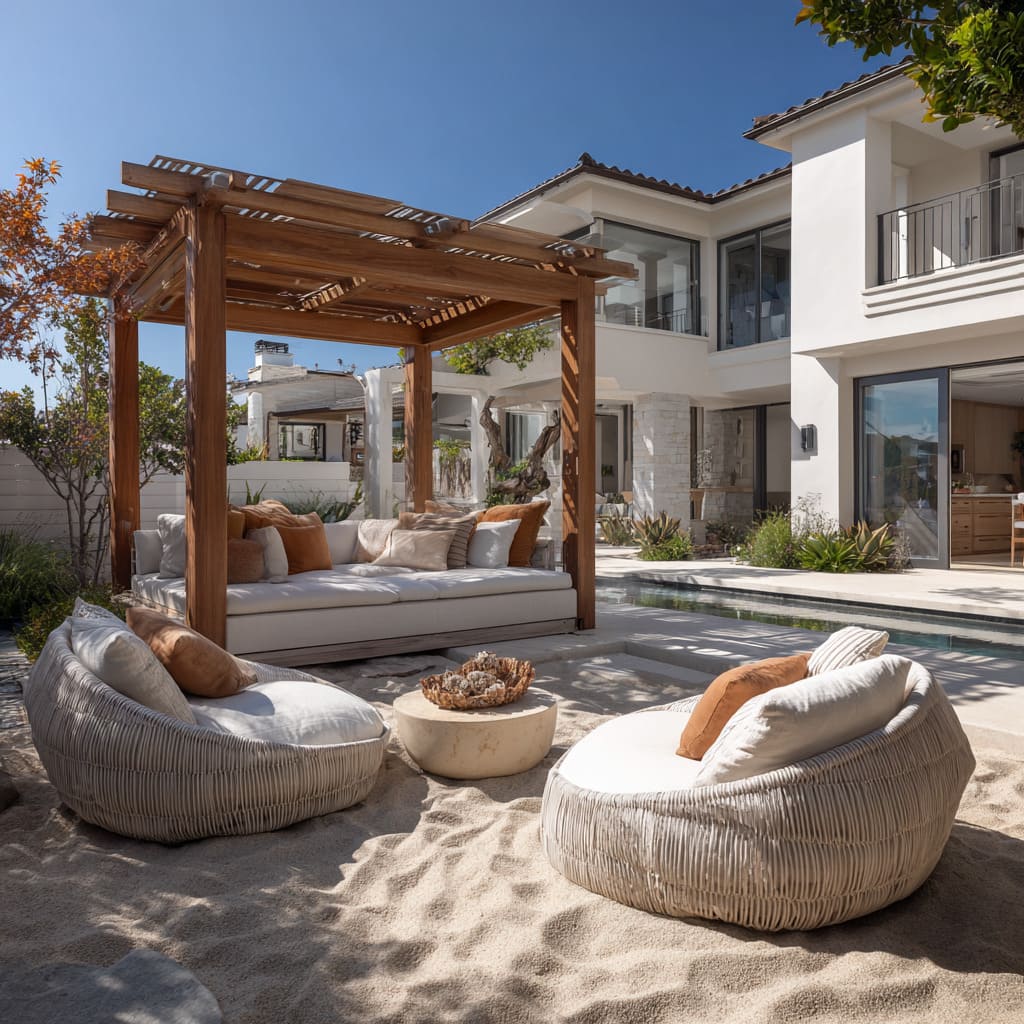
Adapting Sand to Different Architectural Personalities
One of the reasons people return to sand is its ability to adapt to many different architectural moods. In a meadow-bordered cottage yard, sand forms a soft reading corner under a tree.
In a house with warm timber and wide porches, a sunken circular pit on golden sand enhances the sense of comfort and hearth. Homes with sharp, modern silhouettes benefit from sand carved into geometric patios flush with concrete, emphasizing clean lines while adding gentle texture.
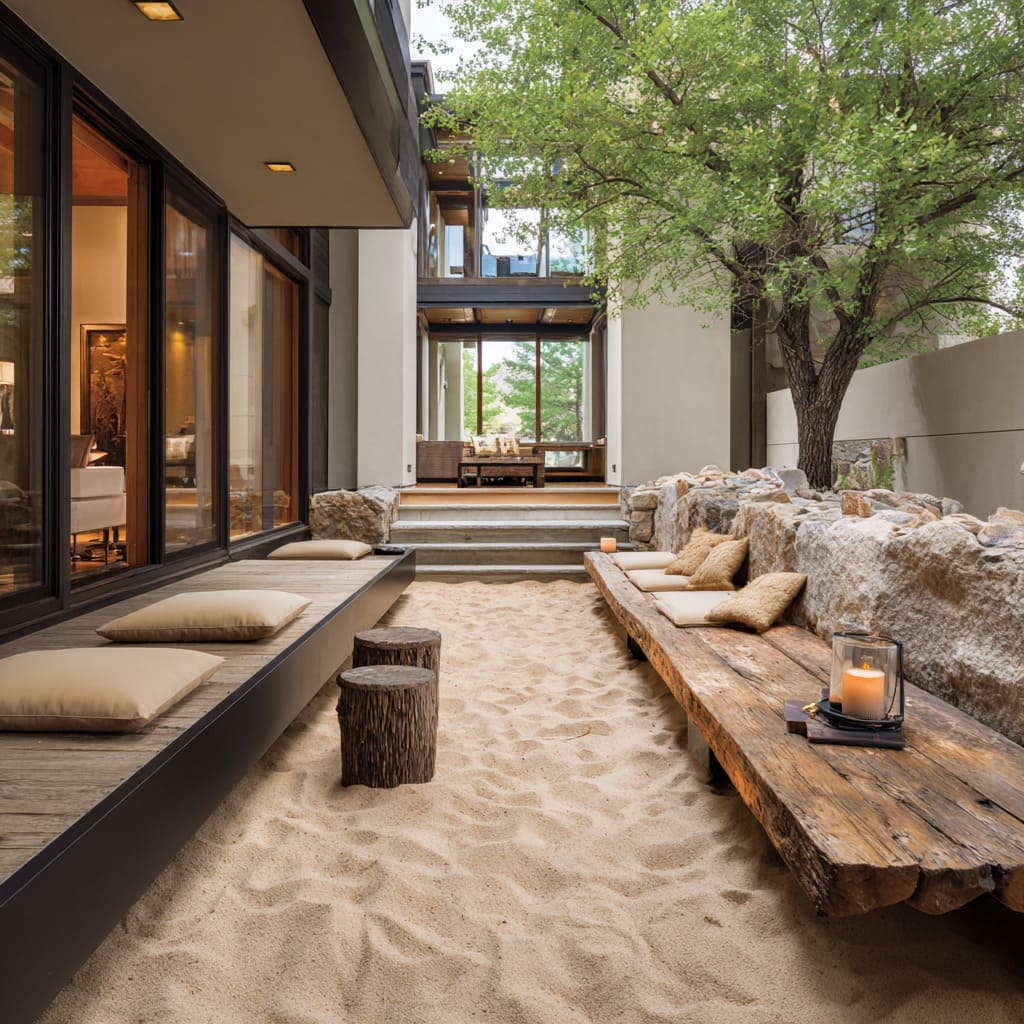
In each case, sand reflects the architectural character around it. It can feel coastal, lake-side, desert-calm, or garden-soft depending on the tone, shape, and level of detailing.
This versatility is what places sand at the center of many contemporary backyard beach sand ideas.
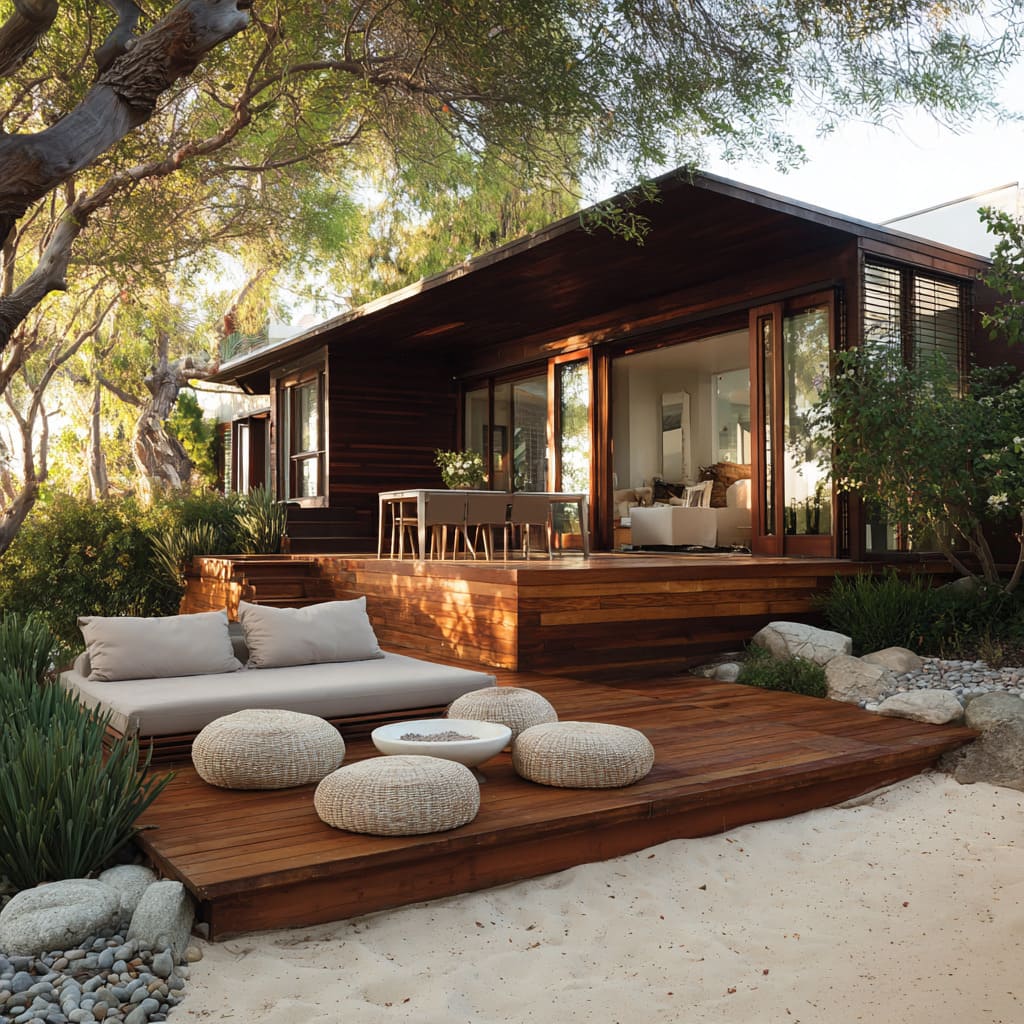
Furniture and Seating: Treating Sand Like a Real Floor
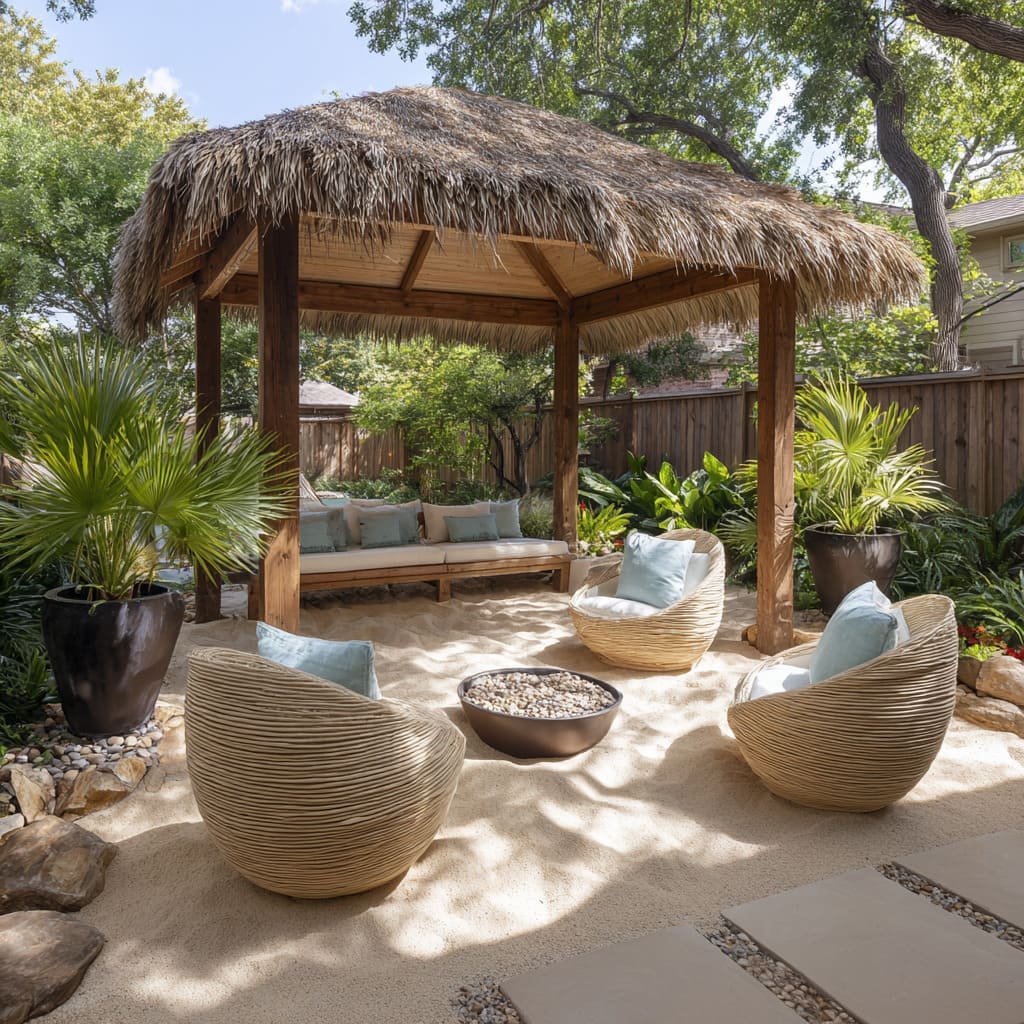
When sand is used as the main ground material, the entire seating strategy changes. Low, broad pieces work best: daybeds, deep outdoor sofas, and relaxed lounge chairs with soft cushions.
Furniture often follows the direction or shape of the sand zone—curved seating for circular pits, long loungers for linear sand lanes, square daybeds for flat sand carpets.
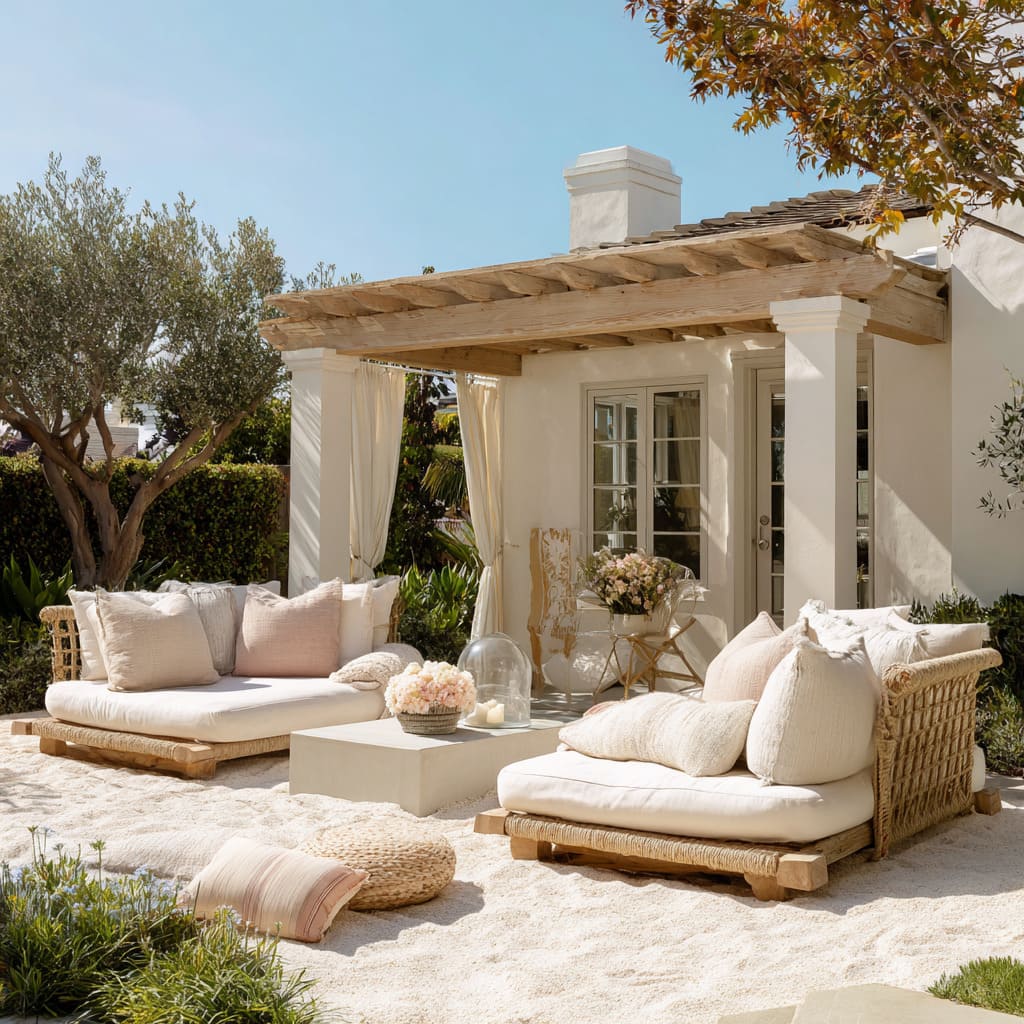
Upholstery colors usually stay close to the ground tone. Soft creams, warm greys, muted stone shades, or pale oat hues ensure that furniture blends into the environment rather than sitting harshly on it.
Timber frames, wicker structures, and rope accents create gentle echoes of natural surroundings such as trees, fences, and pergola beams. This arrangement supports the broader goal: turning the sand area in backyard layouts into comfortable, balanced outdoor rooms.
Planting and Vertical Texture: A Natural Counterpart to Sand
Planting is essential in sand-based backyards because it provides the vertical softness that balances the horizontal sweep of the ground. Often, they pair fine-textured grasses with sand, allowing their blades to create a gentle screen along edges.
Pampas, feathergrass, or slim ornamental varieties rise through the air like vertical versions of the sand’s surface ripples.
Trees play an anchoring role. A single trunk near a sand pocket immediately sets the sense of place, providing shade, visual balance, and dappled light.
Low shrubs and simple groundcover create comfortable buffers between sand edges and façades, helping the sand feel integrated rather than dropped in place. These planting strategies support many contemporary backyard landscaping ideas with sand, ensuring that the composition maintains both calmness and structure.
Small Objects and Atmosphere: Quiet Details That Shape the Mood
In sand-based patios, small objects contribute heavily to the atmosphere because the neutral base highlights every accent. A tray with citrus adds freshness.
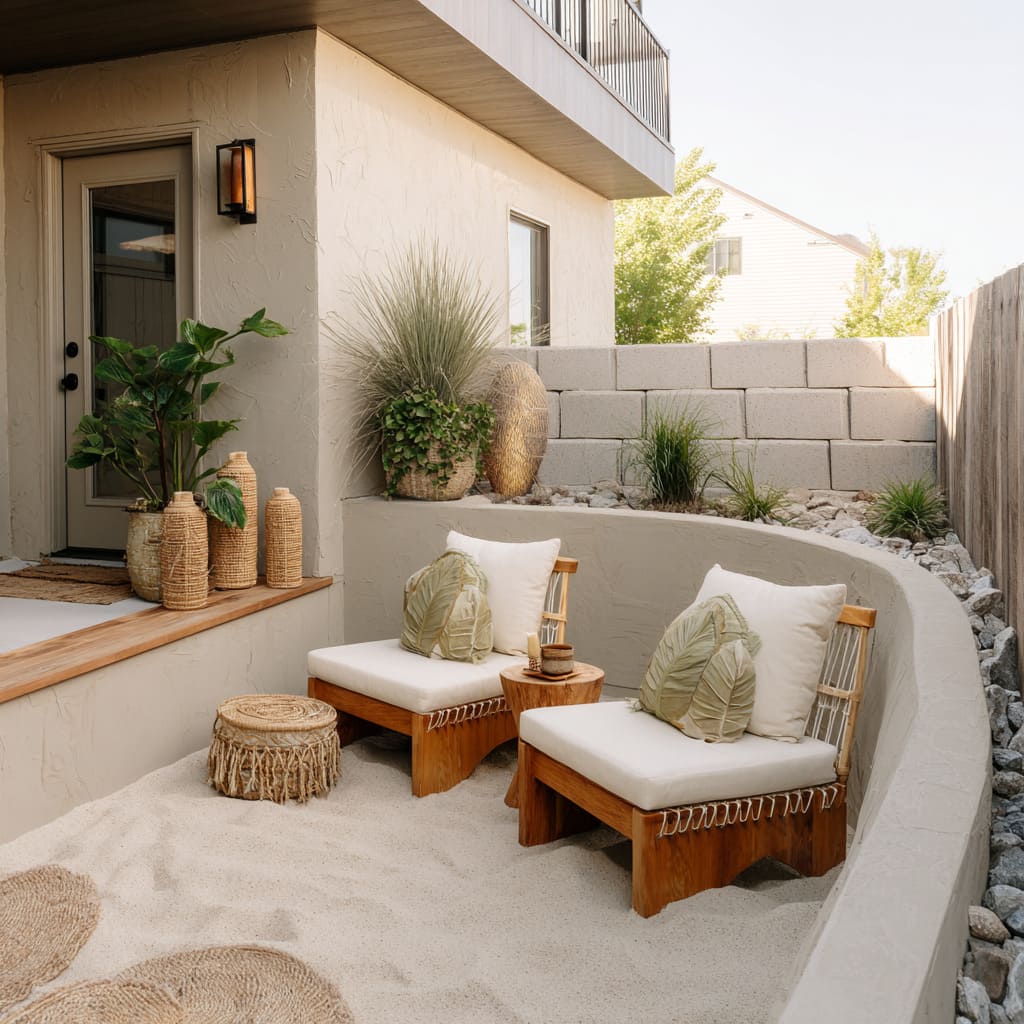
A pair of woven lanterns introduces warm evening character. A couple of coral or mint pillows on a daybed establish a specific palette without overwhelming the scene.
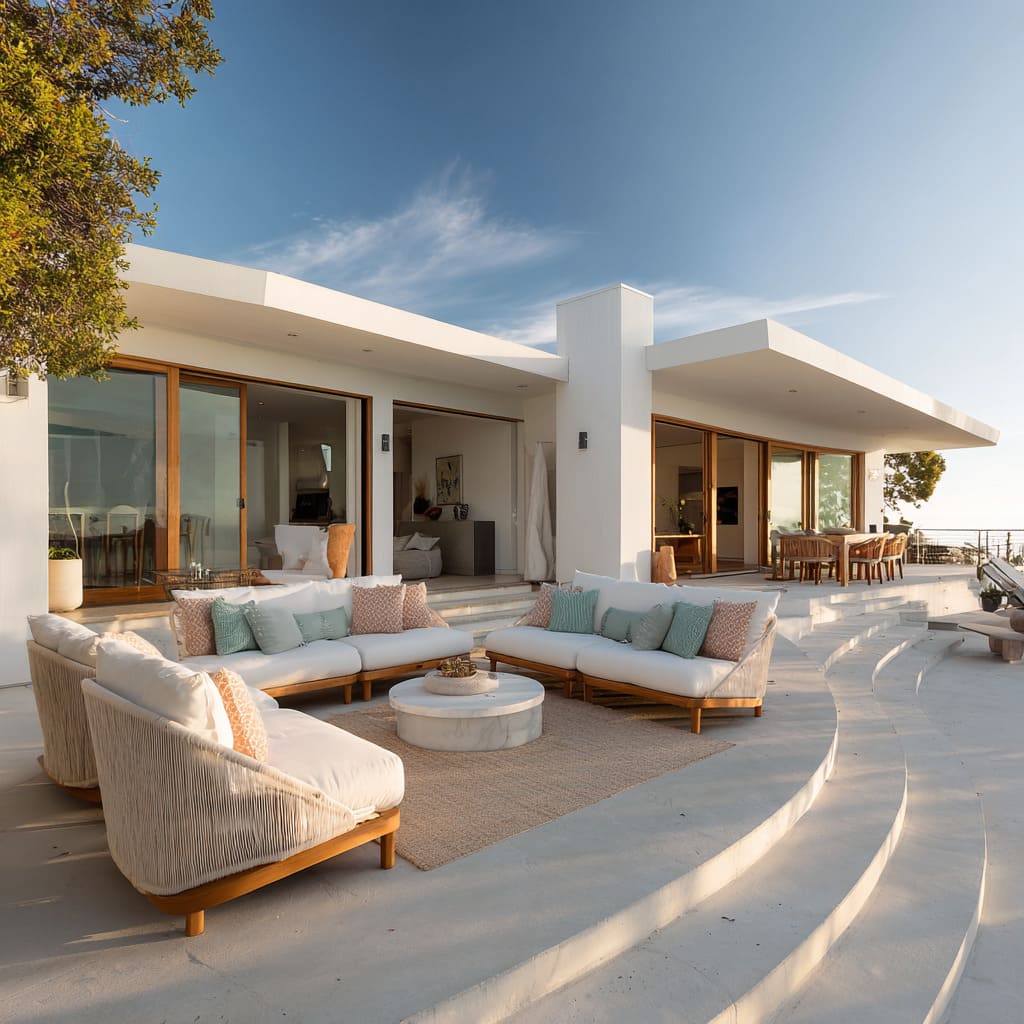
These items guide the emotional reading of the space. Books and throws push the idea of slow afternoons.
Low serving trays and simple glassware support casual social meetings. Subtle decor speaks louder than strong patterns because sand naturally amplifies small gestures.
This quiet approach aligns with many modern sand ideas for backyard where mood-building happens through small, meaningful elements rather than heavy ornament.
Transforming Tight or Overlooked Spaces with Sand
Sand is especially effective in zones that would otherwise feel leftover or unusable. A narrow side yard becomes a peaceful barefoot path when filled with fine sand and bordered with a single bench.
A small corner by a retaining wall transforms into a sun pocket furnished with a pair of deep lounge chairs. A tiny courtyard gains a resort-like identity when the ground plane shifts from hard paving to soft sand.
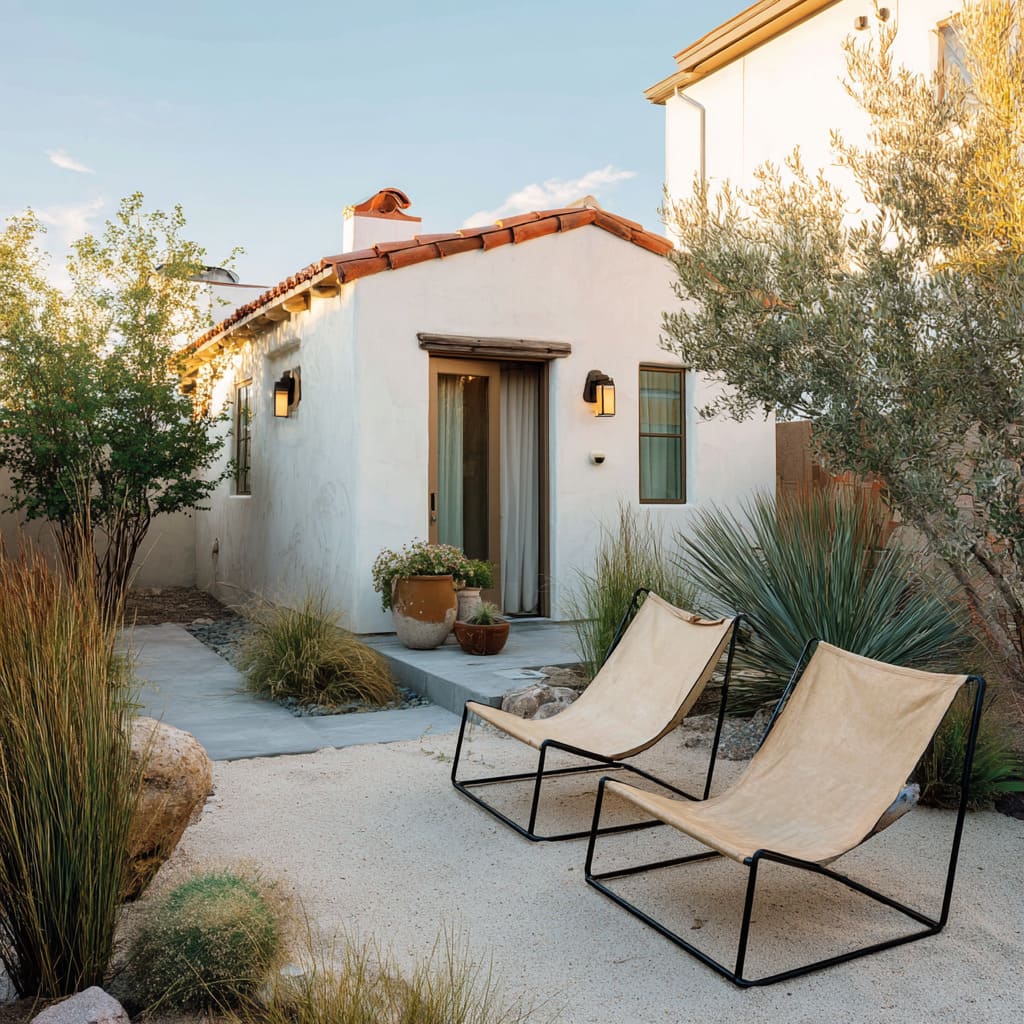
These interventions rely on scale, proportion, and sensory changes rather than elaborate construction. Sand provides a soft transition that can visually widen tight proportions and create a sense of intention in spaces that previously lacked purpose.
Many sand backyard ideas begin with the simple act of rethinking these leftover areas as potential calm zones.
The Broader Language of Sand in Contemporary Outdoor Design
Modern outdoor design embraces sand as an atmospheric material capable of shaping emotion, light, and movement. Sand defines areas, connects architecture to the landscape, supports low seating arrangements, and softens the tone of the entire backyard.
Whether paired with calm grasses, timber benches, sculptural fire bowls, or neutral textiles, sand becomes a quiet foundation for outdoor living.
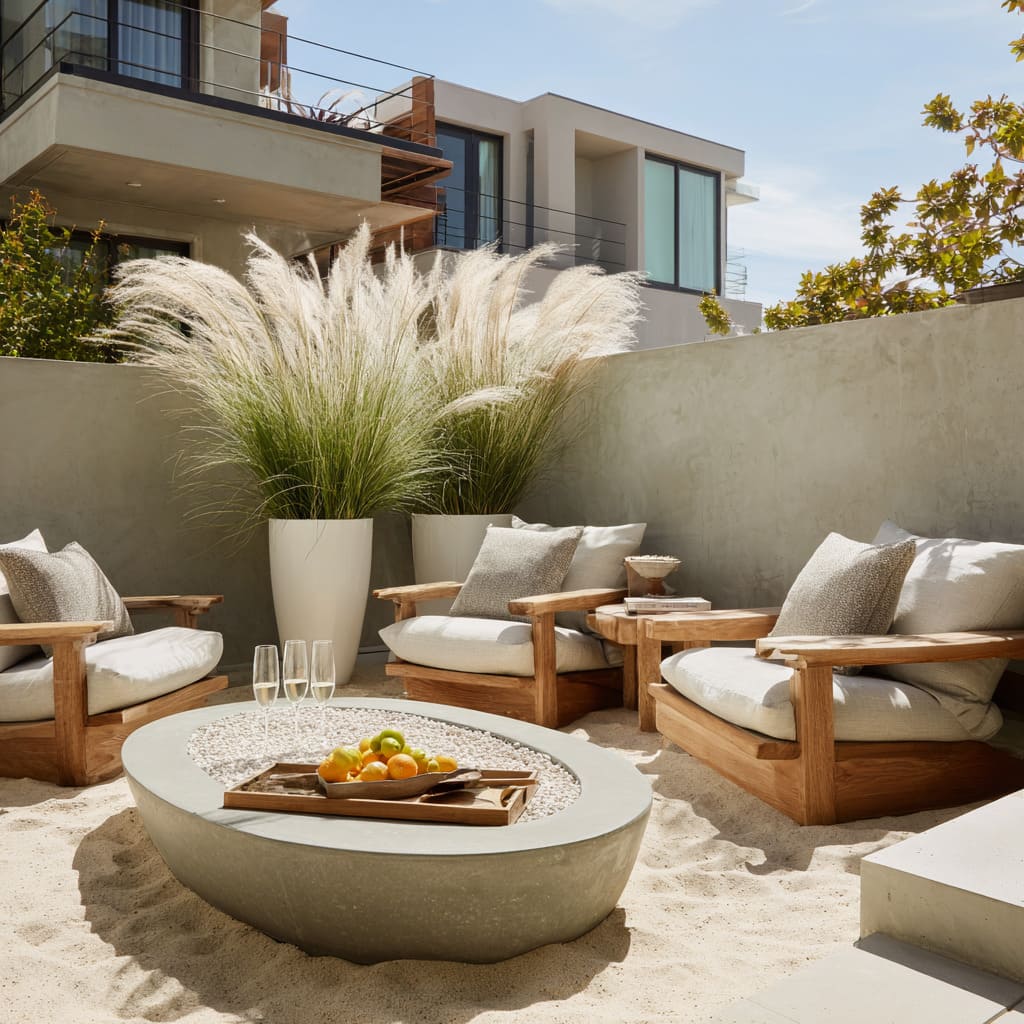
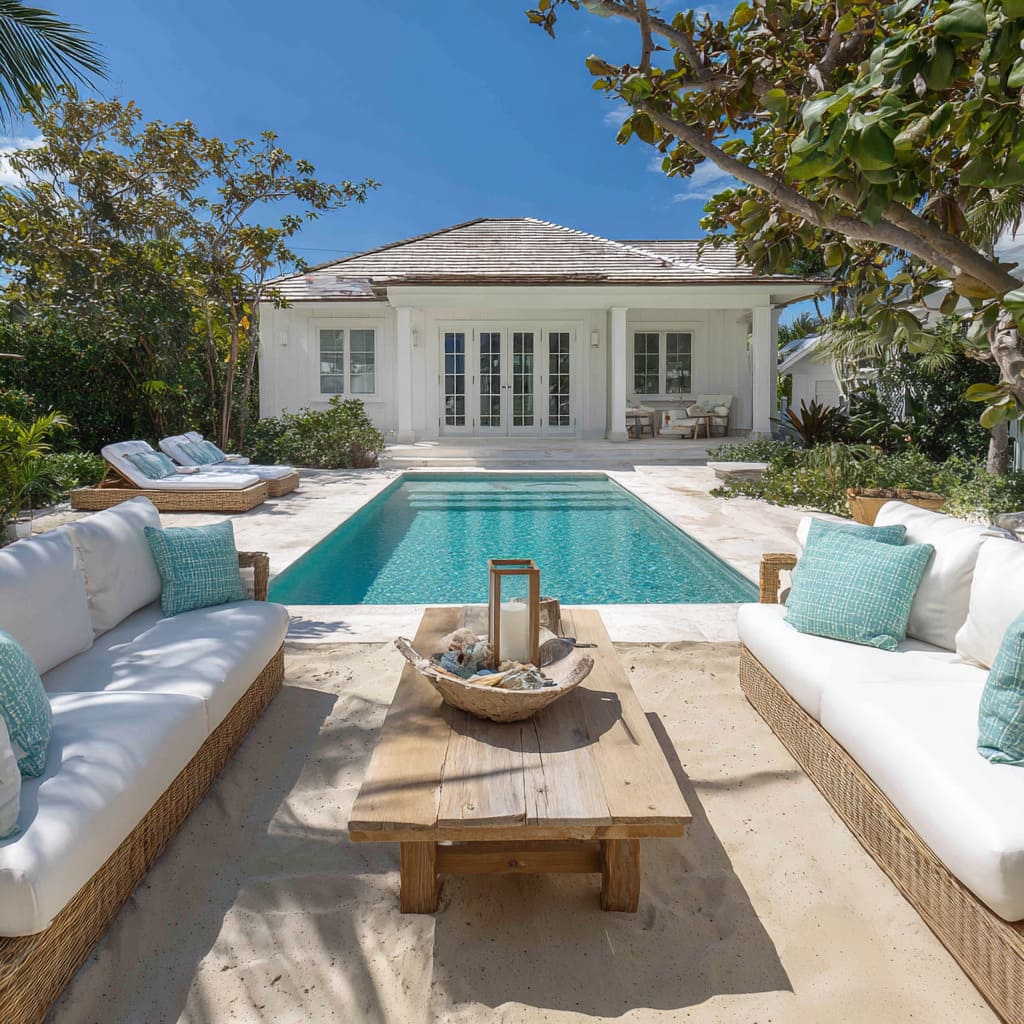
It appears in front yards as soft welcome zones, in side yards as relaxed corridors, in patios as conversation pits, or around pools as barefoot-ready lounging areas. From a design standpoint, sand works as the grounding element for beach sand patio ideas, the flexible base for sand backyard landscape, and the calm canvas for many styles of contemporary outdoor living.
It shows how texture, tone, geometry, and planting can turn open air into a gentle, cohesive space that supports everything from quiet afternoons to warm evening gatherings—without relying on heavy structure or complicated construction.
Related Posts

Harmony Home Design brings 10+ years of residential interior design experience to the ideas shared here. We publish design concepts, layout thinking, and practical styling notes.