
Modern sliding door ideas treat the moving plane as a visual editor for the interior design: it controls how much is revealed, where the eye rests, and how calm or active the connection between zones feels. The strongest results come from treating the door as a surface strategy—a soft wall, a graphic outline, a curtain of shadow, or a luminous field—so the room’s image can shift without relying on extra decoration.
Turning the panel into architecture by reducing “door signals”
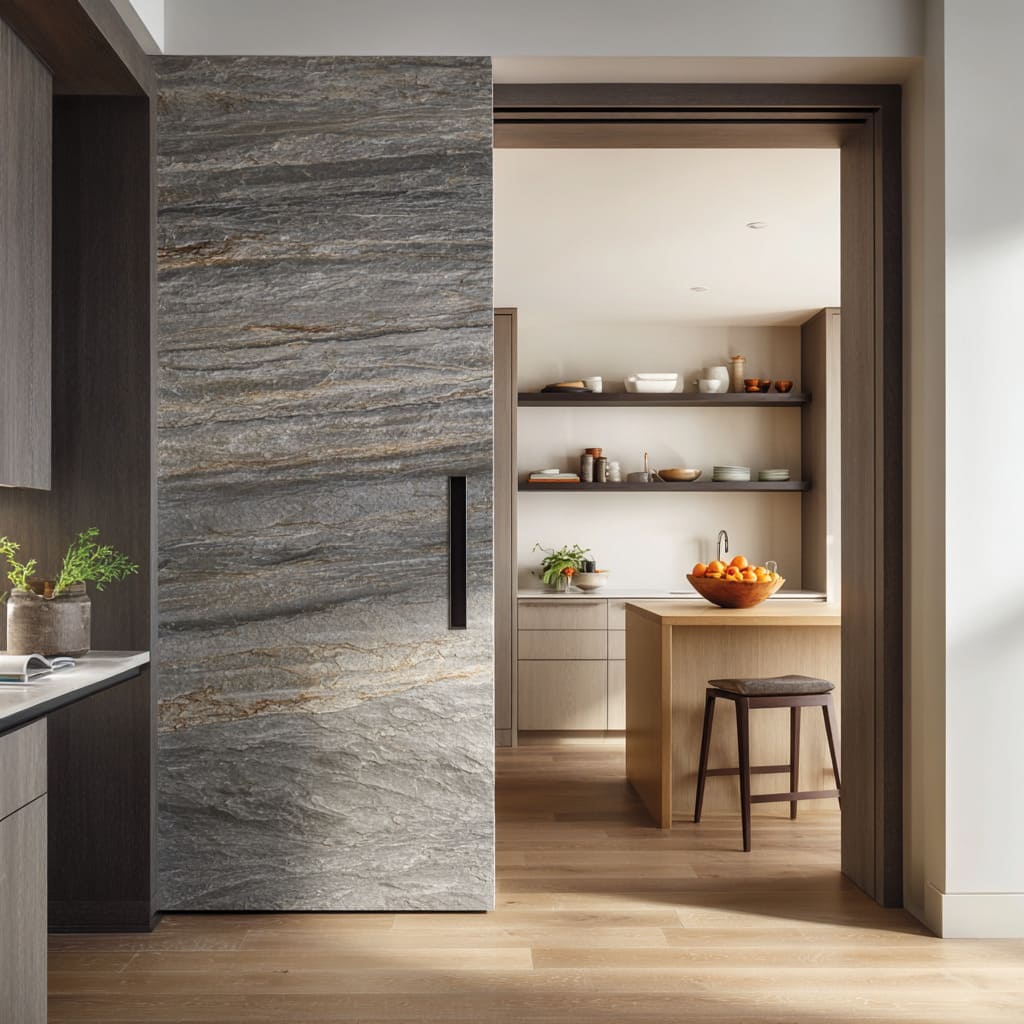
A sliding panel reads most modern and high-end when it stops behaving like a stand-alone object and starts reading as part of the wall system.
- Full-height scale pushes the panel into architectural territory, so it feels like a wall bay that happens to move.
- Low-contrast edges and seams keep the surface from becoming a framed rectangle, which helps the panel merge into the larger envelope.
- Precise spacing and joints become the main “ornament,” replacing decorative profiles with controlled proportion and alignment.
A quiet panel also changes how the rest of the design is perceived: small objects and simple furniture silhouettes can read as intentional because the large surface establishes a stable background.
The handle as human-scale punctuation, not decoration
In modern sliding door designs, the handle often behaves like a scale cue rather than a stylistic accessory. Its placement and thickness subtly tell the eye how to read a very large plane.
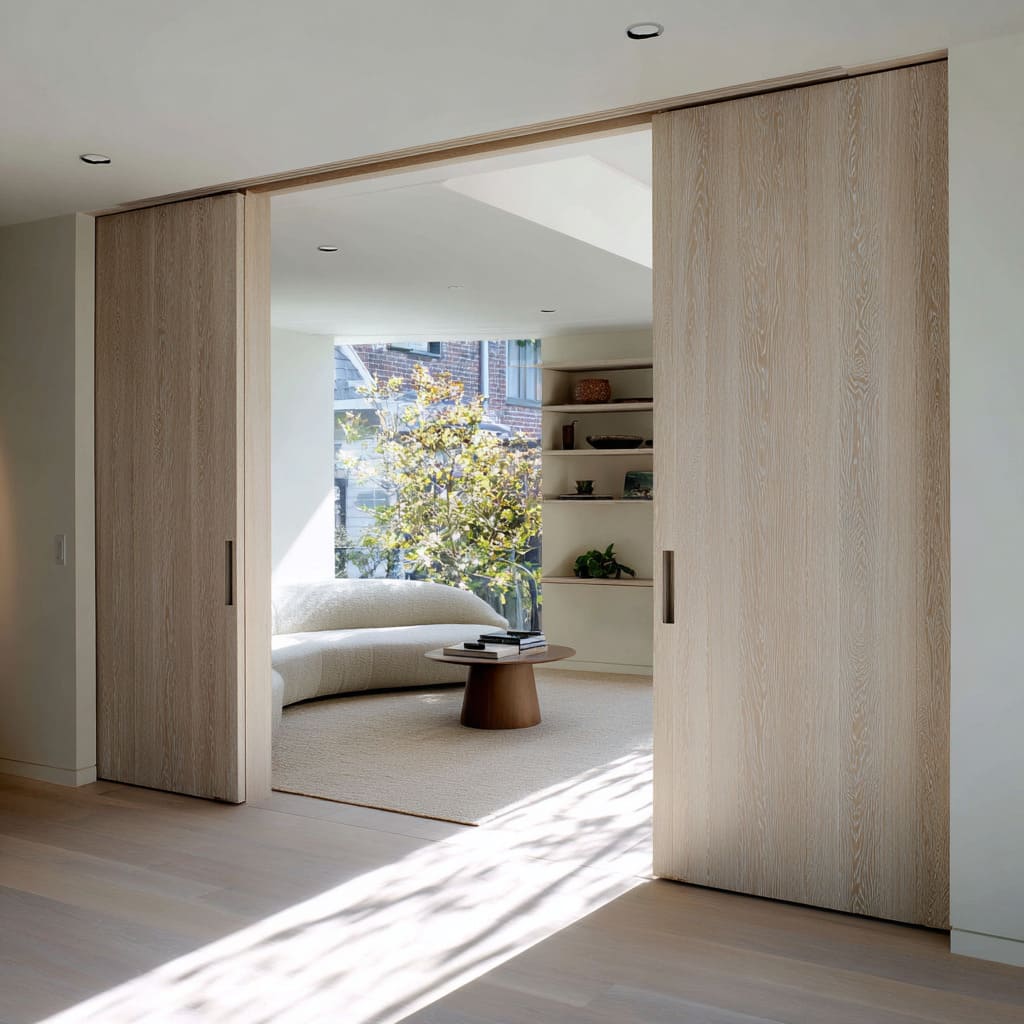
- A low recessed pull tends to create a downward visual stop on an otherwise tall surface, bringing the composition back to human reach and touch.
- A longer, mid-height notch can function like a graphic stroke: a controlled shadow-line that clarifies movement without turning into ornament.
- A more sculpted grip can introduce tactile softness inside an otherwise strict rectangle, and slight shifts from perfect symmetry can reduce a showroom-like stiffness.
The most convincing handles read as part of the surface language: visible mainly through shadow and proportion, rather than shine or complexity.
Openings as framing devices: controlled reveal instead of raw openness
A sliding door system can shape the opening like stagecraft: not theatrical in decoration, but precise in how it frames the next zone.
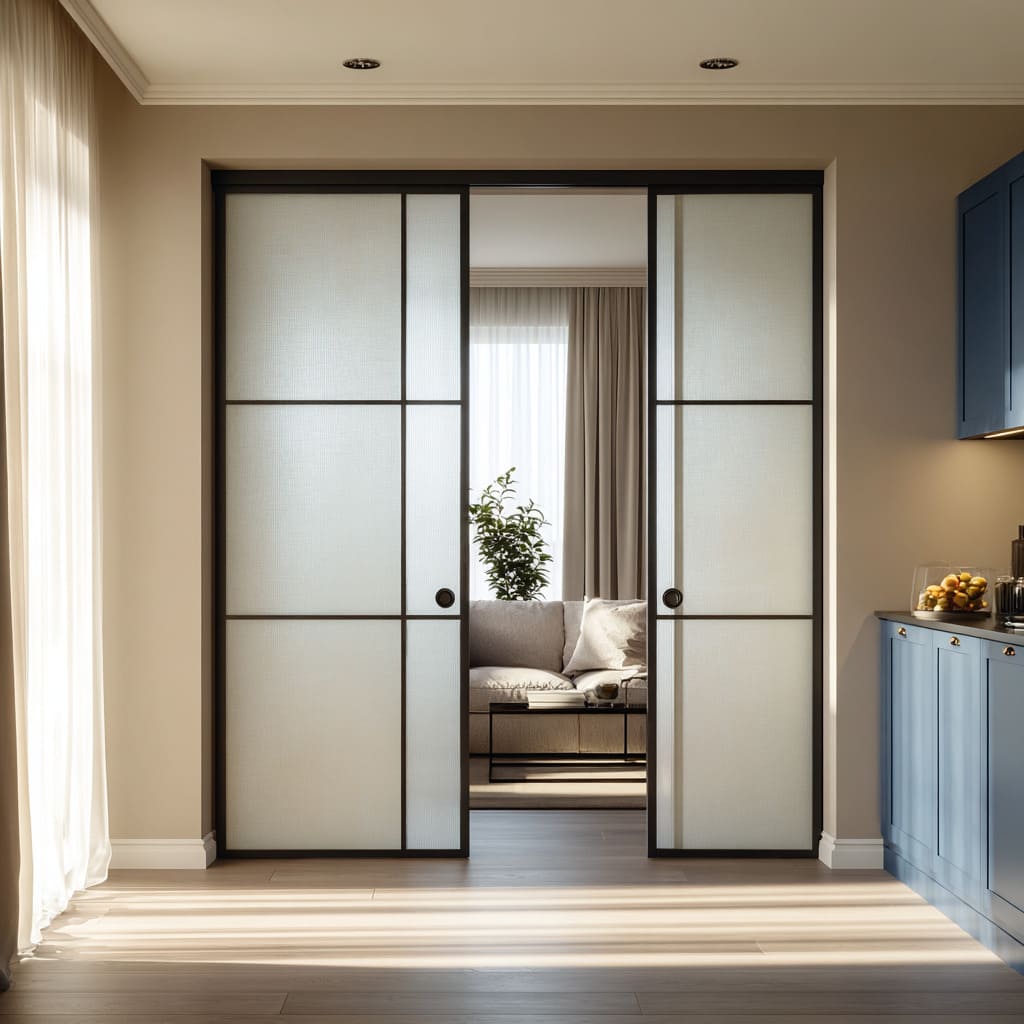
- A centered opening created by two panels commonly produces a clear focal axis, so the next room is revealed in a deliberate, edited way.
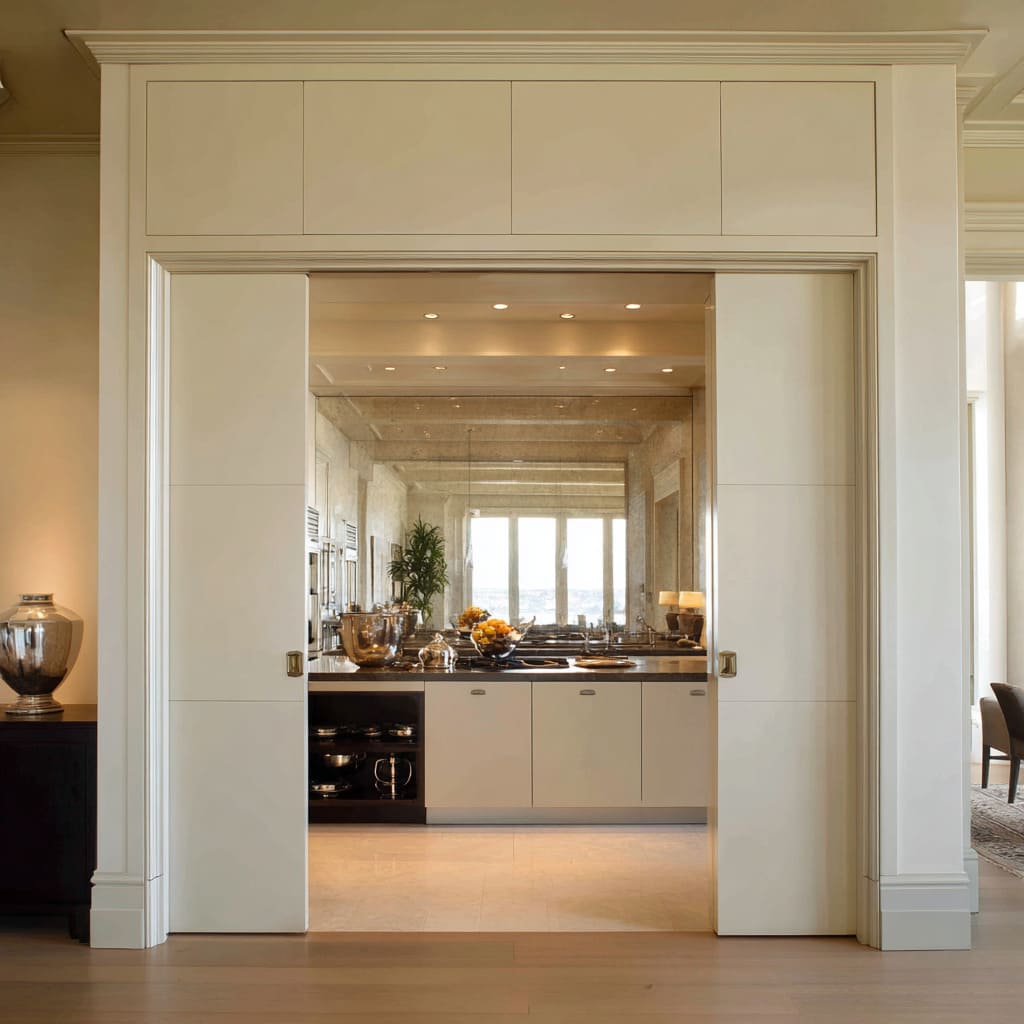
- A very wide opening framed by substantial casing or trim can behave like a proscenium: the doorway becomes an intentional aperture, and large sliding planes read like calm curtains that can restore a continuous wall image.
In both cases, the key idea is that the threshold is not neutral; it is a compositional tool that decides what the eye receives first.

Light as a surface effect: when the door performs under daylight or glow
A major modern strategy is choosing door surfaces that change with light, so depth and atmosphere come from the room’s natural conditions rather than added decor.
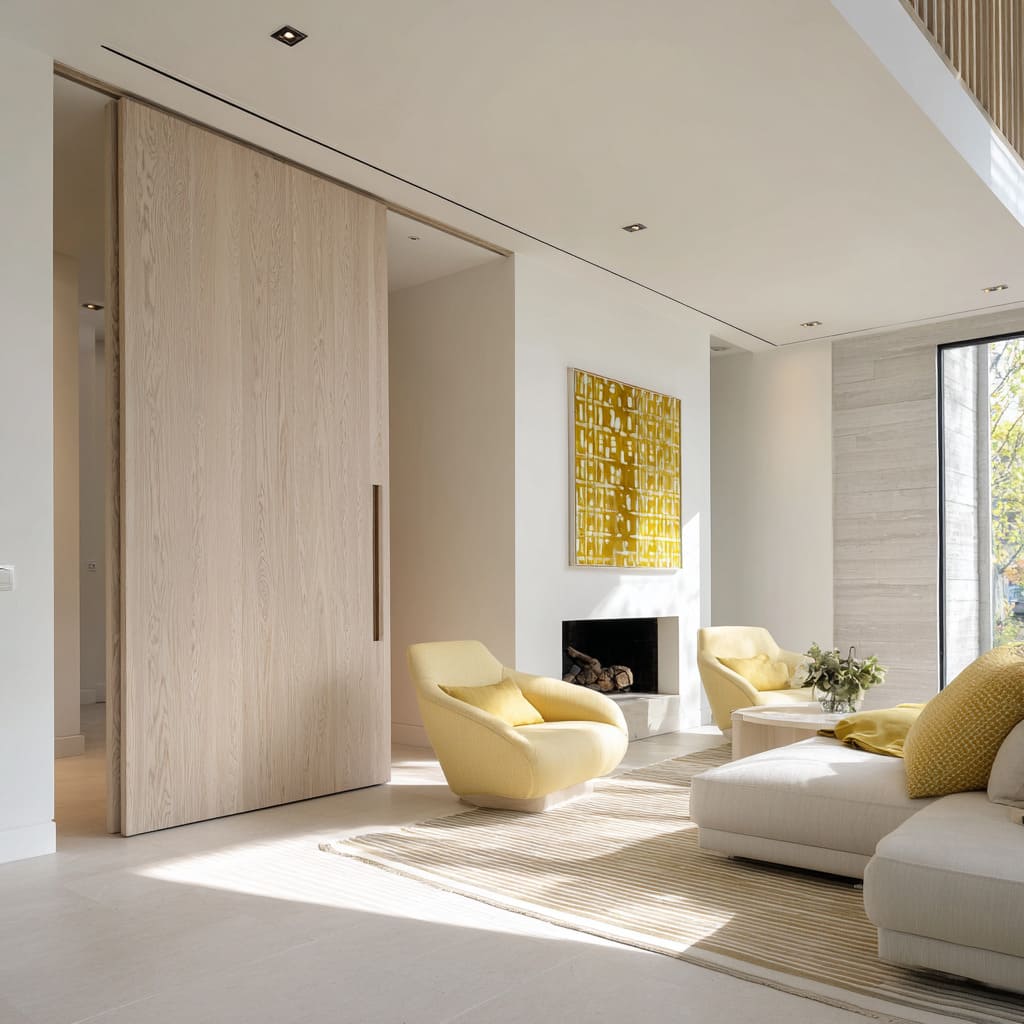
- A broad timber plane can become a canvas for sun geometry—diagonal bands of light and shadow that create time-of-day movement inside an otherwise restrained space.
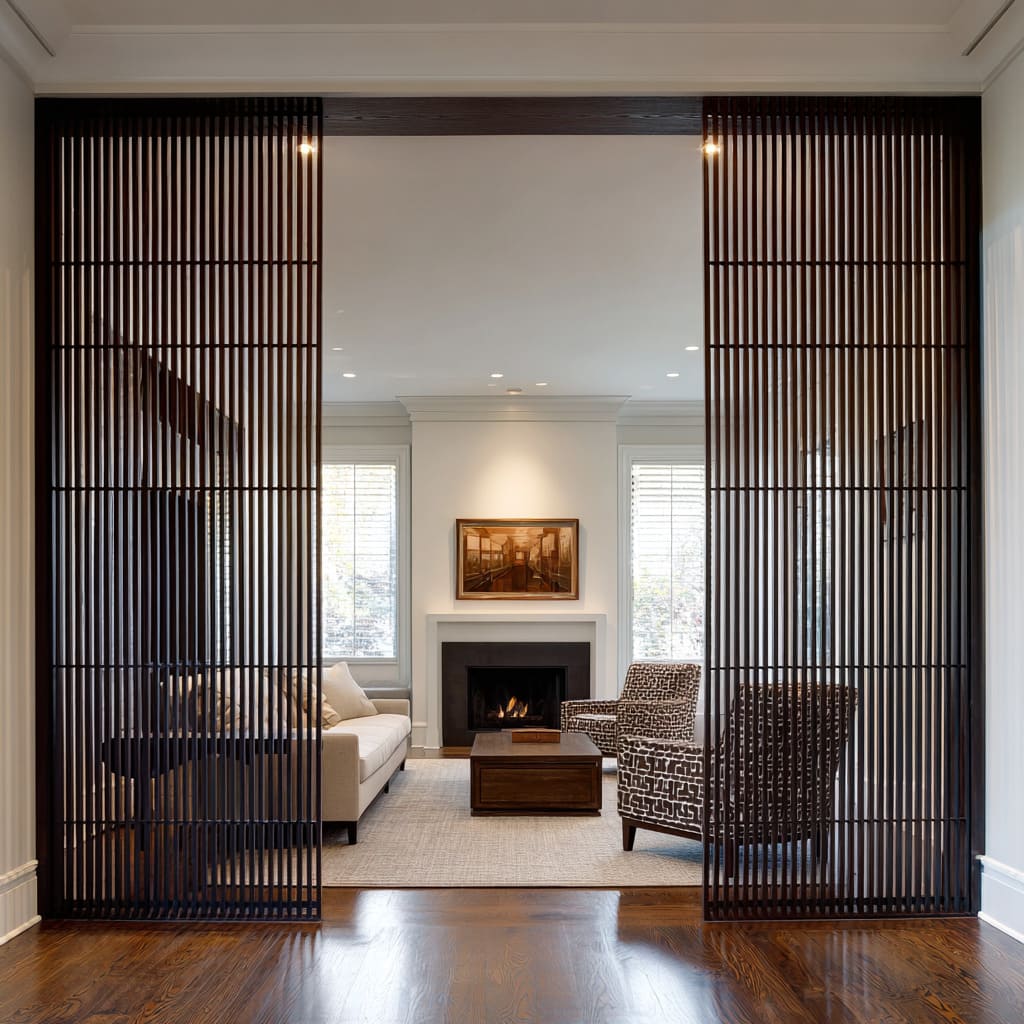
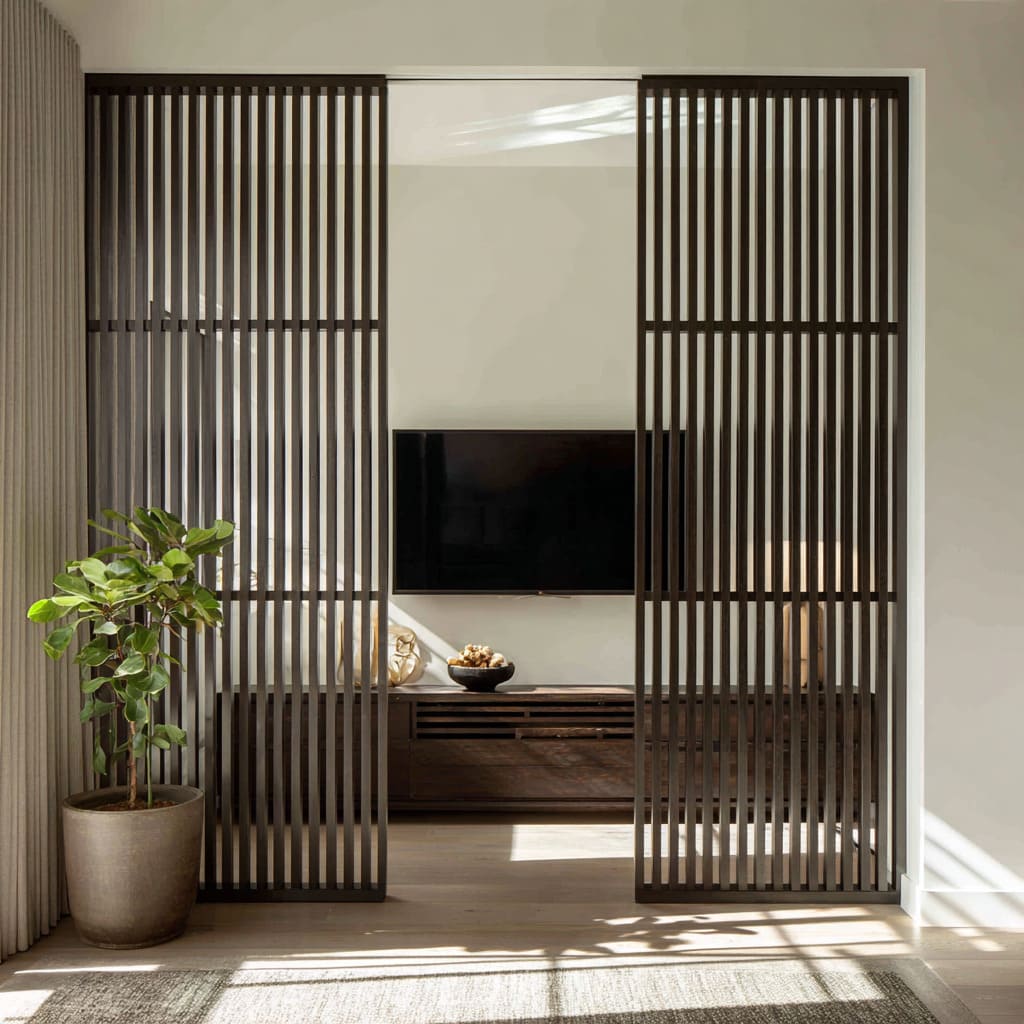
- Slatted screens can act as shadow printers, projecting thin stripe patterns across floors and adjacent planes, creating a graphic layer that feels designed yet weightless.
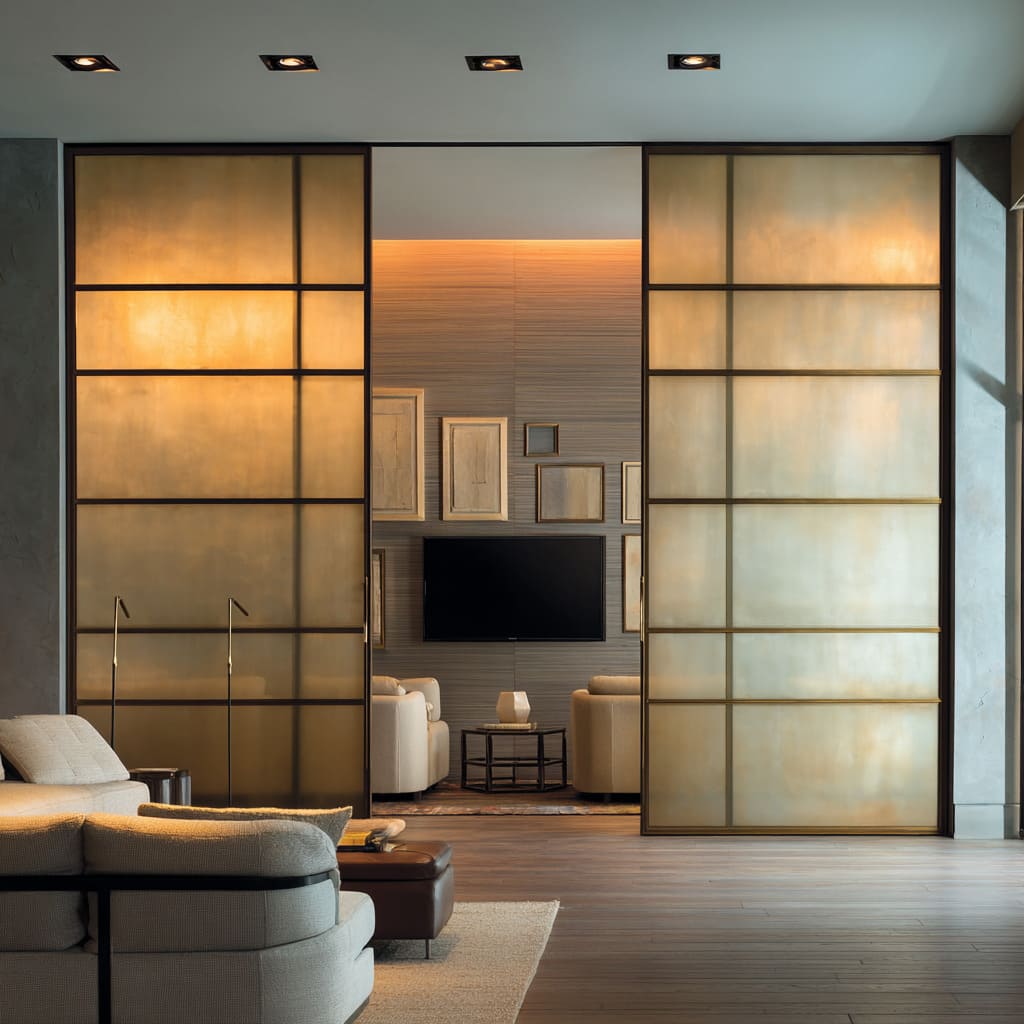
- Translucent panels with warm tone can function as luminous surfaces, producing soft gradients that make the room feel warmer through light alone.
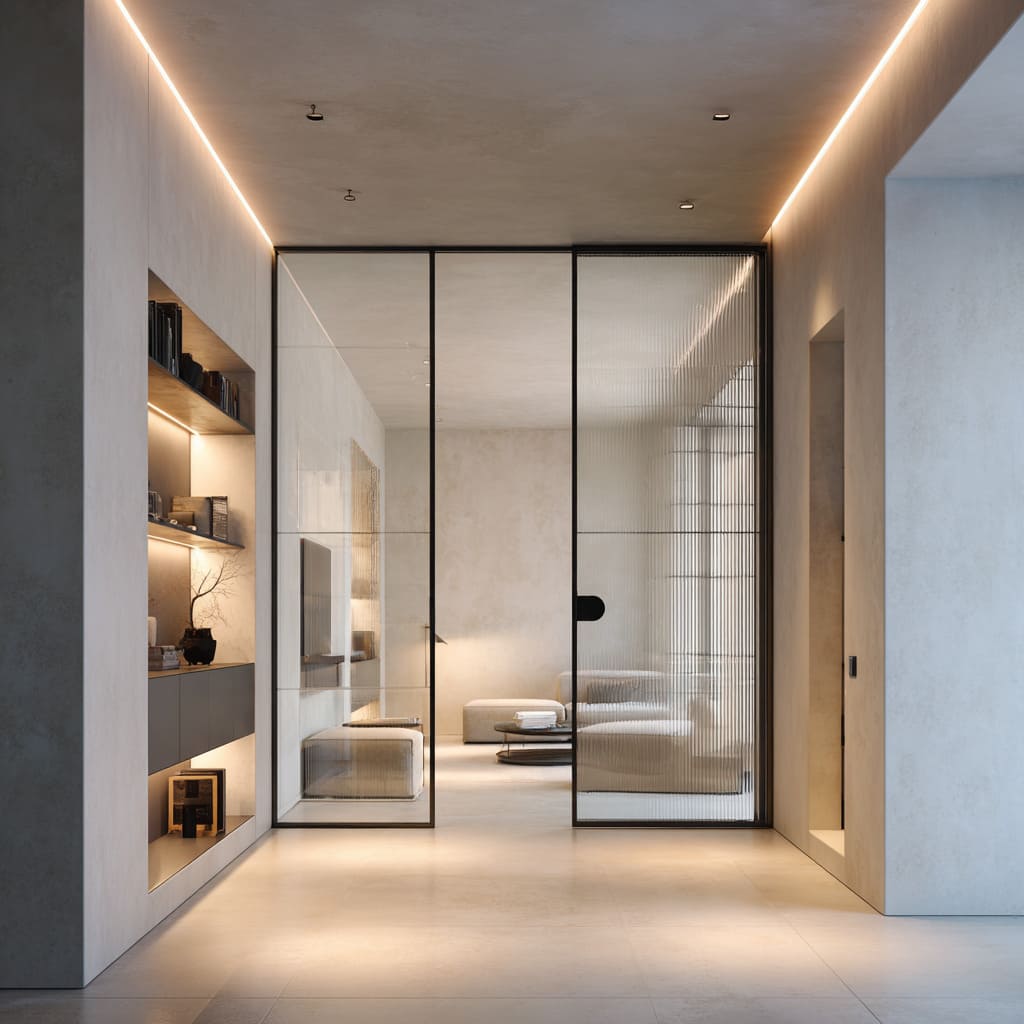
- Mixed transparencies (clear paired with ribbed/fluted or textured glass) create an optical hierarchy: one side reads as a crisp scene, the other as shimmer and silhouette, giving presence without full exposure.
These effects often register as “expensive” because they rely on controlled ambiguity and layered perception, not on more objects.
Building a rhythm system that unifies the room
Many of convincing modern interior designs feel composed because the sliding door participates in a larger rhythm network shared by ceilings, furniture lines, shelving, and glazing.
- Black-grid sliders can operate as a measurement system that organizes tall glazing and visually compresses complexity behind the glass into a calm order.
- A higher band of glazing above the slider can extend the composition upward, so the door system reads as a complete volume outline rather than a human-height divider.
- Slatted screens often gain refinement when their stronger horizontal members create rest bands that relate to interior horizons (table height, sofa back height, mantel zone), preventing the vertical rhythm from becoming relentless.
The design reads more intentional when lines repeat at multiple scales, so the door’s pattern feels inevitable rather than applied.

Soft counterpoints: controlled curves against strict linework
A frequent refinement move is to introduce a small number of rounded or organic forms precisely where line-based systems might feel severe. Curves tend to work best as limited interruptions—a rounded sofa profile, a planter, airy branches, a softly glowing pendant—placed near the edges of grids or slats.
This creates a livable softness without weakening the overall structure.
Calm through negative space: limiting visual noise around patterned doors
When a door system already carries pattern (grid, slats, fluting, luminous rectangles), the surrounding styling often shifts toward restraint. The room’s calm comes from the ratio of air to objects.
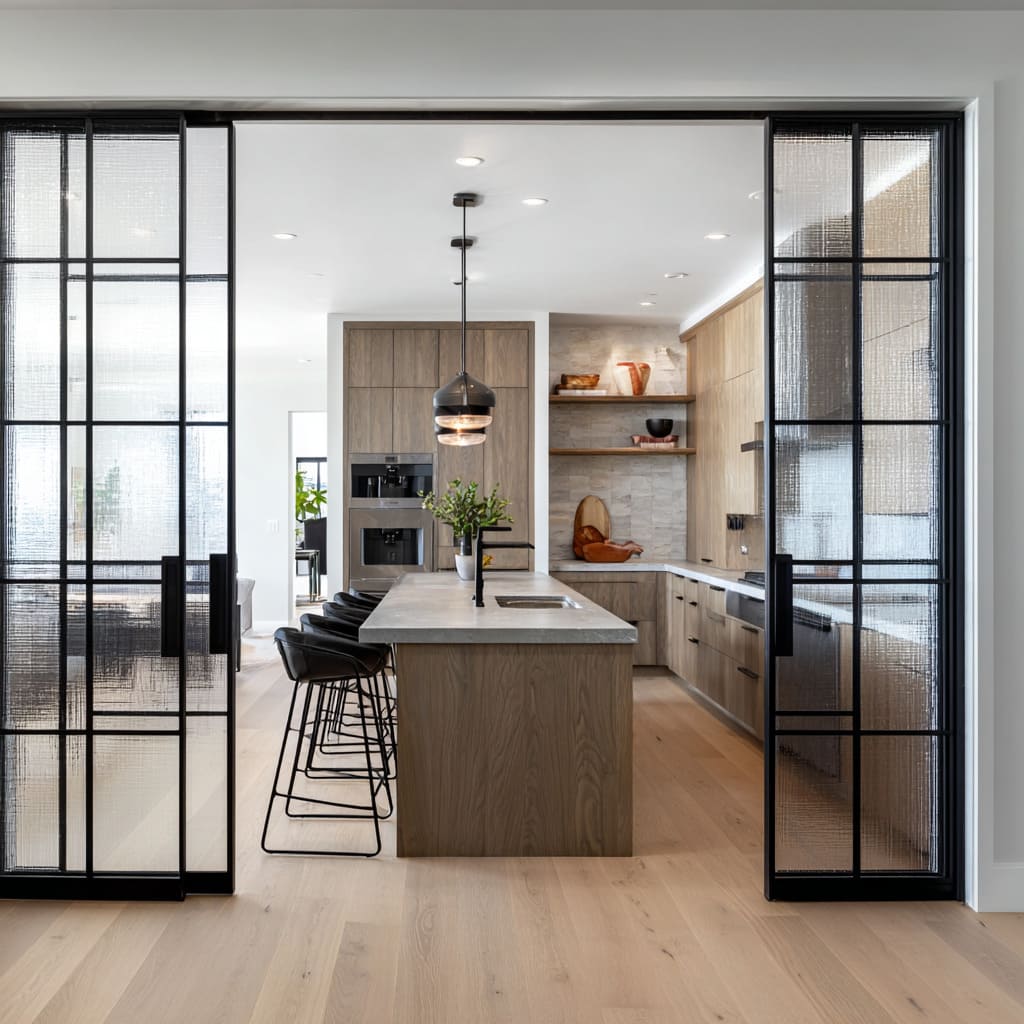
Sparse shelving, controlled countertop items, and low-contrast placement prevent the interior from becoming over-patterned. In this logic, the door system holds the visual structure, and the objects act as punctuation rather than content.
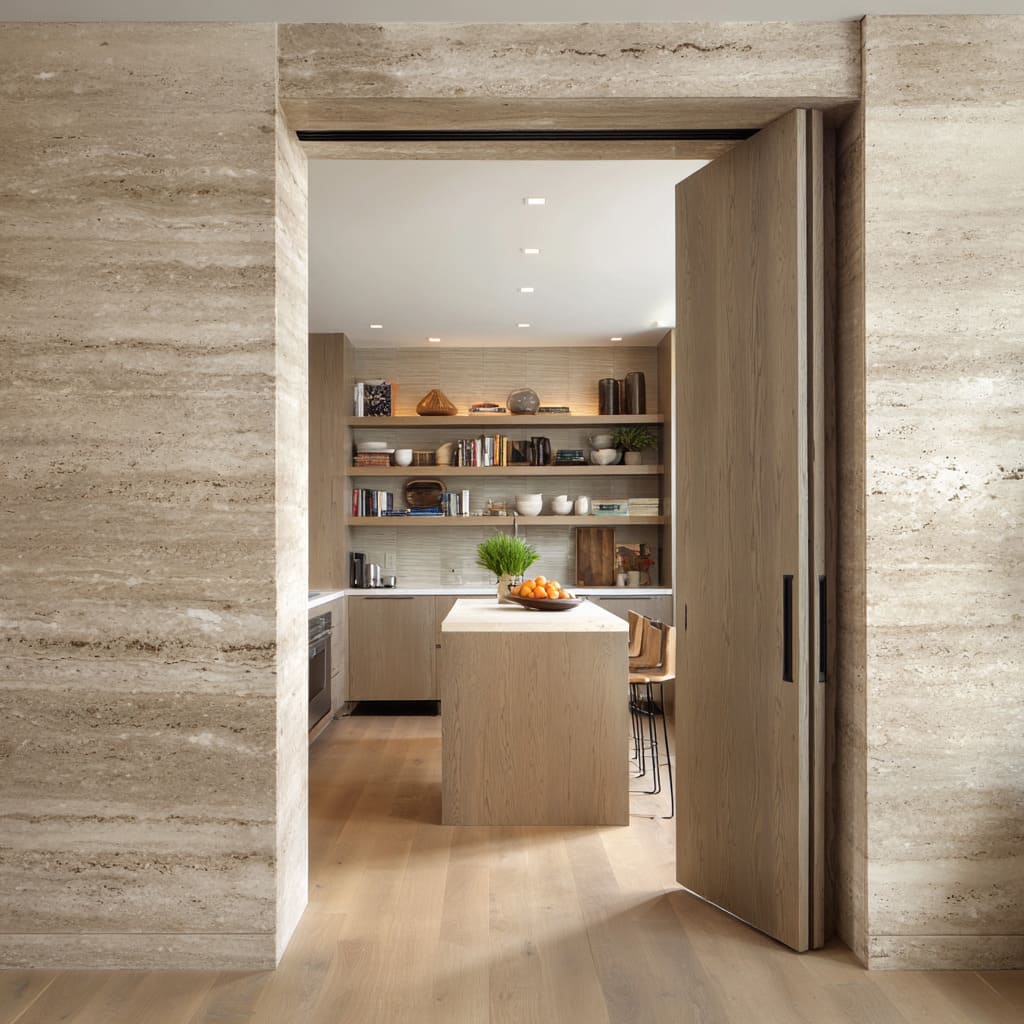
Sliding doors as mediators between atmospheres
Another strategy is using the sliding door as a buffer between different moods:
- Warm timber planes can counterbalance black frames and dark openings, allowing strong contrast without harshness.
- Creamy, matte planes can soften the energy of brighter, more reflective zones beyond, acting like a visual volume control.
- A modern insert inside classical trim can feel high-end when the traditional language remains the frame and the modern surface remains the controlled, quiet field.
The refinement comes from hierarchy: one language provides structure, the other provides silence.
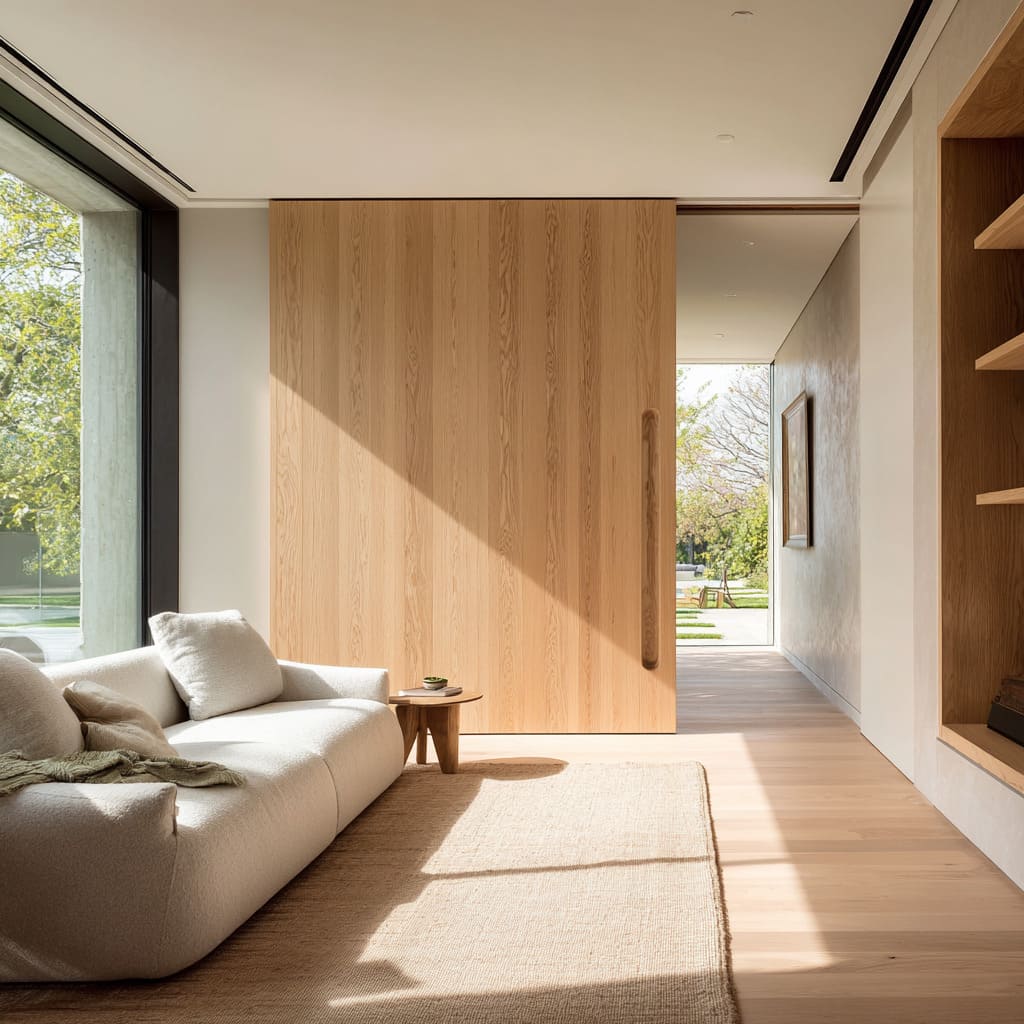
Four distinct visual identities sliding doors commonly create
Modern sliding doors often fall into recognizable visual types, each with a different effect on the room’s image:
- Soft wall minimal (timber/cream planes): continuity, calm, architectural quiet
- Graphic outline (black-grid glass): order, depth, airy structure
- Shadow curtain (dark slats): privacy through fragmentation, cinematic rhythm
- Luminous screen (warm translucent glow): atmosphere from light, softened media-wall presence
These identities differ less by “style” and more by what the door is doing visually: stabilizing, organizing, filtering, or lighting.
A general framework of the main decision points
Sliding door concepts that read as modern and composed typically resolve a small set of visual decisions:
- the door’s role as surface (wall / outline / filter / light field)
- the dominant rhythm (vertical grain, grid divisions, slat spacing)
- the way the opening frames a clear visual target beyond
- how light interacts with the surface (shadow, shimmer, glow)
- how the surrounding objects and shelves behave (air, restraint, low contrast)
- where softness is introduced to temper strict geometry (limited curves, organic silhouettes)
Taken together, these decisions explain why some sliding doors feel like simple room dividers, while others feel like architectural tools that control mood, proportion, and visual calm.
Related Posts
Harmony Home Design brings 10+ years of residential interior design experience to the ideas shared here. We publish design concepts, layout thinking, and practical styling notes.