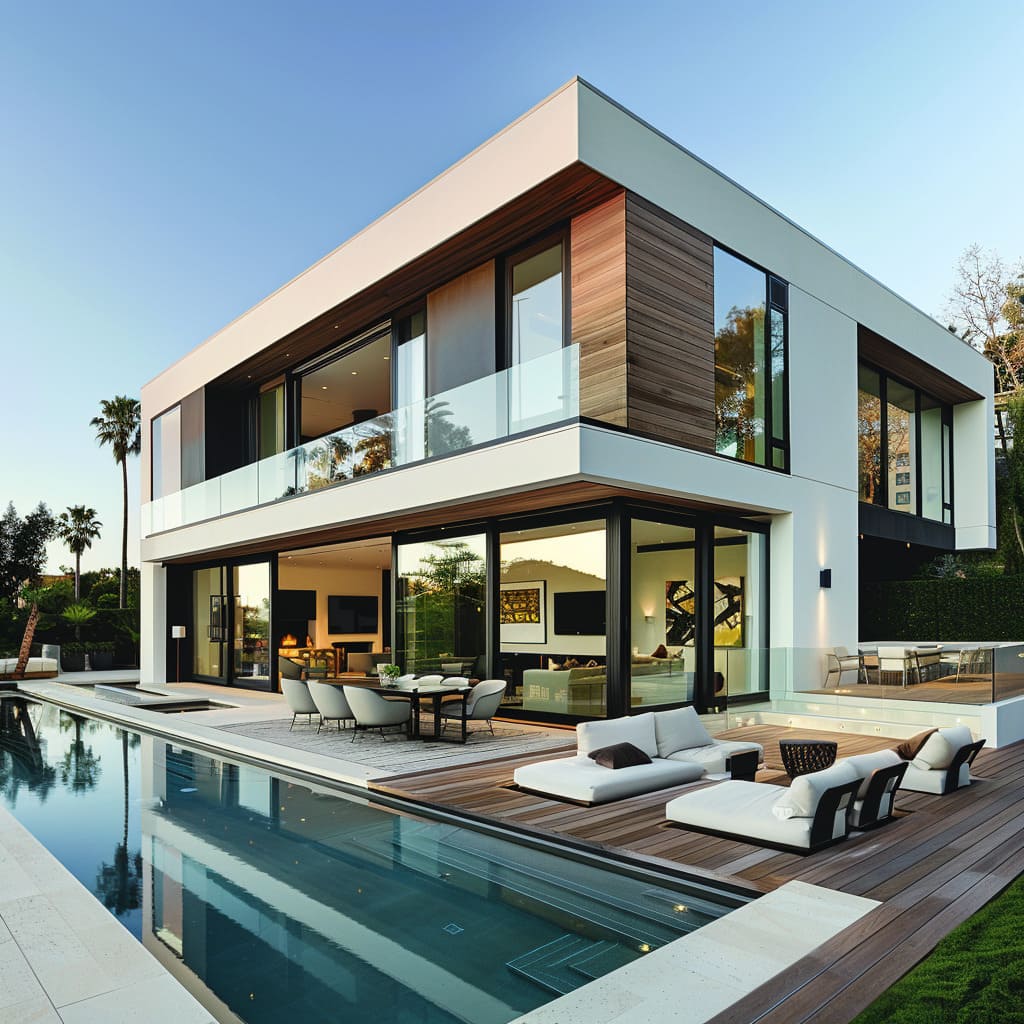
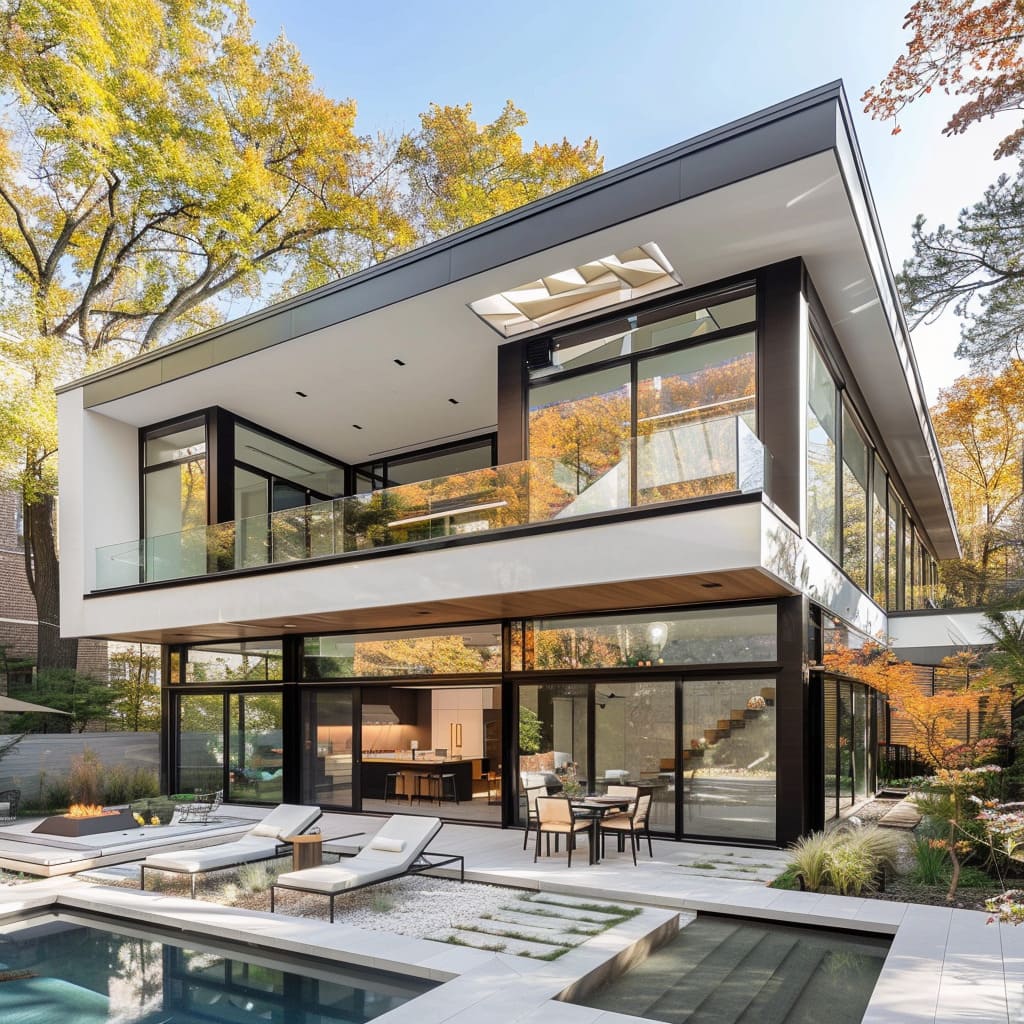
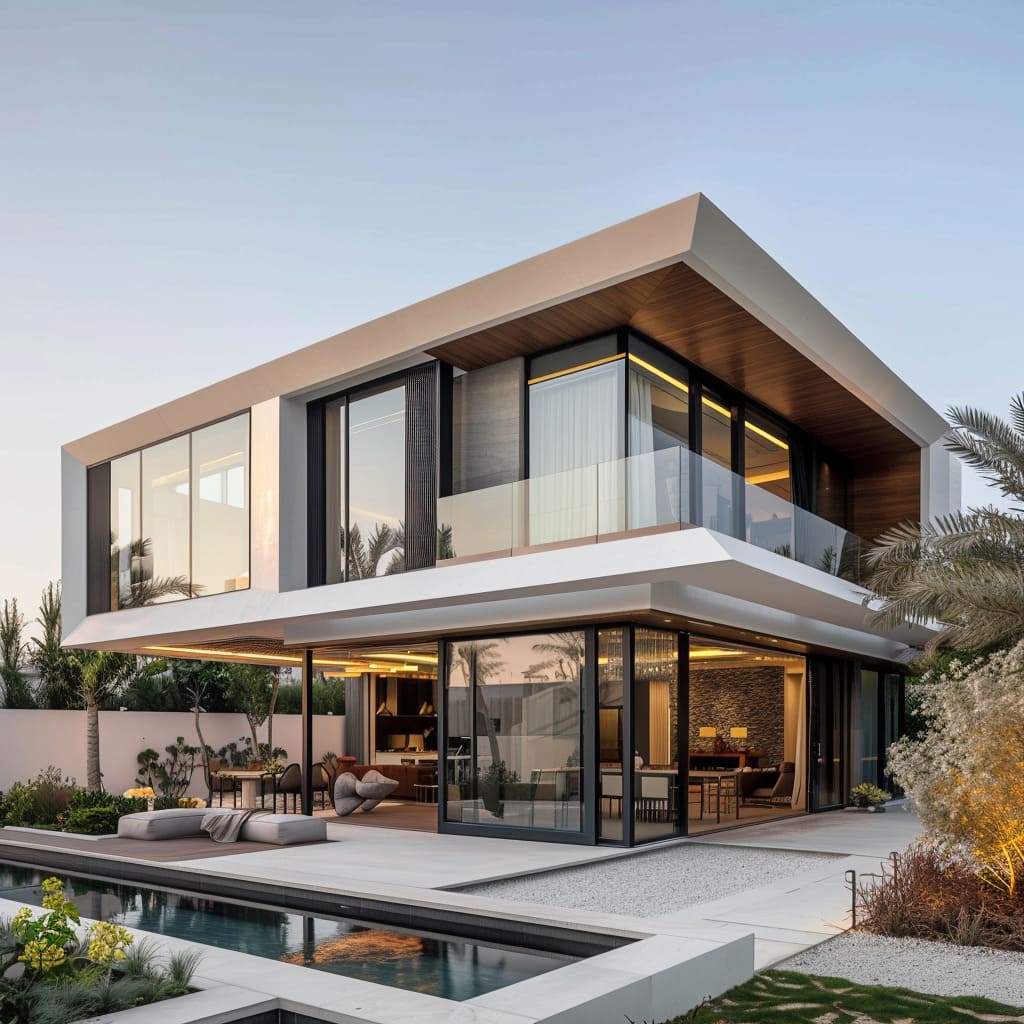
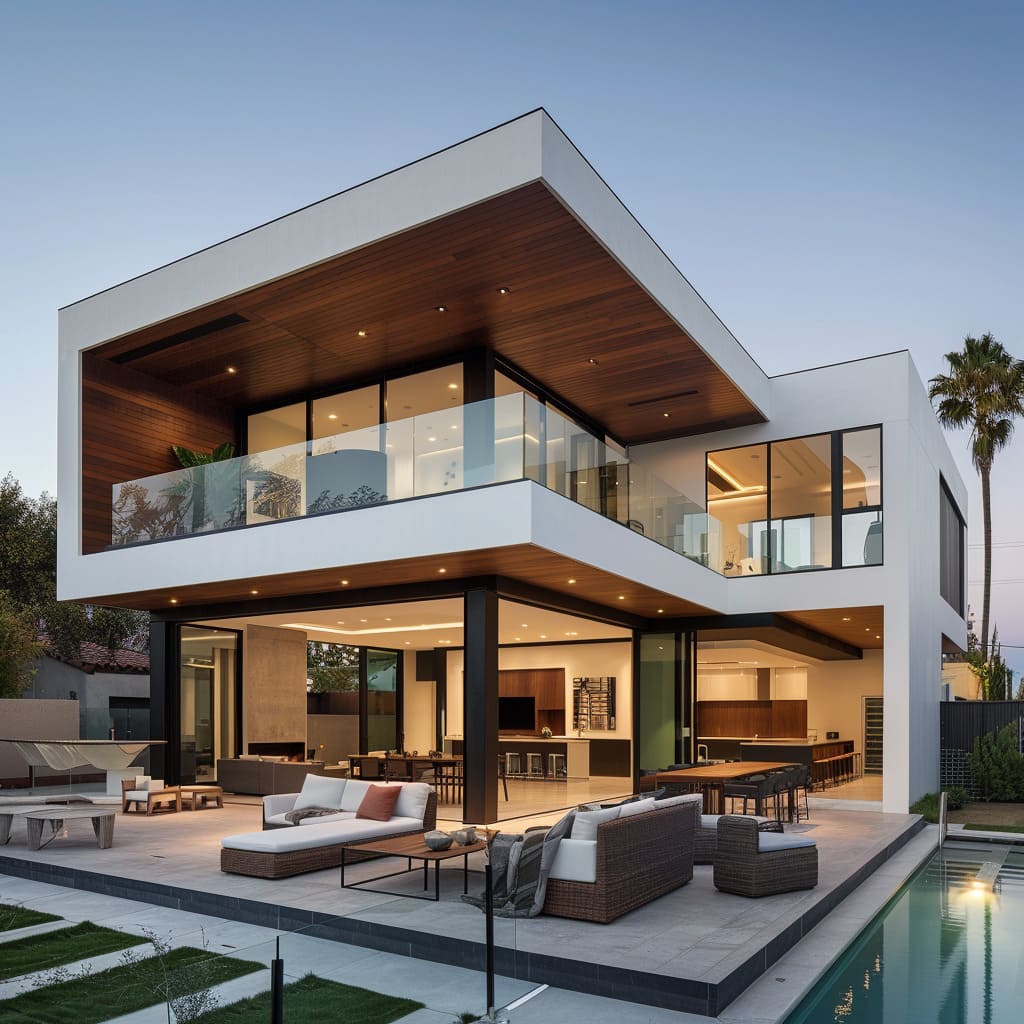
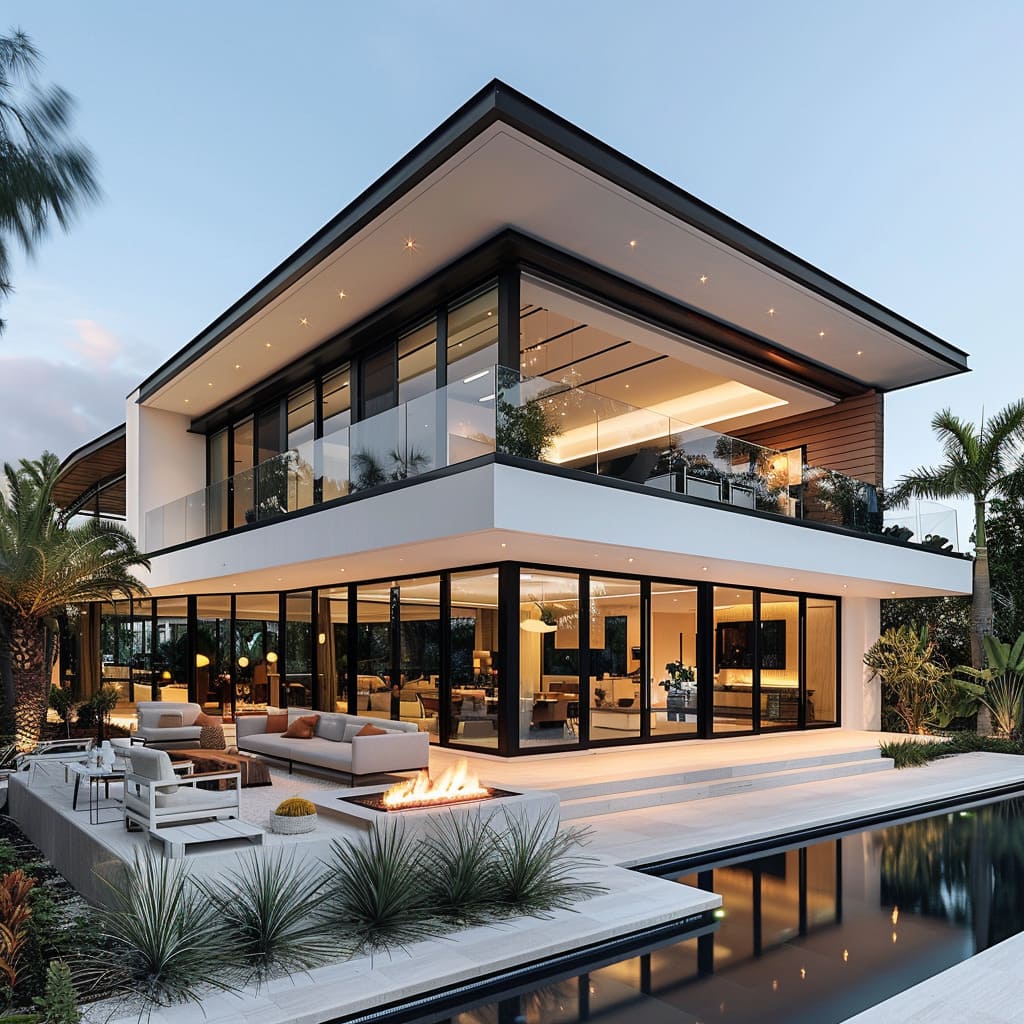
A modern villa can look high-end without relying on a long list of materials: white planes for mass, warm wood for undersides and touchpoints, and black frames as the organizing line—carried consistently from the street facade to the entry portal to the pool terrace. When that system is applied at every scale (roof edges, window rhythm, terrace geometry, planting borders, and lighting), the villa feels intentional in full sun and equally resolved after sunset.
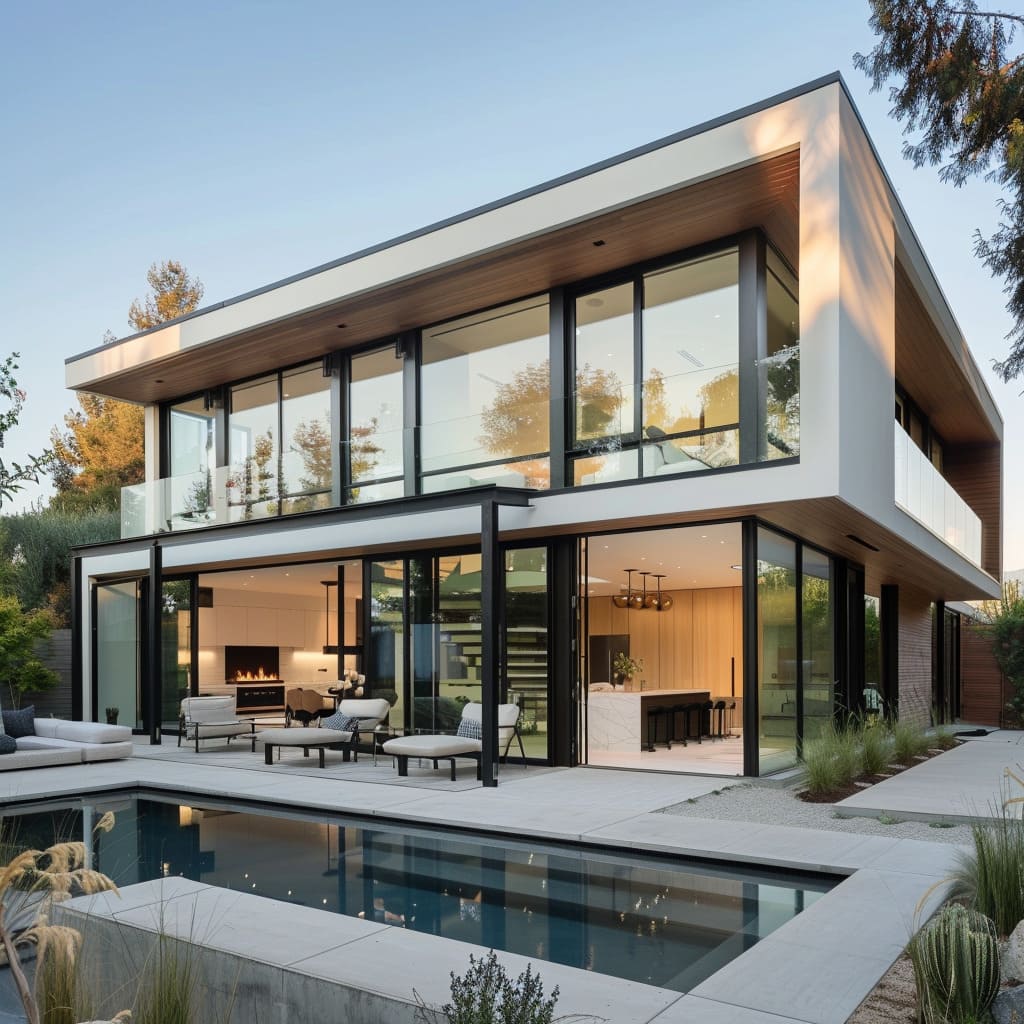
Some modern villas look sharp but cold: too much white and glass, not enough depth or warmth where people actually stand, sit, and move.
Others look busy: several stone types, multiple window colors, extra cladding panels, and outdoor surfaces competing for attention.
Stylish ideas are often based on a small vocabulary repeated with discipline—roof lines, window grids, terrace edges, pool geometry, planting borders, and lighting rhythm—so the whole exterior looks as one composed set of decisions.
The palette that keeps a house design cohesive
White planes: the gallery-like background
White works best when it behaves like a calm backdrop that lets shadow, recess depth, and proportion create interest. The mistake is treating white as a paint color decision only.
On a villa, white is a surface strategy—it defines the big shapes, the skyline, and the long sightlines from gate to entry to terrace.
White that stays warm in shade
A bright, stark white can look crisp in noon sun and then turn chalky or bluish in shade, especially under deep roof plates. A better target is a white with a soft warmth, so shaded facades still feel inviting.
The goal: sunlit white feels clean, shaded white reads creamy—not gray-blue. This is one of the fastest ways to keep a modern villa from feeling clinical.
Texture
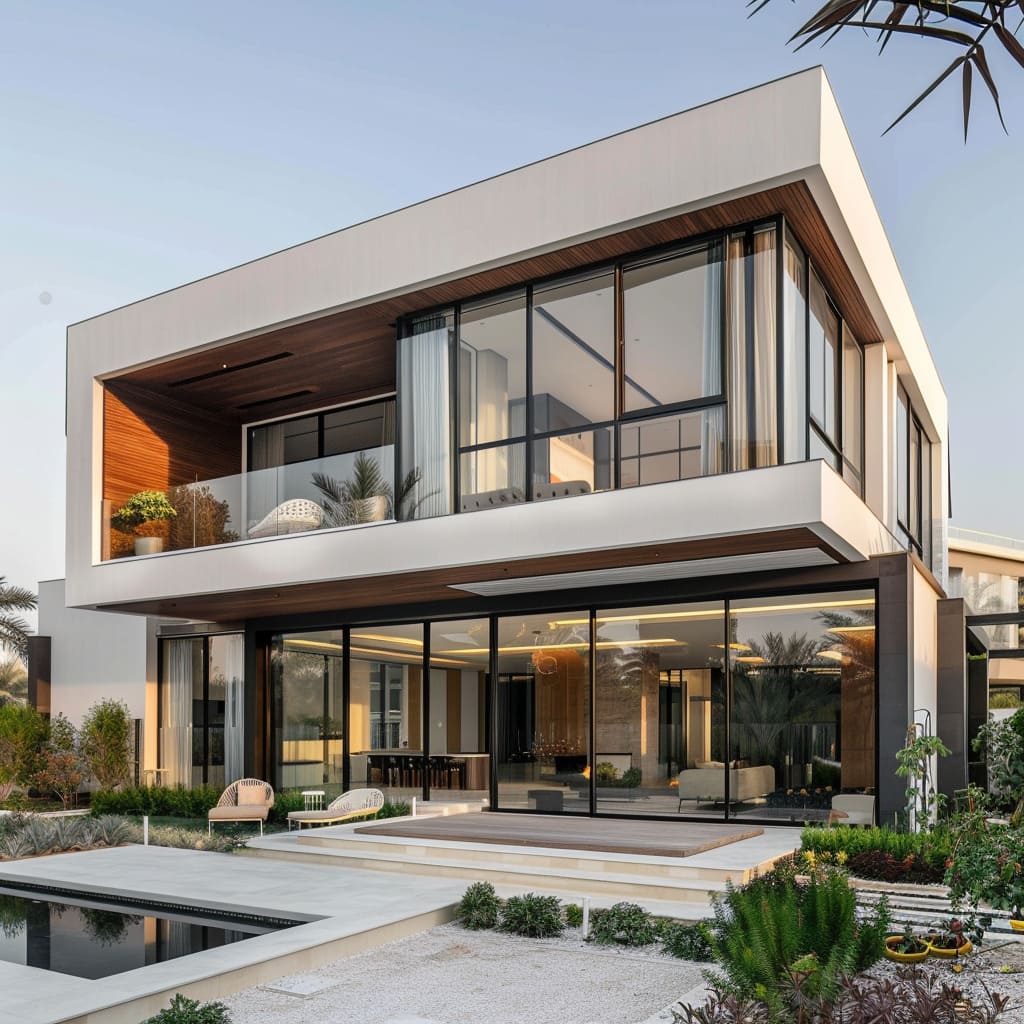
Modern houses look expensive when the main wall surface looks as one continuous material language. Mixing several similar whites (smooth stucco + slightly different panel + another micro-texture) often creates a patchwork effect, even if every finish is white.
Pick one primary wall finish and let depth do the visual work: recesses, returns, and clean shadow lines.
Where white should stay uninterrupted
White gains power when it forms uninterrupted frames and long edges. Use it for:
- Upper-level bands and parapet lines that wrap corners cleanly
- Large wall returns that make the villa feel substantial
- Long horizontal roof plates and balcony plates where you want the eye to run without interruption
Interrupt white only when the interruption has a job: creating a shaded outdoor room, anchoring a corner, or clarifying an entry.
Callout box — White plane rules
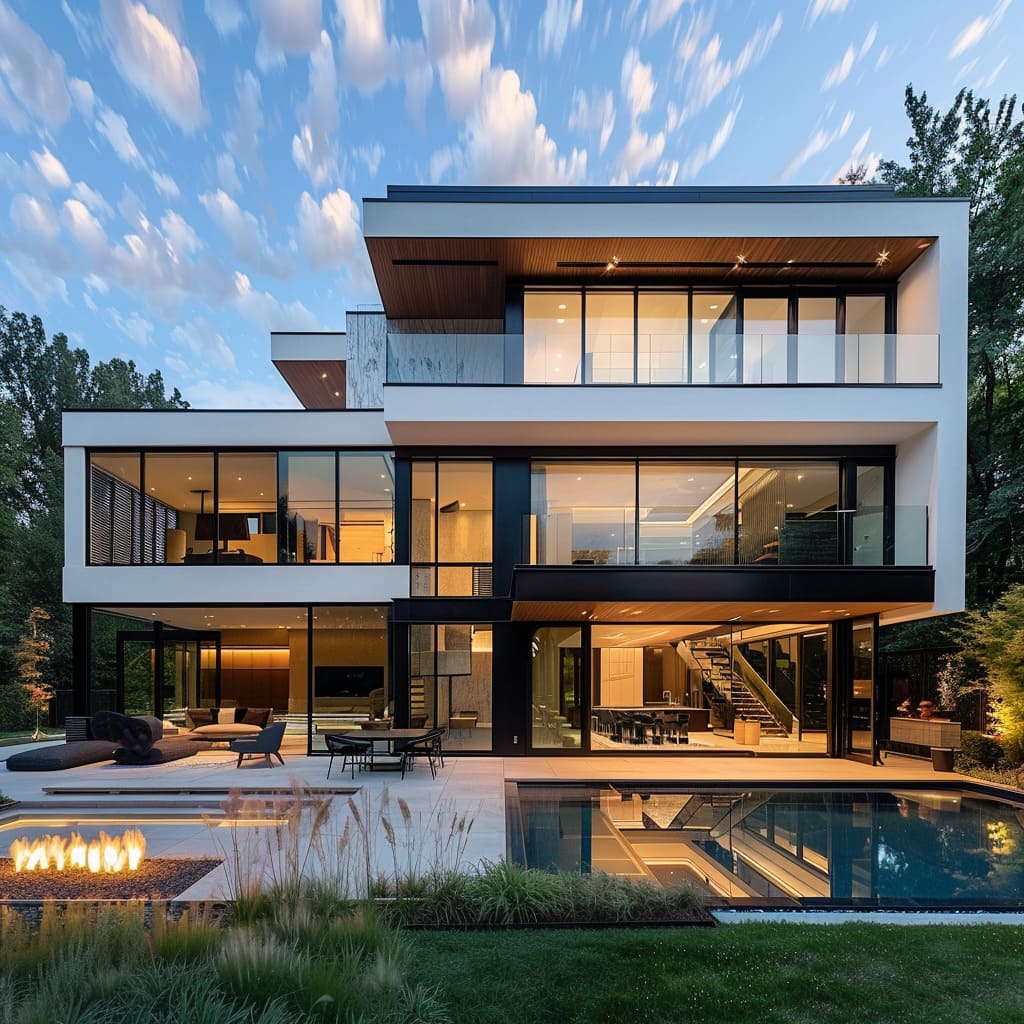
- One main wall finish for 70–85% of visible mass
- Joints and reveals aligned with window grid lines
- Shadow and recess depth for interest
Wood soffits: the outdoor ceiling that changes the mood
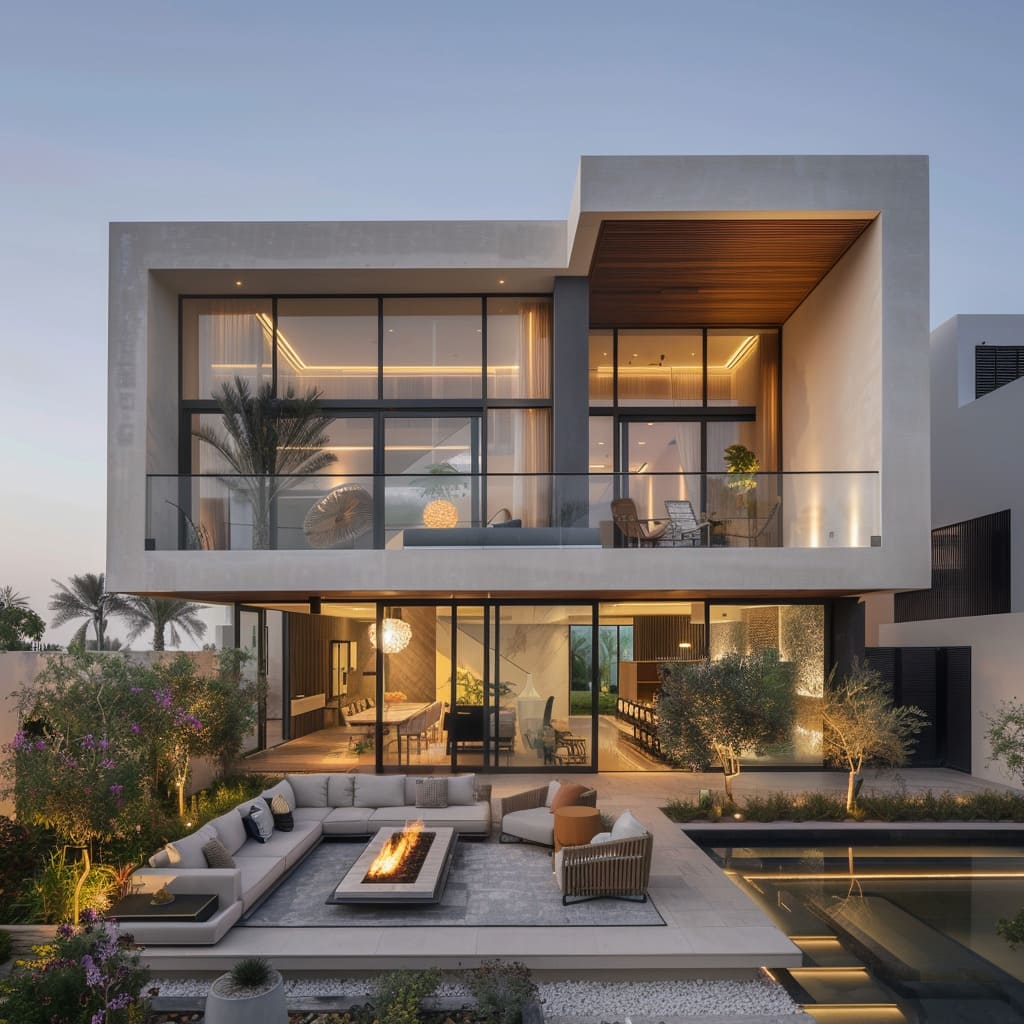
If white is the background, wood is the mood setter—especially when placed where people experience the building most: under overhangs, inside loggias, and at entry ceilings. Wood works best when it looks like an outdoor ceiling, not an accent panel added to warm things up.
Why wood belongs under overhangs and inside loggias
An overhang is a comfort device first: it shades glass, reduces glare, and creates a sheltered zone. When the underside is wood, that shaded zone becomes a true outdoor room.
People don’t experience the top of a roof plate; they experience the underside from the terrace and entry approach. That’s why wood soffits have outsized impact.
How wood visually thins thick roof plates
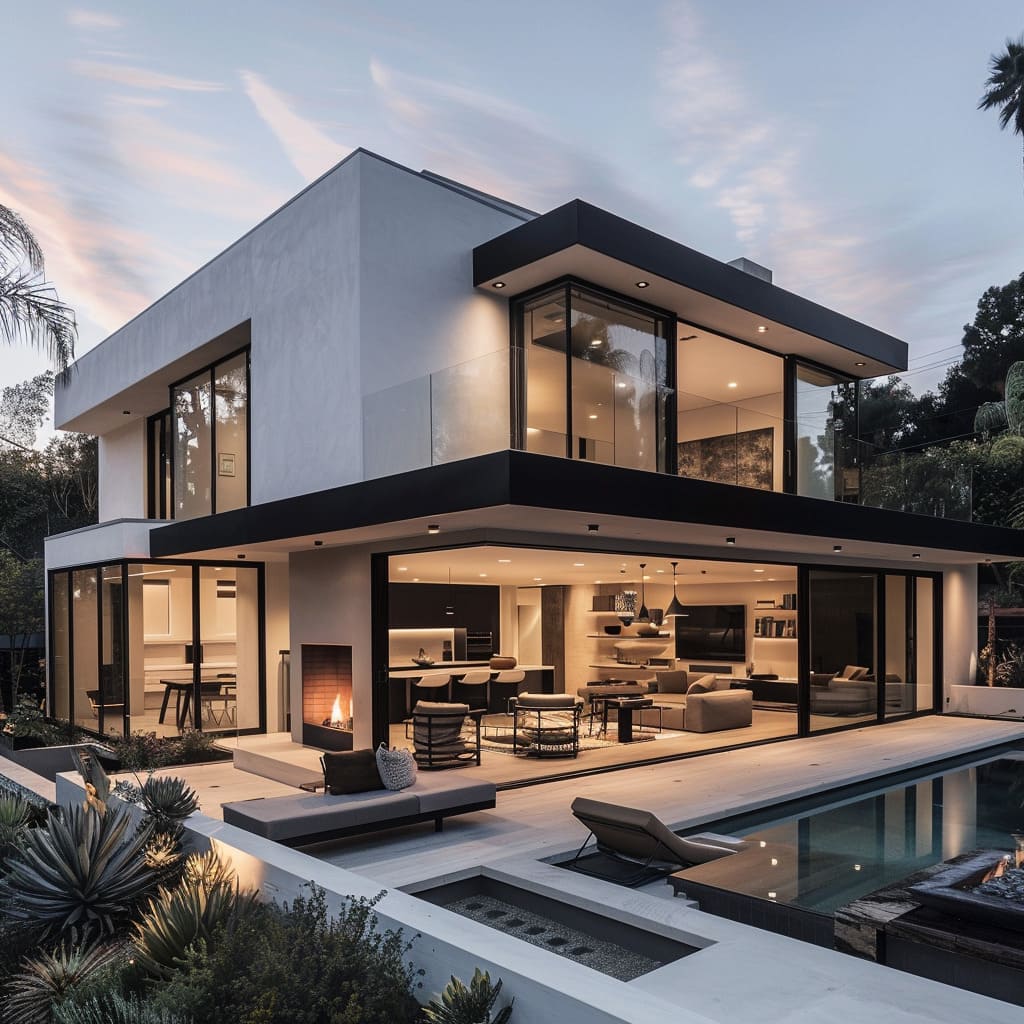
A thick roof plate can look heavy. A warm underside shifts the perception: the eye sees the wood plane as a ceiling floating under the slab, which makes the edge feel more intentional and less bulky.
In evening light, that wood catches warm illumination and gives the villa a welcoming glow.
Where to repeat wood so it feels planned
Wood feels intentional when it appears in a small, controlled set of places with clear roles:
- Soffit (the main ceiling plane outdoors)
- One vertical move (a sleeve, corner wrap, or fin zone)
- One ground touchpoint (deck edge, entry ceiling, or terrace insert)
This trio prevents the common problem: one random wood panel that looks decorative rather than architectural.
Callout box — Where wood works best
- Under deep roof bands
- Inside recessed balcony rooms
- As vertical fins near glass corners for privacy + thin shadow stripes
- As one controlled wall sleeve that anchors a long elevation
Black window grids: the graphic skeleton that organizes glass
Black frames are not decoration. They are the villa’s graphic structure—what makes large glazing read stable, measured, and intentional.
The grid should feel like one consistent system that repeats from floor to floor and from street side to pool side.
Frame thickness
A house loses polish fast when different openings use different frame thicknesses or profiles. Consistency is what creates the calm, architectural look: every opening belongs to the same family.
This applies to sliding doors, fixed panes, balcony doors, and corner glazing.
Why thin mullions + large panes often feel calmer
Many small windows can make a façade feel busy. A smaller number of larger panes, divided by thin mullions, often looks more premium because the glass becomes a clean field.
The mullions then act as measured verticals that give order without visual noise.
Use black to define corners so glazing doesn’t feel fragile
Large glass corners can look luxurious, but they need a clear outline. A black frame line at corners, posts, and fascia edges makes the glass feel held—like a deliberate cut inside a strong envelope rather than a delicate sheet.
Grid discipline checklist
- One black tone (avoiding mixed charcoal vs pure black)
- Same sheen level (matte/satin) across frames, fascia, posts
- Aligning mullions with door stiles and major interior axes where possible
Massing and shade: how deep overhangs make glass feel protected, not exposed
Overhang depth as a comfort tool and a style tool
Deep overhangs create a protective visor effect. Tall glass can feel exposed if it sits flush with the façade and catches full glare.
When the roof line projects far enough, it creates a shadow band that reduces glare and makes the glazing feel sheltered. That shadow band also gives the façade depth, which is a major part of the high-end modern villa look.
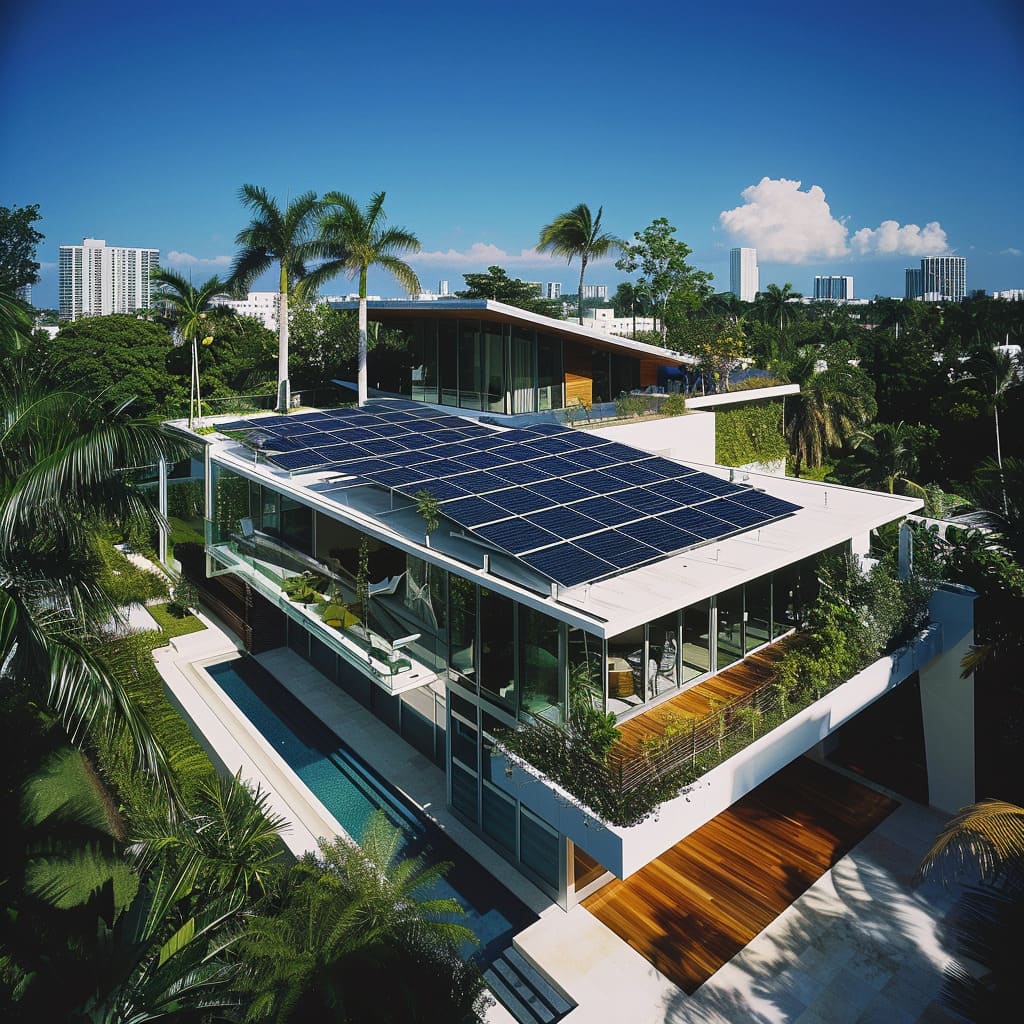
Why the underside finish matters more than the top edge
From the terrace, entry approach, and pool deck, you mostly see the underside. If the underside is handled well—warm wood, clean joints, steady lighting rhythm—the overhang becomes the villa’s outdoor ceiling and sets the tone for how livable the exterior feels.
Common mistake + fix
- Mistake: deep overhang painted white underneath → the ceiling visually disappears, shade feels flat, the outdoor room effect is weaker.
- Fix: warm wood soffit + small recessed lights in a steady rhythm → the underside becomes a readable ceiling plane, and the outdoor zone feels finished at night.
Loggias and recesses
A balcony is often treated as a thin strip. A loggia is different: it’s a carved outdoor room within the mass.
Recess depth creates privacy, shade, and a sense of shelter without adding extra materials.
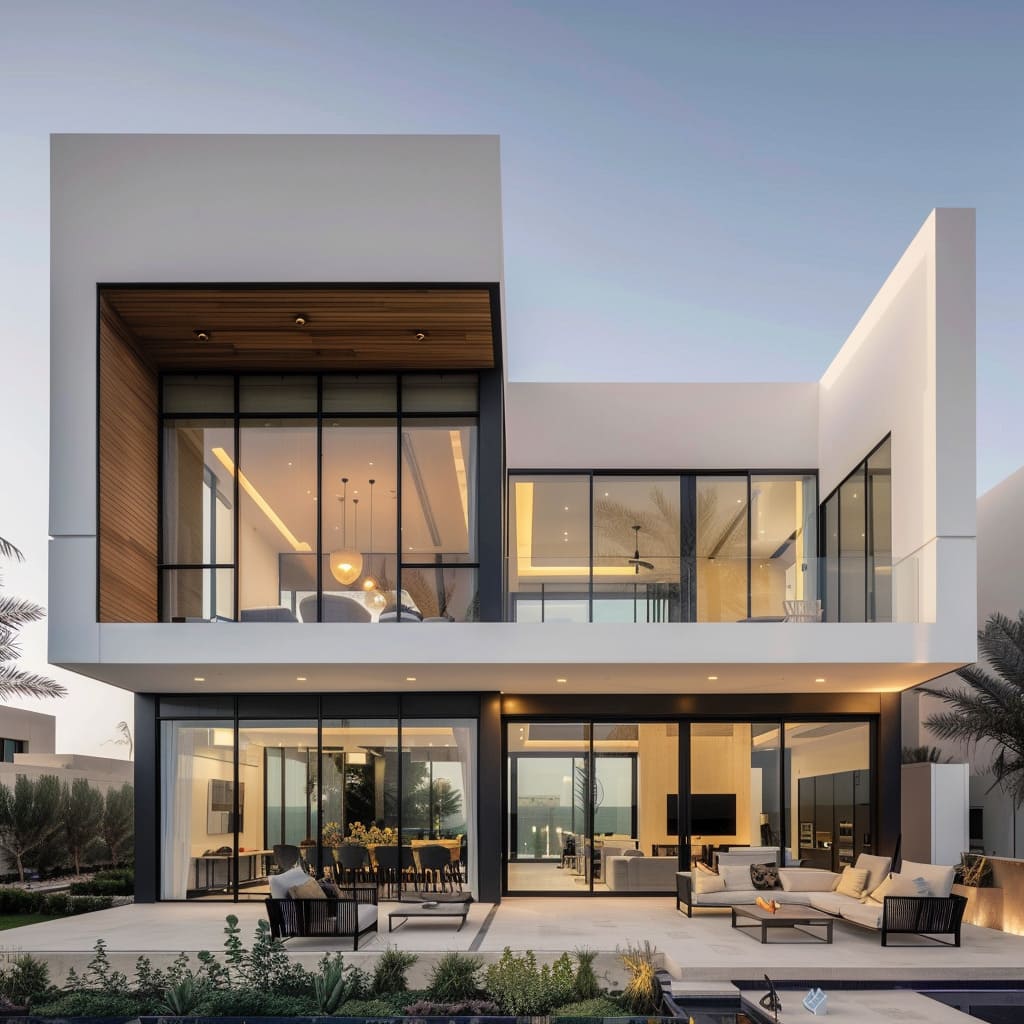
Use carved volumes to get depth without clutter
A deep recessed corner or bay reads like a volume carved out of the white mass. It creates a natural hierarchy: solid zones where privacy is needed, open zones where views and living spaces belong.
Wood-lined ceiling + one side wall inside the recess
If you line only the ceiling, the loggia can still feel like a void. When one side wall is also wood (or a related warm surface), the pocket reads intentional and habitable.
The result: a shaded outdoor room that feels planned, not leftover.
Timber fins: privacy and texture without heavy screening
Fins are a clean way to add depth, privacy, and texture while staying in the same palette. They work best when placed where the plan likely needs a more solid zone: bedrooms, stairs, or service spines.
Place fins where the elevation should look quieter
A villa looks more logical when more private functions read more solid from outside. Fins can signal that quiet zone without fully closing it off.
Let thin shadow stripes do the work
The best fin zones rely on repetition and spacing. In sun, the fins cast narrow shadow bands that add texture.
In shade, they read as a warm vertical layer that relates back to the wood soffit.
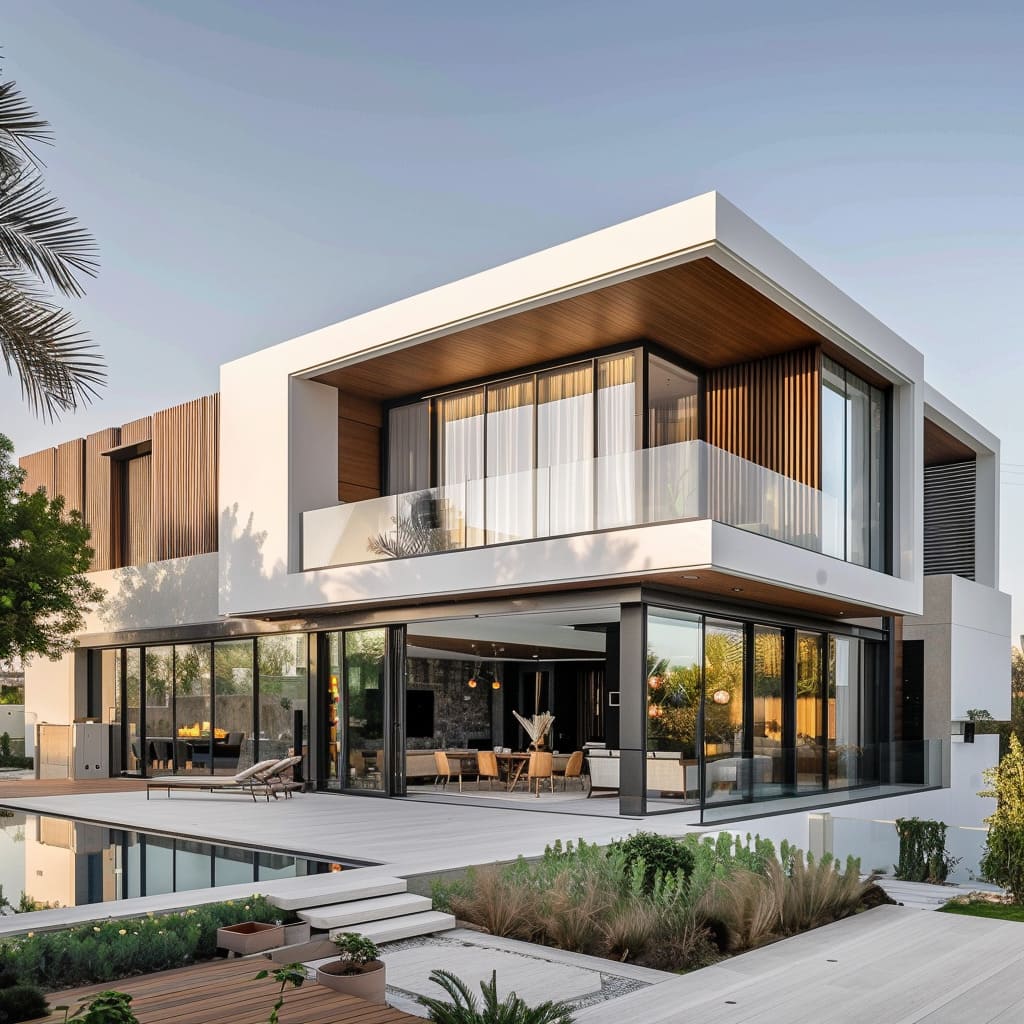
Facade compositions that repeat well from street side to pool side
Think of this section as choosing a base diagram. Each option gives you a clear structure that stays consistent front-to-back.
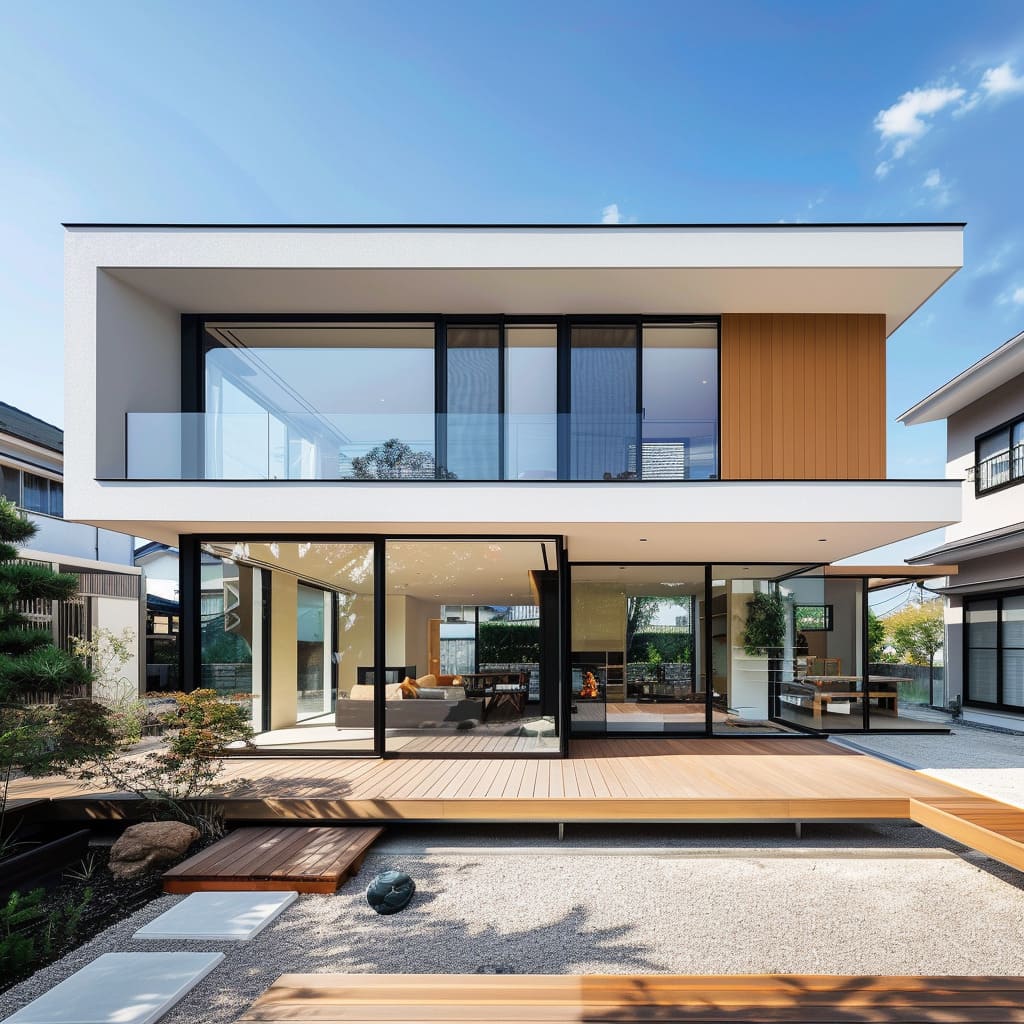
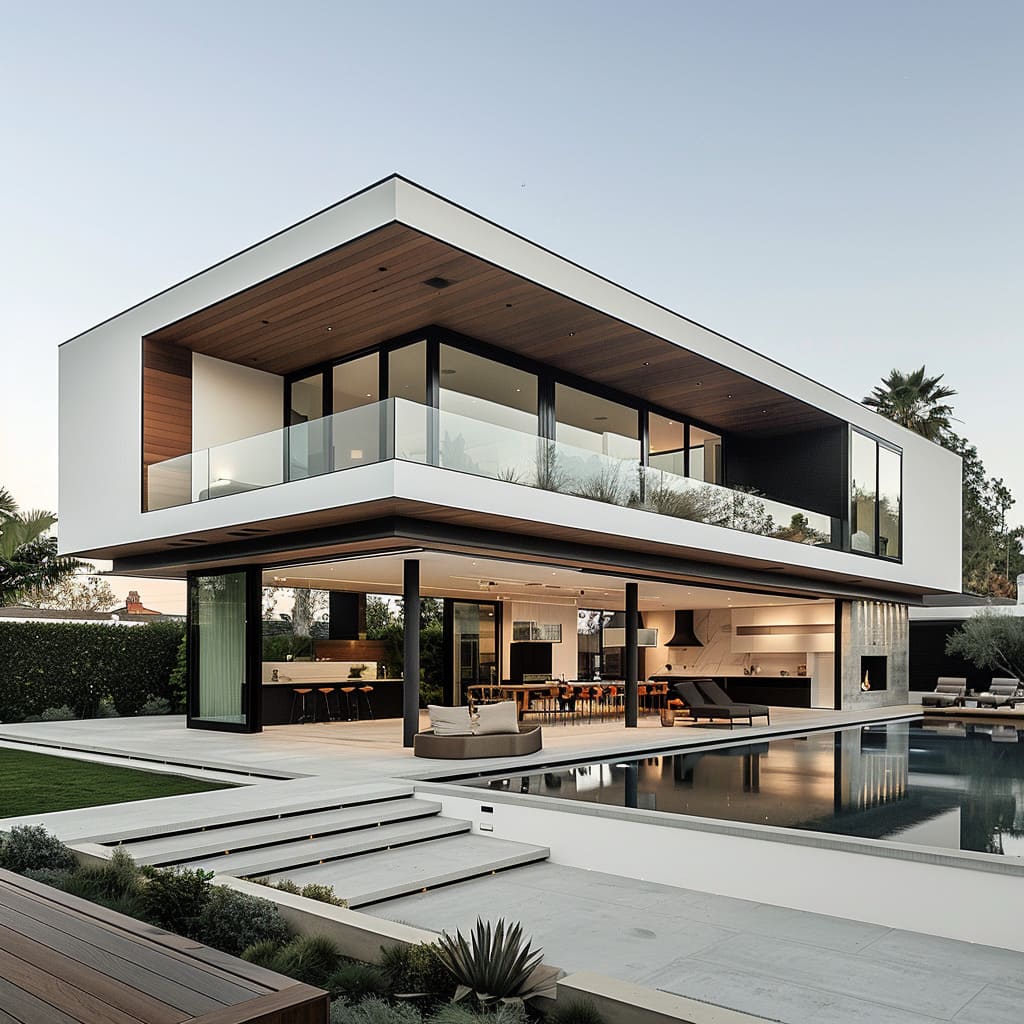
Stacked rectangles + one wood sleeve anchor
- What it achieves: long, clean horizontals with a single warm vertical anchor so the elevation doesn’t feel endless.
- Where it works best: two-story villas with long balcony glazing or long window bands.
- What to avoid: multiple competing accent panels. One sleeve is usually enough. Make it do a real job: anchoring a corner, signaling a stair zone, or adding privacy where glass runs long.
A strong version of this diagram uses a white upper band that wraps as a frame, with the soffit lined in wood. Then a vertical wood sleeve turns a corner or marks one bay.
The black grid stays consistent across both levels, so the sleeve feels like a planned counterweight, not a random patch.
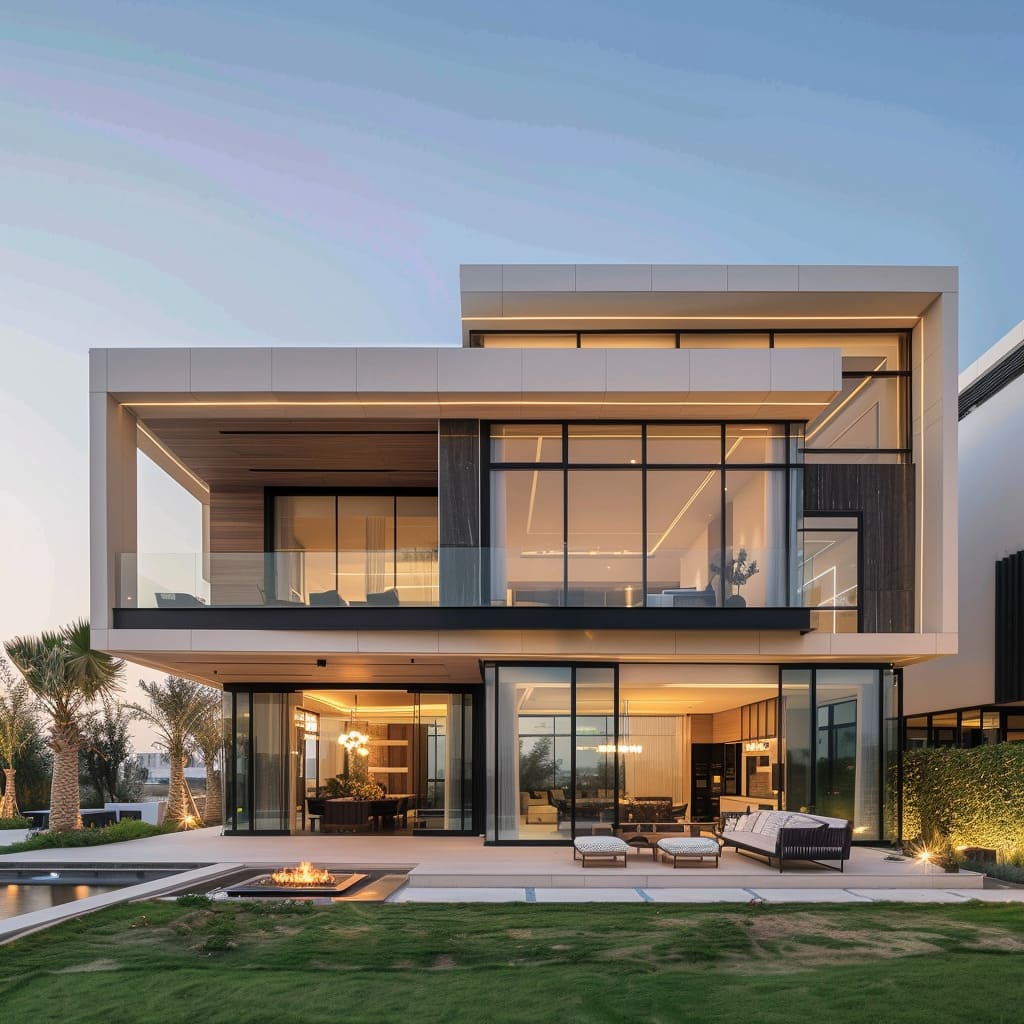
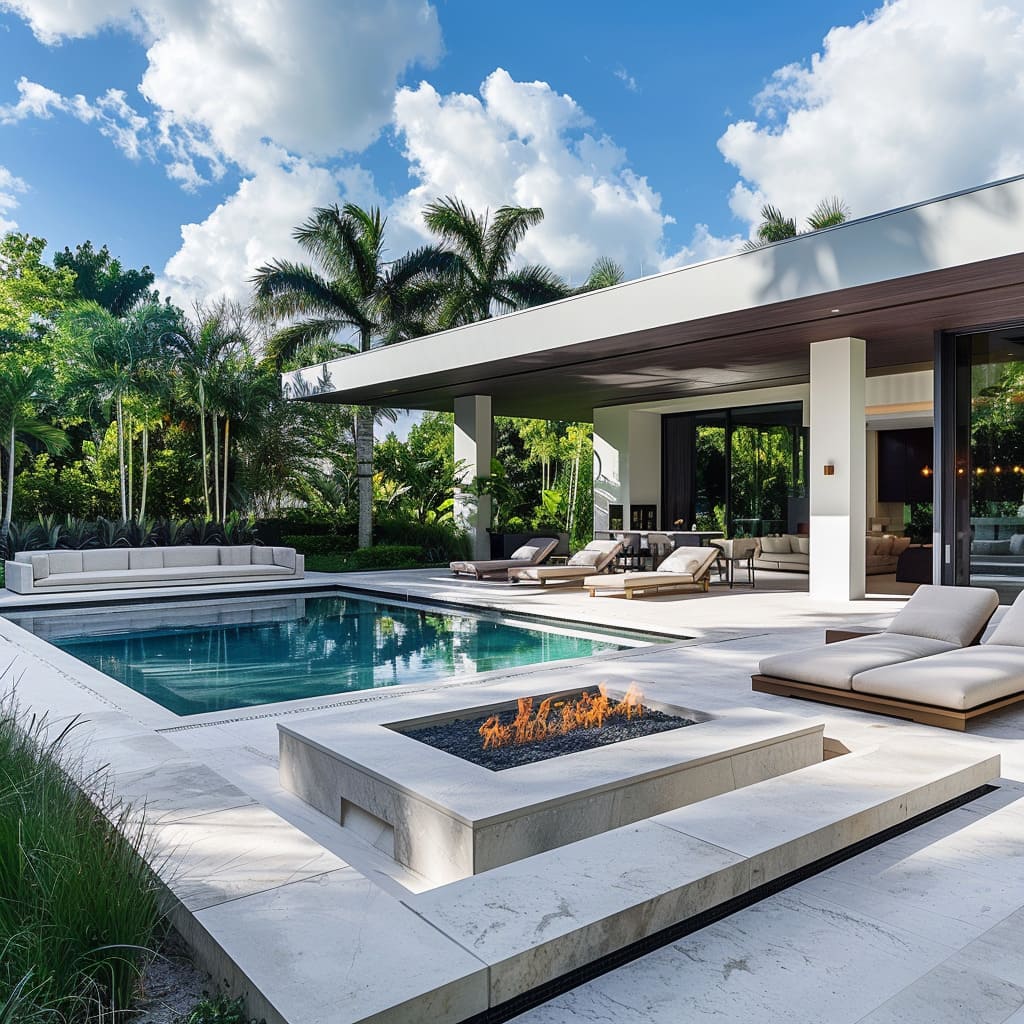
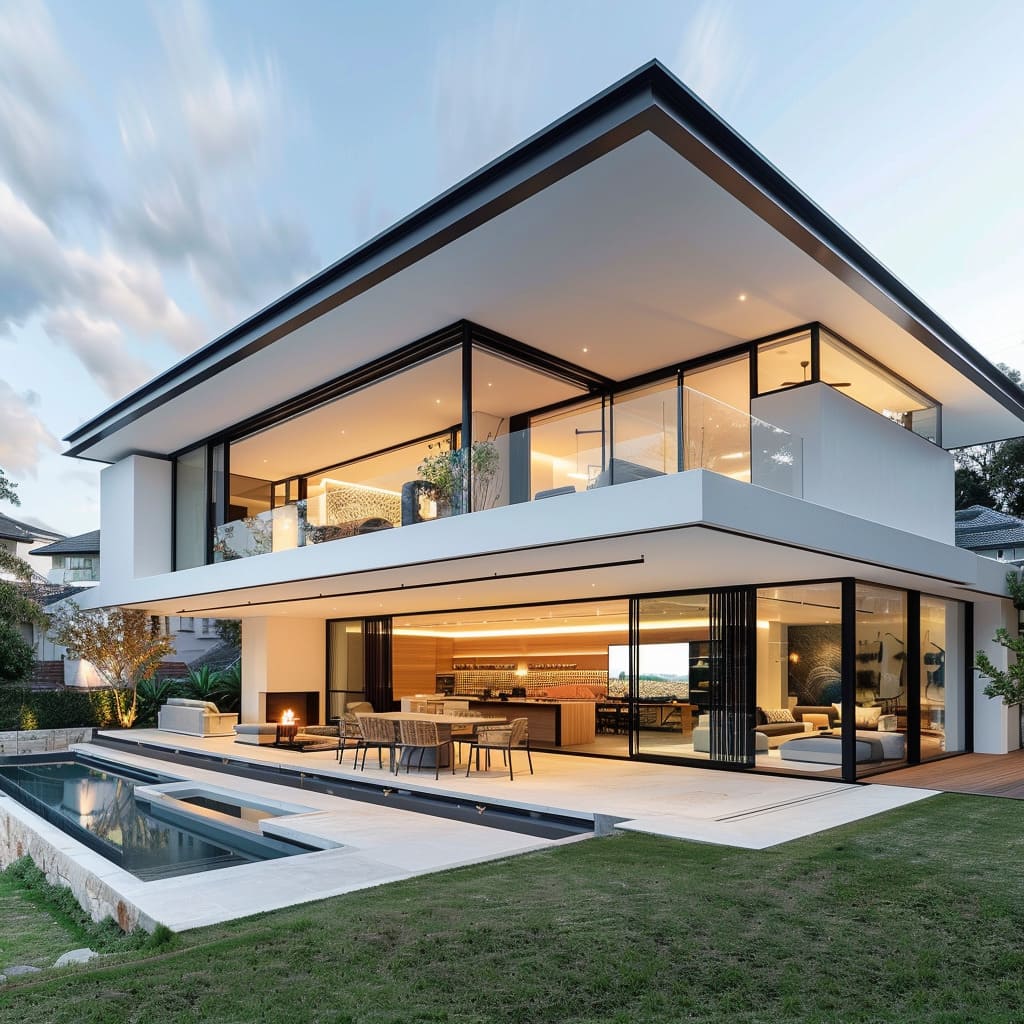
Pavilion under a thin roof plate (glass-forward)
- What it achieves: a sheltered terrace that feels like a minimal veranda; black posts set a readable rhythm.
- Where it works best: houses with wide openings and strong indoor-outdoor living.
- What to avoid: terrace furniture that sits too tall and blocks the glass wall.
This diagram shines when the roof plate projects to create a shaded outdoor sitting zone right at the threshold. The black structure—posts and beams—should read slim and consistent with window frames.
The wood soffit becomes the main warmth plane, and the pool (or reflecting water) sits close enough to act as a foreground mirror.
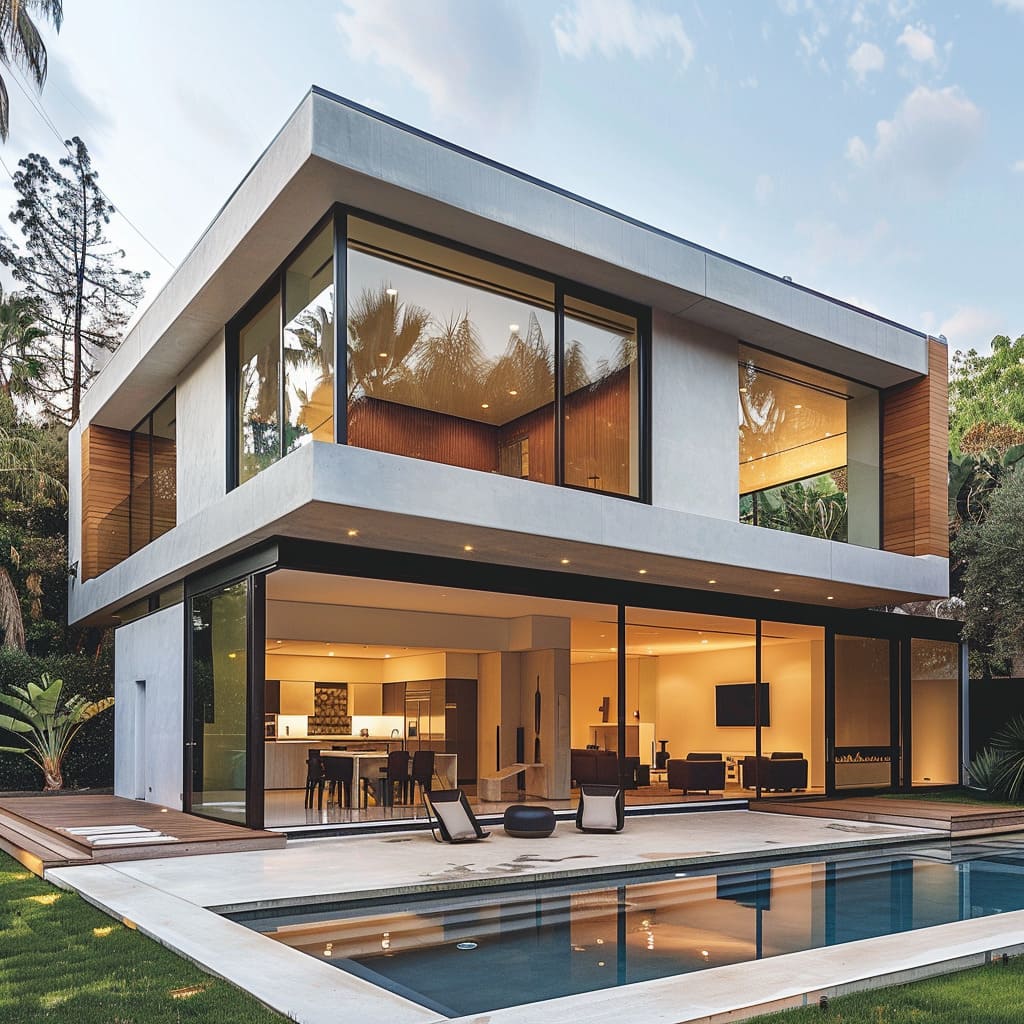
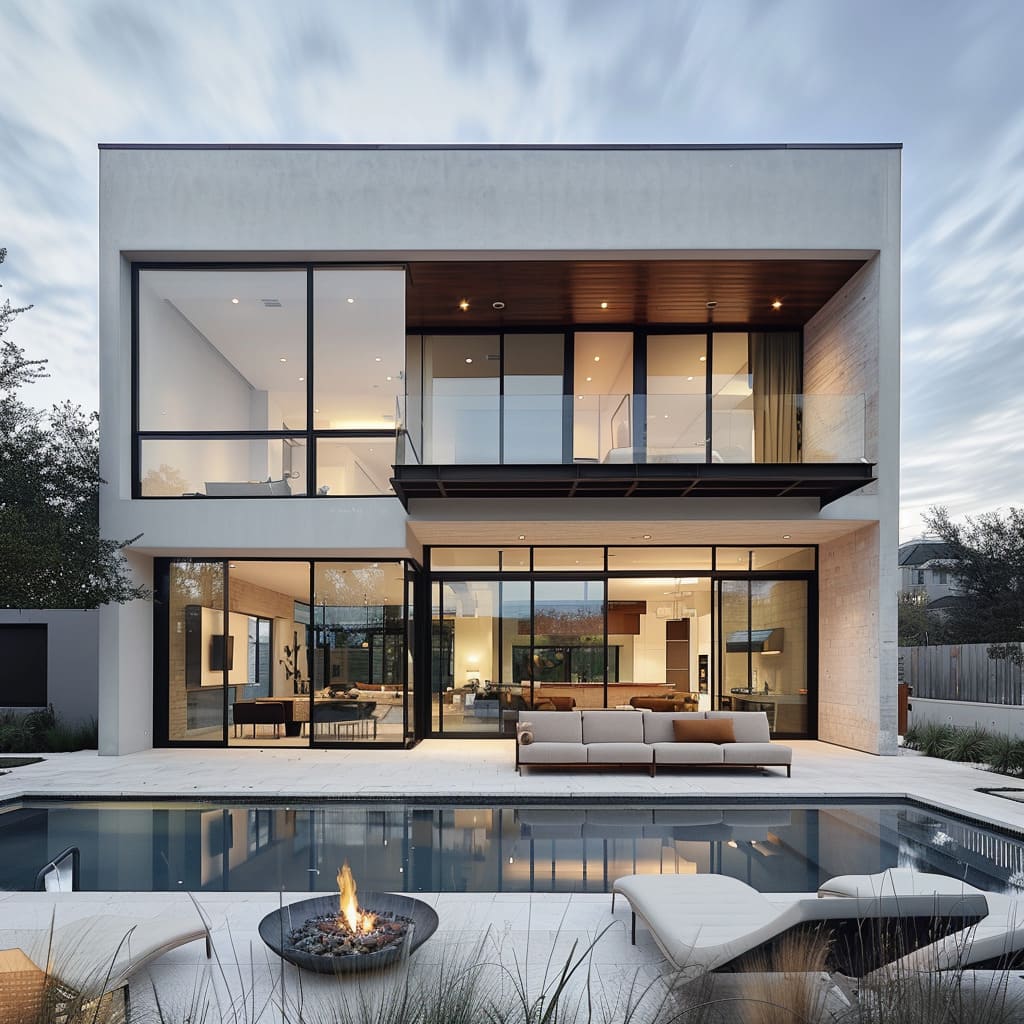
One oversized black glazed rectangle as a graphic feature
- What it achieves: a bold weight point that balances large white massing and gives the facade a strong signature.
- Where it works best: rear façades facing a pool terrace, or street façades that need one strong focal area.
- What to avoid: changing grid proportions between floors.
The key is discipline: one large black-framed glass field that reads like a graphic cut inside the white. Keep mullion spacing consistent and align it with major door lines and interior structure so it doesn’t feel arbitrary.
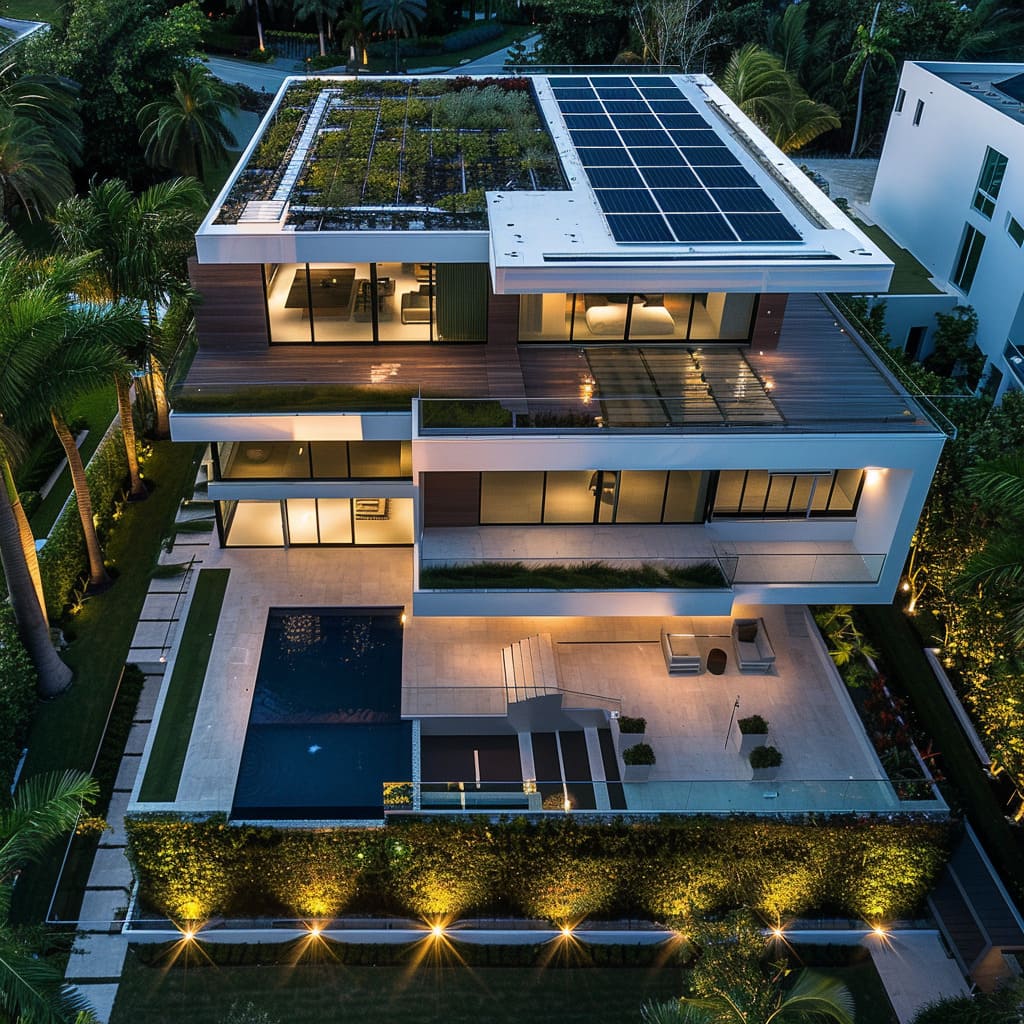
The central dark spine strategy
- What it achieves: hierarchy and stability, plus a perfect place for integrated lighting.
- Where it works best: wide villas where long glass bands need a visual anchor.
- What to avoid: using the spine as random decoration. It should suggest where vertical circulation or service zones sit.
A central dark pier or band can split glazing into left/right zones and keep the façade from reading like one uninterrupted sheet of glass. If you integrate a vertical light line (or a clean wash) into the spine, night reading becomes extremely crisp without adding visible fixtures.
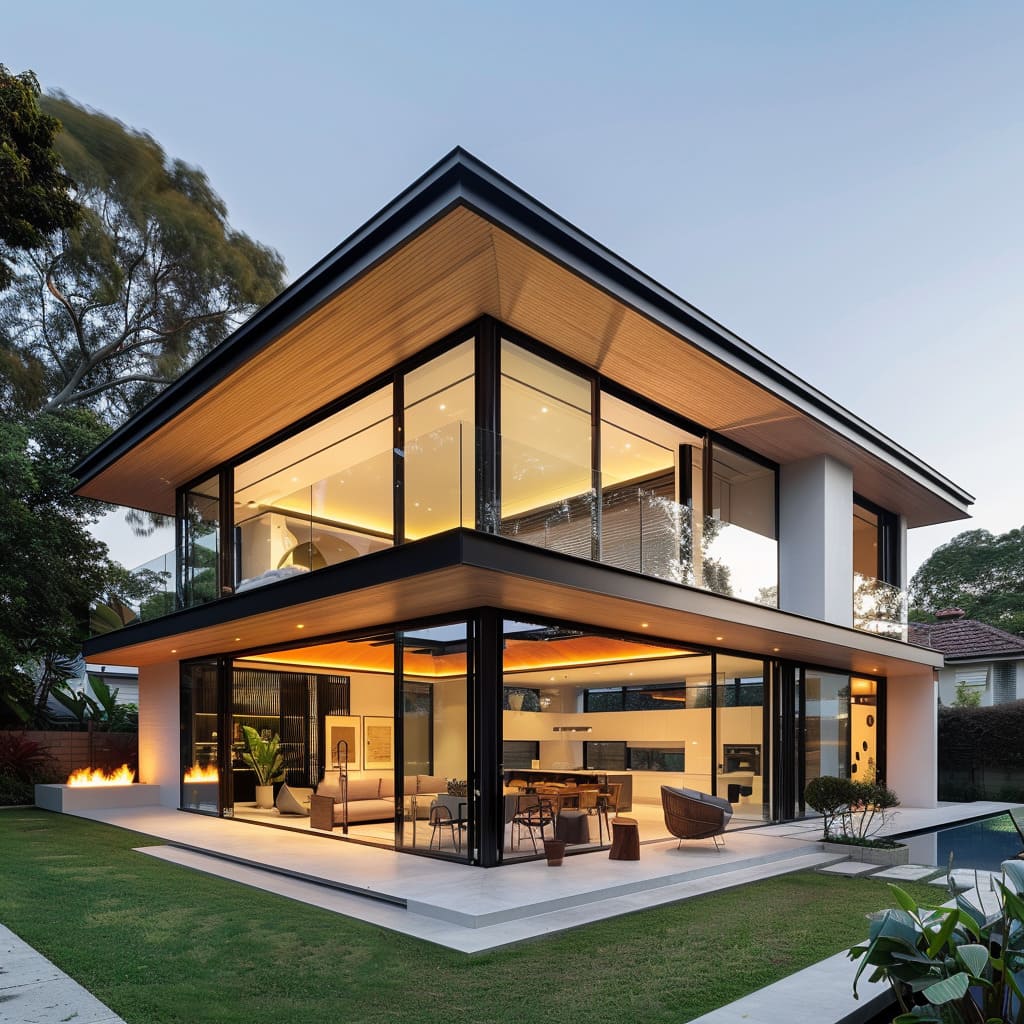
Layered terraces (two to three plates)
- What it achieves: shade, privacy, and a strong rhythm that looks premium at dusk with integrated lighting.
- Where it works best: multi-level villas or sloped sites, and villas that want strong horizontal emphasis.
- What to avoid: too many small step changes; keep the ground plane readable.
Layering works when each plate has a job: one is the main shaded outdoor ceiling, one is a balcony/guard line, one is a terrace edge or step system. Add wood to undersides, keep black lines consistent, and let the pool run parallel so the whole exterior reads as one geometry.
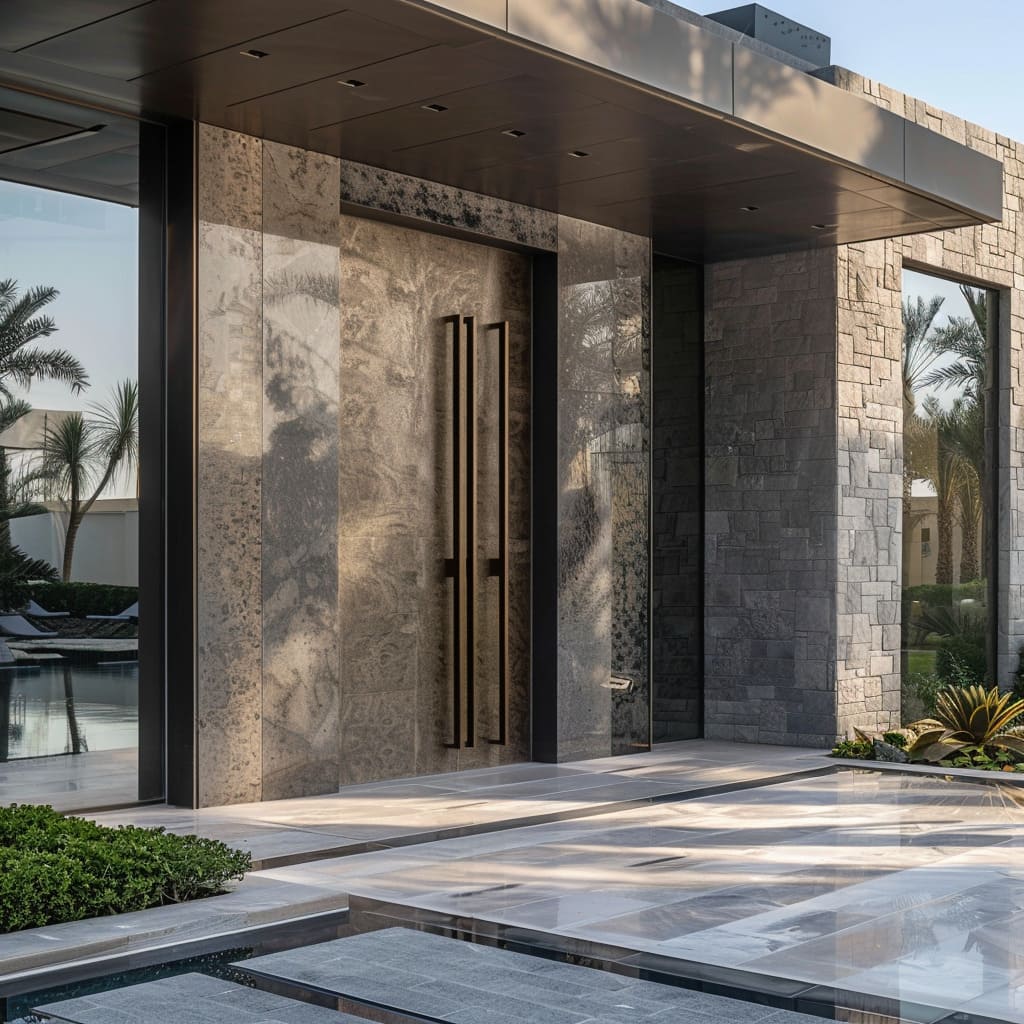
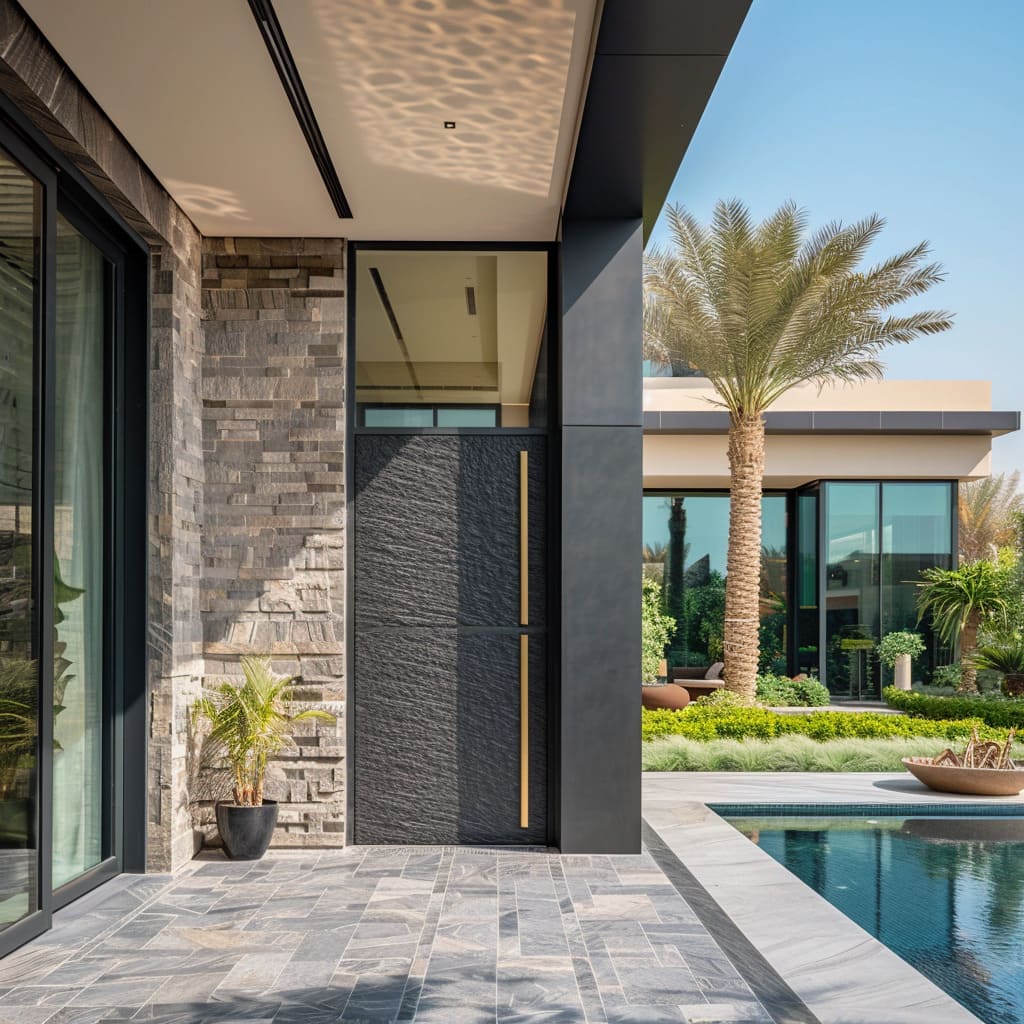
Entry portals and arrival
Modern houses often win or lose at the entry. If the entry is weak, the rest can feel like a nice facade with an ordinary front door.
A strong arrival sequence uses depth, shadow, one dominant door, and a ground plane that feels gallery-clean.
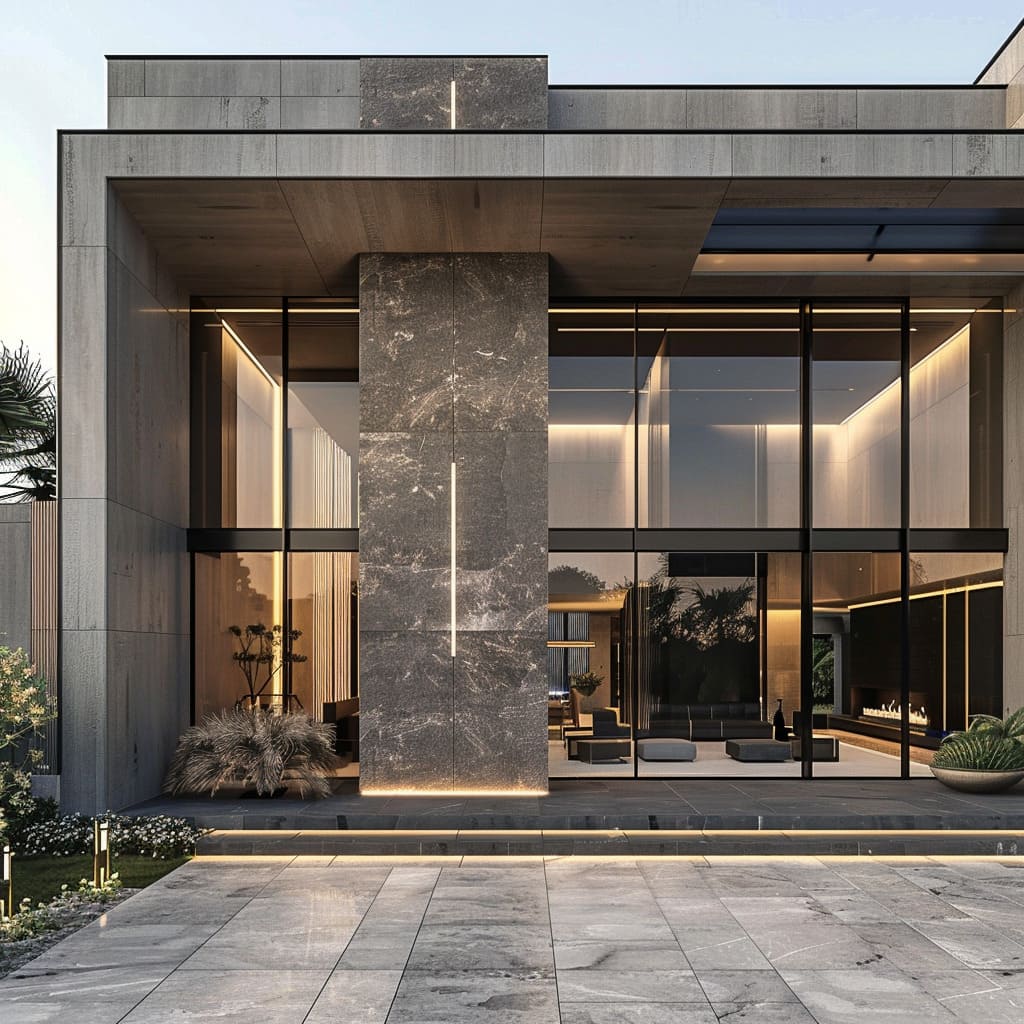
The carved void approach (depth + shadow)
Recess the doorway into a thick wall or roof band. This creates shade, comfort, and a sense of protection.
The recess also builds drama through shadow lines rather than ornament.
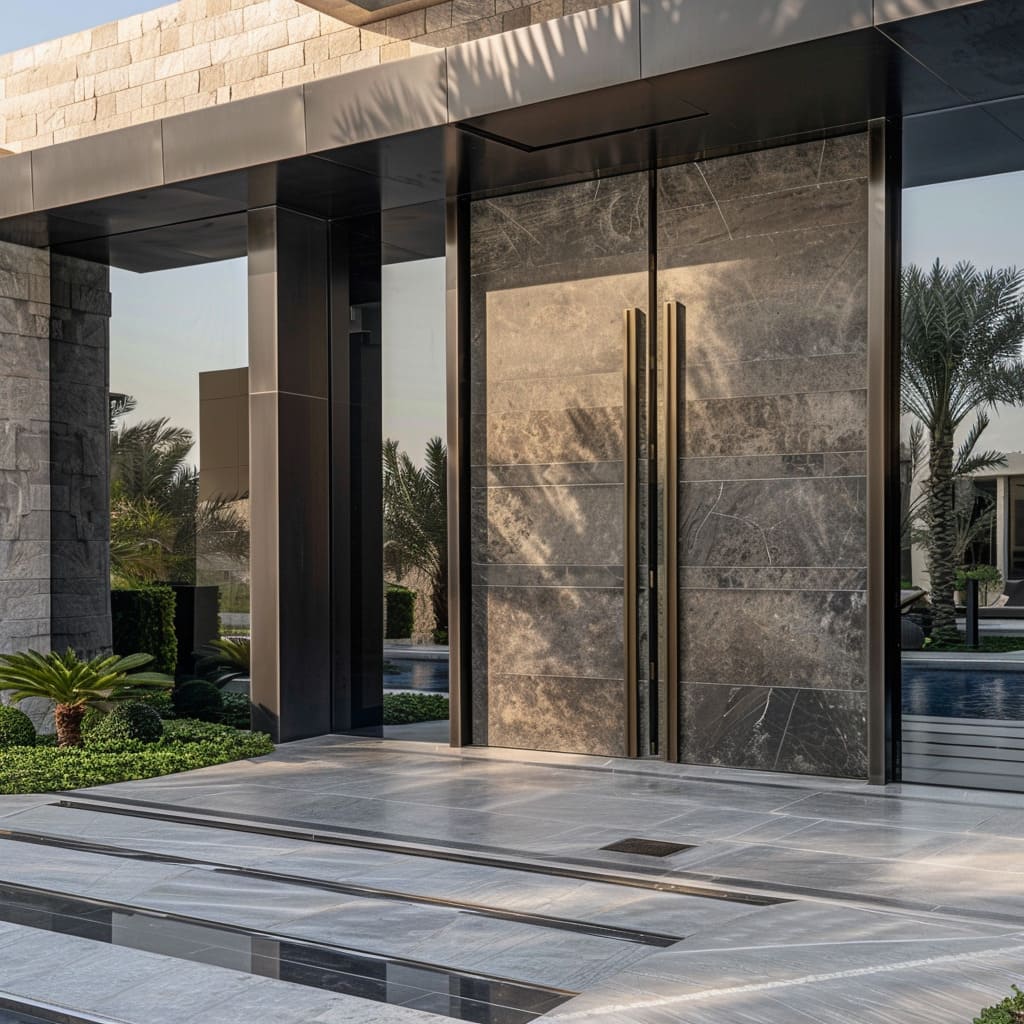
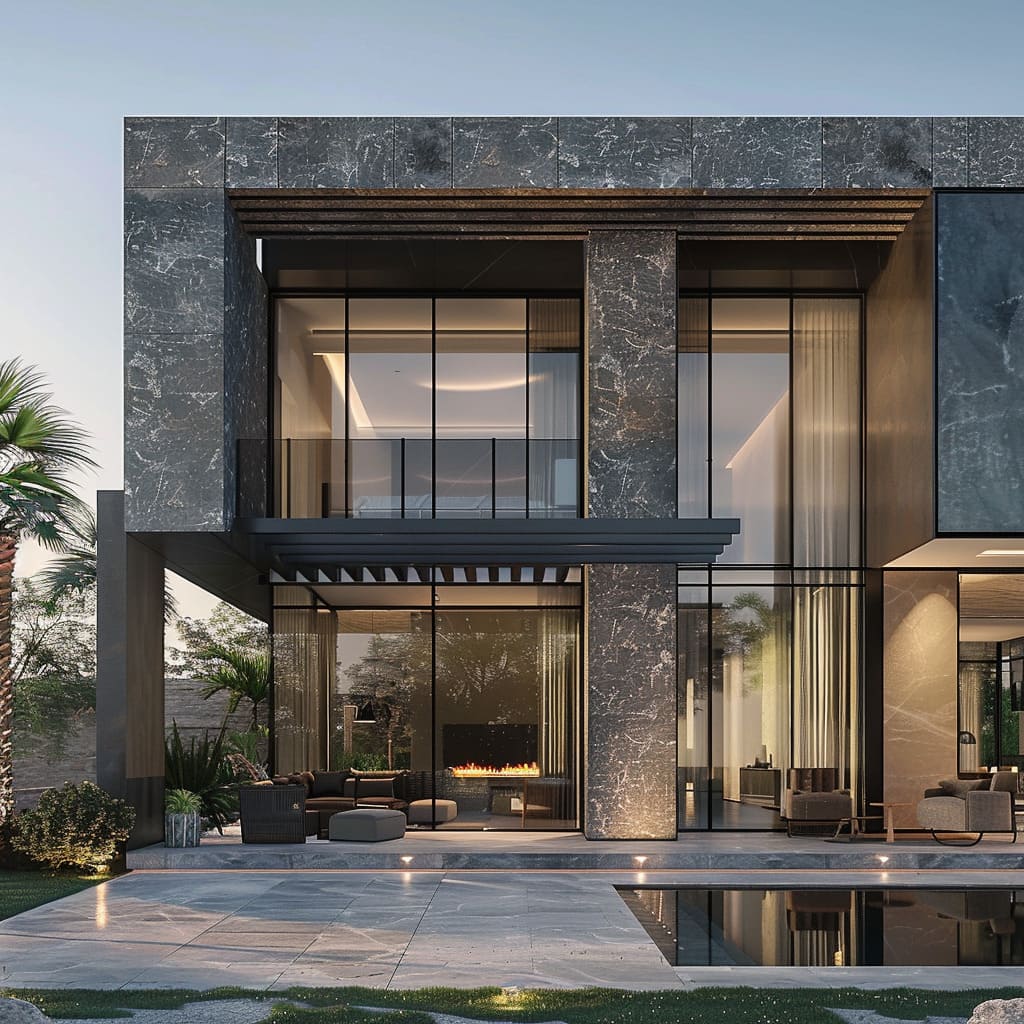
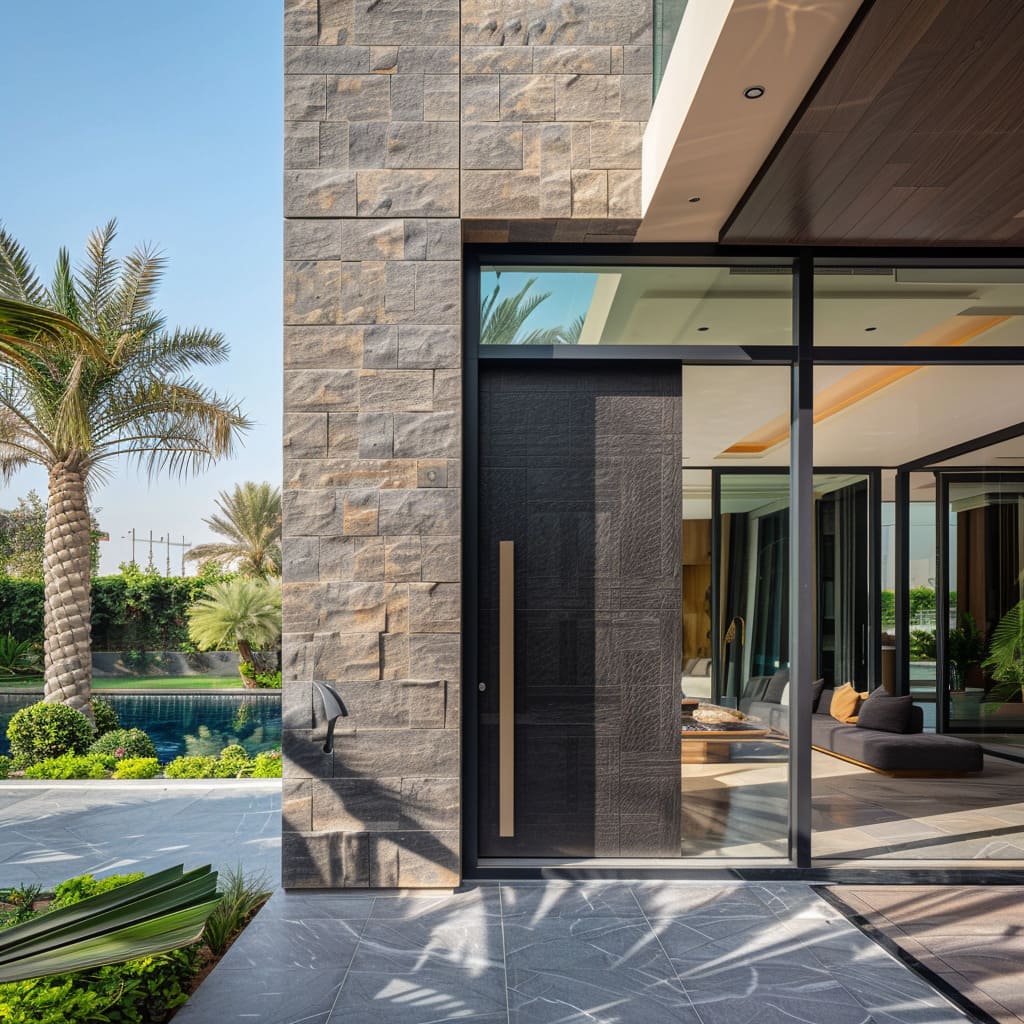
A dark metal surround that looks structural
A thick, crisp metal surround (blackened steel or dark bronze-like tone) should feel like a frame holding the void, not a thin trim line. Depth matters: you want the door to sit within a clear shadow gap so dark surfaces don’t collapse into one flat tone.
Pivot door scale and hardware as the only jewelry
A modern villa entry looks most premium when the door is the hero and the hardware is the only highlight.
- Door: oversized slab with a dark stone-like or wood-like finish; subtle tonal movement is better than busy pattern.
- Hardware: one warm metal tone for pull handles. Keep it simple and tall so it reads as a strong vertical line.
- Repeat the warm metal lightly: house numbers, mailbox slot, possibly one small sconce if truly needed.
Ground plane as a gallery floor
A calm forecourt makes the entry feel expensive before anyone touches the handle.
Large-format pale slabs with tight joints
Small pavers introduce too many lines. Large slabs reduce joint noise and make the approach feel composed.
Dark linear inlays/drain lines as direction lines
Instead of decorative borders, use a thin dark strip near the threshold (or parallel bands) to guide movement and sharpen the modern look. Done well, it feels functional and graphic at the same time.
Adjacent glazing to reflect planting
A full-height glass panel near the entry can reflect palms, shrubs, and sky, which softens heavy stone and metal. Reflection keeps the entry from feeling static.
Mini checklist — Entry success cues
- One dominant door
- Two texture families max on walls (example: rough stacked stone + smooth slab plane)
- Minimal objects (skip cluttered pots; use a few sculptural plants grouped in beds)
The ground plane is architecture: paving, decks, steps, and edges
Modern house exteriors succeed when the ground plane is treated as part of the architecture—not as landscaping that happens afterward. The best terraces read like an extension of interior flooring: continuous, low-joint, and aligned with the facade grid.
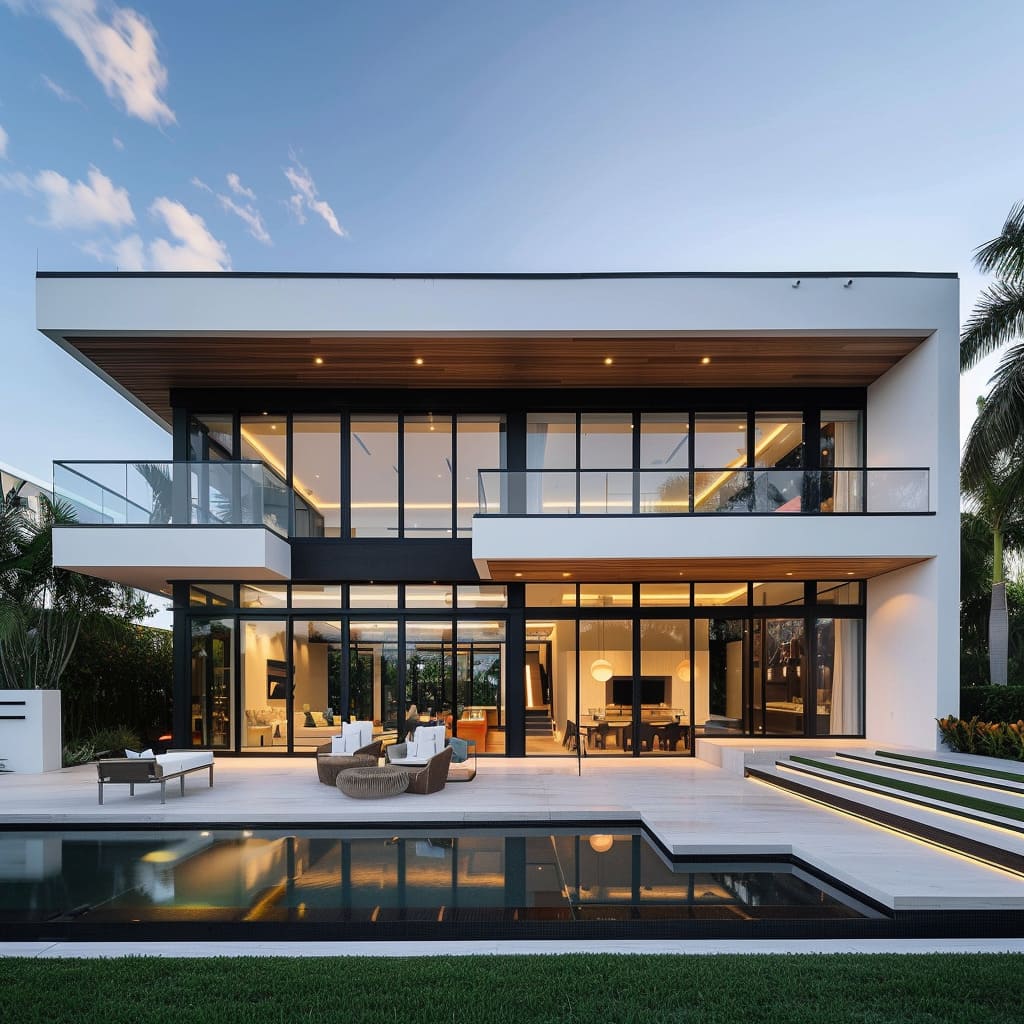
Large-format paving that supports long sightlines
Big slabs create a calmer field, which is especially important near water because reflections look cleaner when the surroundings aren’t visually noisy.
Why big slabs look more premium
Fewer joints = fewer interruptions. A modern villa already has strong lines in roof edges and window grids; the terrace should support that, not add extra pattern.
When mixed-format patterns help
If a terrace is extremely large, a controlled mixed-format stone field can add scale and subtle variation. The key is restraint: keep tone variation tight and joint widths disciplined.
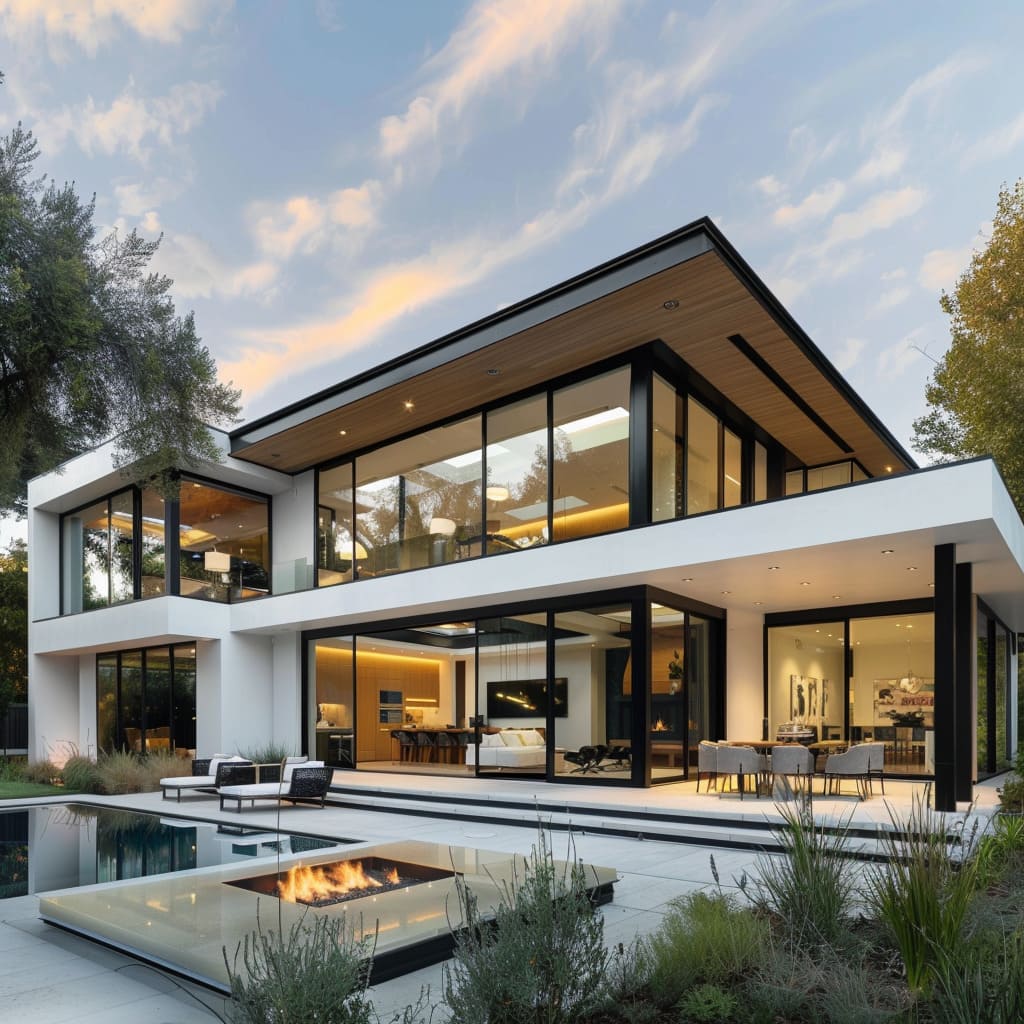
Timber decks as barefoot zones and warm connectors
Wood decking works best as a purposeful comfort surface, not as a second competing terrace material.
Use full-length decks parallel to glazing
A long deck band aligned with sliding doors creates a true indoor–outdoor extension. It also visually ties wood soffits (above) to the ground plane (below), which makes the palette feel complete.
Flush deck-to-pool edge alignment
When deck edges align cleanly with pool coping, circulation becomes simple and the terrace reads as one continuous platform.
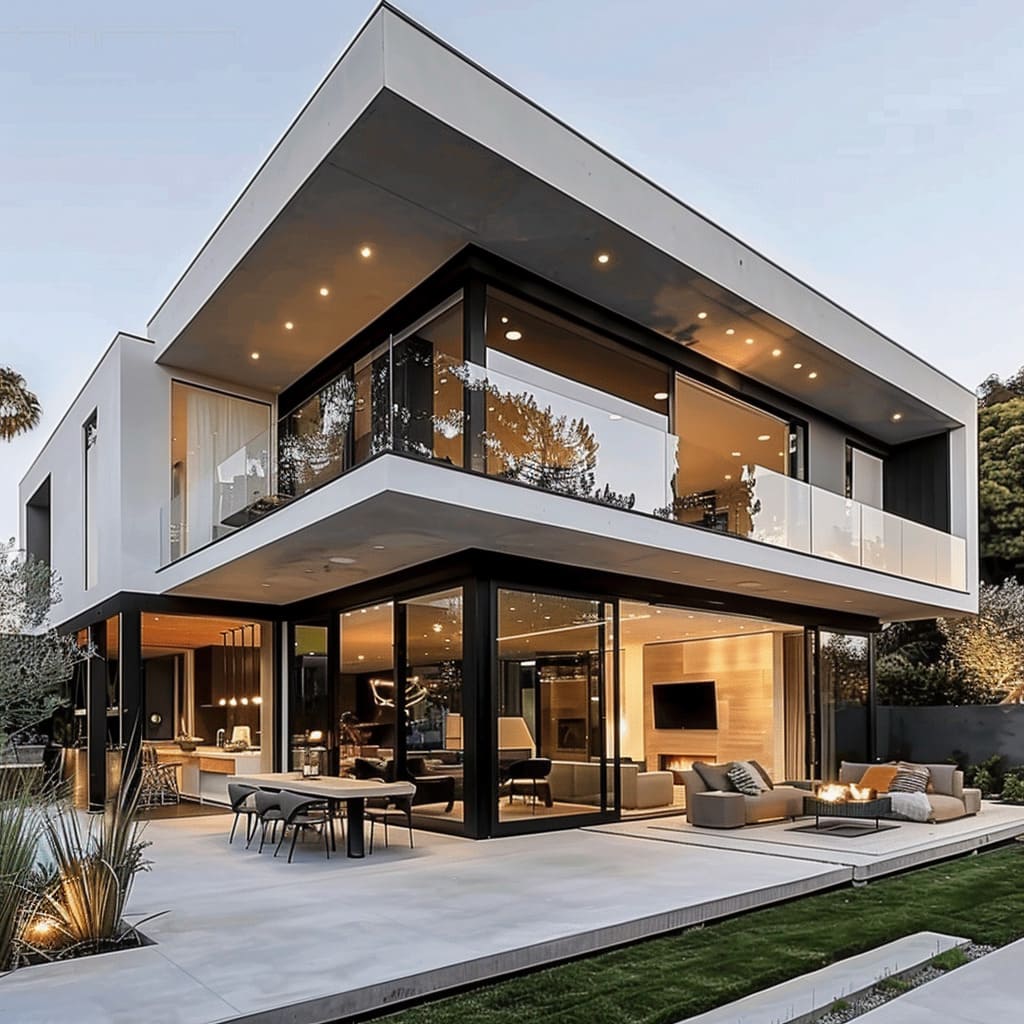
Steps that do more than move people
Steps are a major modern villa opportunity: they can shape the terrace the way architectural plates shape the facade.
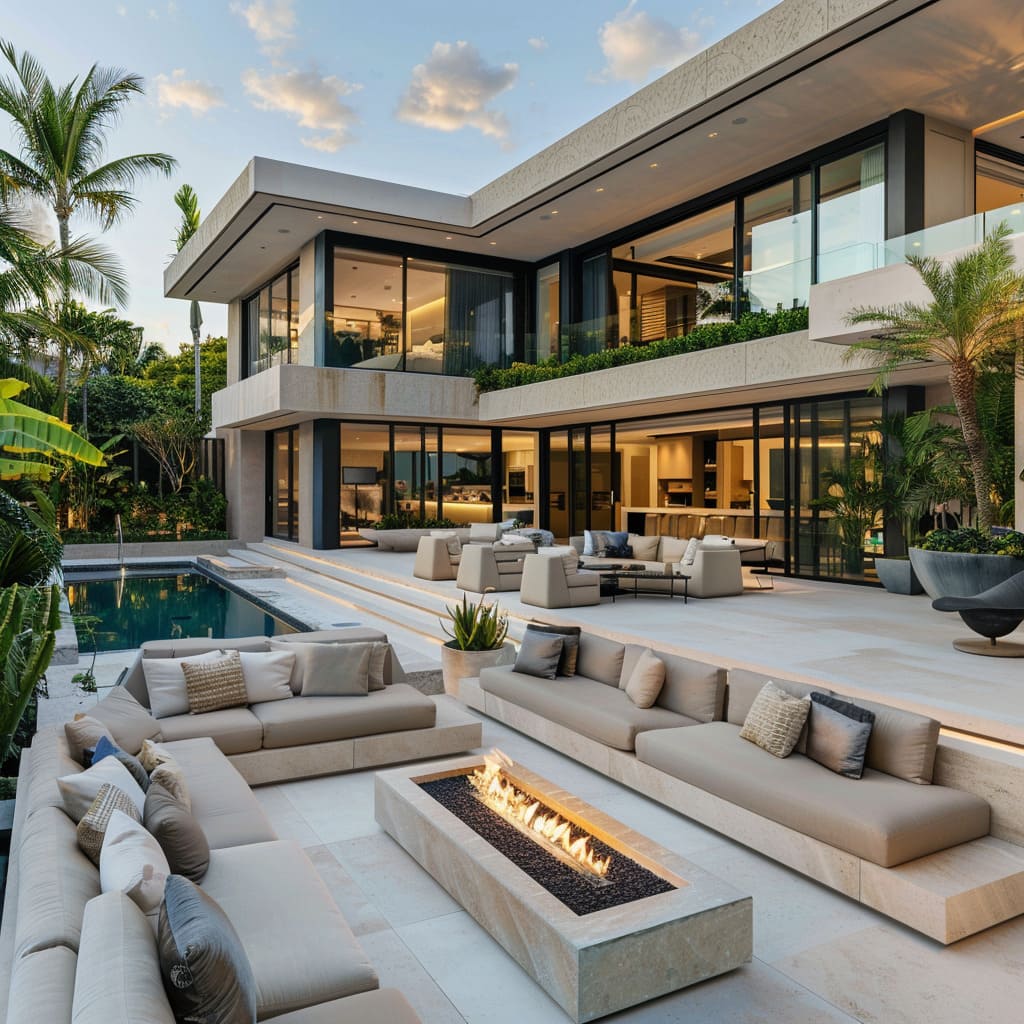
Wide, shallow steps as seating edges
Low risers and generous treads feel slow and luxury-oriented. They also double as casual seating during gatherings.
Align step lines with pool edges and roof lines
When step edges echo the same lines as the pool and roof, the entire exterior reads as one geometry. This is one of the cleanest ways to avoid the backyard-feels-added-later problem.
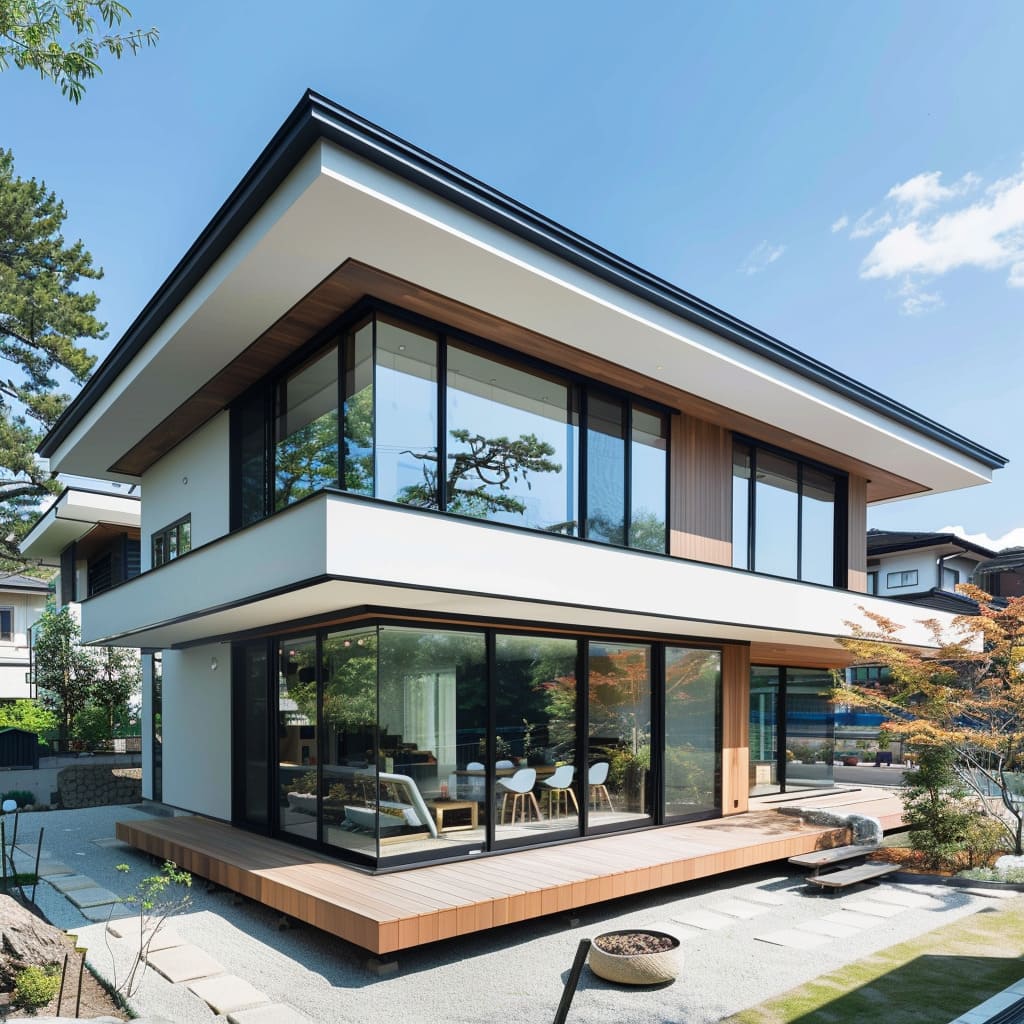
Pool placement that reinforces the villa’s geometry
A pool should strengthen the villa’s main lines. The most reliable approach is to use the pool as a mirror plane that repeats the architecture’s horizontals.
The parallel pool axis (most reliable modern move)
A long rectangle running alongside the main terrace amplifies the villa’s horizontals and makes the exterior feel longer and more composed. Bulky coping can break the clean modern read.
A thin, sharp edge helps the pool look like a clean plane set into the terrace.
The side-lane pool (tight lots, strong effect)
A narrow lap lane beside living glazing makes water a constant reflection band. It can feel extremely high-end if the terrace remains generous.
If the lane is close to the house, avoid squeezing seating into a thin corridor. Maintain a clear walking band so the side lane feels like a designed feature, not a constraint.
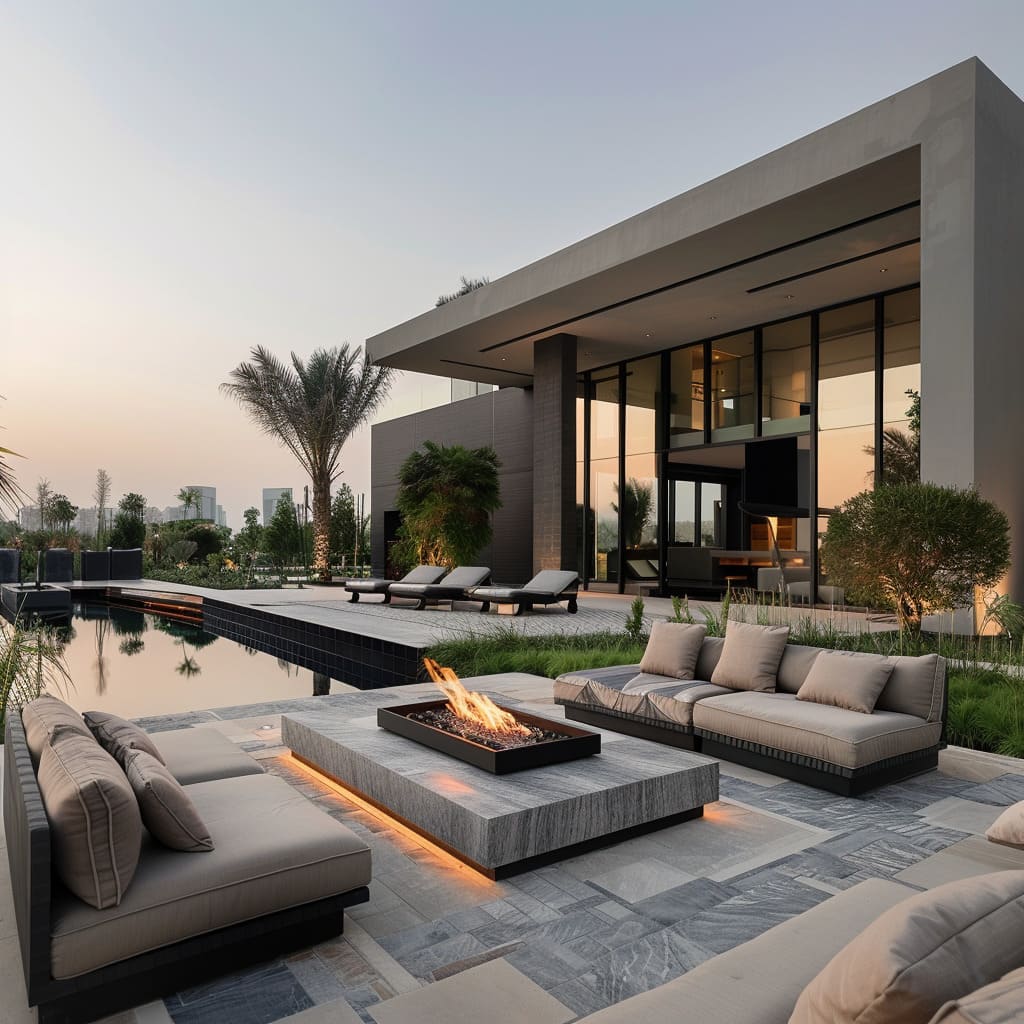
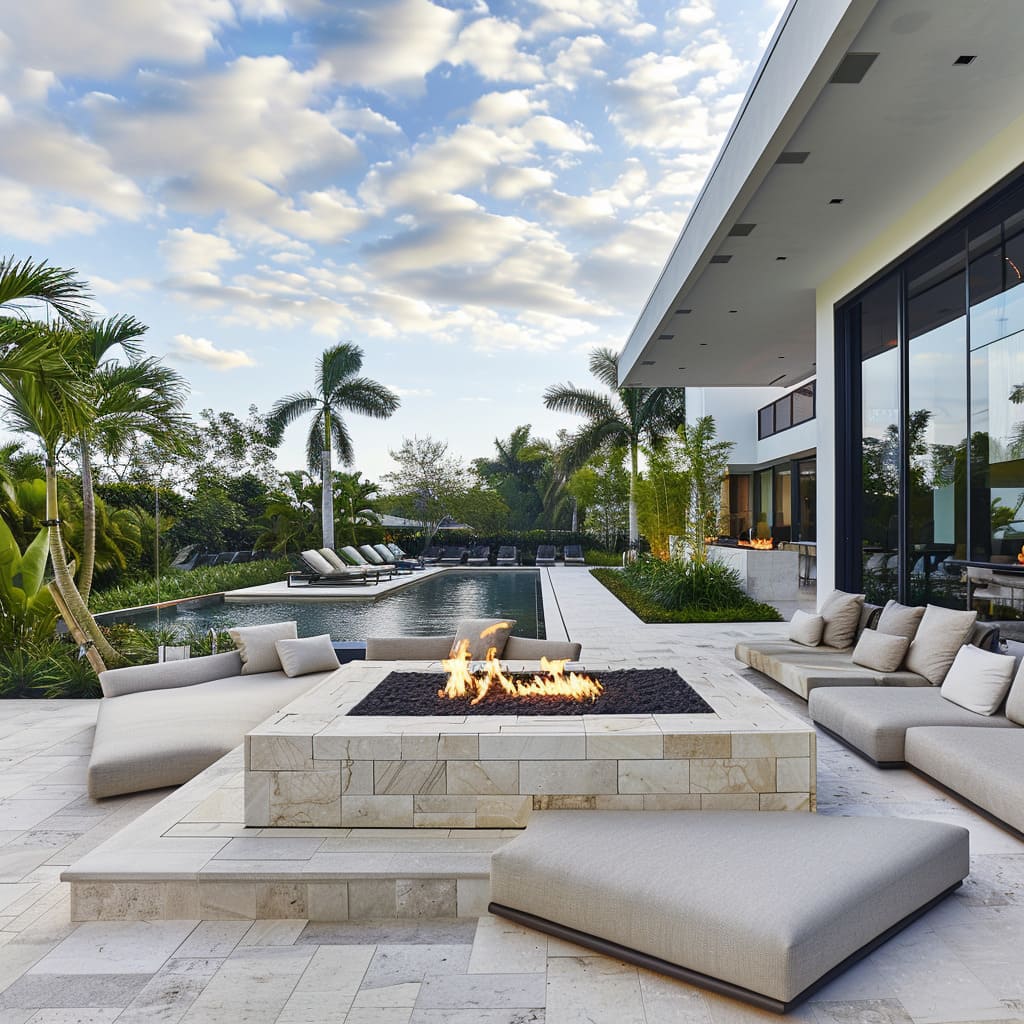
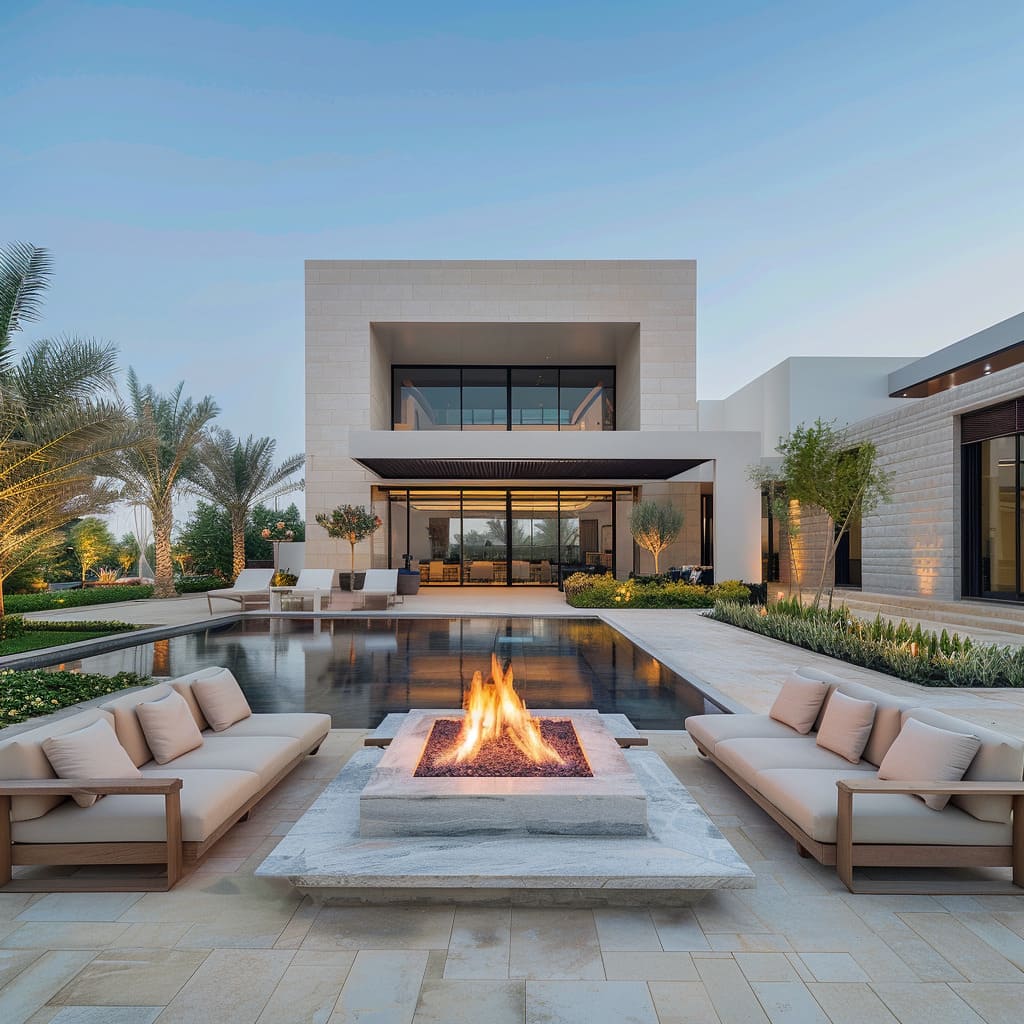
Courtyard pool sequences (fire + water + planting walls)
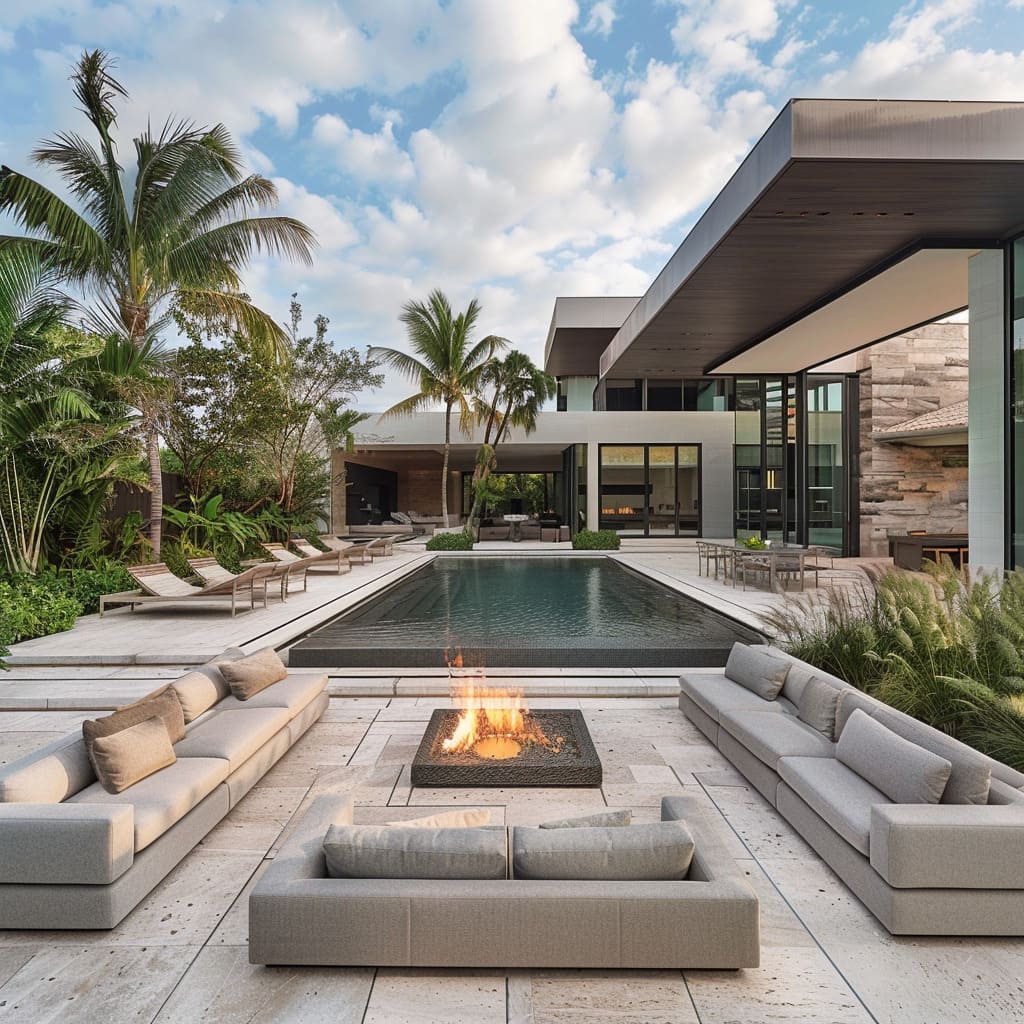
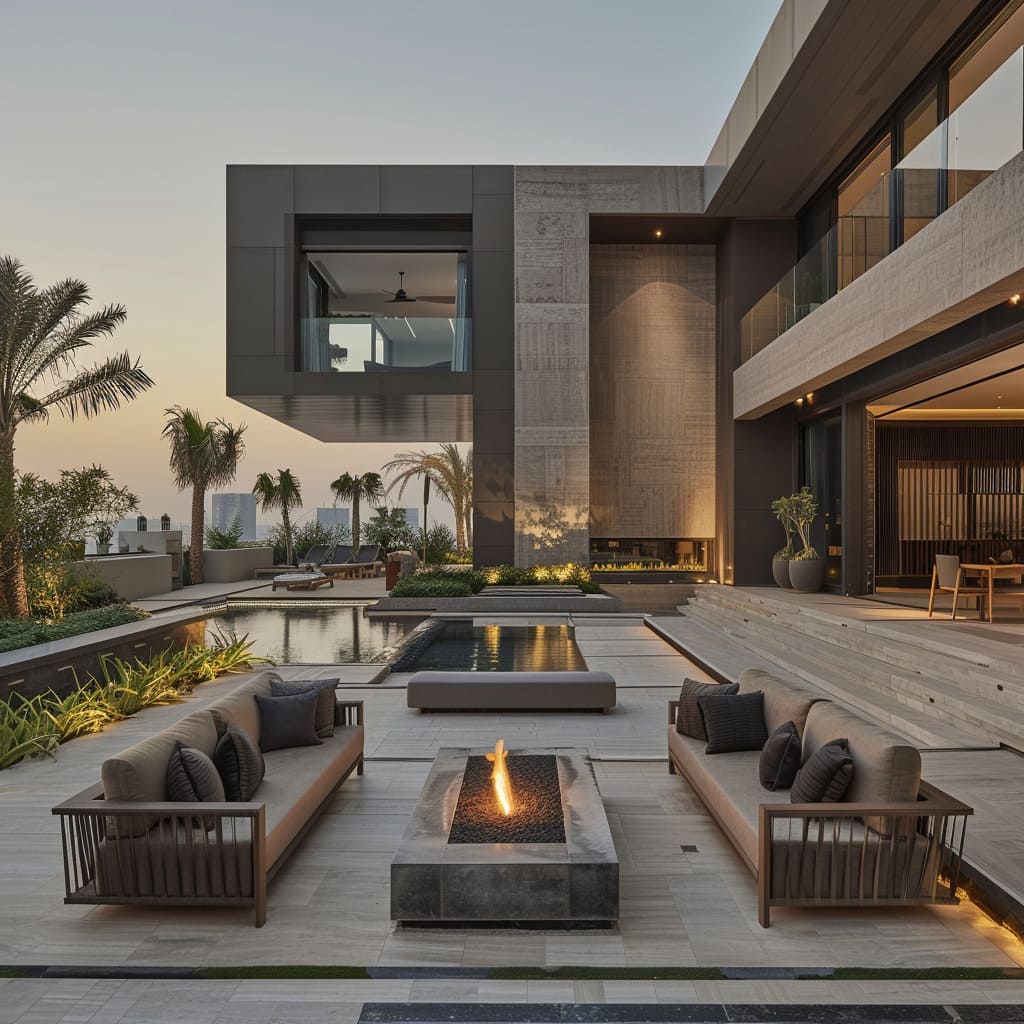
A courtyard pool can feel like a private resort when the sequence is planned: fire as the social anchor, water as the perspective extender, planting as the privacy wall.
A strong hierarchy works best
- Fire feature near the gathering zone so it pulls people together
- Pool aligned as the main view line so the courtyard feels longer
- Planting massed at the perimeter so privacy reads soft, not fortress-like
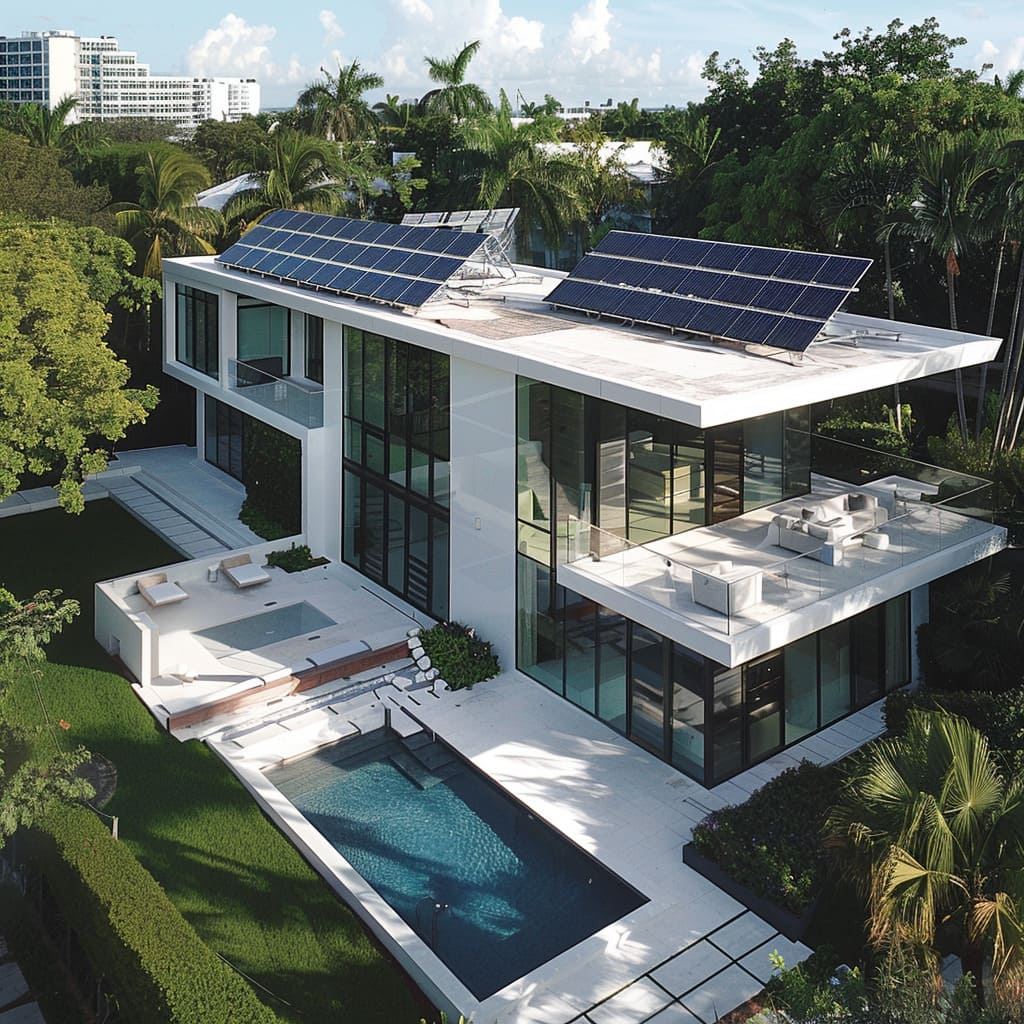
Outdoor rooms that feel planned, not staged
The terrace should read as a complete outdoor living floor with clear zones, not as a big slab with scattered furniture.
Furniture zoning that matches the architecture
Place zones where they naturally work with the plan and the overhang.
- Dining closest to sliding doors for service logic and daily use
- Lounge under the overhang for shade and evening comfort
- Sun loungers near the pool edge in an orderly row to reinforce the pool line
A simple test: when you view the terrace from inside through the glazing, the outdoor layout should feel as organized as an interior living room.
Low silhouettes keep the glass wall dominant
Tall furniture can block the facade and make the glass wall feel chopped up. Low profiles let the architecture stay readable.
Instead of bright cushions, use tactile variety: woven chairs, ribbed cushions, slatted details, and matte fabrics. This keeps the palette consistent while still giving the outdoor zone richness up close.
Planting as a controlled border: privacy without visual clutter
Planting should behave like soft architecture: it frames, it protects, and it supports the main lines.
Perimeter massing strategy
A clean modern villa landscape usually follows a clear height hierarchy:
- Dense planting at property edges for privacy
- Lower planting near glazing and pool edges to keep views open
- Continuous bands and clusters, not scattered individual pots
This approach keeps the terrace readable and prevents the common look of random greenery placed wherever there was leftover space.
Two planting moods that fit this style
Desert-friendly modern
- Gravel bands as the ground texture
- Tufted grasses and sculptural succulents for shape
- Palms used as vertical punctuation
- Planting grouped in controlled masses to keep the look sharp
Tropical modern
- Layered green walls at the perimeter
- Palms and large-leaf texture behind crisp white planes
- Lower groundcover closer to the pool for softness without blocking circulation
- Dense perimeter planting to create privacy without tall solid walls
Lighting plan: make the house look high-end at night
Night lighting should reinforce the same system: warm ceilings under overhangs, clear edges, and a lived-in interior glow behind the black grid.
Soffit lighting: small points, steady rhythm
Recessed downlights set into wood soffits turn overhangs into glowing ceiling planes. The spacing matters: keep it steady and aligned with architectural rhythm so it looks intentional rather than random.
Linear lighting that traces edges (use sparingly)
Thin warm lines under roof bands and balcony edges can give a crisp outline effect. Use restraint: a few strong lines are better than many competing light strips.
Interior glow as part of the exterior composition
Glass-heavy villas look best at night when interior lighting is layered and warm: pendants, linear ceiling lighting, and a fireplace line can all become part of the exterior reading. A practical rule: interior ceiling lighting geometry should relate to the exterior lines (roof edges, mullion rhythm, terrace plates).
This makes the house look composed rather than like a bright box.
Landscape lighting that supports privacy
- Low uplights washing hedges to form a glowing green boundary
- Step lights under tread noses for safety without visual clutter
- Small spike uplights aimed carefully at trunks, not sprayed everywhere
The goal is legibility and atmosphere, not brightness.
Material selection guide
Wood soffit options and how they change the look
Natural wood
- Rich, authentic grain and warmth
- Requires a plan for weathering and maintenance
- Best when you want the soffit to be a real visual feature
Thermo-treated wood
- Improved stability and outdoor performance
- Often a slightly deeper, more even tone
- Great when you want warmth with a more controlled aging behavior
Engineered/composite wood-look
- Consistent color and lower maintenance
- Grain can read less natural up close, so detailing matters
- Works well when you want clean modern consistency without seasonal movement concerns
Grain direction
- Running boards lengthwise along the façade amplifies horizontals and makes the villa feel longer.
- Cross-grain or mixed directions can create visual noise; keep direction consistent per elevation.
Color logic
Aim for a warm mid-tone that still looks warm in shade and in late-day light. If wood is too pale, it can disappear under a roof plate.
If it’s too dark, it can fight the black frames and flatten the underside.
Black frames: color, sheen, and consistency
Matte vs satin
- Matte feels crisp and graphic, reduces glare, feels more architectural
- Satin can look slightly richer and can catch highlights, but inconsistency becomes obvious fast
Match frames to fascia edges, posts, and door surrounds
The villa looks most resolved when black appears as one family: window frames, structural posts, slim pergola-like elements, fascia lines, and key entry metalwork. Avoid almost-black mixes
Mixing charcoal, soft black, and deep bronze-black often creates a patchy look.
Pick one dark tone and keep it consistent.
Paving and coping: formats that look calm near water
Large-format porcelain/stone slab look
- Looks clean with minimal joints
- Supports reflections and long sightlines
- Works especially well for wide terraces and pool surrounds
Practical comfort notes (without getting engineering-heavy)
- Choose a surface that stays comfortable underfoot in hot weather and feels safe when wet.
- A slightly textured finish can look modern while still feeling secure around water.
Joint width discipline
Tight, consistent joints are a huge part of the premium look. Align paving joints with façade grid lines and key terrace edges whenever possible.
Common mistakes and clean fixes
Too many accent materials
Problem: white + multiple stones + extra cladding + several metal colors = busy, inconsistent.
Fix: reduce to a disciplined set: white mass + one wood language + one dark line + one paving family.
Add a second stone only when it has a clear role (often entry portal texture).
Glass feels exposed
Problem: tall glazing with shallow overhangs and little recess depth feels like a display wall.
Fix: deepen recesses, strengthen overhang projection, add a loggia pocket, or use fins where privacy is needed.
Inside, keep curtains light and simple so the facade still looks clean.
Terrace feels added later
Problem: pool edge, paving joints, and furniture zones don’t relate to façade rhythm.
Fix: align the pool edge and main paving runs with the façade grid; position dining and lounge zones as natural extensions of interior functions; keep the terrace as a clear platform with readable edges and step lines.
Outdoor clutter
Problem: too many small objects, scattered planters, busy side tables, mixed décor styles.
Fix: fewer objects, larger pieces, more open floor area.
Let the architecture, water reflection, and lighting do most of the visual work.
Planting looks random
Problem: individual plants dotted everywhere, pots used as fillers, inconsistent bed edges.
Fix: mass planting into clusters and continuous borders.
Keep low planting near glass and water, and build privacy height at the perimeter.
Closing thought
A modern villa exterior looks finished when every major surface has a clear job: white planes provide the quiet strength, wood soffits make shade feel like comfort, and black grids give glass a measured structure. Then the ground plane and pool repeat that same geometry, planting forms a soft perimeter wall, and lighting makes the whole system readable after sunset.
Keep the vocabulary small, repeat it with discipline, and the house looks like one unified design from the gate to the pool edge.
Related Posts

Harmony Home Design brings 10+ years of residential interior design experience to the ideas shared here. We publish design concepts, layout thinking, and practical styling notes.