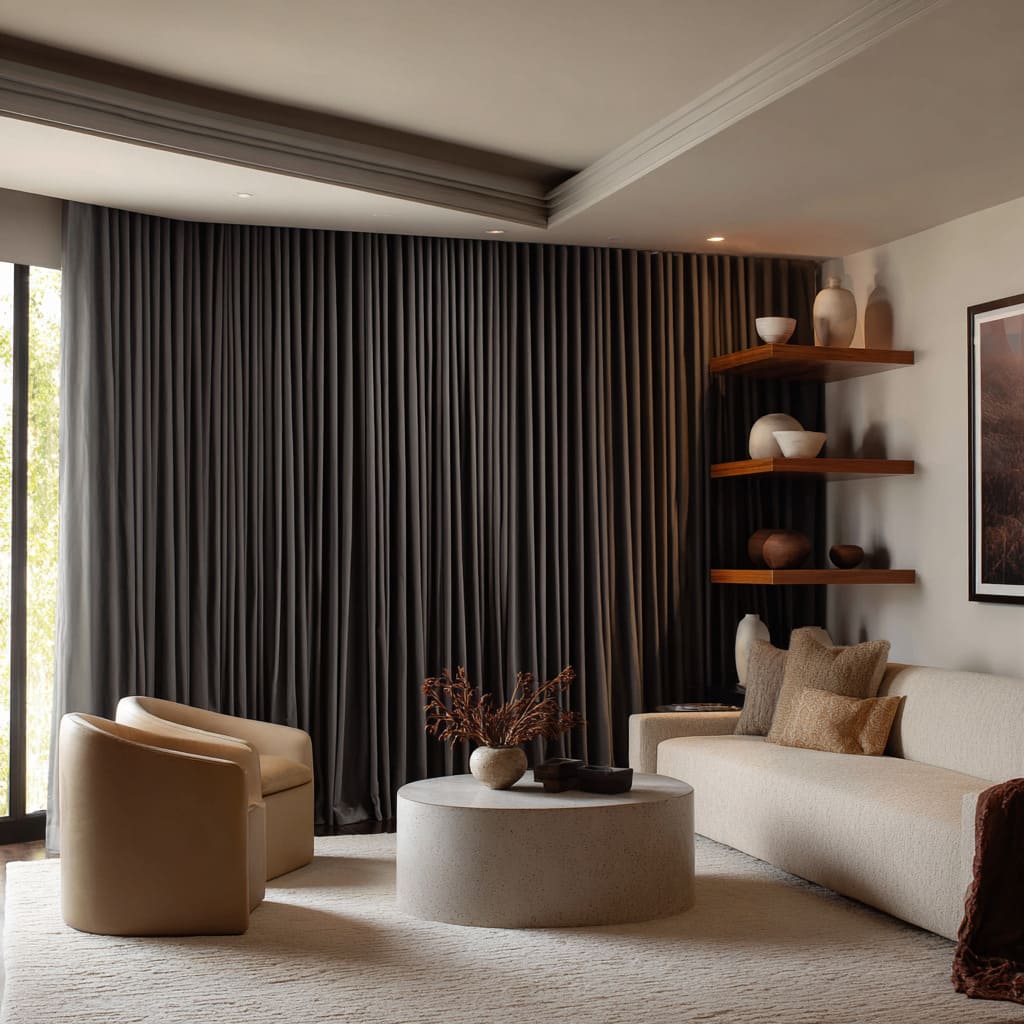
Modern living space designs increasingly rely on drapery as a defining visual element, not merely as fabric placed over glass. In contemporary interior designs, curtains act as soft architectural layers that shape atmosphere, manage light, and connect furnishings, colors, and textures into one coherent field.
The latest drapery ideas for living room windows show how fabric can frame views, organize proportions, echo natural materials, and introduce quiet structure without appearing heavy or ornamental. Whether created through layered sheers, warm tonal solids, textured weaves, or subtle color bands, modern drapery has become one of the most expressive tools for building a calm, composed living environment where every fold, shadow, and hue supports the overall character of the room.
The Role of Color as a Soft Structural Line
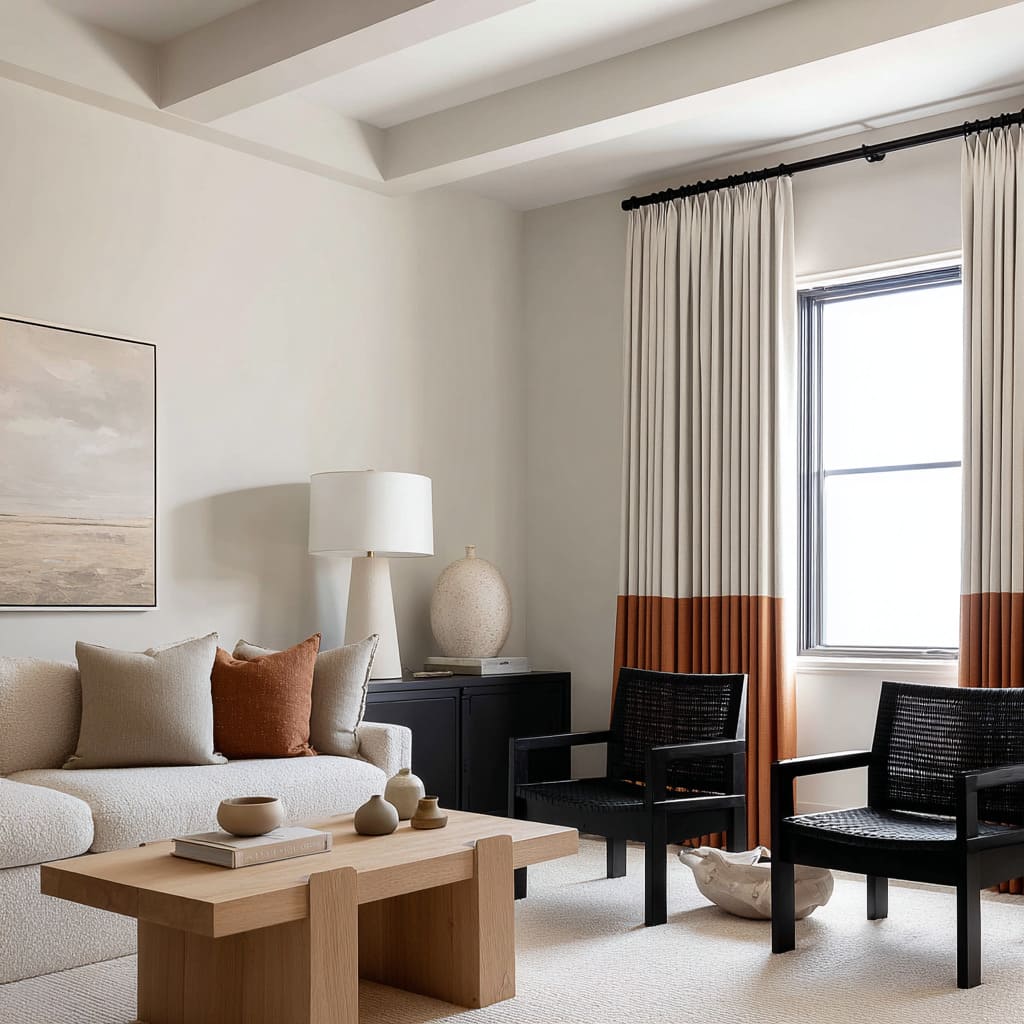
Color in drapery is rarely used as decoration alone—it frequently acts as a structural guide, dividing or grounding different zones of the interior. They often introduce gradients, color-block hems, or bottom-weighted tones that interact with furniture heights and architectural breaks.
These low-placed shifts in tone form what can be described as soft “belt lines” around the design, visually grouping the sofa arms, sideboard tops, and rug edges into a unified zone. When pale curtains deepen into rust, caramel, or bronze near the hem, the eye recognizes a kind of grounding energy without the space feeling segmented.
This approach appears in three main forms:
Subtle Color Transitions
- gentle ombré shifts that echo the warmth of wood
- gradients that catch and balance incoming daylight
Bold Color-Block Bands
- pronounced stripes near the floor that line up with furniture
- tonal accents that keep neutral palettes from becoming flat
Bridge Tones
- mid-range hues that soften transitions between pale walls and darker flooring
- colors that tie stone, wood, and metal together
In these strategies, drapery becomes a color instrument that quietly organizes the living space look, allowing drapery designs for living room interiors to feel cohesive without relying on bold prints or loud accents.
Pleat Discipline and the Rhythms of Soft Repetition
The spacing and character of folds influence the personality of the room more than most people realize. Some interiors lean on tight, disciplined pleats that resemble fluted millwork, giving the curtain wall a column-like precision.
These folds create a sense of vertical order that supports refined, balanced layouts. In contrast, relaxed pleating with softer troughs and irregular slumping establishes a more lived-in, sun-washed mood.
These softer folds often appear in spaces with textured plaster, loose-weave upholstery, and open-weave rugs.
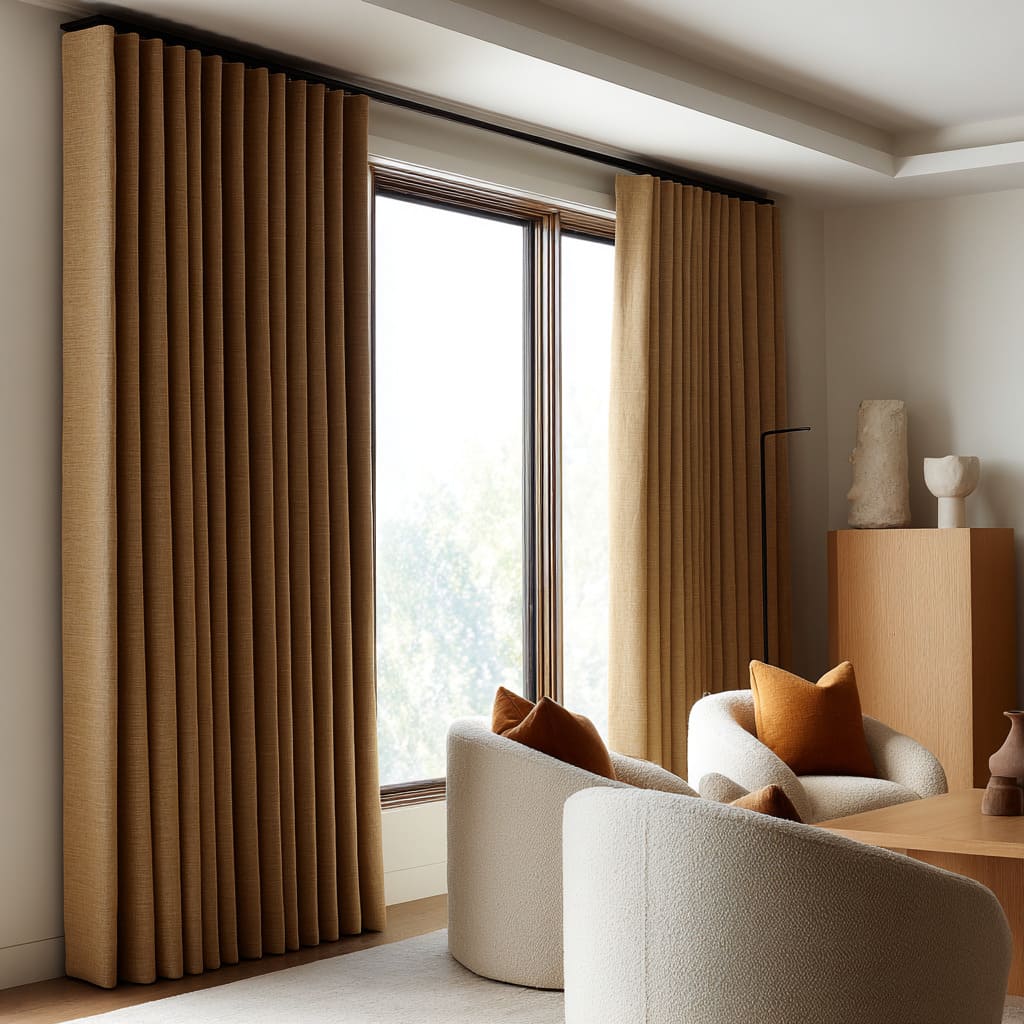
Across many drapery ideas for living room windows, the rhythm of the pleat becomes its own decorative element. Even without pattern or color variation, the play of light across the vertical surfaces produces visual depth.
This dual rhythm—both architectural in the larger folds and atmospheric in the micro-shadows between them—reveals how drapery organizes the room through repeated softness rather than a rigid line. The curtain becomes a soundless metronome: regular, gentle, and visually grounding.
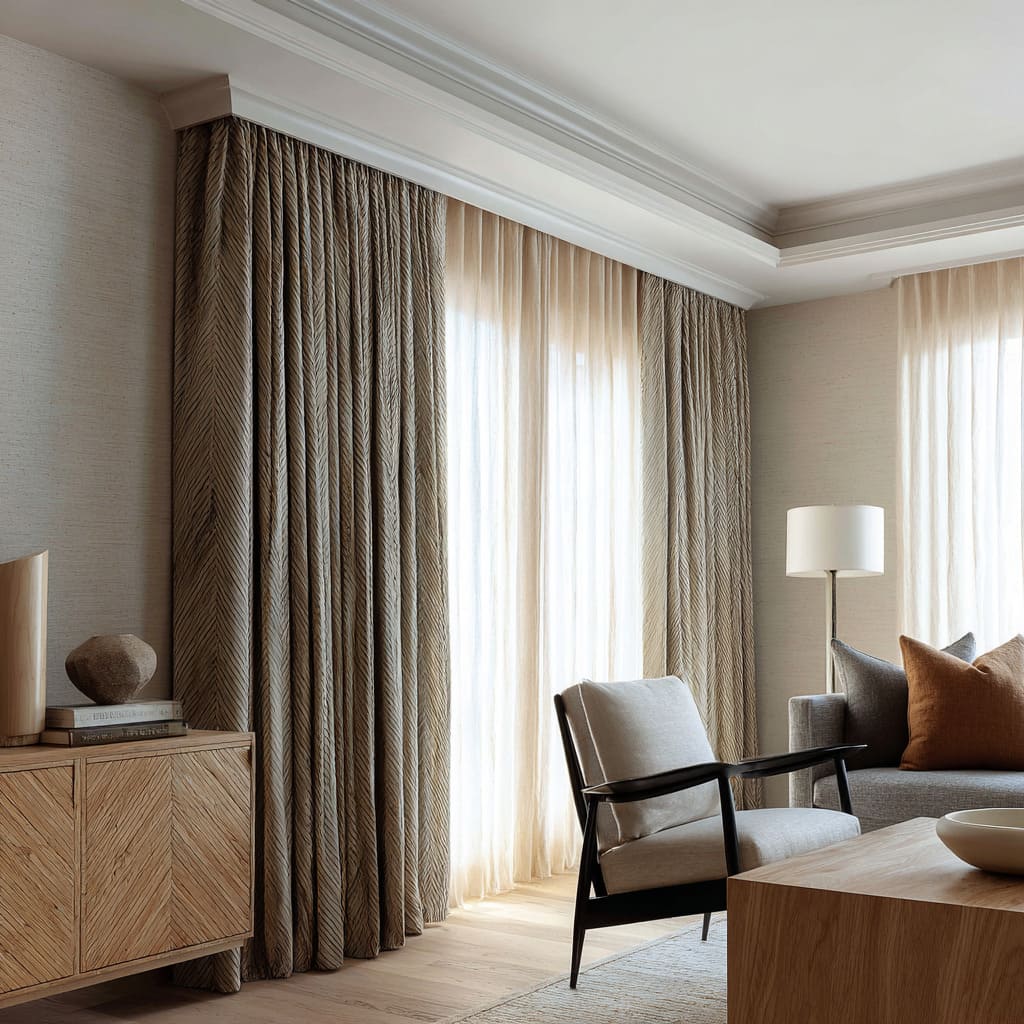
Texture as Interpretation: Connecting Interiors with Landscape and Materials
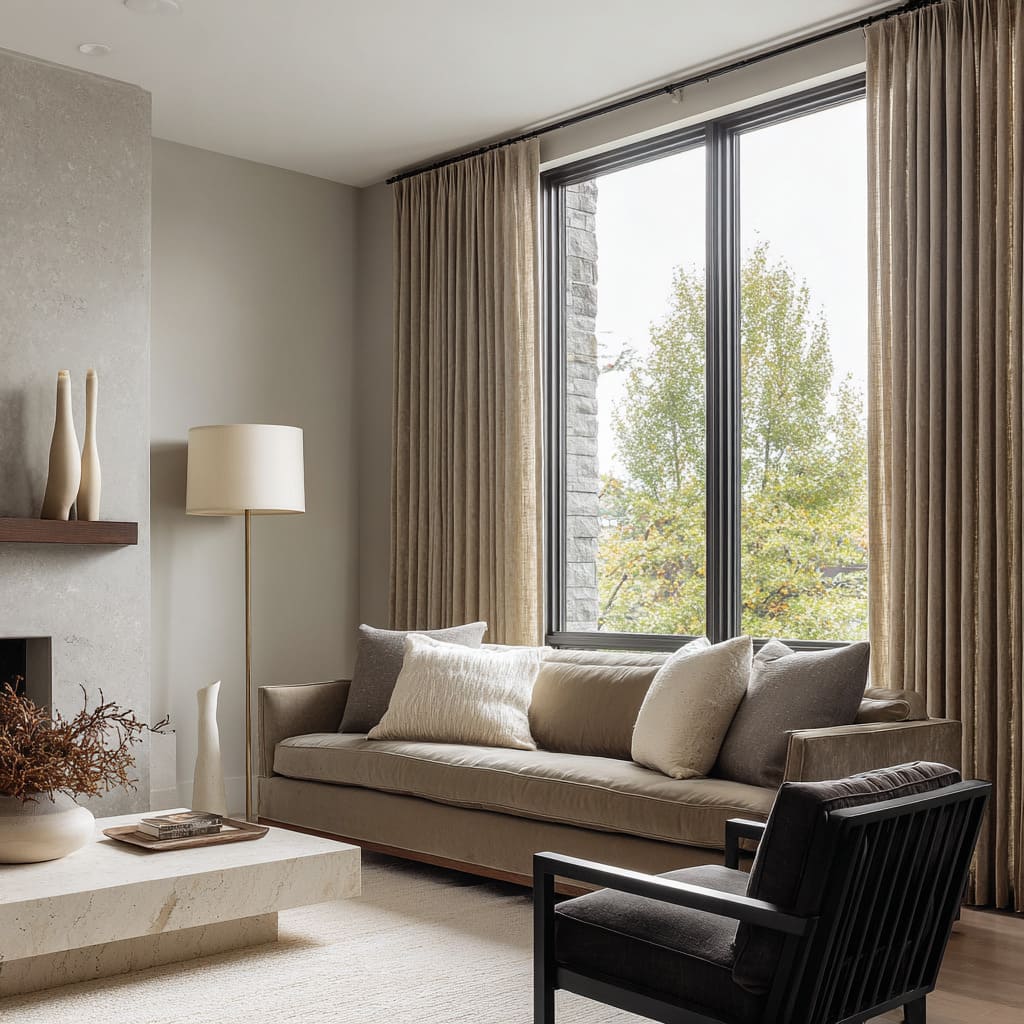
Texture in modern drapery rarely stops at “soft vs heavy. ” Many fabrics intentionally echo forms already present in the space or just outside the window.
Some resemble tree bark, desert stucco, dry grasses, or layered soil tones. Others mirror natural materials—fine vertical ribs that relate to wooden cabinetry, pixelated weaves that resemble stone sediment, or slubbed velvet surfaces that hold light like mineral dust.
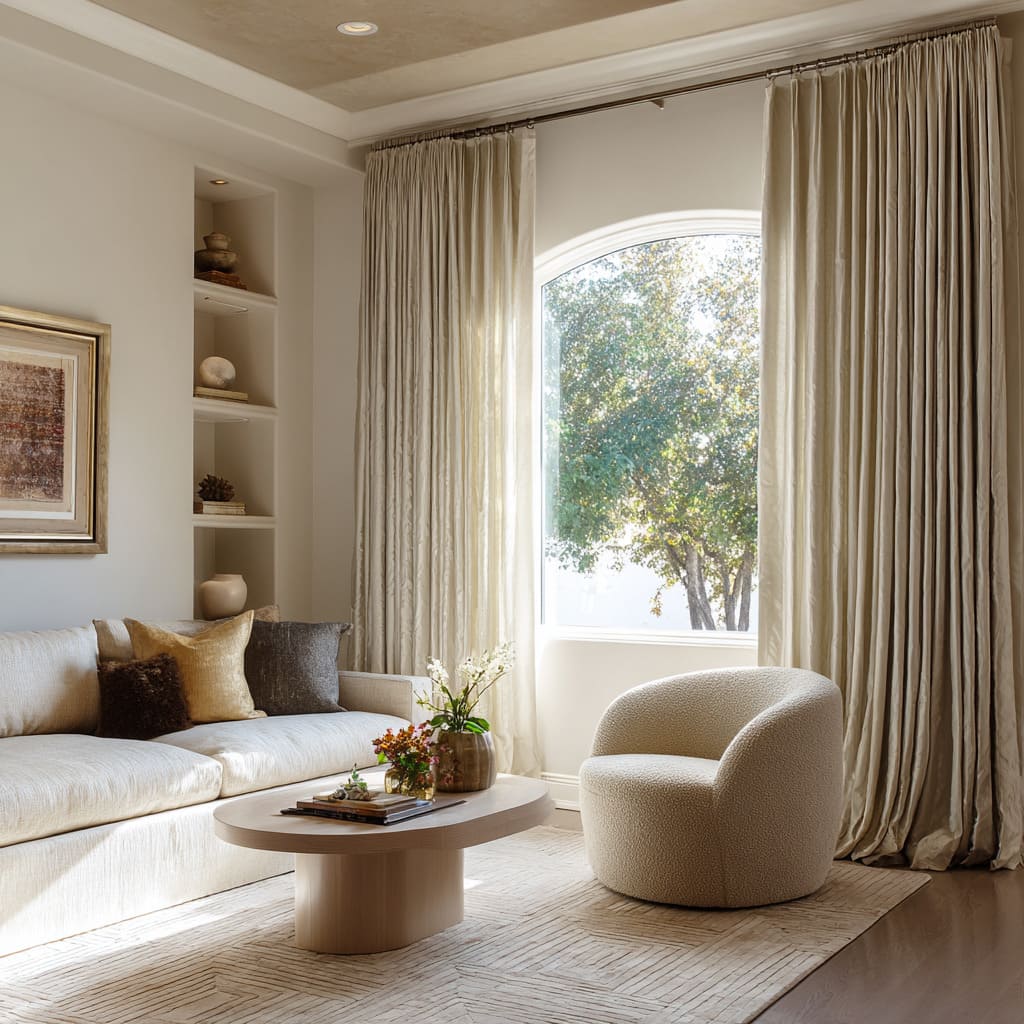
This approach creates a visual conversation between the curtain and its surroundings, one that enriches modern drapery ideas through subtle associations rather than literal motifs. The curtain becomes a translator between the interior palette and the outdoor view.
A few examples:
- ribbed fabrics paired with views of tree trunks
- straw-colored weaves harmonizing with sunlit landscapes
- slightly creased ivory drapery replicating the effect of light sliding down plaster
- heathered charcoal panels that echo slate or volcanic stone
Fabric can become a poetic parallel to the natural world, making the interior feel deeply rooted yet visually gentle.
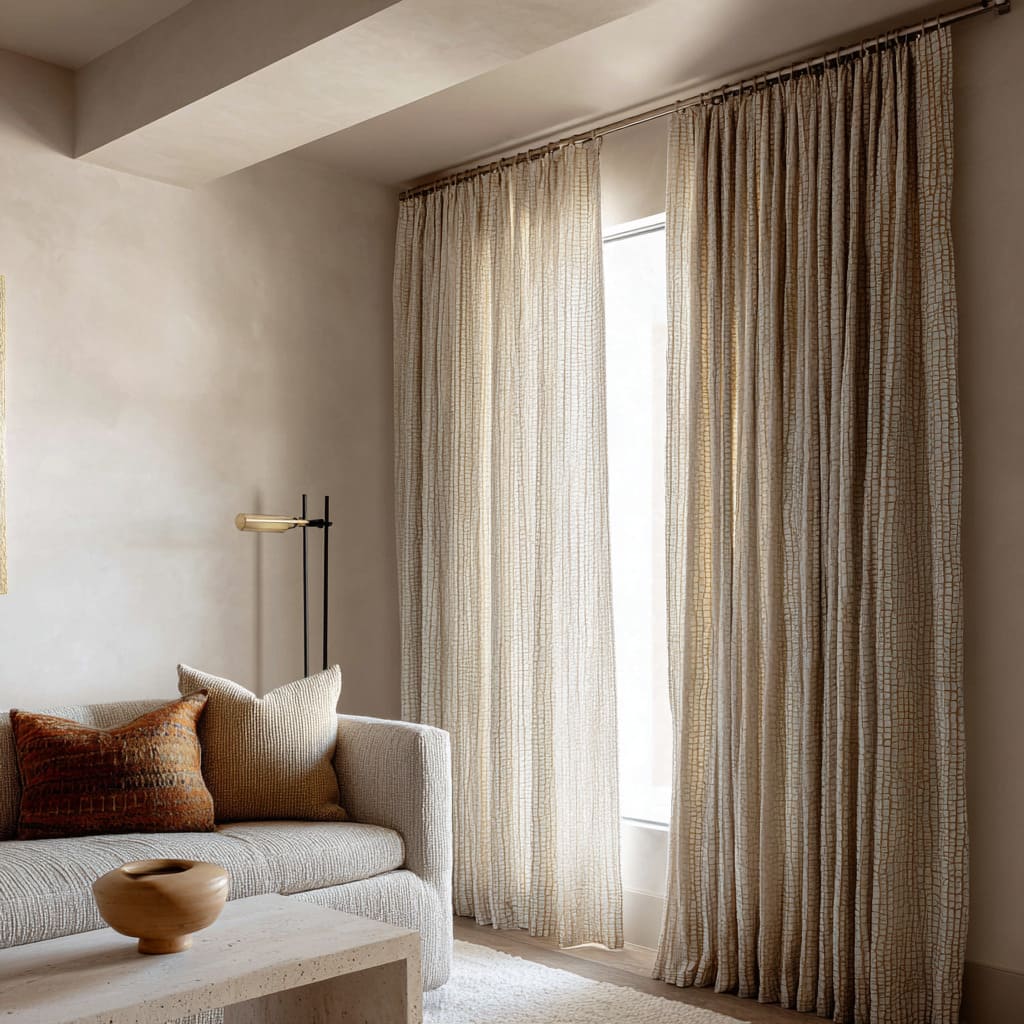
Layering as Depth: Sheers, Solids, and Atmospheric Transitions
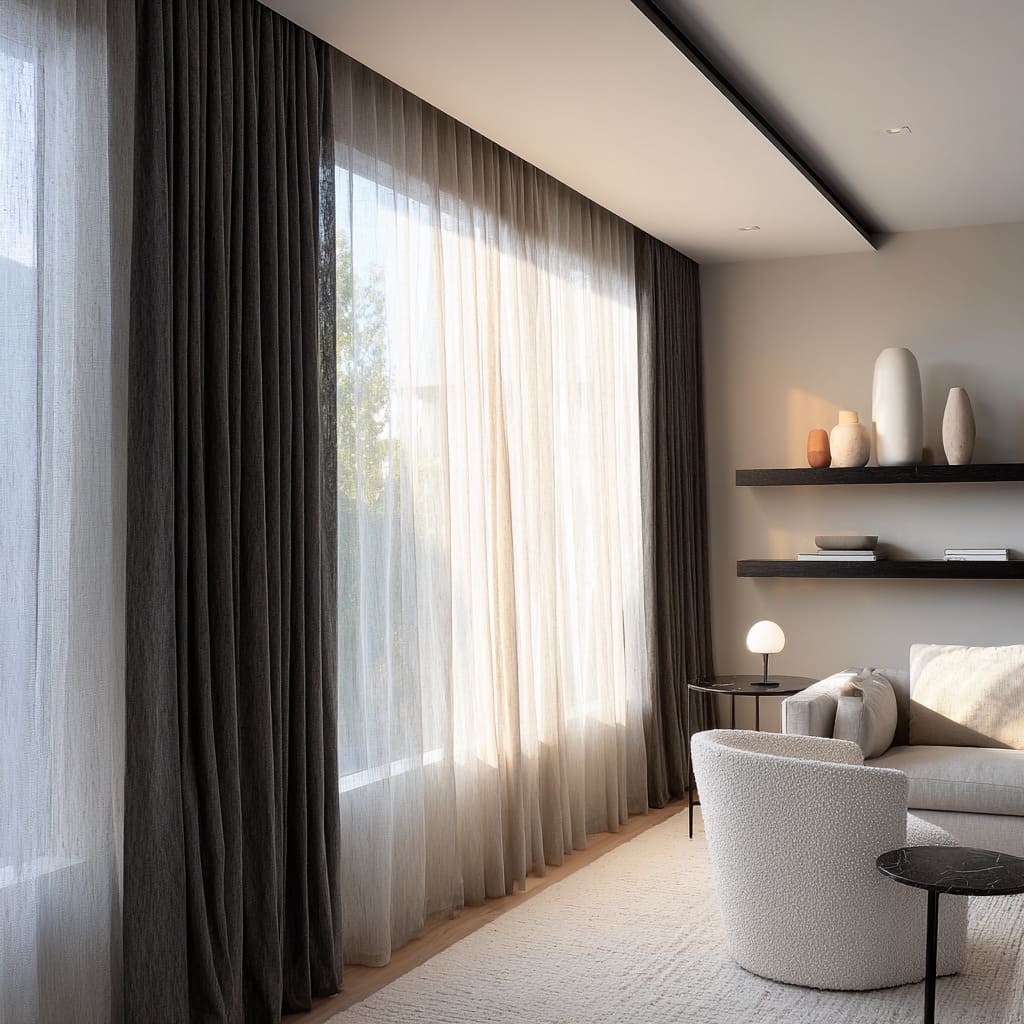
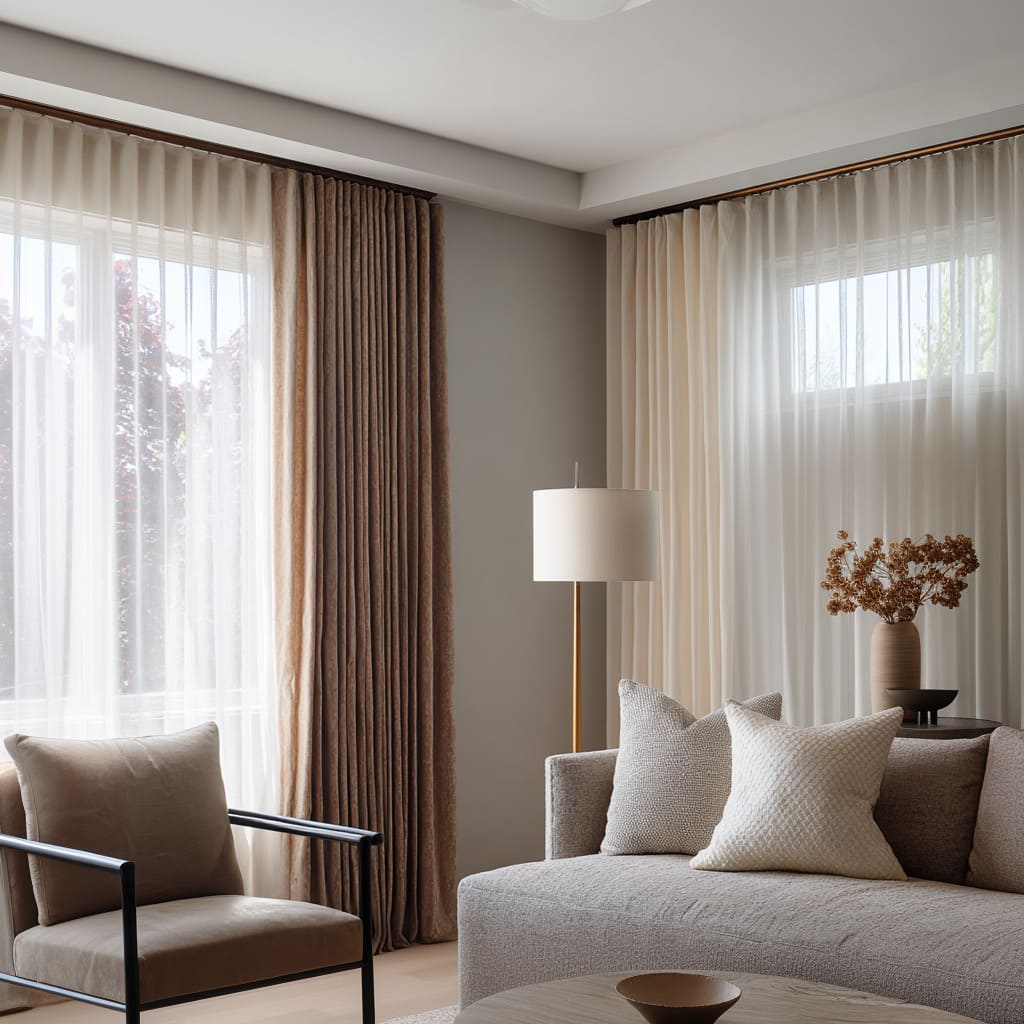
Layered curtains add depth not just by doubling fabrics, but by creating variations in light intensity and color temperature. Sheers often form the glowing “core” of a window wall, while heavier panels shape the edges like soft frames.
This layering produces a sense of recession—one textile behind another—similar to looking through two planes of watercolor wash.
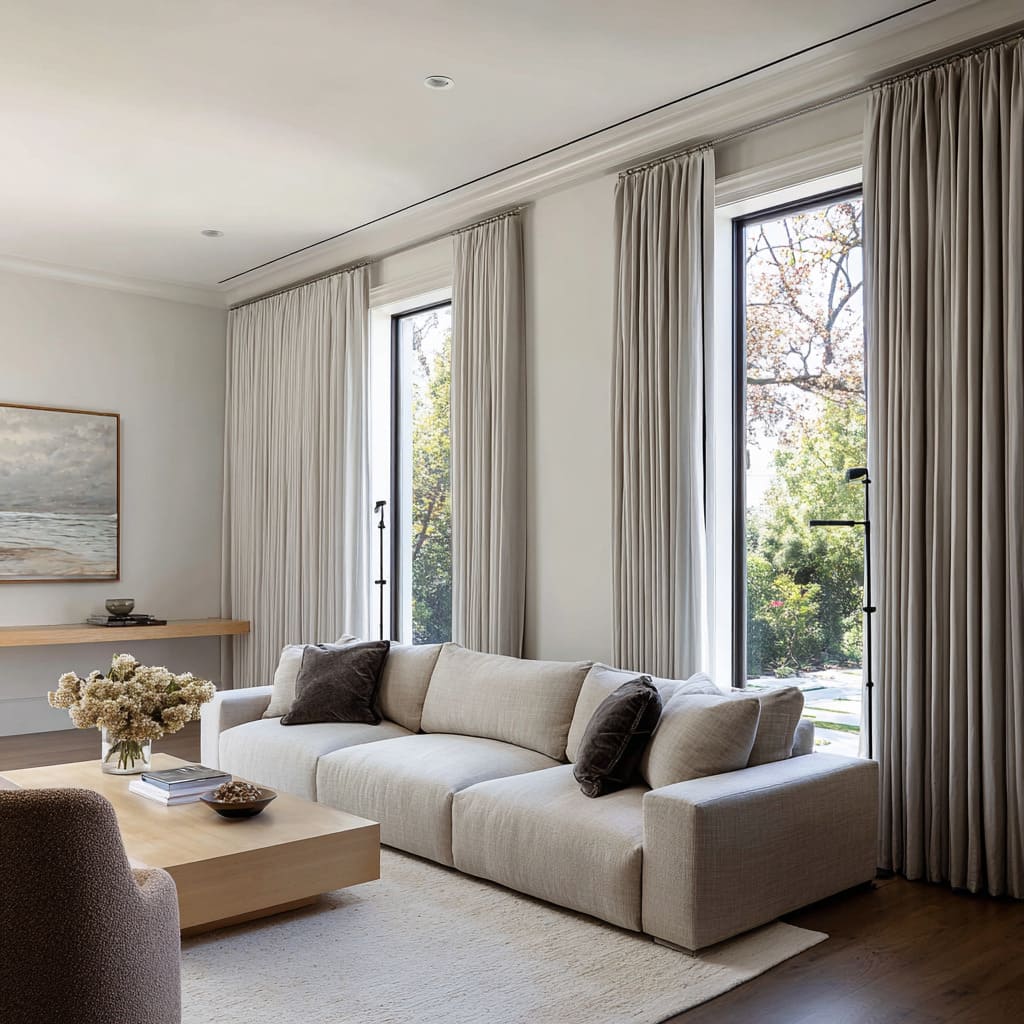
The most expressive layering strategies include:
Sheer-Centric Walls
Sheers dominate the visual field, with solids pushed outward toward the edges, creating a glowing interior horizon.
Edge-Weighted Solids
Heavy panels sit at the far sides, forming a quiet, grounding frame around luminous sheers.
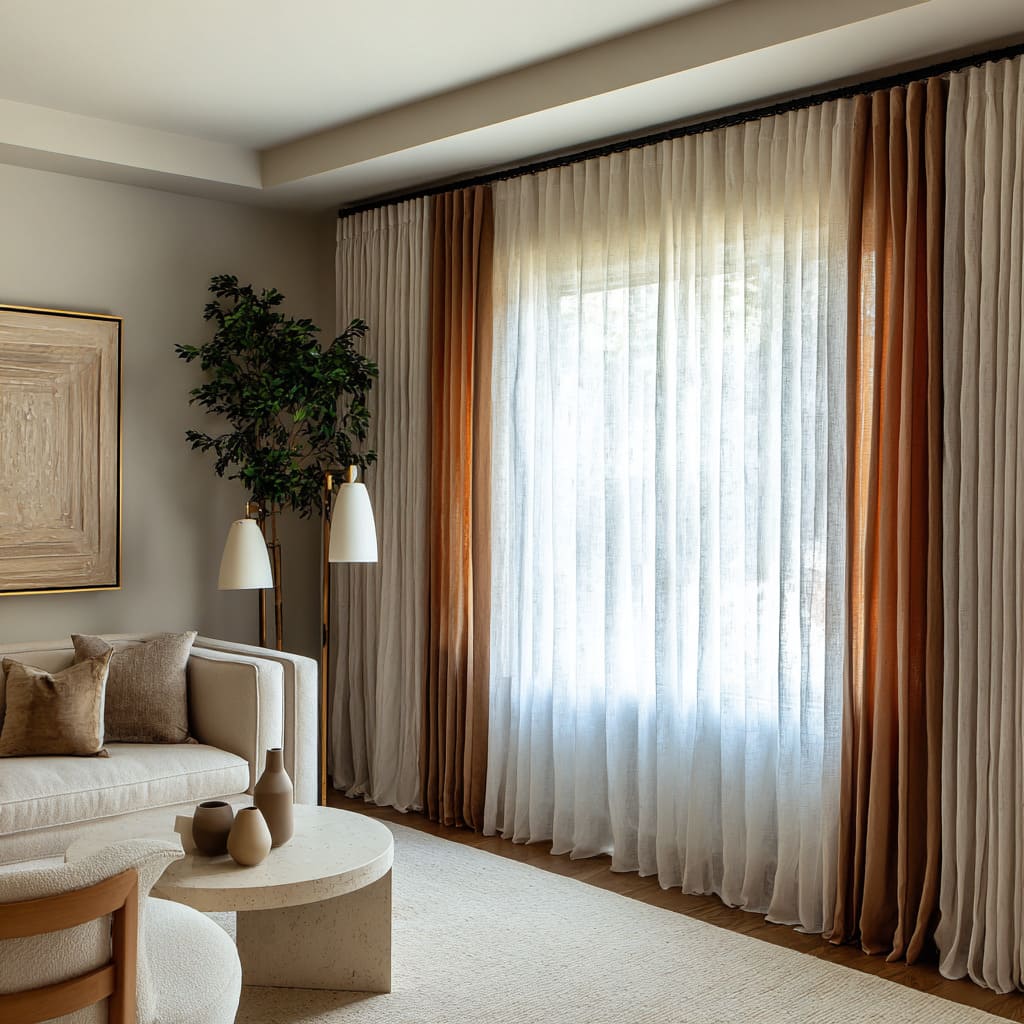
Color-Band Layering
Three-tone arrangements appear as fabric “paintings,” where light, mid, and warm tones stack as vertical color fields. This use of depth allows to build beautiful living room drapes that behave more like sculptural compositions than window treatments.
The curtain wall becomes a softly illuminated backdrop that controls mood without overt pattern or ornament.
The Emotional Temperature of Fabric: Calm, Cocooned, or Sunlit
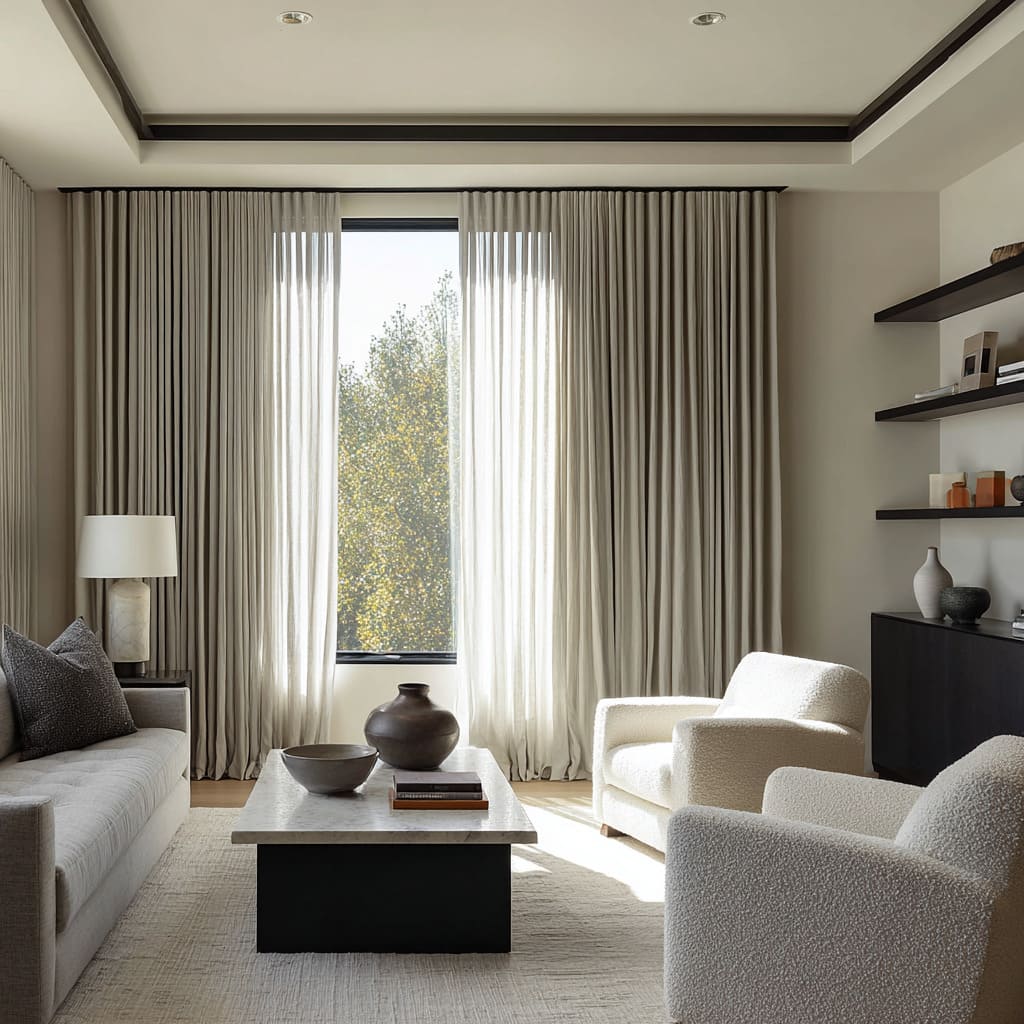
The emotional reading of a design shifts dramatically based on the weight, sheen, and color temperature of the drapery. Dense charcoal pleats create a cocooned, evening mood, ideal for rooms centered on quiet conversation.
Light-filled sheers generate a breezy, open atmosphere, suitable for daytime lounging or bright social spaces. Velvet or subtly lustrous fabrics lend a sense of stillness and low, late-afternoon richness.
Even without technical considerations, designers can vary emotional depth through:
- fabric luminosity (matte vs softly reflective)
- color weight (pale neutrals vs mid-range stone or deep graphite)
- material character (velvet, linen blends, dry ribbed weaves)
- light behavior (how the fabric holds or diffuses sunlight)
The curtain can become the emotional anchor that balances furniture texture, art, and natural light. This emotional calibration is one reason so many visitors intuitively feel at ease in rooms built around soft, architectural fabric solutions.
The Curtain as Organizer of Objects, Art, and Furniture
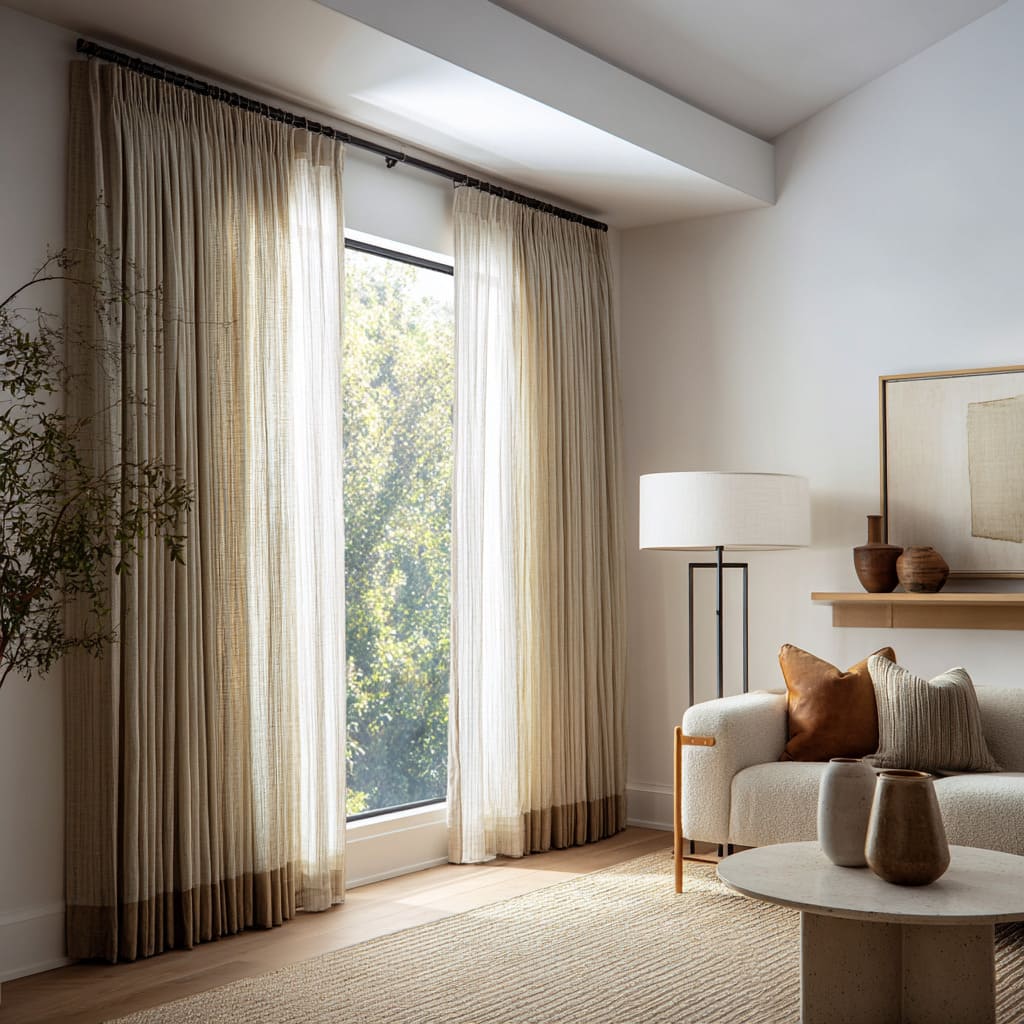
Drapery quietly establishes an internal logic for everything placed in front of or around it. Heights of furniture often align with hem bands, color-block transitions, or the soft horizontal where pleats begin to break.
Art pieces mirror tonal gradients, ceramics echo drapery textures, and occasional tables adopt shapes that complement the curtain’s rhythm—round forms placed before strict pleats or rectilinear pieces used to stabilize softer folds.
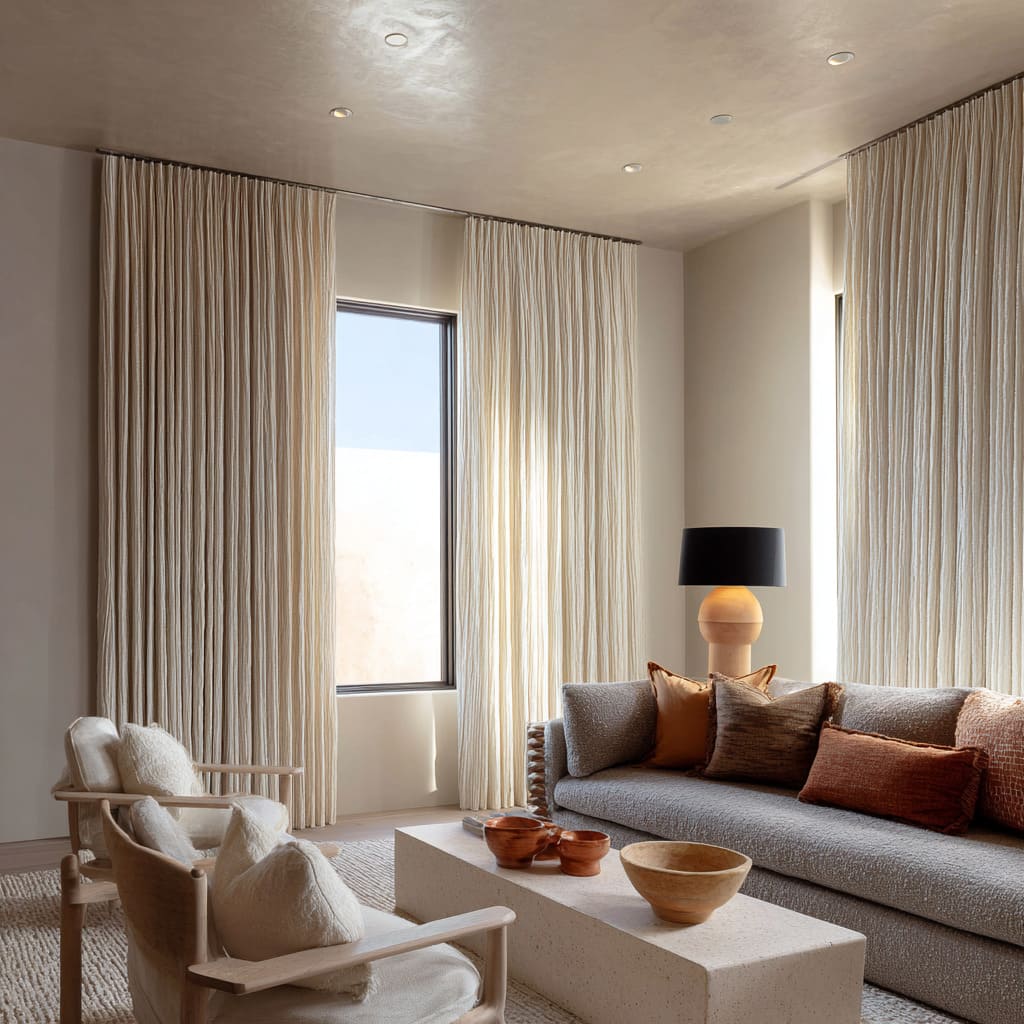
In more curated spaces, designers rely on fabric to structure the room’s object hierarchy. This includes:
Subtle Alignments
- pillow heights matching darker hem bands
- shelving starting exactly where curtain stacks end
- warm pottery tones repeating bottom-weighted curtain hues
Shape Echoes
- curved chairs placed before plush velvet
- angular furniture paired with tight, formal pleats
- low, broad coffee tables echoing the horizon where fabric meets the rug
Through these alignments, drapery becomes a silent partner in organizing the visual composition. This is why drapery ideas for family room interiors often revolve around placing seating and sculptural objects near the curtain wall, where textures can interplay rather than sit disconnected.
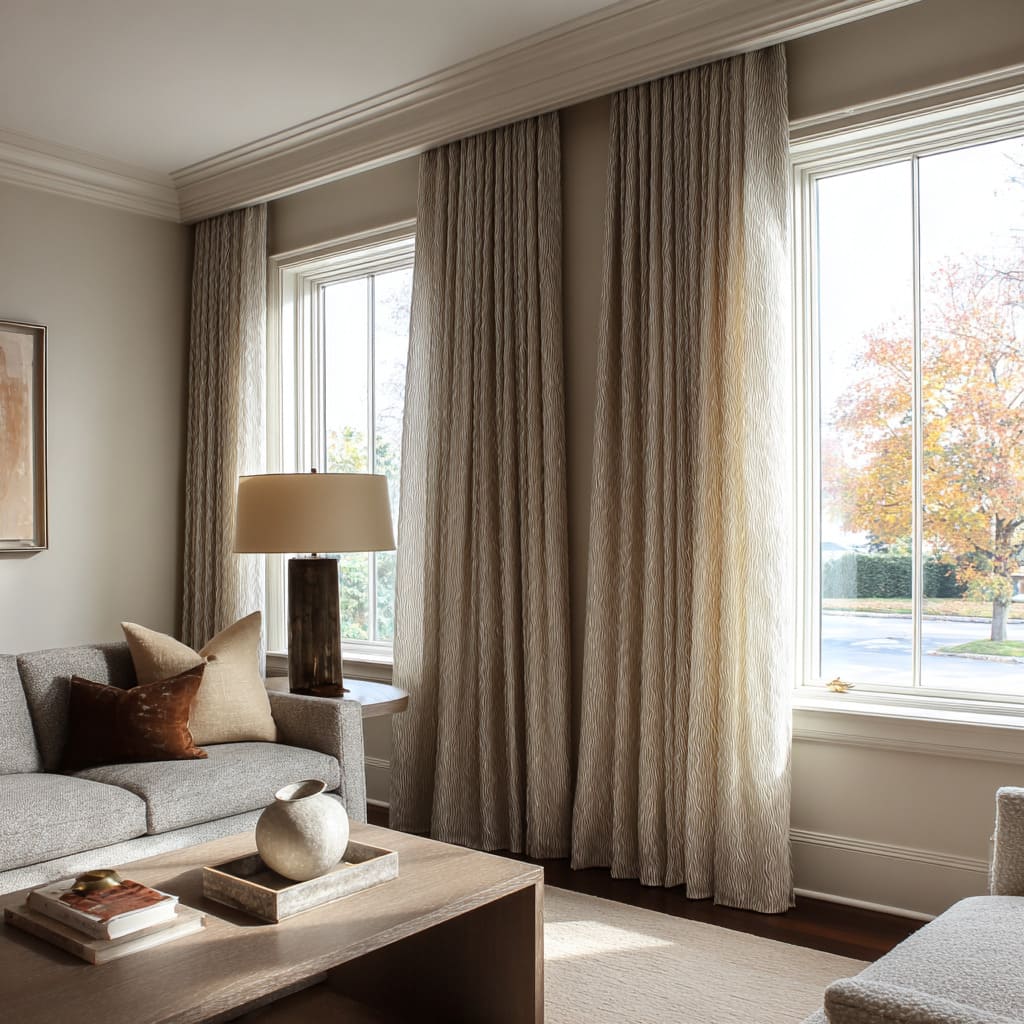
Reframing Windows: Composition, Proportion, and Soft Geometry
Modern interior designs use drapery to reinterpret the window rather than simply cover it. Curtains can pull far beyond the glazed area to make the opening feel wider.
In others, solid stacks left and right create a forceful central axis that guides the eye through the room. Arched windows are sometimes treated with straight, full-height panels that partially obscure the curve, making the architecture feel taller and more serene.
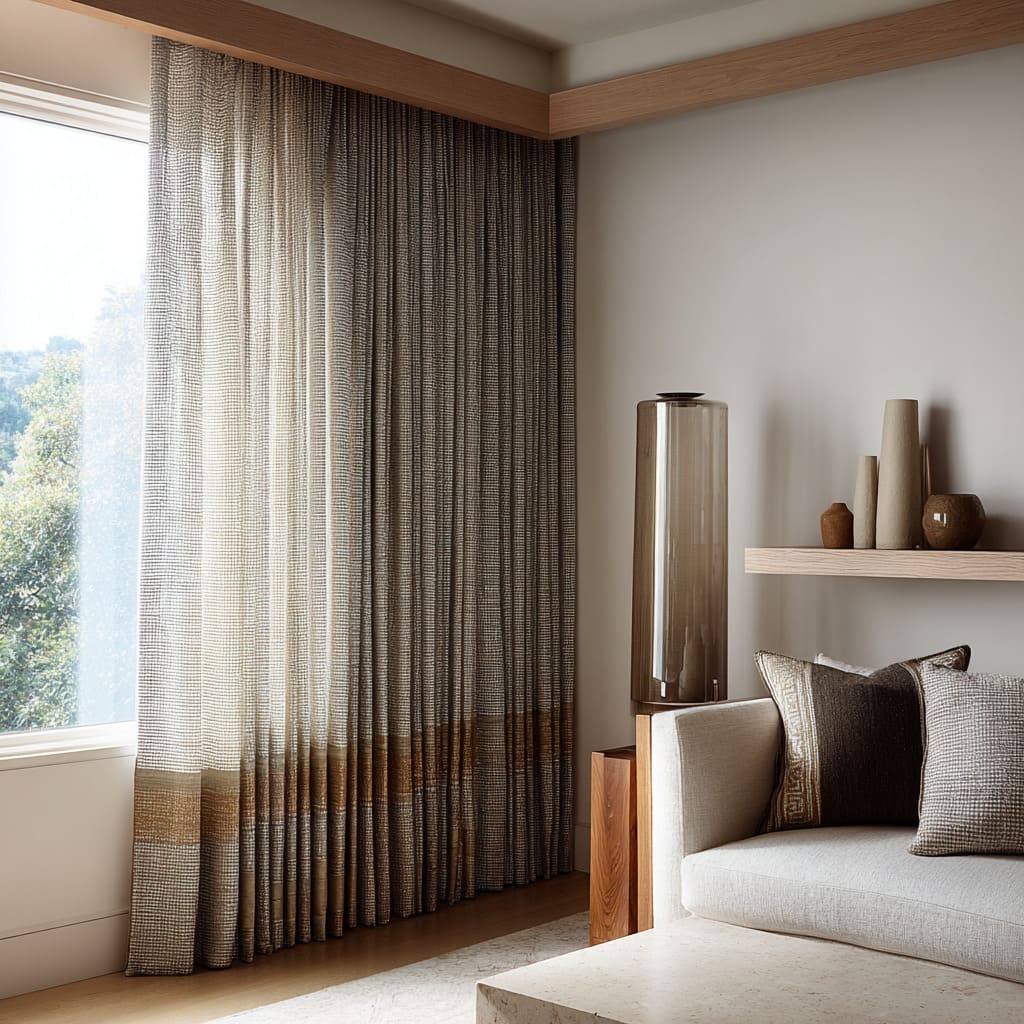
This flexible reframing supports many modern living room drapery ideas by shifting a window’s identity from functional glazing to soft sculptural feature. When designers treat fabric as part of the architecture, window walls can become:
- glowing soft-box surfaces
- framed vertical landscapes
- three-band color compositions
- symmetrical axes for furniture placement
- textile “columns” separating views
This technique, combined with well-chosen color and texture, explains how contemporary interiors use drapery to shape spatial experience without altering the building itself.
How Variety of Curtain Typologies Builds Character
Within the broader design vocabulary, different curtain typologies bring distinct personalities into the space. Some interiors rely on structured solid panels that fall like tailored garments, while others depend on semi-sheers, crushed-texture fabrics, or blended layers that shift throughout the day.
Across collections of different curtain designs for living room settings, the fabric types often serve roles similar to musical instruments:
- Velvet adds depth and softness, holding shadows gently.
- Sheers behave like ambient light diffusers.
- Ribbed weaves introduce topographical movement.
- Heathered solids offer quiet visual complexity.
- Color-block panels create graphic emphasis.
Blended correctly, these typologies create highly expressive yet understated compositions, forming interiors where drapery is not an afterthought but a central element of spatial character.
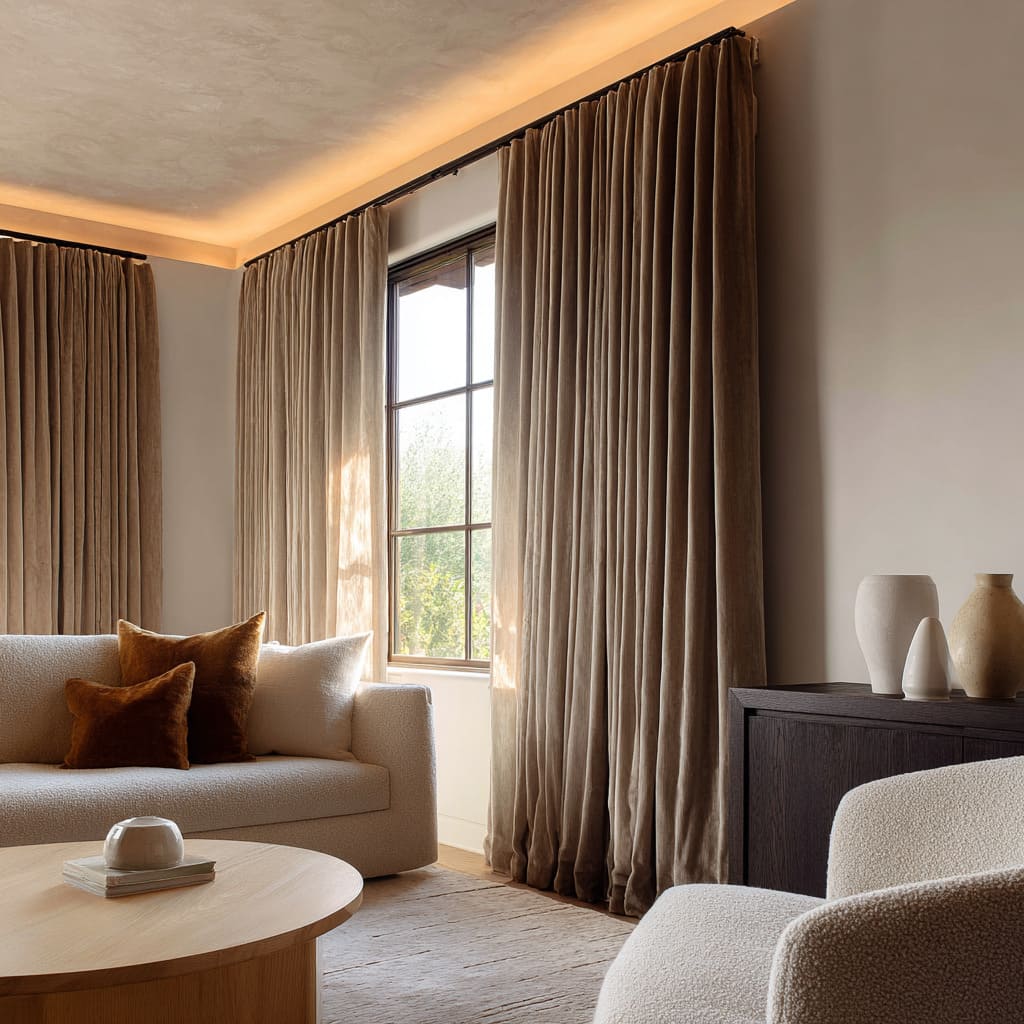
The Horizon of Contemporary Living Room Fabric Design
When observing the evolution of drapery ideas for living room windows, what emerges is a shift toward drapery as a unifying, atmospheric, and architectural force. The fabric is not defined by its hardware or its function alone; instead, it behaves as a soft plane that alters mood, reframes views, aligns with landscape tones, and clarifies interior proportions.
Whether the treatment relies on layered sheers, ribbed neutrals, velvet shadows, honey-toned solids, or color-block hems, the curtain consistently shapes the personality of the living room with a level of subtlety unmatched by furniture or art.
Across global interior design trends, modern living room drapery ideas now define how light enters the room, how colors interact, and how a visitor emotionally understands the space. In this way, drapery becomes one of the most influential yet gentle tools for crafting visual harmony in contemporary family spaces, supporting the entire room through softness, tone, rhythm, and atmospheric depth—quiet but essential, understated but transformative.
Related Posts

Harmony Home Design brings 10+ years of residential interior design experience to the ideas shared here. We publish design concepts, layout thinking, and practical styling notes.