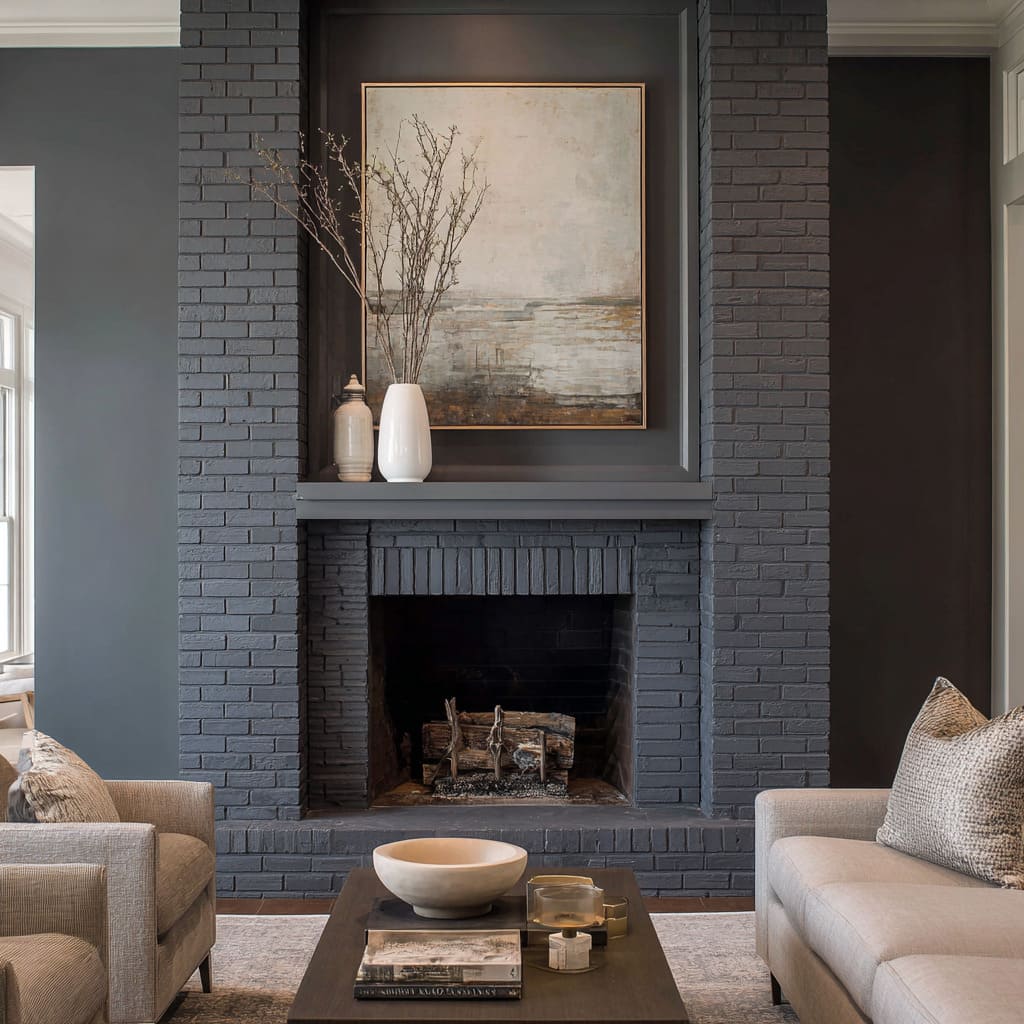
The most defining characteristic behind many luxury modern painted brick fireplace ideas is the dry, velvety finish that removes shine and replaces it with a soft sense of calm. Matte surfaces behave like a filter: they smooth out visual noise, quieten harsh reflections, and allow daylight to glide slowly across the brick.
This shift gives the entire structure a soothing presence, whether the brick is coated in pale greige, fog-blue, soft oyster, or deep graphite.
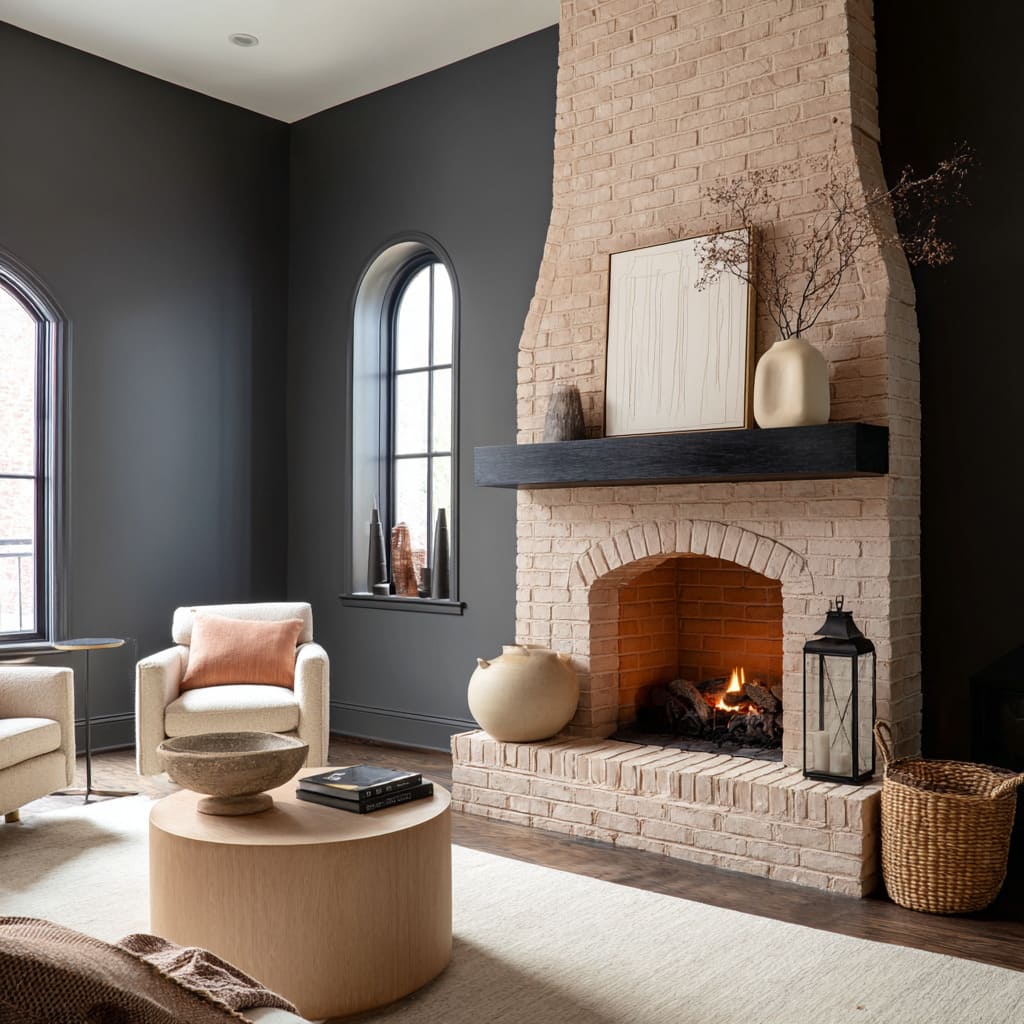
What makes this approach so effective is how matte paint can make brick feel like something different—sometimes closer to clay, sometimes closer to chalk, and sometimes closer to a clouded mineral surface. In high-end interiors, this leads to fireplaces that seem sculpted rather than assembled.
Warm interiors benefit from matte tones that carry sunlight softly, while darker schemes rely on the matte surface to swallow excess brightness. Each variation builds a design where texture breathes gently instead of pushing forward.
Color as a Complete Interior System
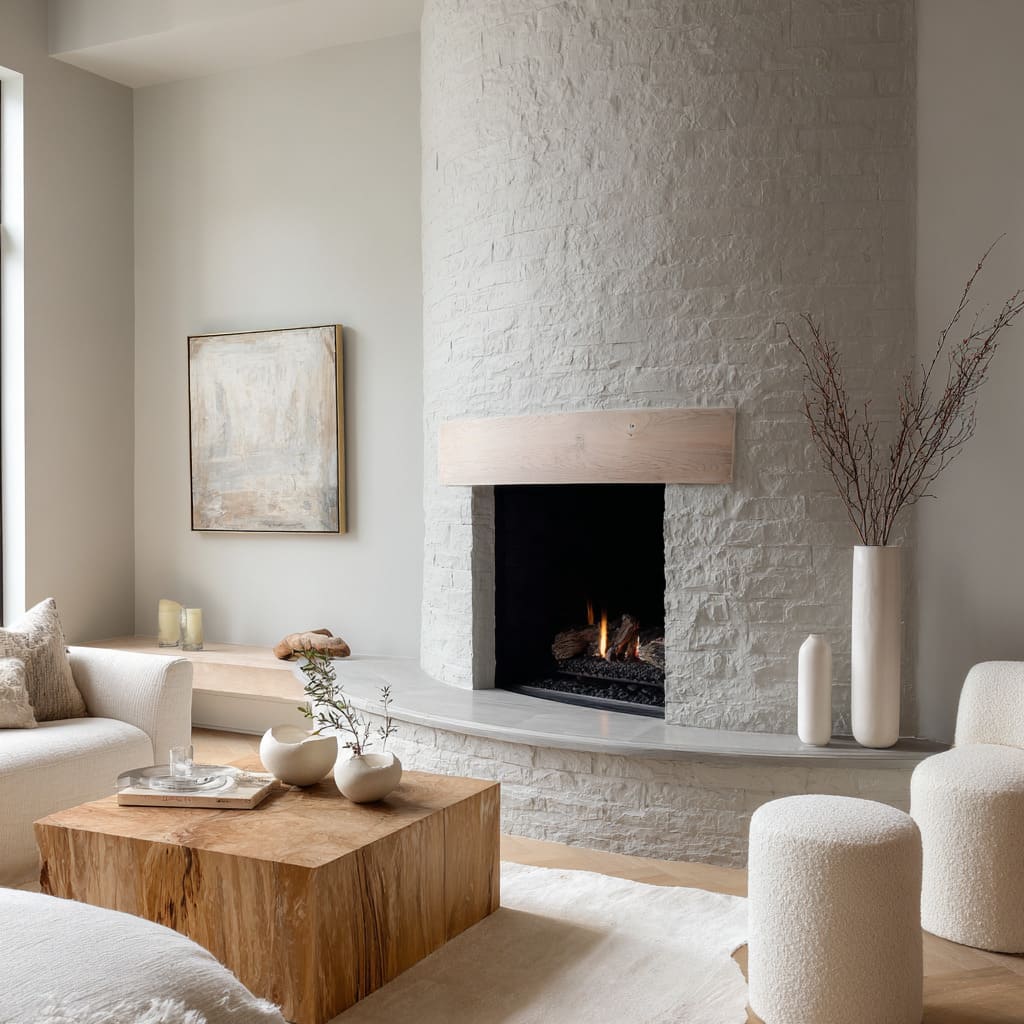
Color choices in luxury fireplaces often operate as a full-room strategy rather than an isolated decision. This is where many sophisticated fireplace painting ideas emerge: the brick tone acts as a bridge between textiles, wall colors, flooring hues, and art palettes.
For example, greige brick can sit gracefully between cooler grey wall paint and warmer off-white upholstery without creating conflict. Deep charcoal tones can extend seamlessly into shadowy wall planes, turning the fireplace into a strong but calm architectural anchor.
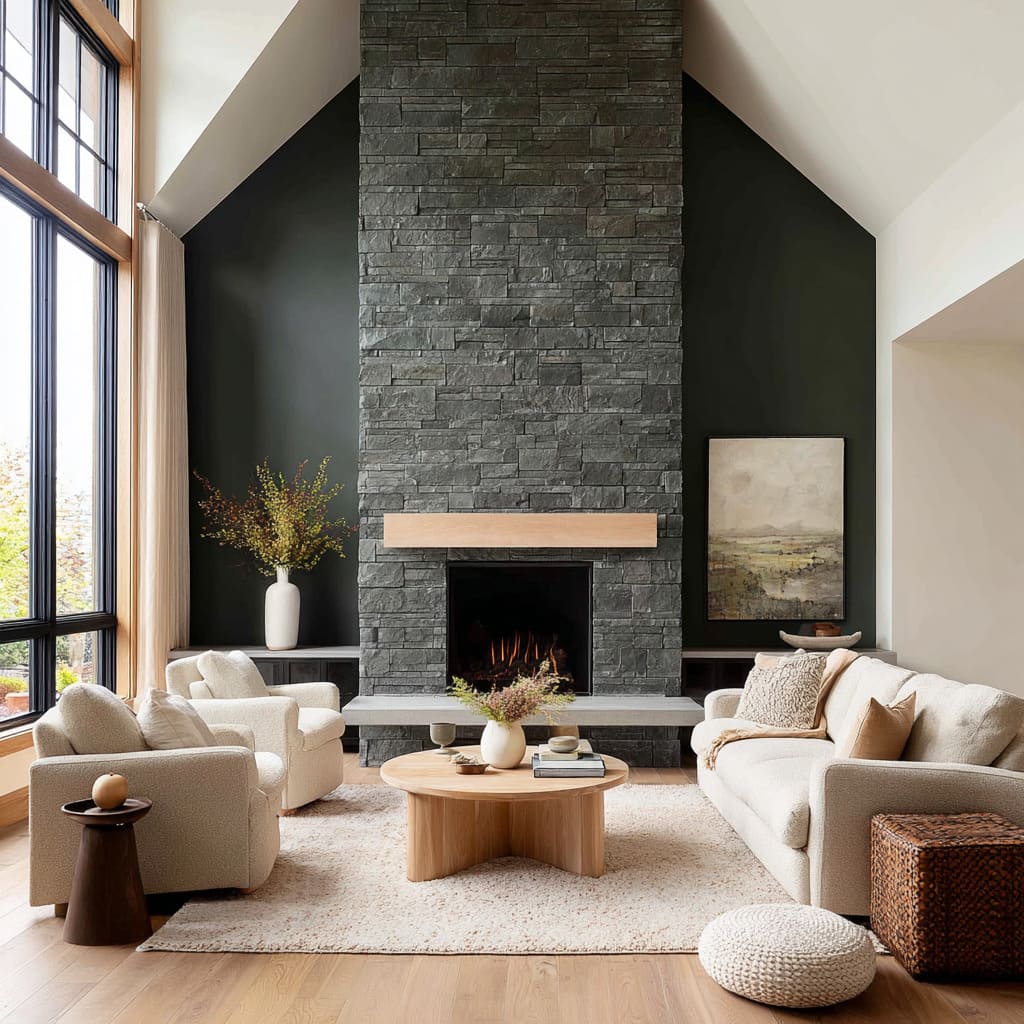
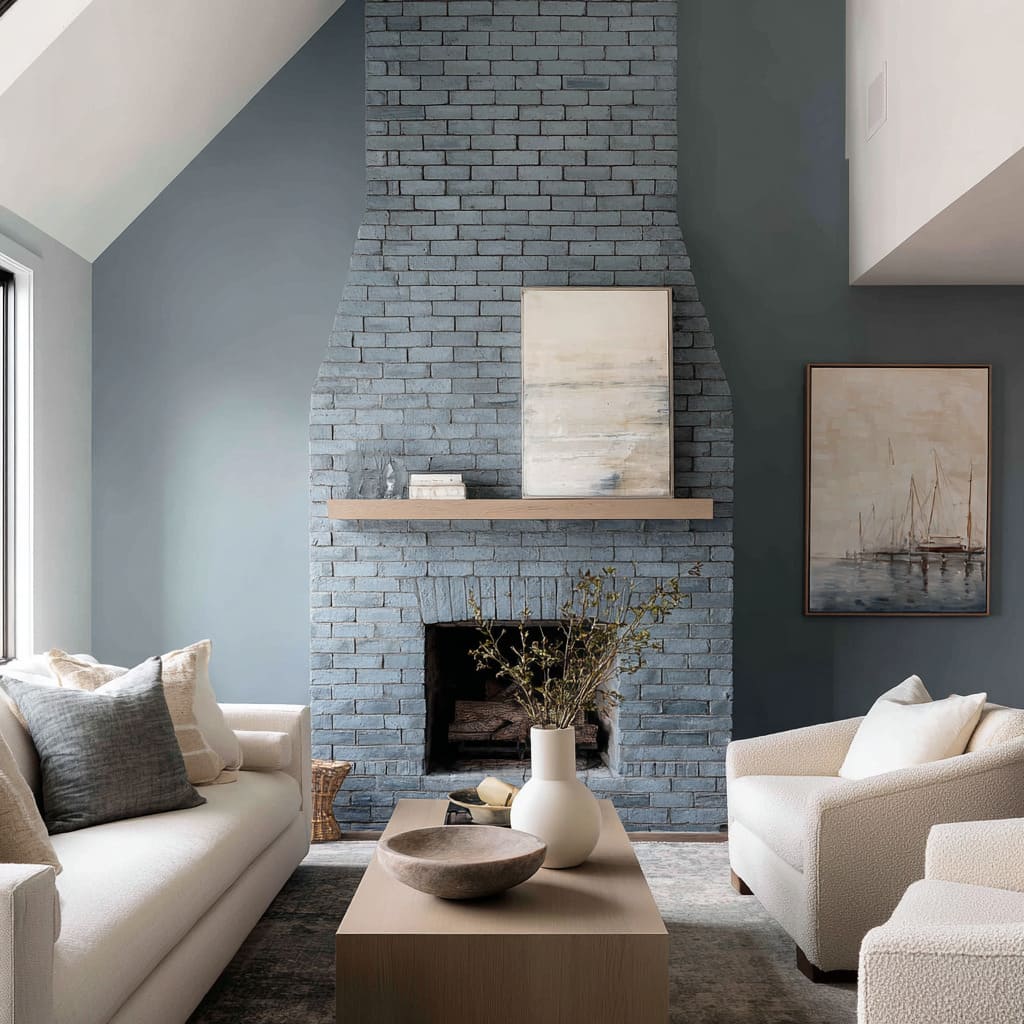
Muted blue tones can echo the softness of daylight filtering through large windows, while clay-rose tones can sit beautifully between warm wood and darker wall shades. This color logic prevents the fireplace from becoming a forceful accent; instead, it becomes the tonal center that helps everything else align.
The subtle interplay between warm and cool undertones allows for compositions that feel airy, grounded, or atmospheric depending on the scheme.
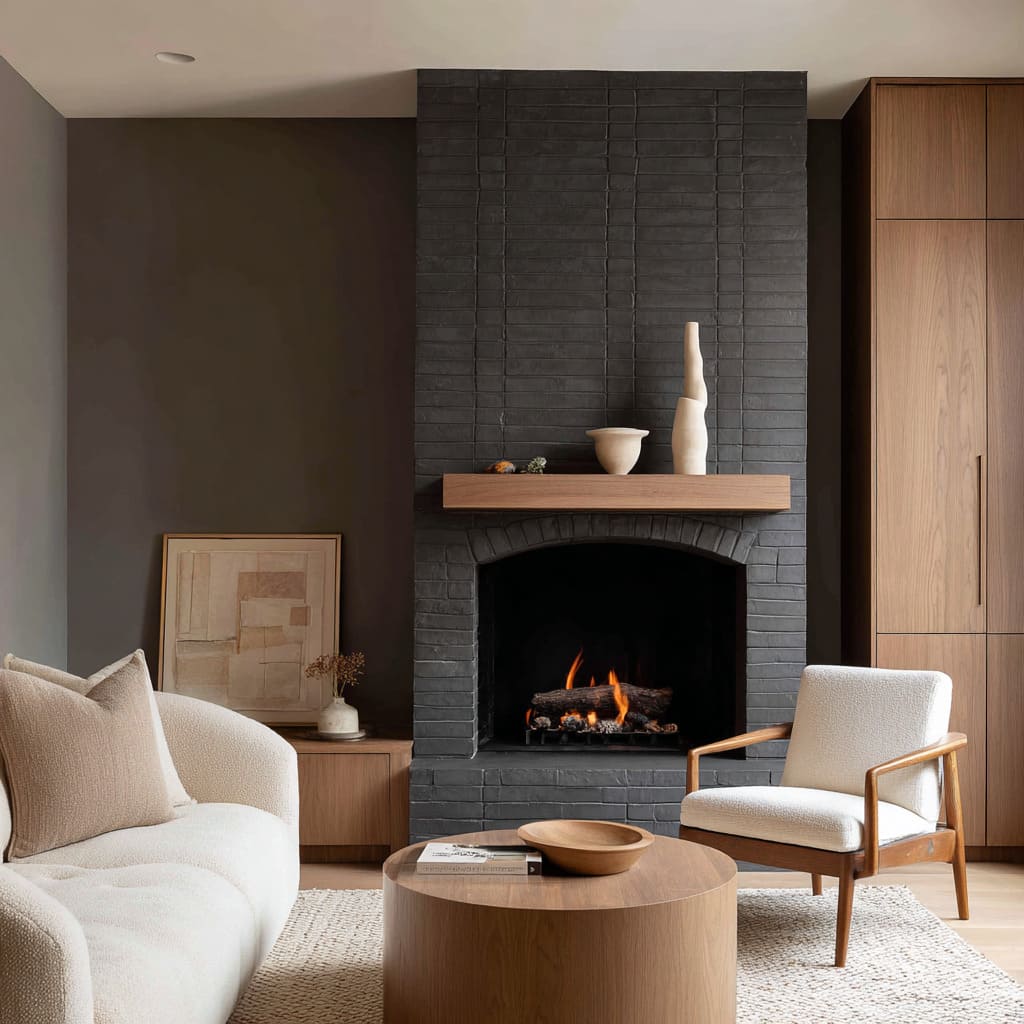
Architectural Shapes Creating Sculptural Presence
One of the strongest themes in high-end fireplace concepts is how design relies on shape rather than decoration. Brick columns rising from floor to ceiling can feel monumental when their proportions are stretched, narrowed, or tapered.
Curved brick fronts create a softer gesture, especially when finished in porcelain-grey or other muted tones, because the curve catches light in a slow gradient that highlights the brick pattern. Straight chimney stacks gain elegance when an oversized mantle, a slim ledge, or a flush inset is added to break the vertical pull.
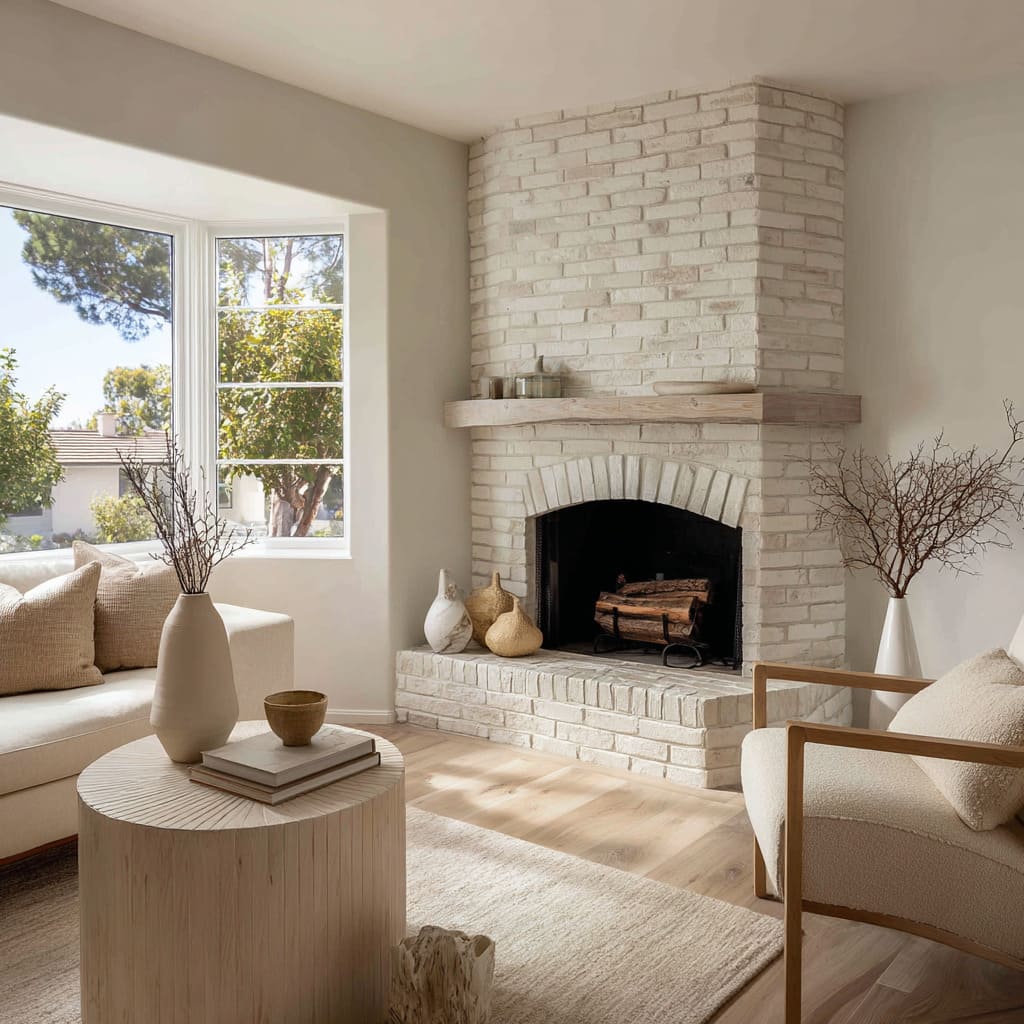
Arched firebox openings introduce warmth by balancing the strict lines of the chimney. These curves also create a centered focal point that works with furniture layout, seating groups, and nearby openings.
By using shape as the emotional base, fire features become more than heat sources—they become architectural punctuation marks that influence how the rest of the design behaves.
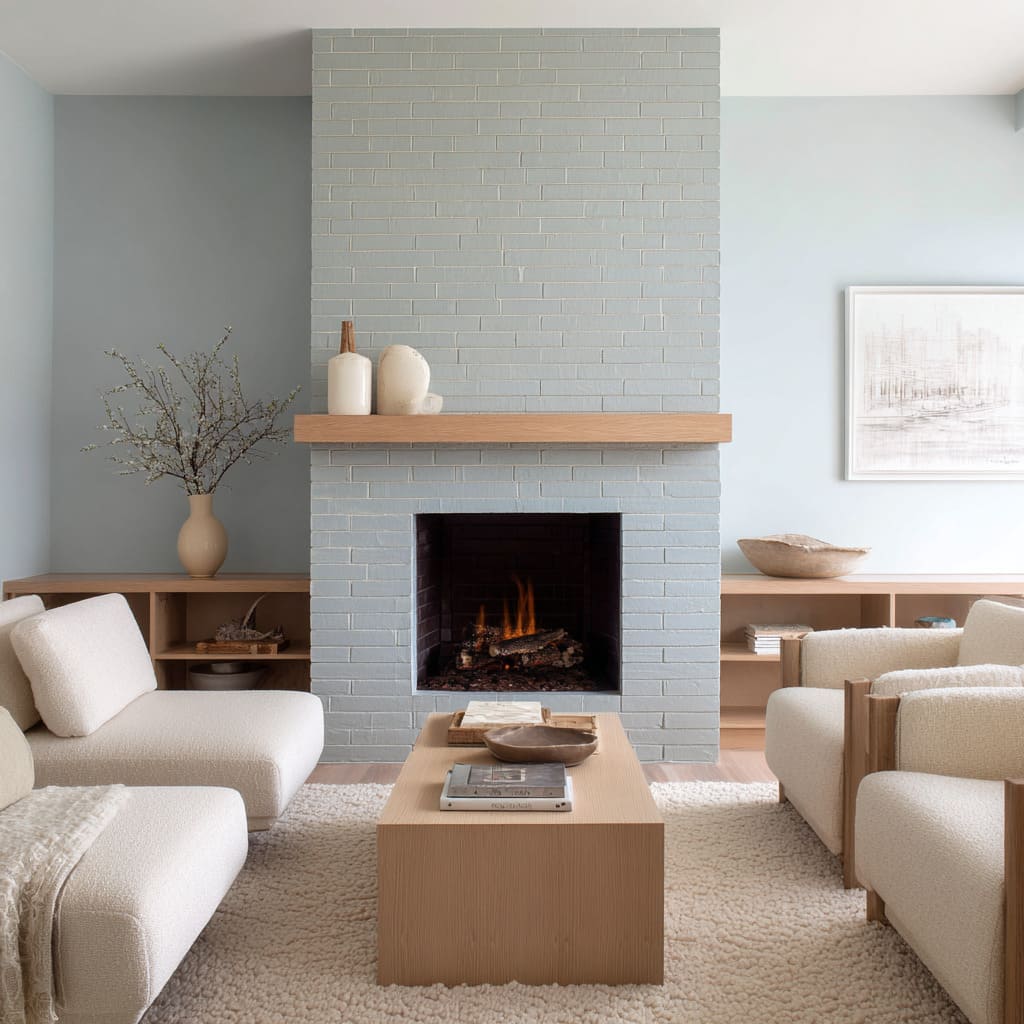
Turning Brick Into Plaster, Stone, or Mineral Through Washes and Tone
Modern interior designs often use color-washes, thin paint layers, or soft diffused coats that let parts of the brick show through. These approaches form some of the most effective brick fireplace color ideas because they move brick away from its rugged, traditional character toward a surface that resembles plaster, stone, or natural sediment.
Many designs use taupe-white washes that create cloudy variation between bricks.

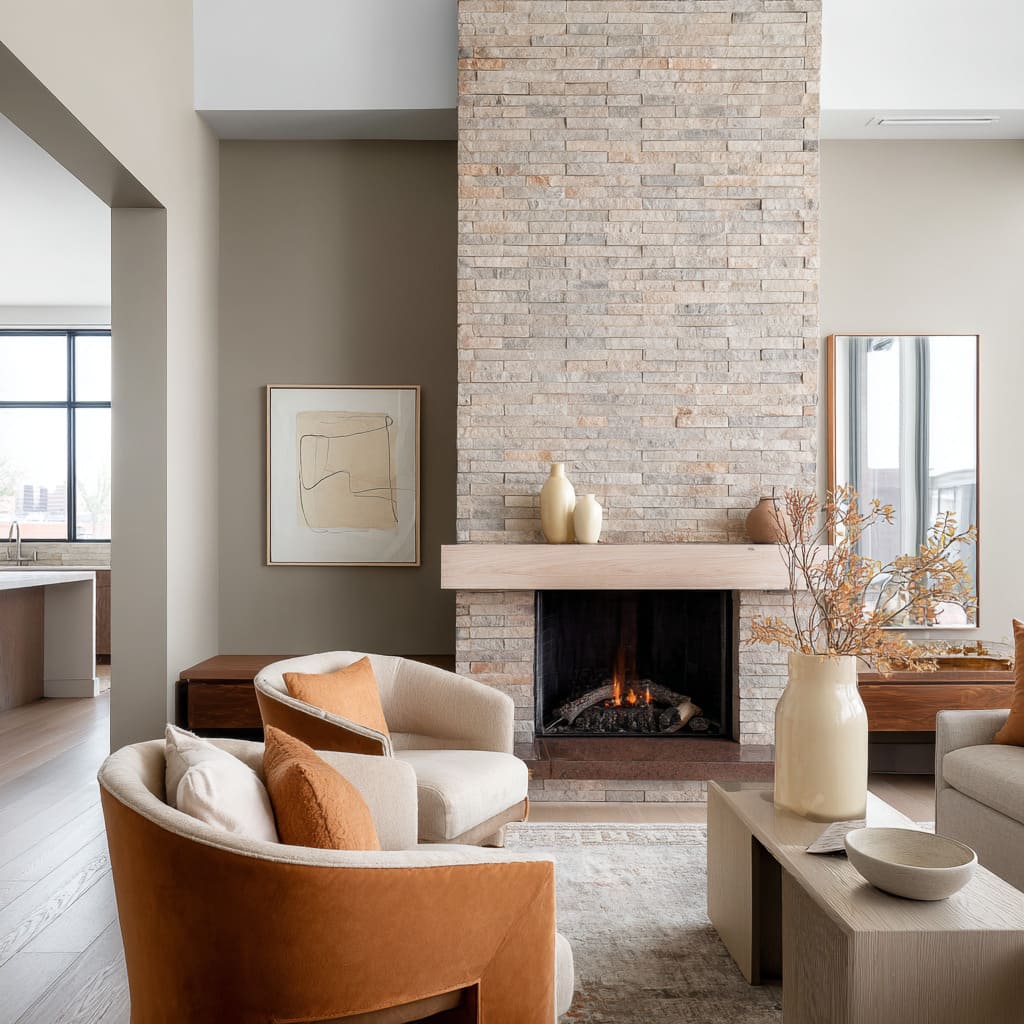
Others choose driftwood-white or alabaster tones that conceal just enough of the brick to create a softened outline without erasing texture. Warm stone colors can evoke a sandstone effect, and mushroom-grey tones can capture the feel of smoothed rock found in natural landscapes.
This subtle surface behavior changes how the fireplace interacts with artworks, furniture shapes, and light conditions. Even when the brick grid is still visible, the surface reads as calm and settled instead of busy or rustic.
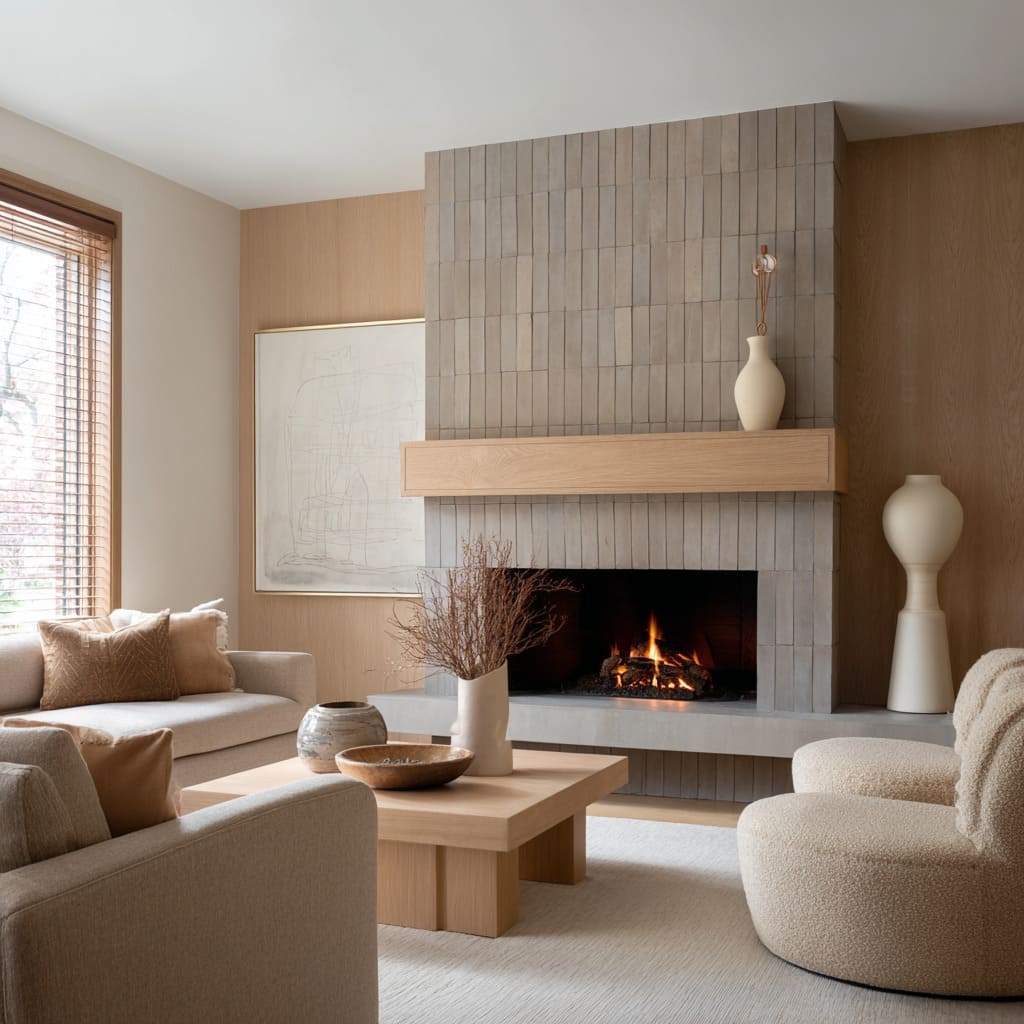
Balancing Vertical Strength With Horizontal Anchors
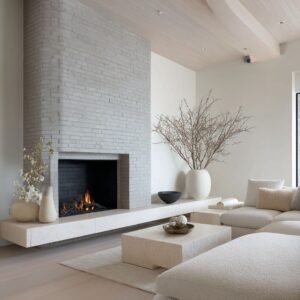
Luxury fireplace compositions rely heavily on balancing strong vertical brick stacks with calming horizontal features. Mantles—whether painted, light wood, or dark wood—create a line that stops the eye and reduces the tower-like feel of tall chimneys.
Long hearths act as grounding platforms, especially when combined with built-in bench seating or extended stone slabs.

Furniture layout can reinforce this balance: a round coffee table sits beneath the chimney to counter the vertical pull; the hearth becomes a place for sculptural vessels that rest low to the ground; soft rugs in neutral tones add additional weight at floor level. This interplay is essential because it creates stability in the room.
Even fireplaces with dramatic upward movement feel grounded when a wide, linear element cuts across them. This horizontal rhythm also repeats in shelving, cabinet lines, and window sills, forming a full interior story.

Styling Language
Styling around modern fireplaces is precise and measured. Ceramics in pale tones often sit in small groupings—two or three pieces at most—to form a quiet vertical rhythm that echoes the brick pattern.
Branch arrangements are placed to introduce irregular shapes that contrast with strict geometry. Negative space is always intentional: mantles remain mostly open, relying on restraint to highlight the architecture rather than hiding it behind accessories.
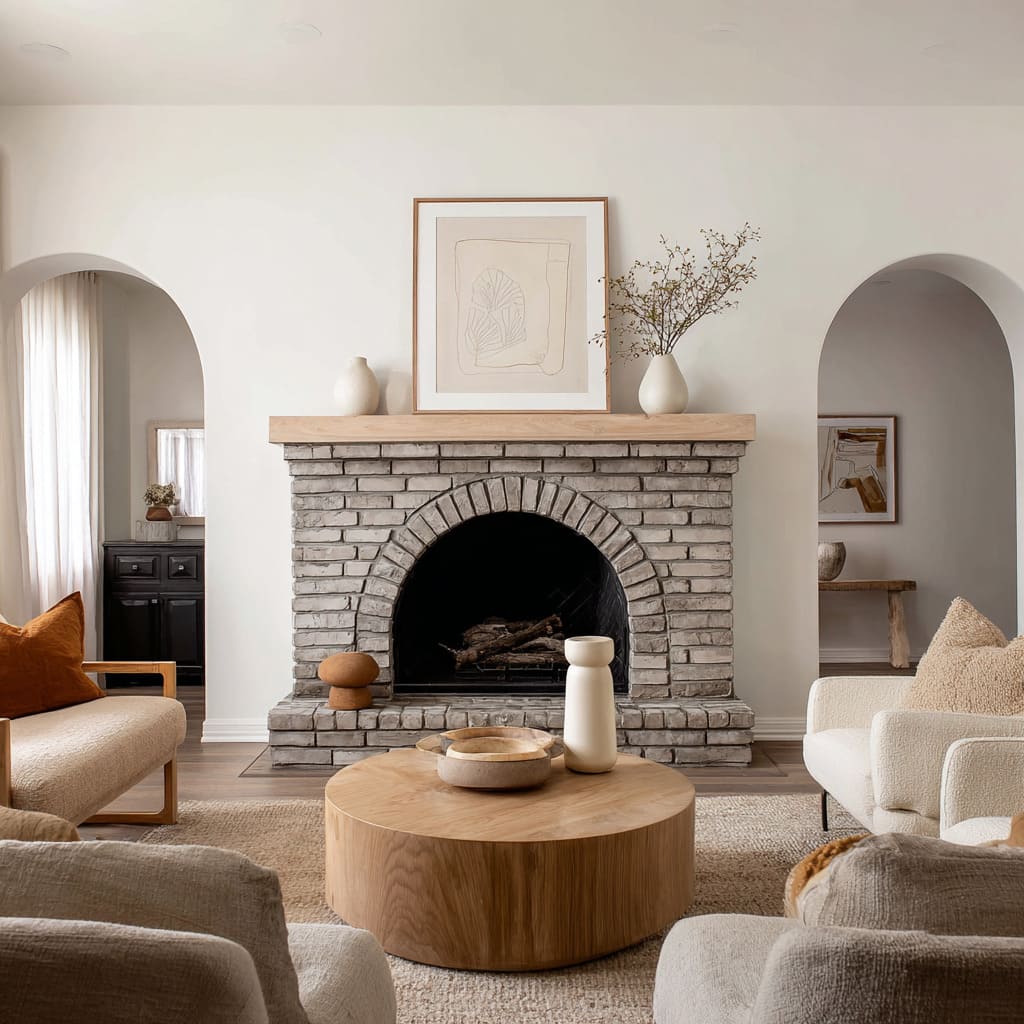
These styling principles create harmony with the brick’s matte texture. When the background is soft and uniform, sculptural pieces stand out more clearly; when the brick is darker and velvety, pale ceramics appear almost illuminated.
Organic materials such as woven baskets, dried stems, and raw-edge wood items support the calm, indoor-outdoor feeling found in many fireplace rooms. Together, these details build a balanced scene where every object interacts with the brick surface rather than competing with it.
Interaction With Windows, Openings, and Daylight
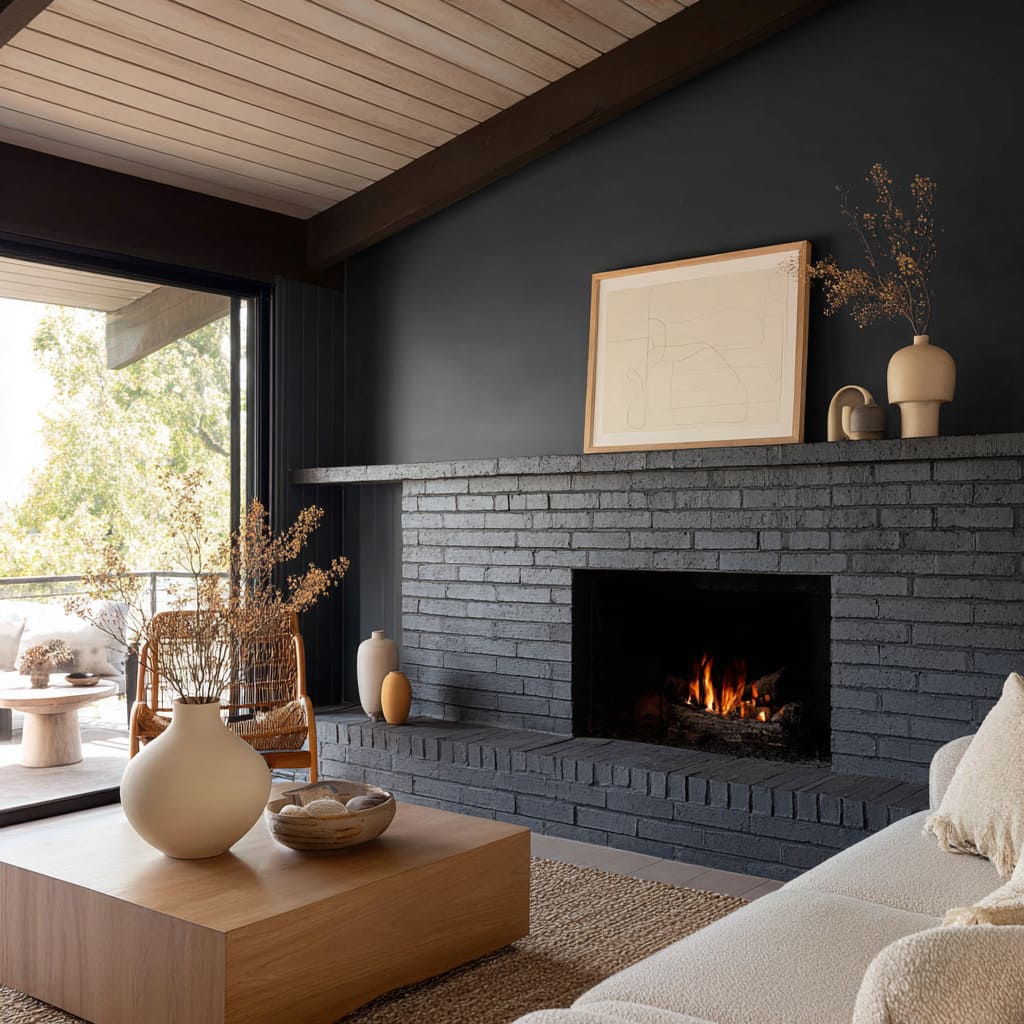
Many luxury fireplace arrangements rely on their relationship with window lines, natural light, and adjacent openings. When tall black-framed windows sit beside dark-painted brick, the mullions become structural companions to the brick’s vertical edges.
When pale brick stands beside archways, the fireplaces feel connected to the home’s overall architectural softness. Daylight plays a major role: fog-blue, storm-blue, and clay-rose tones shift throughout the day, responding to morning brightness or golden-hour warmth.
Pale brick can appear nearly white at noon and more beige in evening light. Darker brick can feel richer at sunset as indirect light touches its matte surface.
This interplay forms a living color cycle throughout the day. The fireplace never appears static; instead, it interacts with shadows, reflections, and exterior views, creating a space with changing mood and depth.
Material Echoes and Repeated Motifs
A high-end fireplace design never stands alone. Its material language reappears in surrounding pieces to form an integrated environment.
This creates many subtle brick fireplace paint color ideas because the palette is designed to echo the fireplace’s tone. Some designs use woven fabrics with tiny grid patterns that quietly mirror the brick’s pattern.
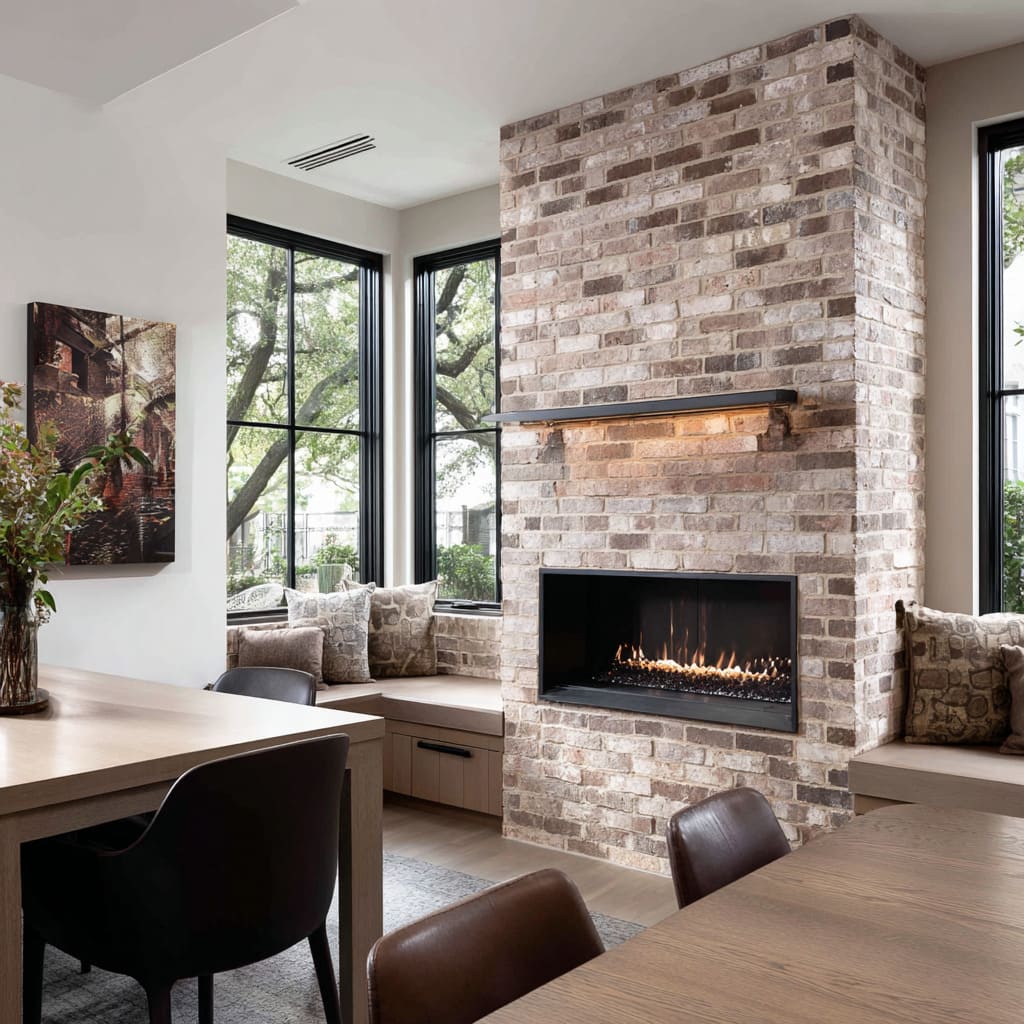
Others repeat warm walnut or pale oak tones from the mantle into coffee tables, storage pieces, and picture frames. In spaces with stone-colored brick, rugs in warm grays or sandy neutrals tie the palette together.
In darker spaces, boucle fabrics create gentle contrast that softens the fireplace rather than fighting it. Even abstract artworks often include faint lines or soft tonal transitions similar to the shading on the fireplace wall.
These echoes make the brick feel integrated into the home rather than treated as a decorative add-on.
Emotional Categories That Shape the Final Design Character
Three emotional directions appear again and again. Some fireplace designs fall into a soft sun-washed group, using mist-grey, taupe, and pale stone finishes to create gentle brightness.
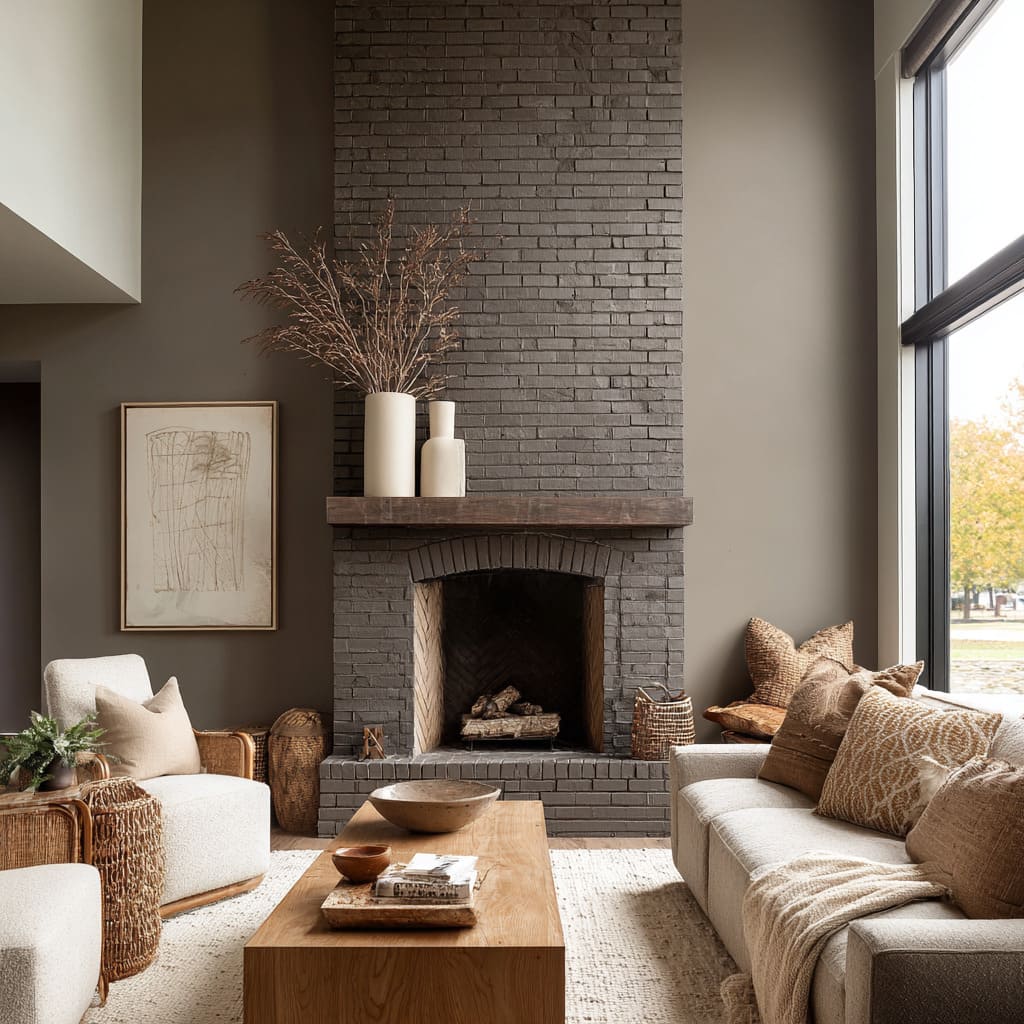
Others lean into warm, grounded tones such as clay, mushroom, sandstone, or umber to build a natural and relaxed feeling. The remaining category explores deeper atmospheres using charcoal, ink, or blue-grey finishes to create calm intensity.
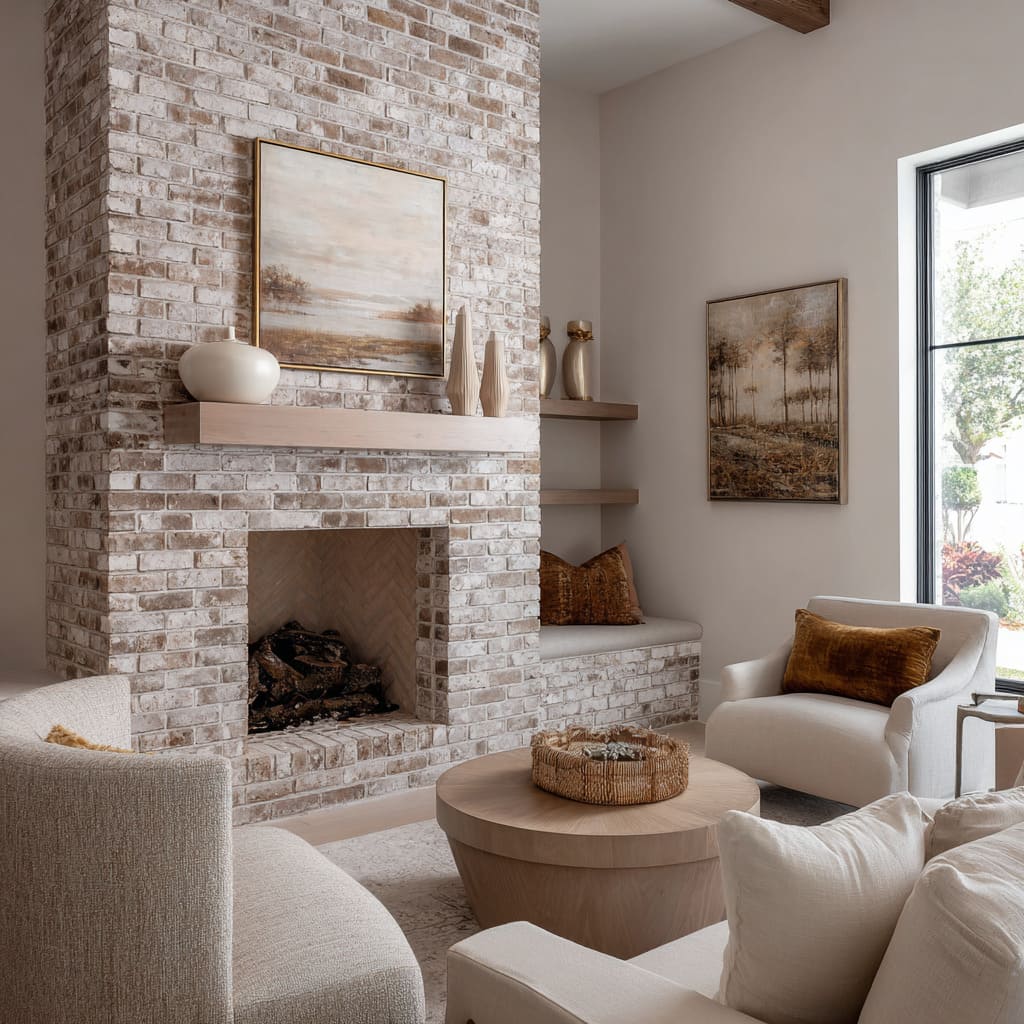
Each direction shapes how furniture, flooring, and styling are chosen. These emotional categories reveal many brick painted fireplace ideas because they show how color and tone define the spirit of the design as much as the structural form.
In soft schemes, rounded furniture and woven textures add comfort. In earthy schemes, caramel notes and warm woods create harmony.
In darker schemes, cream upholstery and low lighting form contrast that feels settled and composed.
The Role of Proportion, Rhythm, and Weight
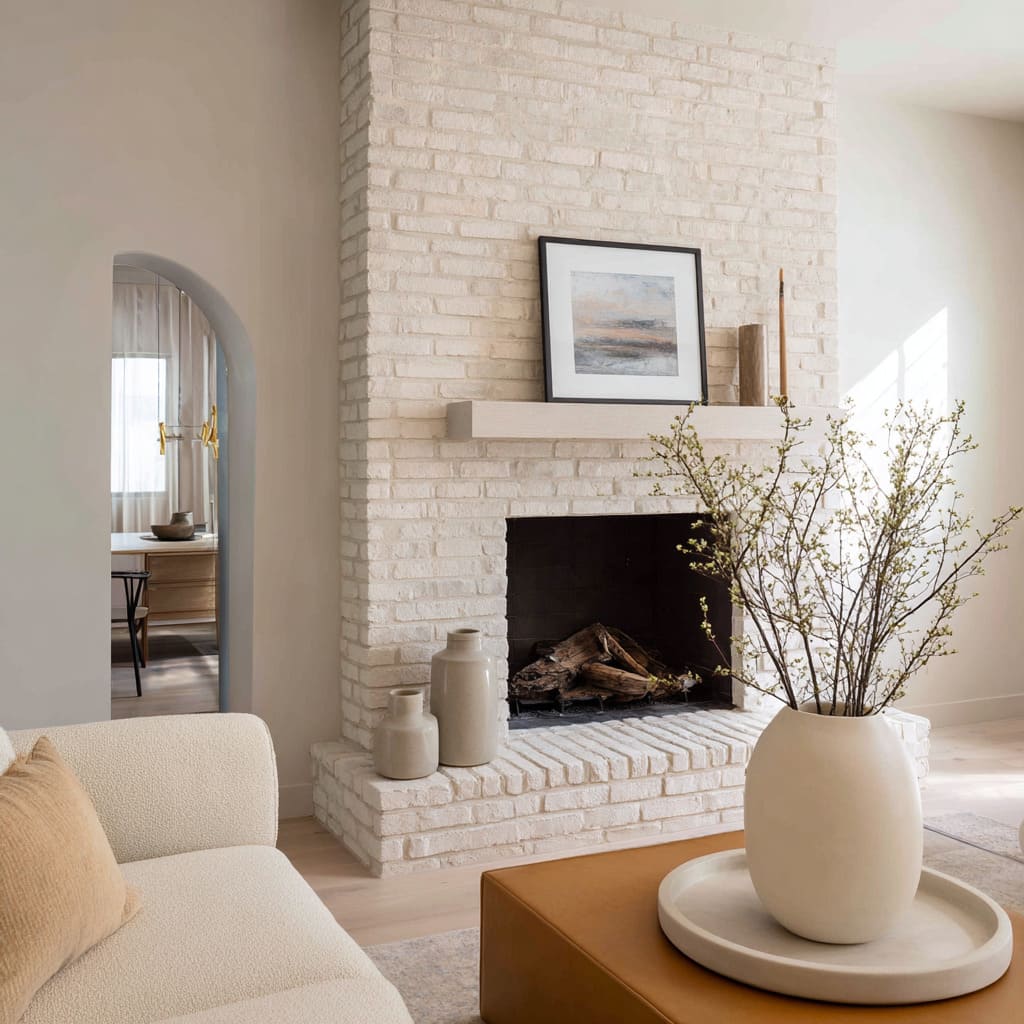
In many modern interior desings, painted brick features gain their character through the proportions around them. Tapered chimneys express upward movement; long hearths express steadiness; curved fronts create calm visual flow.
Mantle height, firebox size, and shelf spacing build a rhythm that influences seating placement and circulation. These interior rhythms also support many subtle fire place painting ideas, because color works hand-in-hand with proportion.
For example, darker brick makes the silhouette feel slimmer and more formal, while lighter brick broadens the mass and blends gently with the wall. Paired with sculptural ceramics, textured rugs, and natural wood tones, the overall weight of the fireplace becomes part of the room’s visual structure, helping define where conversations naturally form, where artwork rests, and how light behaves throughout the day.
Quiet Modern Approaches to Color, Styling, and Material Transitions
Modern luxury fireplaces often favor calm transitions, intentional restraint, and surfaces that support mood rather than noise. These patterns explain why the most refined ideas for updating a brick fireplace often rely on color gradation, sculptural accents, and balanced layouts instead of bright hues or heavy ornament.
Each brick surface becomes a soft background for low-key styling.
Pale ceramics create gentle punctuation; dark fireboxes create focused warmth; wood mantles bring welcome grounding. Even simple palette strategies—like allowing one caramel cushion to echo warm freckles in the brick, or letting a tall vase break the straight lines of the chimney—quietly strengthen the fireplace’s presence.
These principles support many refined painting ideas for a brick fireplace, showing how color, shape, and composition combine to create spaces that feel calm, structured, and visually rich without relying on loud contrasts or busy detailing.
Related Posts
Harmony Home Design brings 10+ years of residential interior design experience to the ideas shared here. We publish design concepts, layout thinking, and practical styling notes.