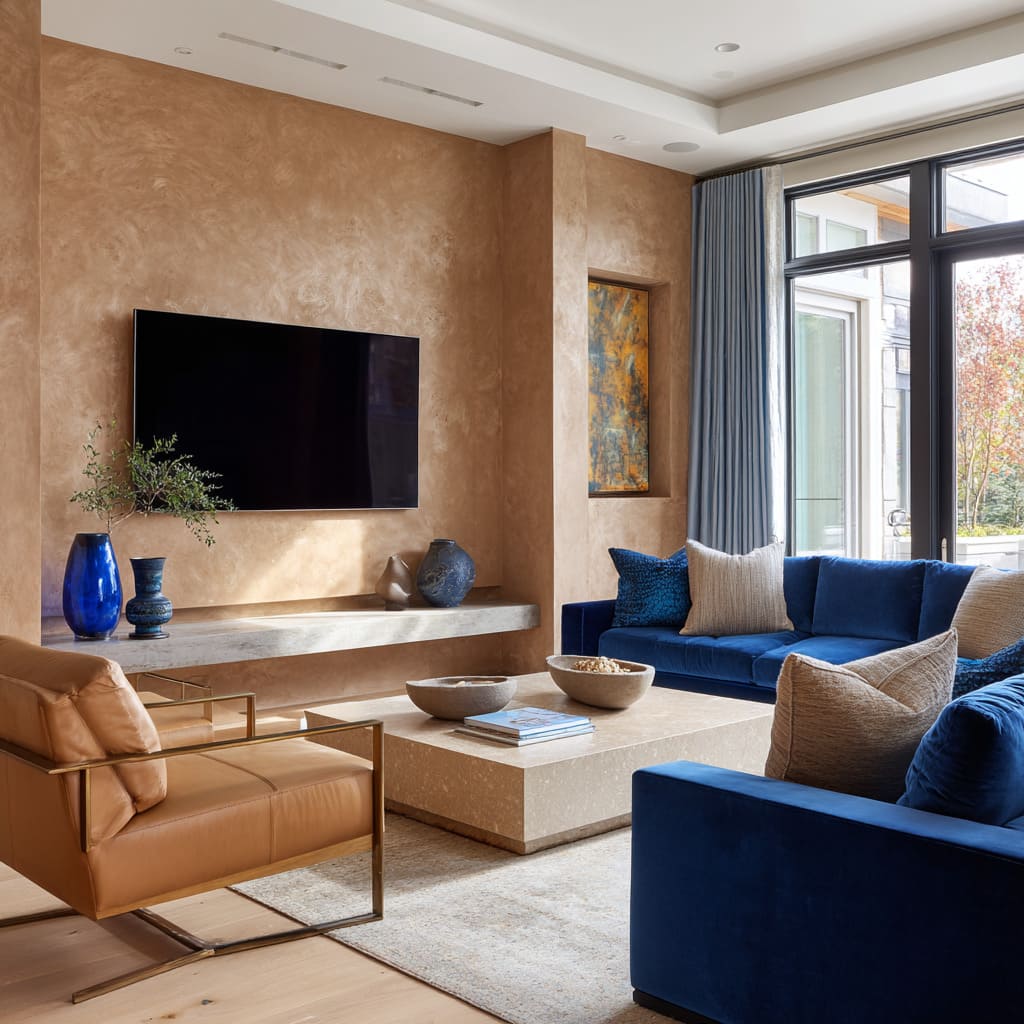
Terracotta and blue work together because they follow the logic of natural landscapes: clay earth below, open sky or quiet water above. In most interiors that use this palette, the designer chooses which color holds the role of “ground” and which functions as “air.
” Even when no walls are painted and no major surfaces are touched, the two colors often behave like elements that already understand their place in the design. Terracotta regularly appears through soft blocks placed low in the space—an ottoman, leather chair, bench seat, tiled tabletop, or a long cabinet front—so the eye reads it as something steady and anchoring.
Blue usually stretches upward or outward, seen in curtains from ceiling to floor, cushions arranged along the back of a sofa, window bench lineups, tall shelving, or even distant artwork that reflects daylight. The palette feels natural because both colors communicate a type of balance: terracotta grounds the design with gentle warmth, and blue opens it with softness.
This reading remains strong even when the palette shifts in intensity, such as desert-leaning orange with muted navy or soft peach with grey-washed blue.
Where Color Lives in Height: Understanding Vertical and Horizontal Placement
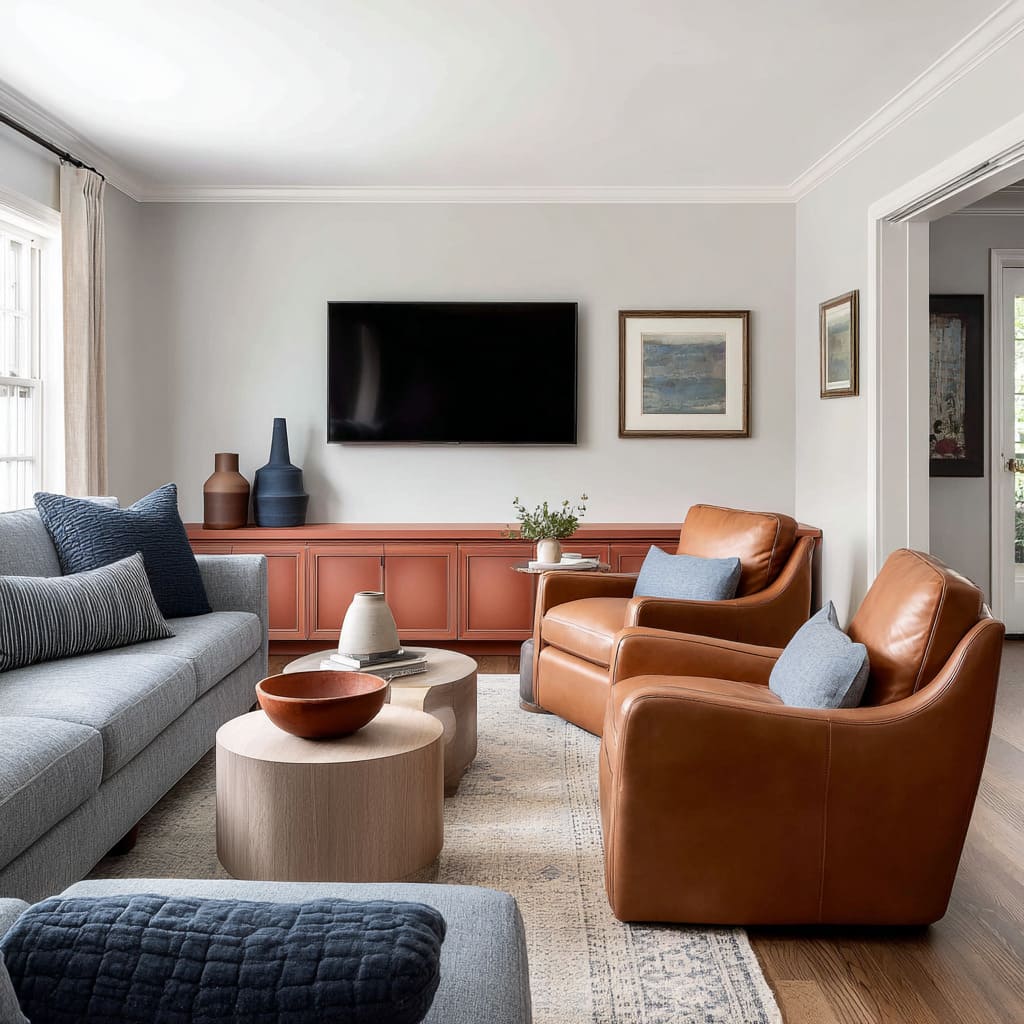
A not-so-obvious pattern is how carefully the height of each color is controlled. Warm hues prefer to sit horizontally: long cushion lines at seat level, tiled coffee table tops, low storage in rusty tones, or a wide bench softened with terracotta textiles.
Cool tones, meanwhile, often rise vertically—large curtains in watery blue, tall vases, shelving in smoky blue, or artwork stacked high up on the wall. This creates a natural layering that feels almost architectural even without actual construction changes.
The eye travels from a strong warm stripe at the base toward cooler, more relaxed forms reaching upward. Some interiors flip this logic and place terracotta as a tall plane, such as a wrapped wall or chimney volume, in which case blue becomes the “horizontal” comfort color in sofas and rugs.
In every version, the placement is never random. The palette follows a distribution that keeps the room visually calm even when the colors themselves have personality.
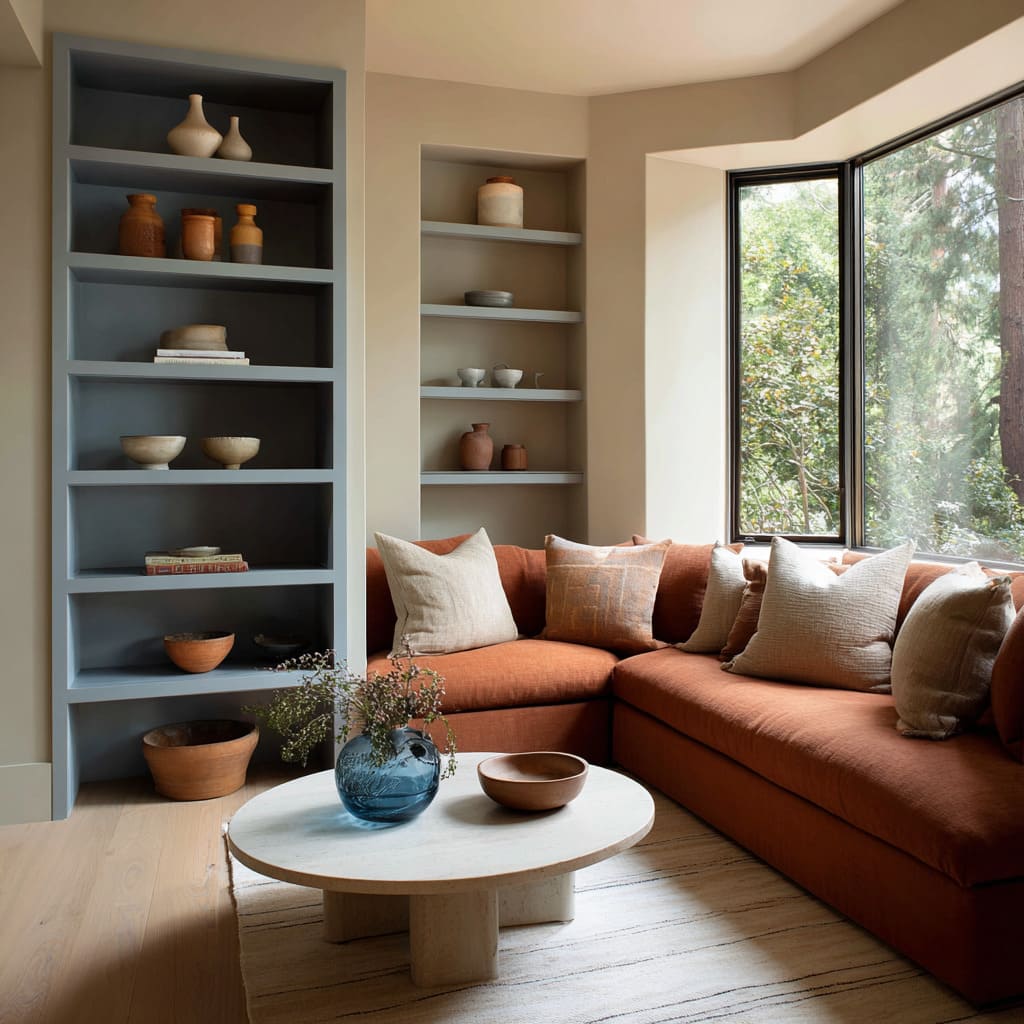
Common vertical/horizontal placements:
- Warm horizontal bands: long bench cushions, tiled table surfaces, ottomans, media cabinets
- Cool vertical planes: curtains, tall shelving in muted blue, large window coverings
- Balanced zones: rugs with thin stripes of both colors, cushions arranged as color gradients
This handling of height is one of the most important factors in the quiet harmony of a blue and terracotta living room design.
The Power of Texture: One Hue, Many Sensations
Texture is one of the strongest forces shaping how terracotta and blue behave. Even when the palette repeats the same color tone, the feel of the surface changes the mood dramatically.
Terracotta appears in many “skins”: suede-like plaster, dusty micro-plaster niches, velvety ottomans, matte clay ceramics, glazed vessels with light reflection, leather chairs with warm sheen, and even narrow stripe cushions that look almost like thin hides. Each version expresses the same warm tone with a different emotional weight.
Blue moves through just as many identities: soft boucle sofas, linen pillows with a washed finish, velvet seating in deep electric shades, glass vases catching daylight, thin blue stripes in rugs, or powdery drapery with delicate pleats.
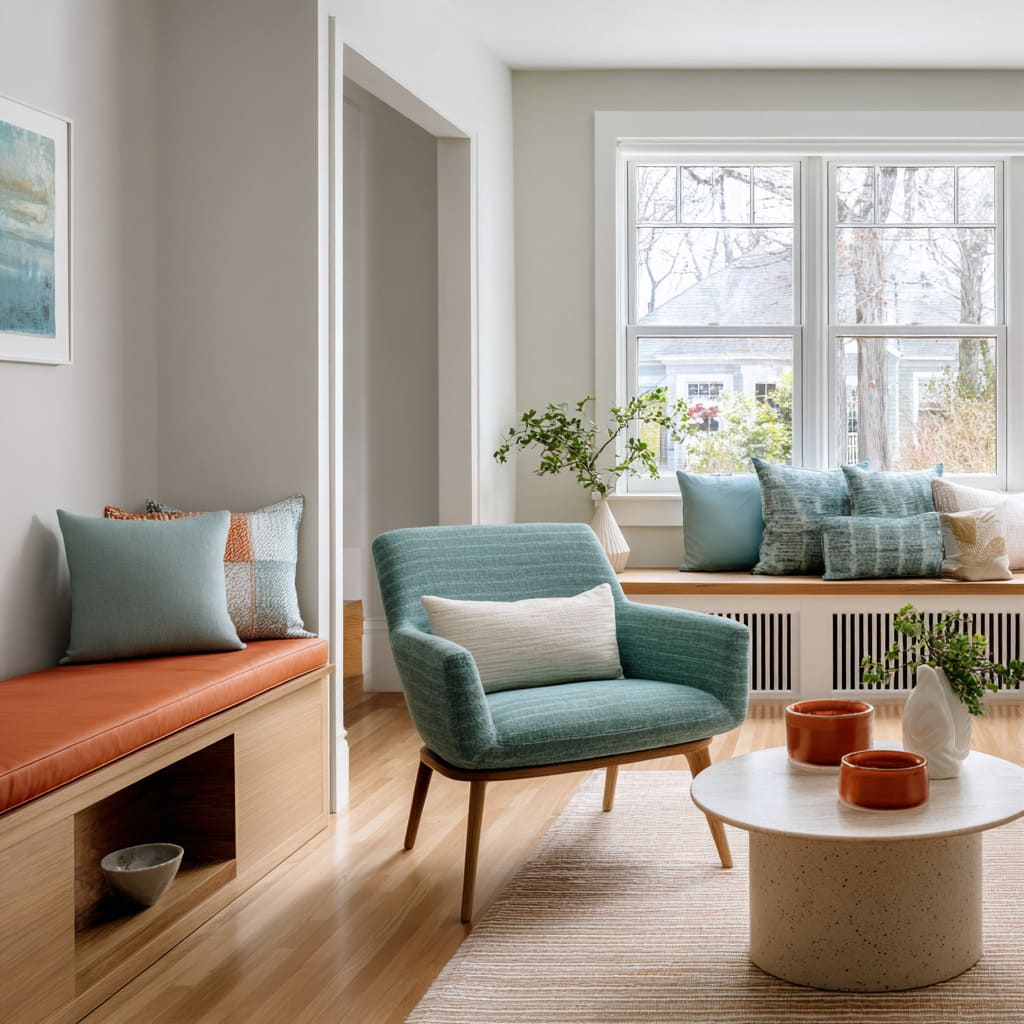
Texture shifts that change the color’s personality
- Matte surfaces make terracotta feel calm and clay-like, and make blue feel more restful.
- Velvet surfaces make both colors denser and more saturated, adding depth.
- Glazed finishes turn blue into a reflective accent and terracotta into a highlight tone.
- Nubby or woven textiles make the colors feel soft and informal.
This rich mix of textures keeps the palette from feeling repetitive and lets terracotta and blue blend into many interior moods, from relaxed to refined.
How Small Objects Carry the Story: Bowls, Vases, and Tabletop Compositions
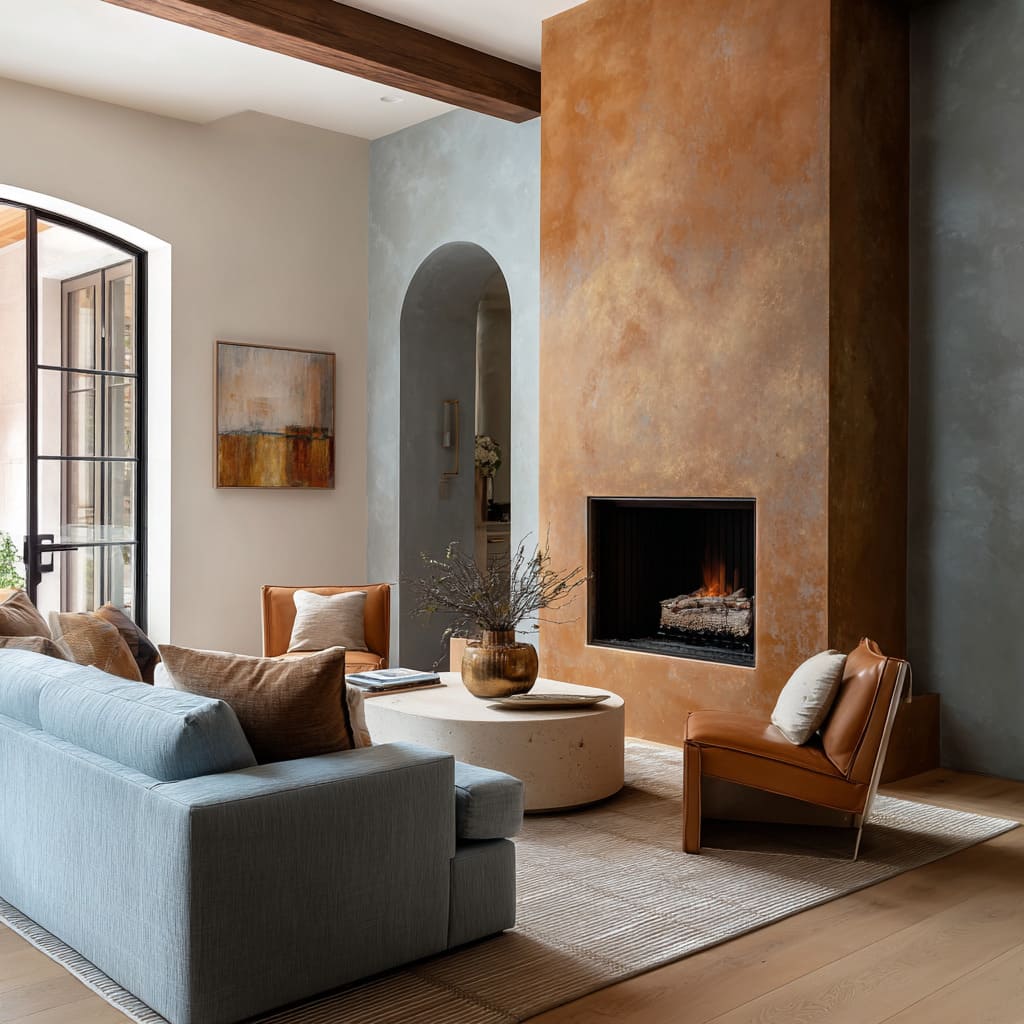
The tabletop can become a micro-scene that expresses the palette in a concentrated way. A simple bowl in warm clay, a tall cobalt vase, a neutral stone dish, or a stack of pale books can create a miniature landscape that repeats the room’s colors in softer, quieter form.
Designers often use a set of three or four items arranged with a clear rhythm—warm, cool, neutral, then height—to anchor the broader palette. Bowls in terracotta echo larger pieces like a bench seat or cabinet front.
Glass vases bring out the cooler side of the palette without feeling heavy. Neutral stone pieces connect to the rug, walls, or sofa in the background.
These tiny still lifes function like pocket summaries of the room’s entire mood. They make the palette readable even at close range, and they give the larger space a sense of intention without needing loud patterns or oversized accents.
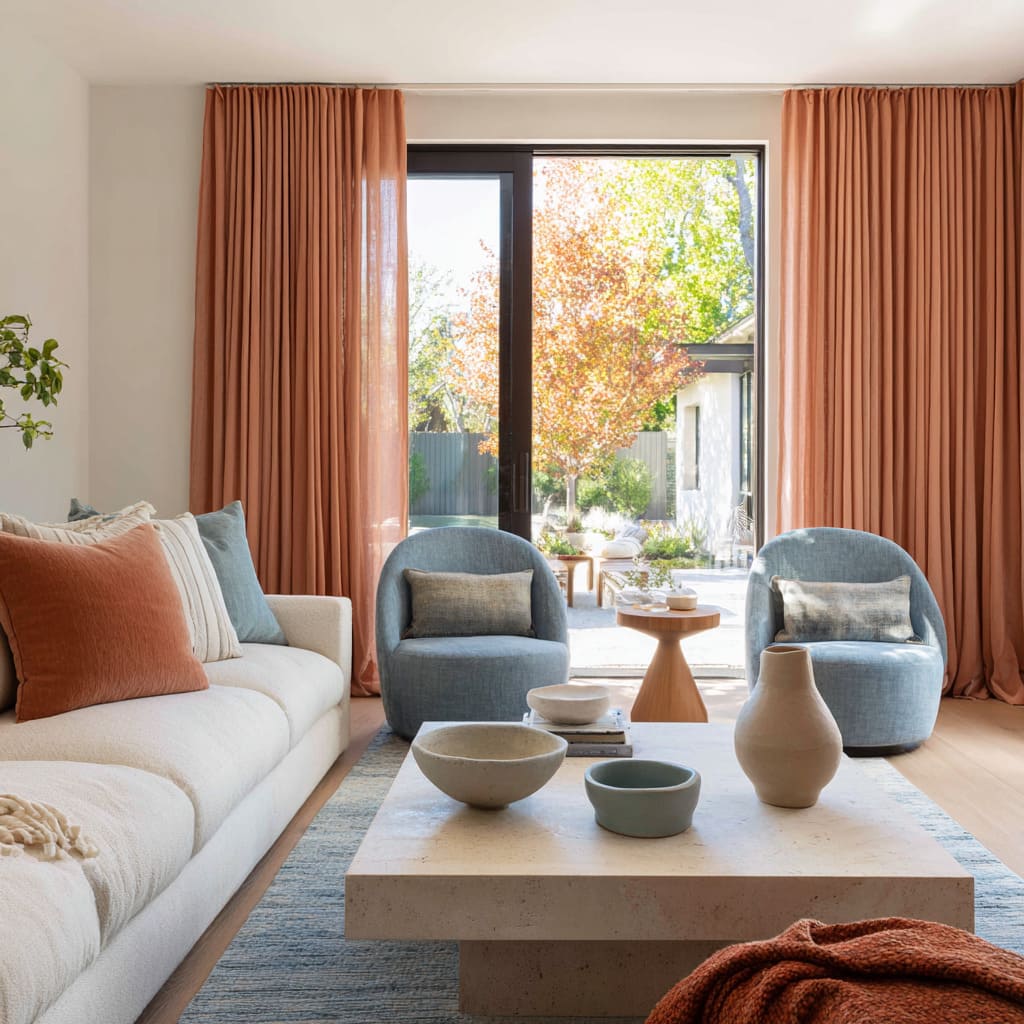
Objects commonly used as palette translators:
- Terracotta bowls or dishes
- Cobalt or navy glass vases
- Pale ceramics with soft glazes
- Books with neutral covers
- Low stone vessels echoing floor or table surfaces
These groupings ensure that terracotta and blue return repeatedly throughout the space as quiet, consistent notes.
Benches, Window Seats, and Built Forms as Color Anchors
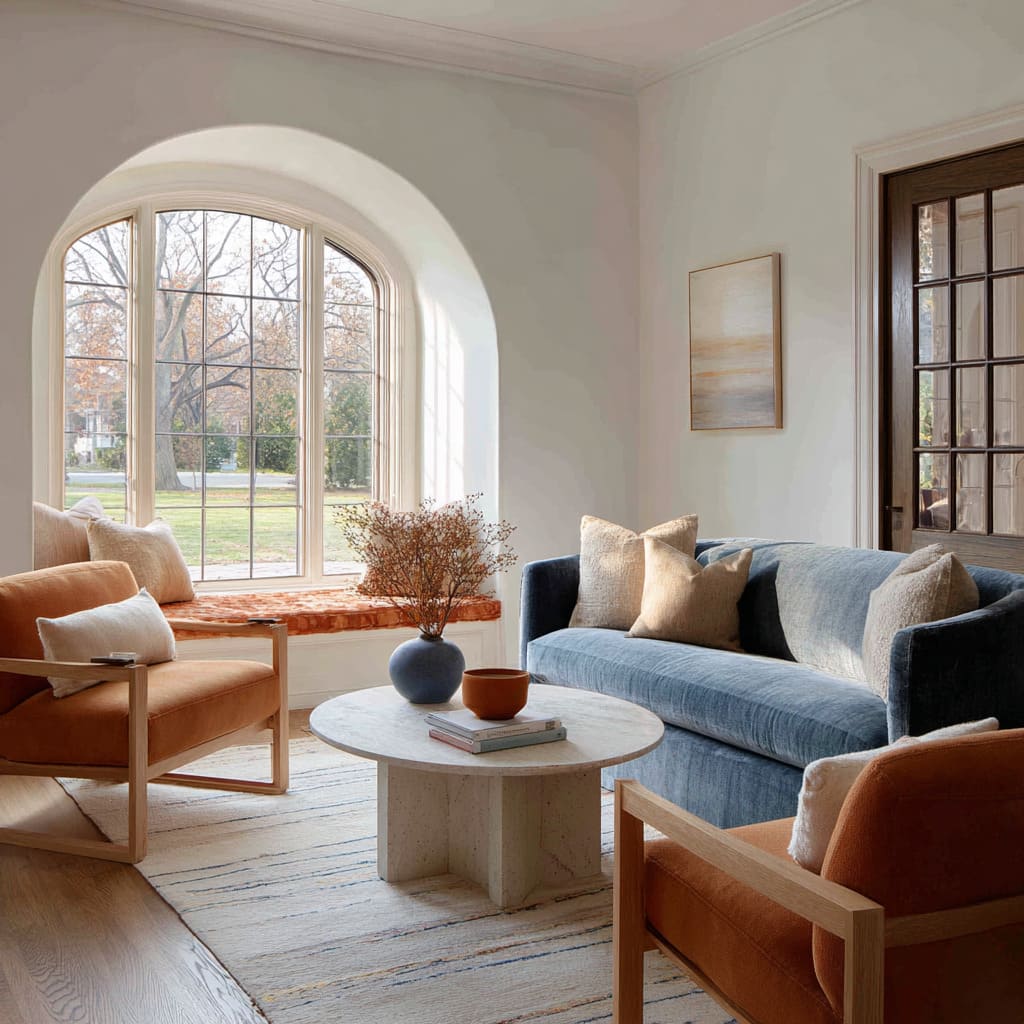
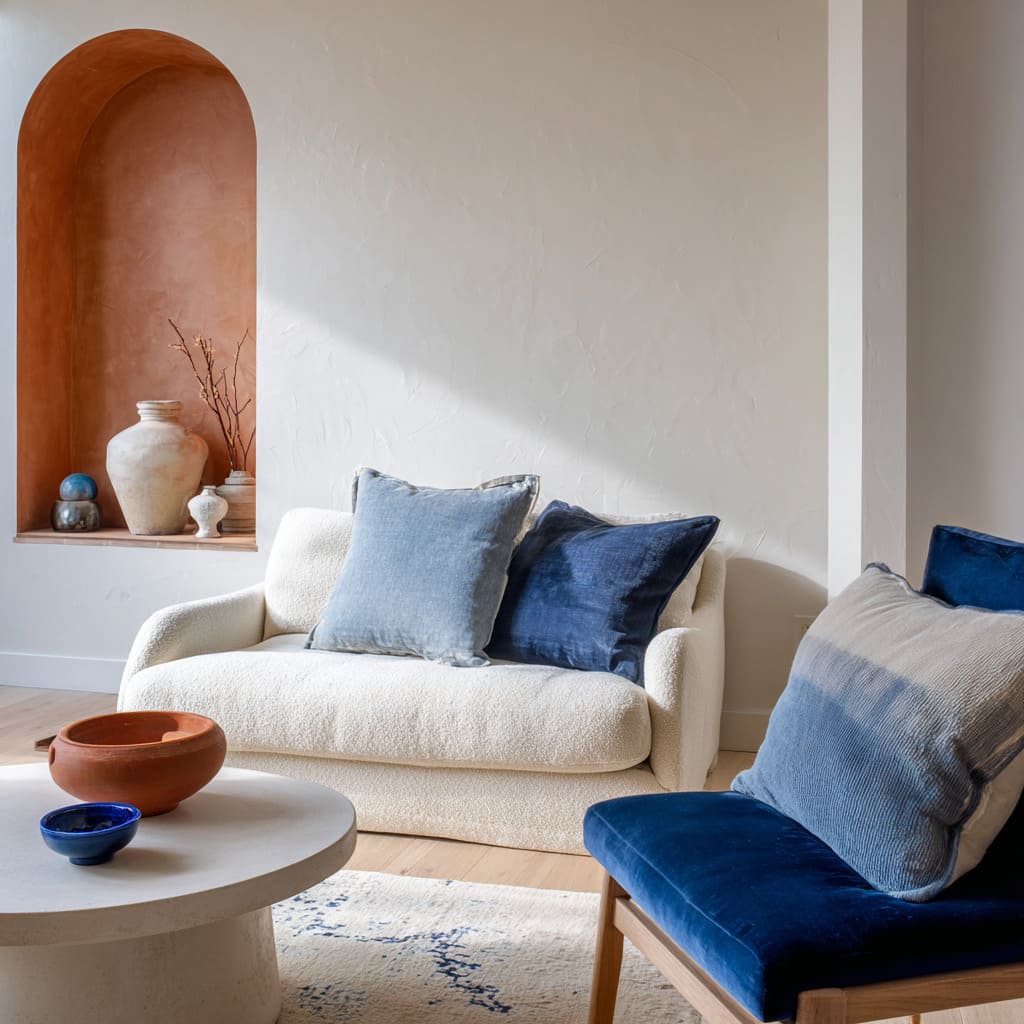
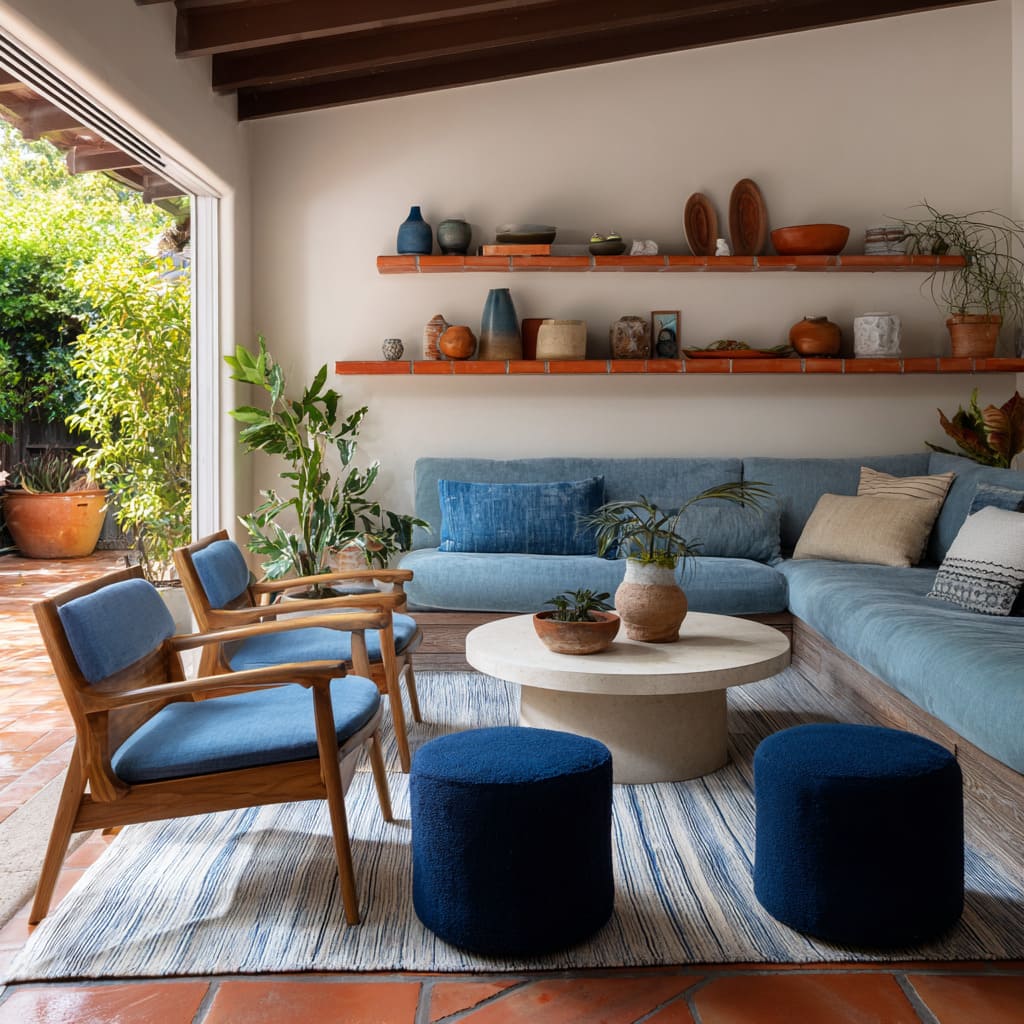
A recurring theme in terracotta and blue living room ideas is the use of long continuous surfaces to carry color with precision. Many interiors rely on window benches, built-in seats, low cabinets, or thin cushion lines to introduce clean, deliberate bands of warmth or coolness.
These elements act like color “rails” guiding the eye across the design. A terracotta bench cushion under a window becomes a horizon line beneath the outdoor view.
A long blue window seat reads like a relaxed zone of coolness in a pale environment. Terracotta cabinet fronts stretch across a full wall and balance a blue sofa placed opposite them.
What makes these choices special is how intentional the line quality feels. The color is not scattered.
It’s delivered in one calm band at sitting height, holding the palette steady across the design.
Why these long elements matter
- They create visual stability in a palette with strong warm/cool contrast.
- They keep the color structured and avoid overwhelming the space.
- They allow both hues to stay present without competing for dominance.
These horizontal surfaces become the quiet foundation of the palette’s overall order.
Curtains, Artwork, and Tall Elements as Soft Connectors
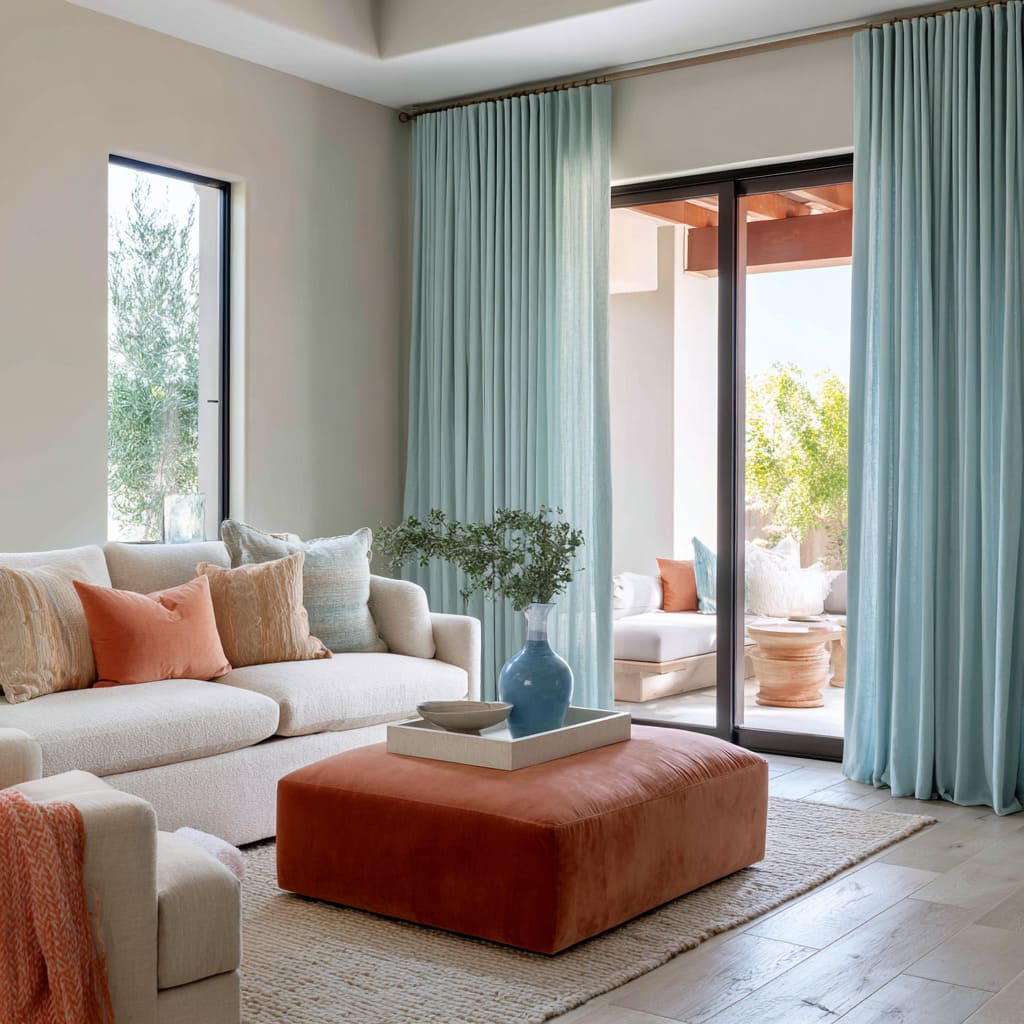
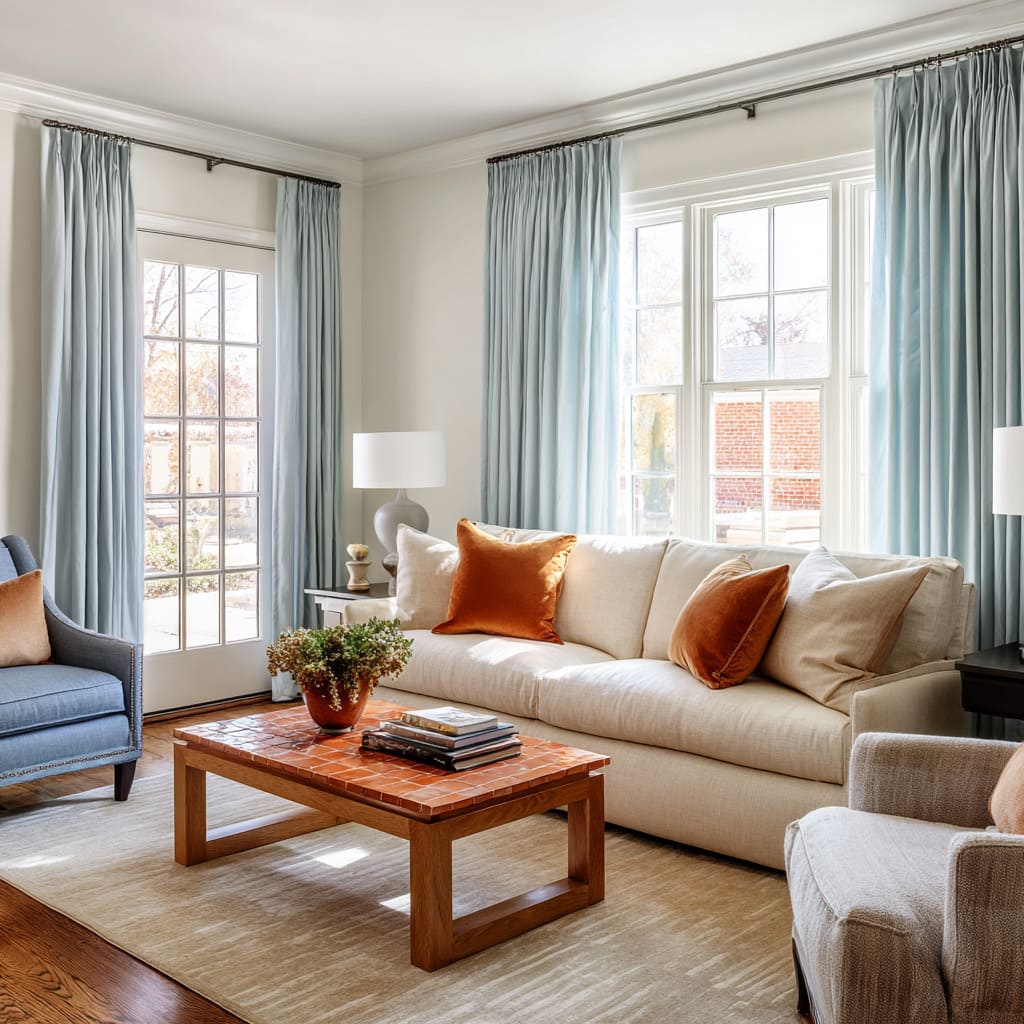
While terracotta prefers grounded zones, taller elements often use shades of blue to “lift” the palette. Curtains are one of the most effective tools: pleated drapes in powder blue, aqua, or slate create vertical planes that visually cool the design.
Their height makes the palette feel tall and soft, and their texture spreads the color lightly through the space. Artwork plays a similar role, especially when stacked with blues at the bottom and pale tones at the top.
These pieces act like slow shifts between warm and cool without needing hard contrast.
Vertical elements that tie a palette together:
- Curtains with soft folds that catch daylight
- Tall shelving painted in muted blue-grey
- Large framed art with loose blue strokes or blended blues and creams
- Glass doors and windows that reflect sky tones
These taller features often create the room’s “envelope,” while terracotta anchors the lower part. The contrast stays gentle, allowing the palette to feel harmonious rather than split.
The Role of Neutrals as Quiet Translators Between Warm and Cool
Neutrals are not just background; they are the glue holding the palette together. Beige, off-white, cream, pale wood, grey-beige textiles, sand-tone rugs, and stone tables consistently bridge the jump from terracotta to blue.
These hues prevent strong temperature contrast from feeling sharp. Neutral cushions between warm and cool pillows act like stepping stones.
Light wood floors pick up the warmth of terracotta while staying cool enough for blue accents. Stone coffee tables echo both earthy warmth and breezy softness.
Rugs in washed cream tones soften the space underfoot while allowing blue lines or tiny terracotta marks to feel integrated rather than isolated.
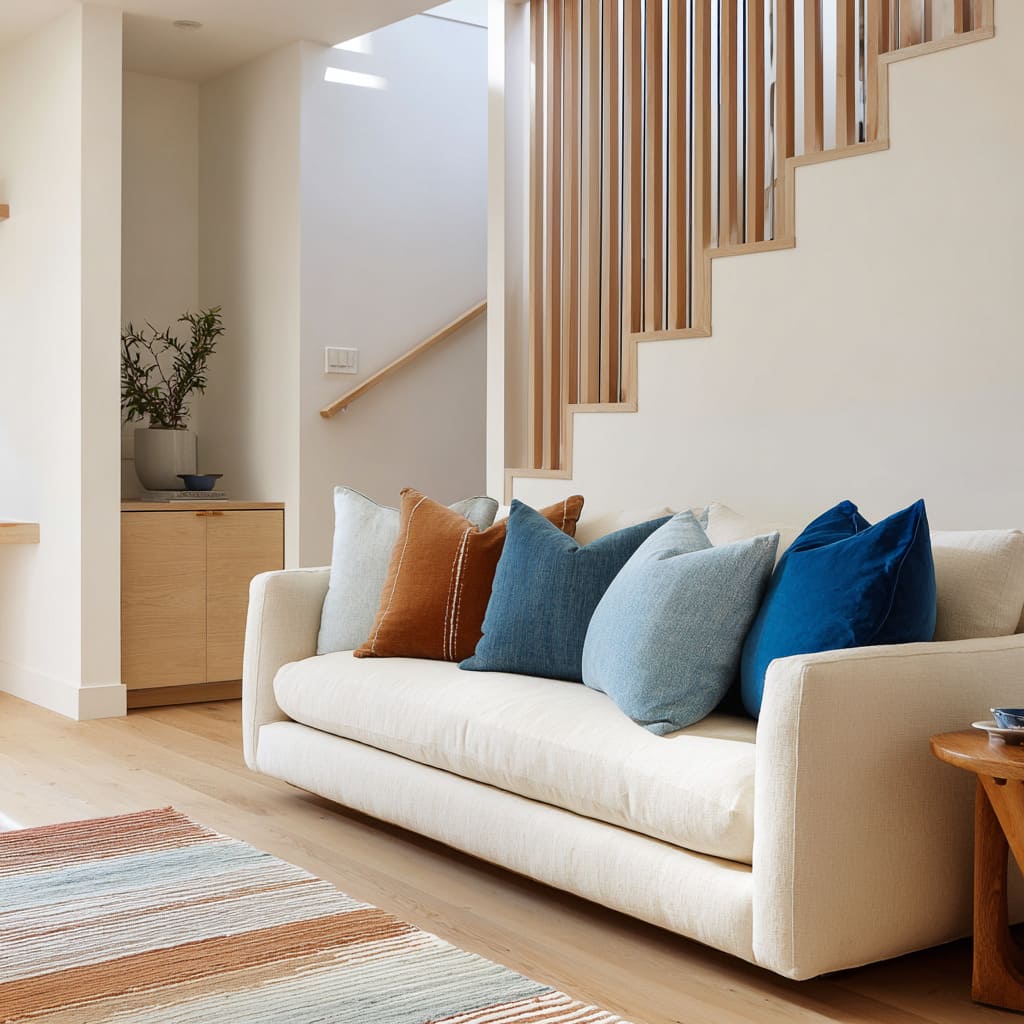
Neutrals also appear in the upper third of the room design—on ceilings, high surfaces, and the frames of windows—so the space never feels top-heavy with color. This distribution lets terracotta and blue stay focused on the human-height layer, giving the palette a clear sense of order without crowding the view.
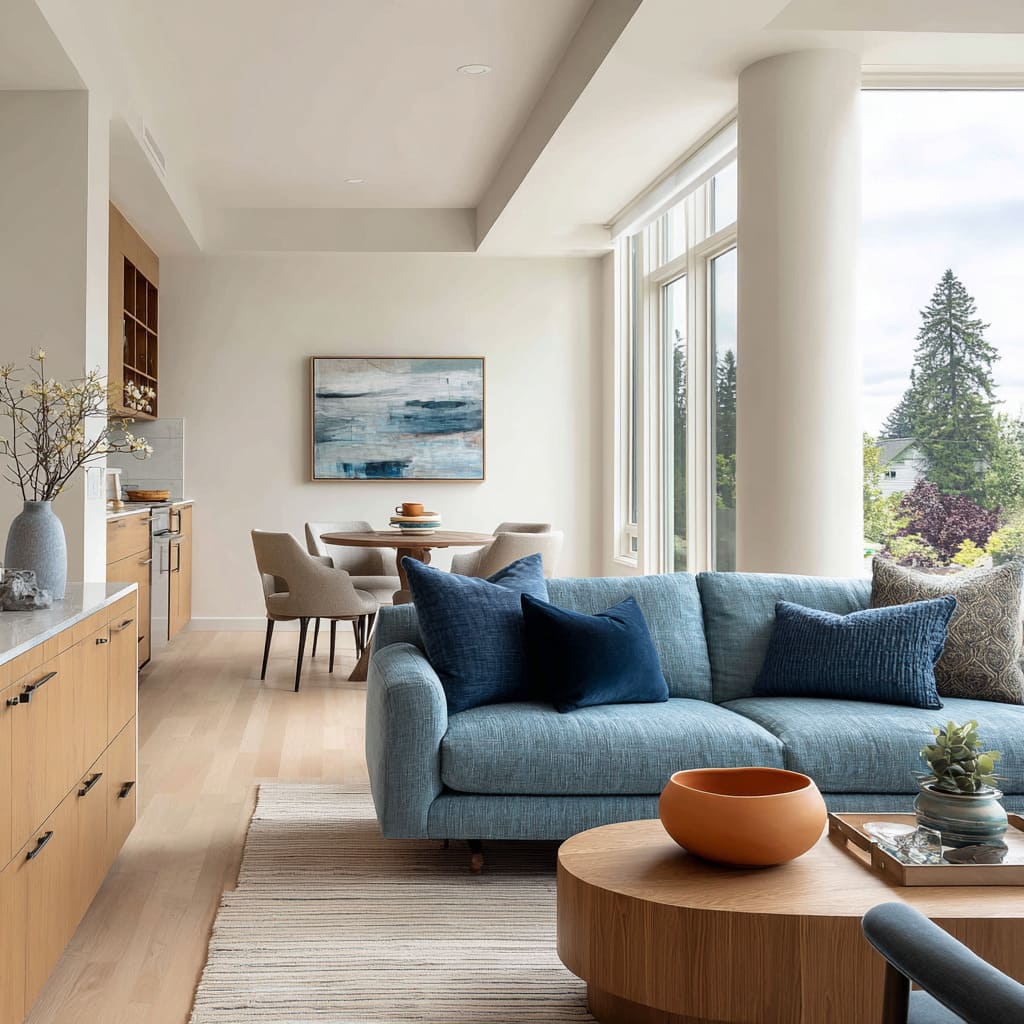
Nature as a Living Part of the Palette
Nature can play a subtle but powerful role. Green plants, bare branches, tree views, and shifting daylight help the pairing feel more organic.
Greenery is especially effective because it sits between terracotta and blue on the visual temperature scale. A leafy plant near a terracotta niche softens it.
A garden view behind a blue sofa keeps the palette feeling fresh. Branches in simple vases add vertical movement that echoes stripes, curtains, slats, or mullions in the design.
Daylight deepens terracotta in recesses and brightens blue fabrics, creating natural variation across the day. Even seasonal views outside the window—fall tones, early spring greens, or soft winter light—can become part of the interior palette without any extra decor.
These natural layers keep the design lively without adding clutter. The combination feels calm but never still, quiet but never flat.
In open spaces with large windows, nature becomes the softest version of art, complementing both warm and cool color fields inside.
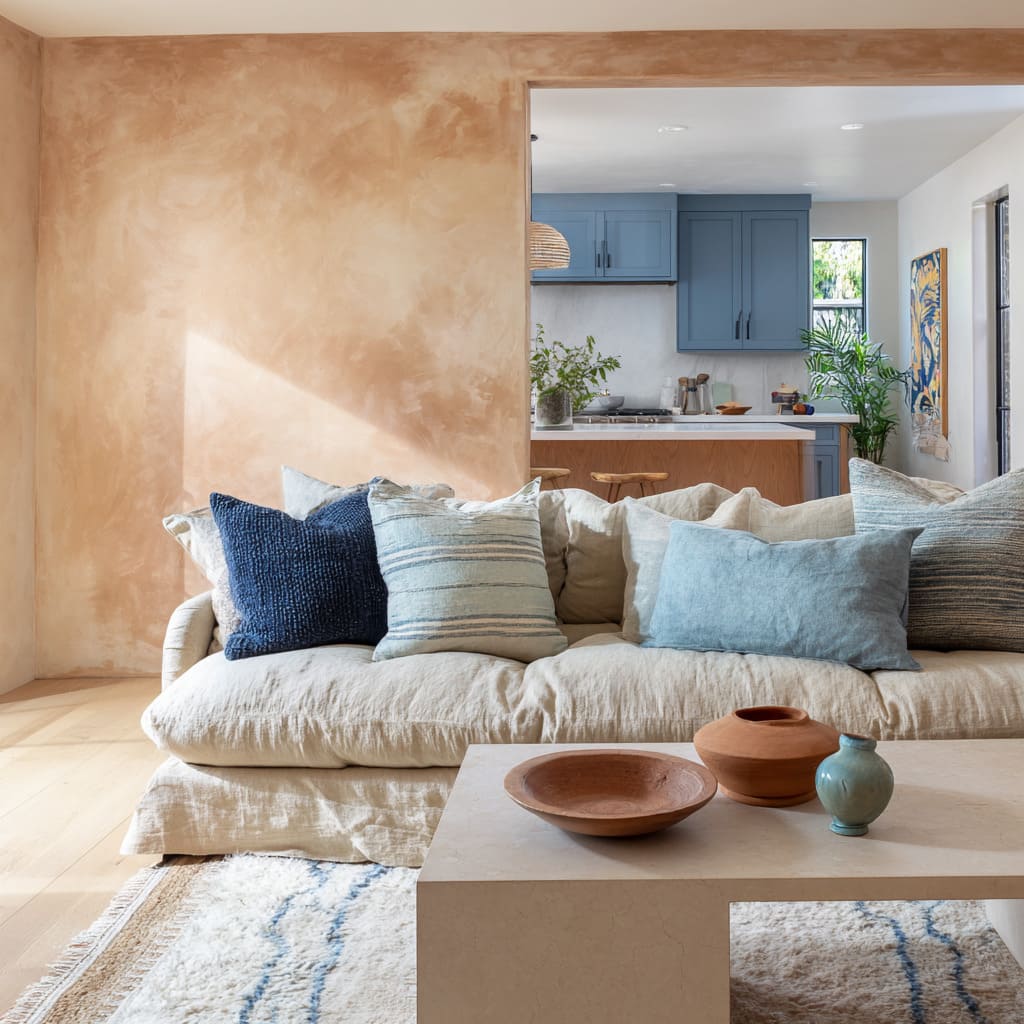
Patterns, Stripes, and Soft Gradients for Seamless Blending
They can use extremely soft, broken, or washed patterns that let terracotta and blue blend in gentle ways. Rugs with faint stripes carry the two colors horizontally in thin lines.
Cushions arranged from warm to cool create smooth transitions instead of sudden contrast. Artwork with layered colors repeats the palette in subdued brushstrokes.
Even small accessories like bowls or vases often follow a quiet gradient: from pale beige to dusty terracotta to inky blue.
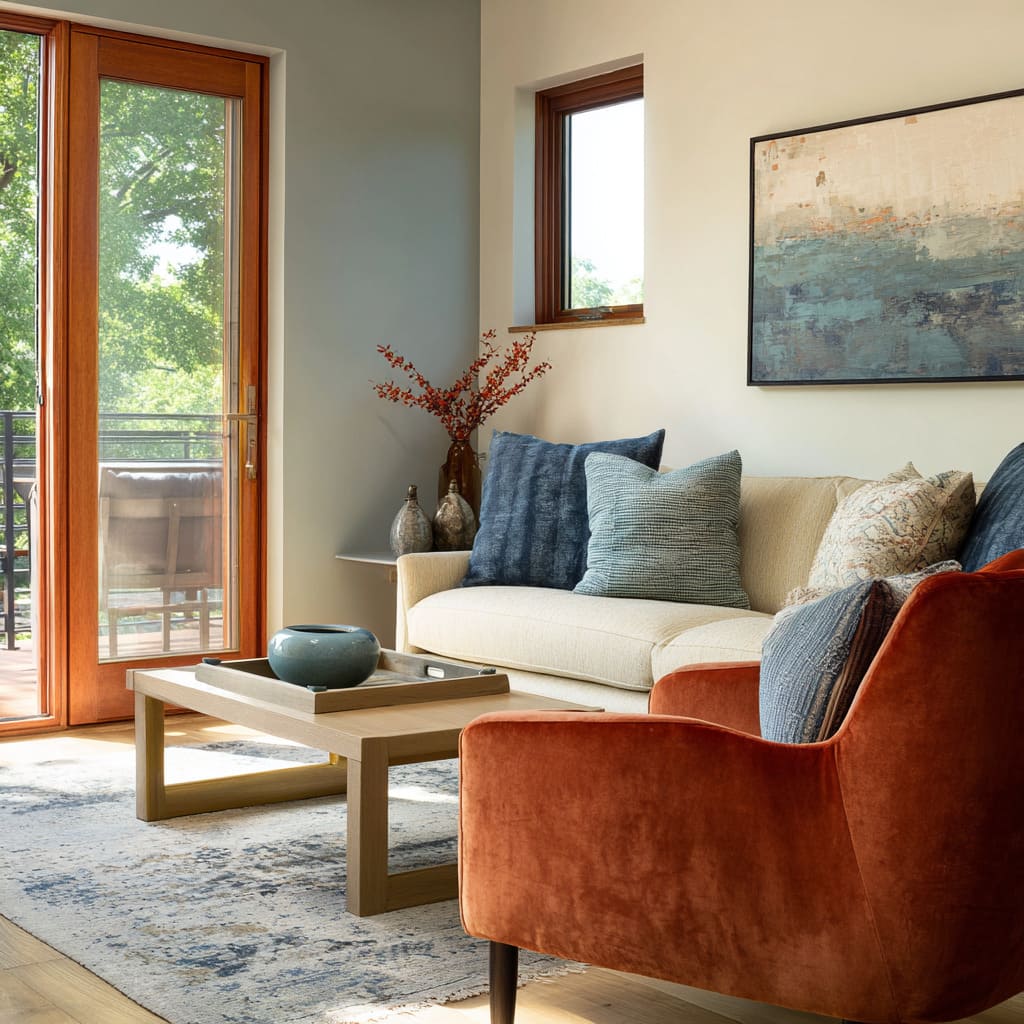
Examples of gentle pattern strategies:
- Soft horizontal rug stripes mixing rust, sand, cream, and blue
- Cushion arrangements that move from terracotta on one side to blue on the other
- Washed patterns in rugs echoing colors of seats, curtains, or art
- Small geometric details used sparingly so the palette stays calm
Pattern, in this palette, is more about guiding the eye than grabbing attention. It allows terracotta and blue to coexist in the same object or textile without feeling busy.
Color Roles in Evolving Interiors: When One Color Leads and the Other Supports
Terracotta and blue rarely share equal dominance at the same time. One always leads, and the other supports.
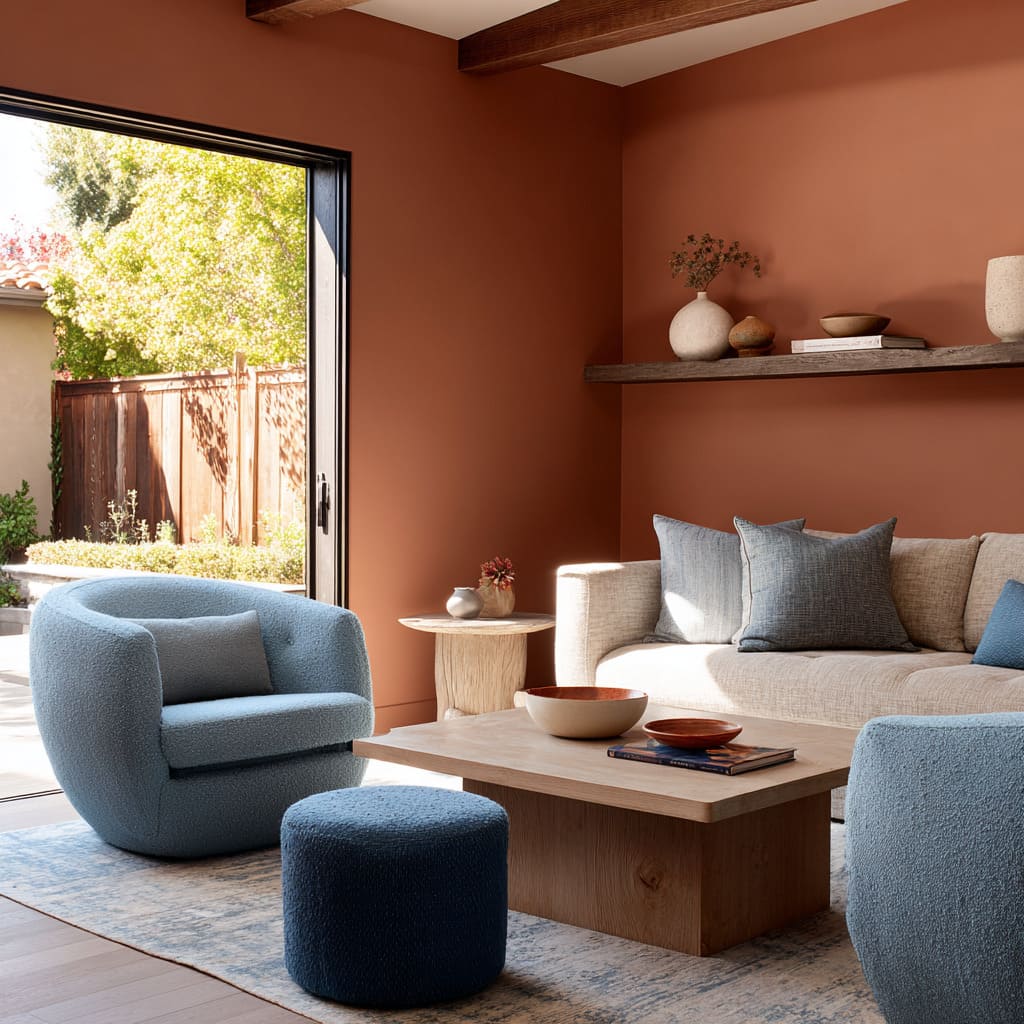
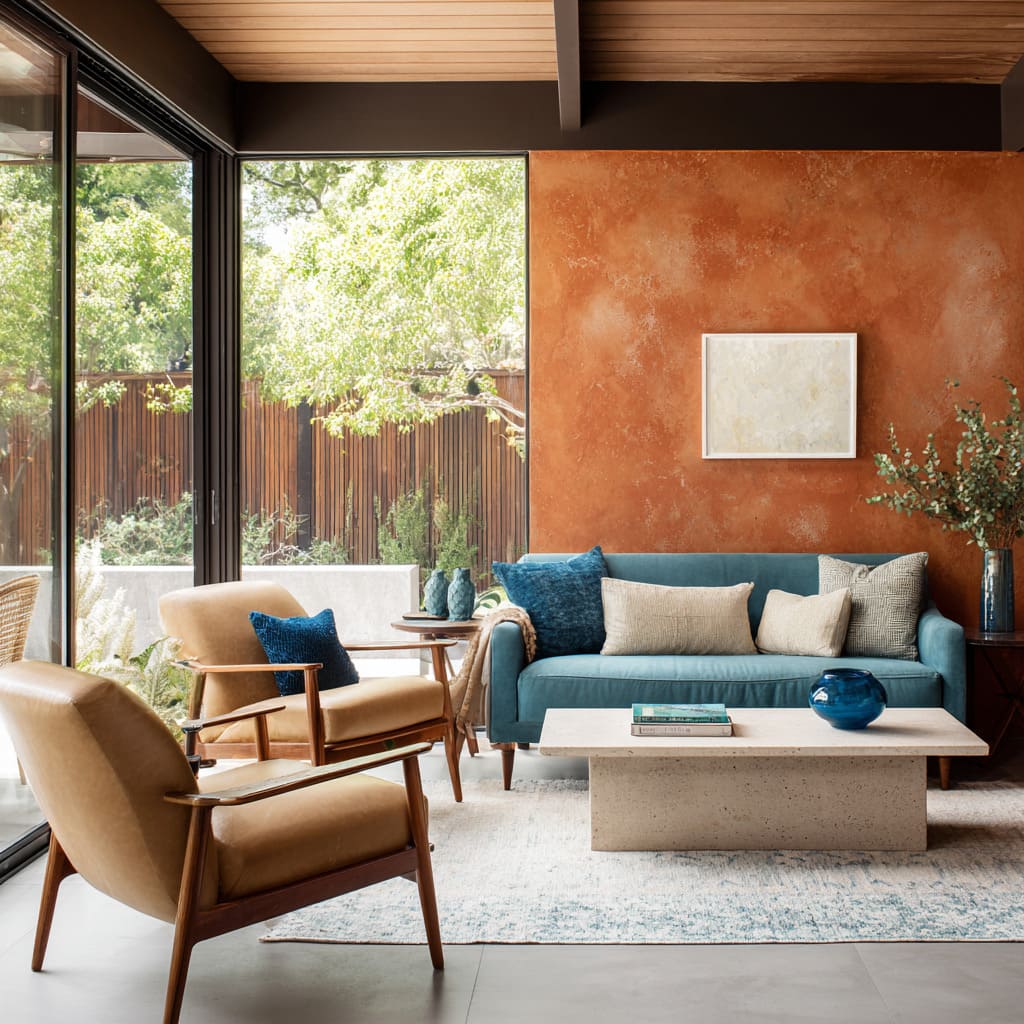
If the design features a large terracotta wall or wide terracotta furniture, blue settles into upholstery, drapery, or rugs in softer ways. If the blue is strong—through curtains, sofa, or a large rug—terracotta shows up as slim accents, tabletops, or small ceramics.
This balance keeps the palette from feeling divided. The strongest color sets the tone; the other keeps the space gentle and layered.
This is the heart of every terracotta and blue living room idea: a warm base that supports cool air, or a cool design that finds steady ground in warm, earthy details. Even when the palette becomes bold, the relationship stays soft and structured.
The overall effect is a space filled with quiet depth, moving layers of texture, and natural harmony born from earth and sky.
Related Posts
Harmony Home Design brings 10+ years of residential interior design experience to the ideas shared here. We publish design concepts, layout thinking, and practical styling notes.