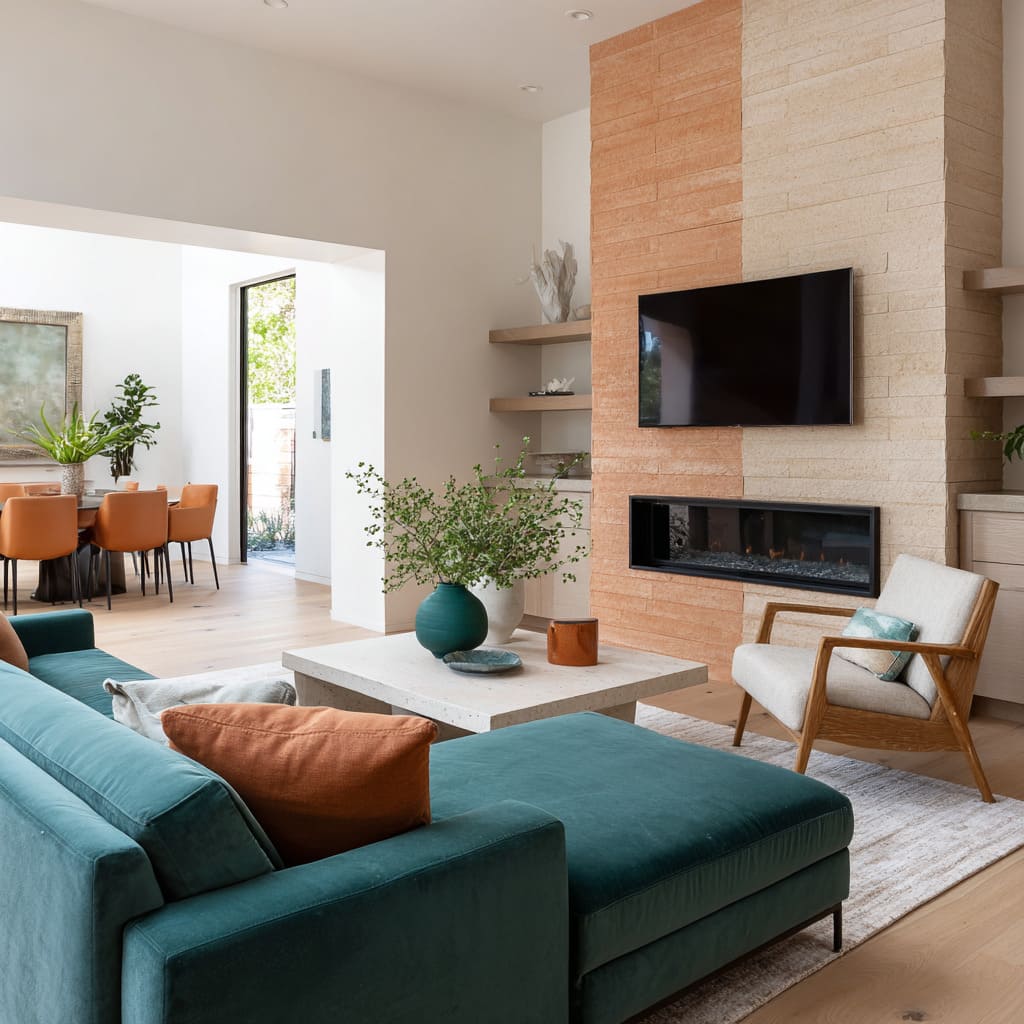
The relationship between teal and terracotta creates one of the richest, most atmospheric color stories in contemporary interiors. Their pairing goes far beyond simple contrast.
It is shaped by shade families, material finishes, how each color behaves under natural light, how it moves across architectural surfaces, and how it interacts with surrounding décor. The following article organizes this topic into extended thematic sections, each exploring a different viewpoint.

The Atmospheric Roles of Teal and Terracotta
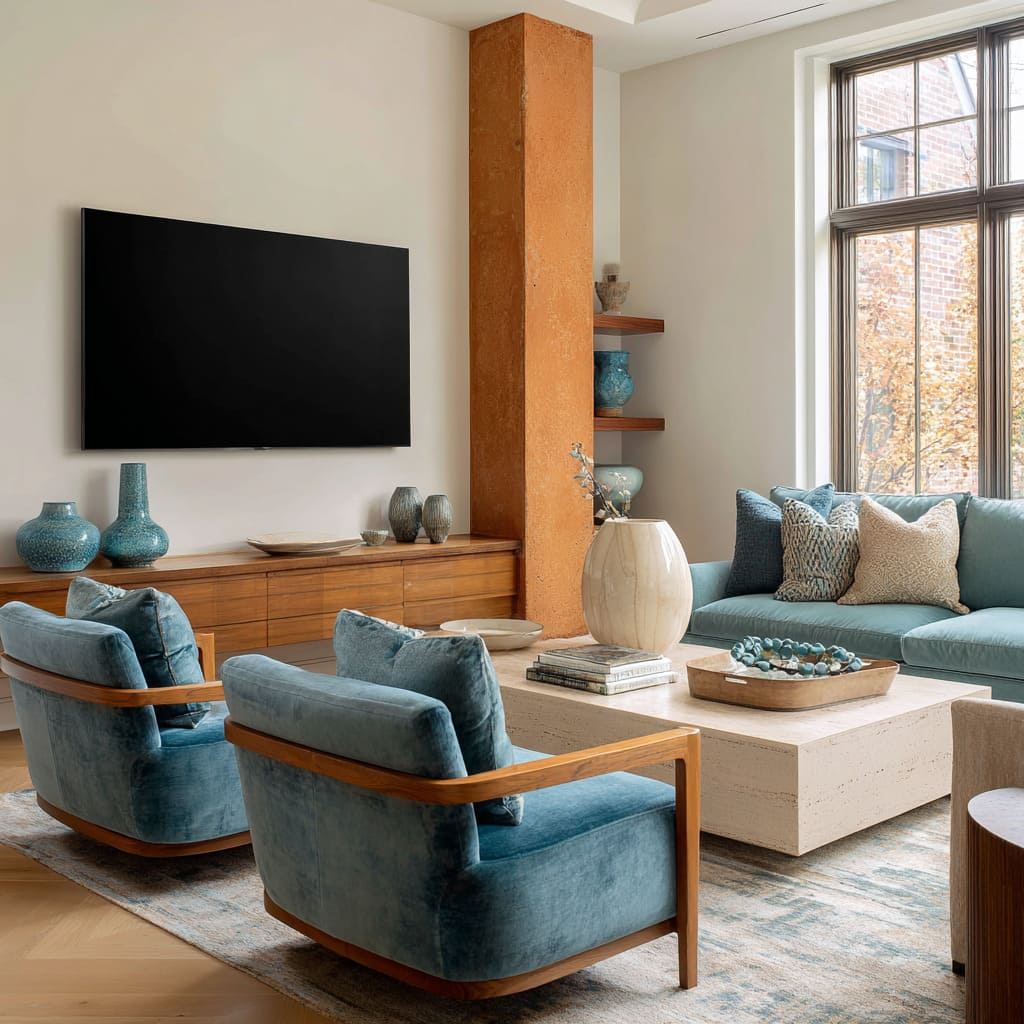
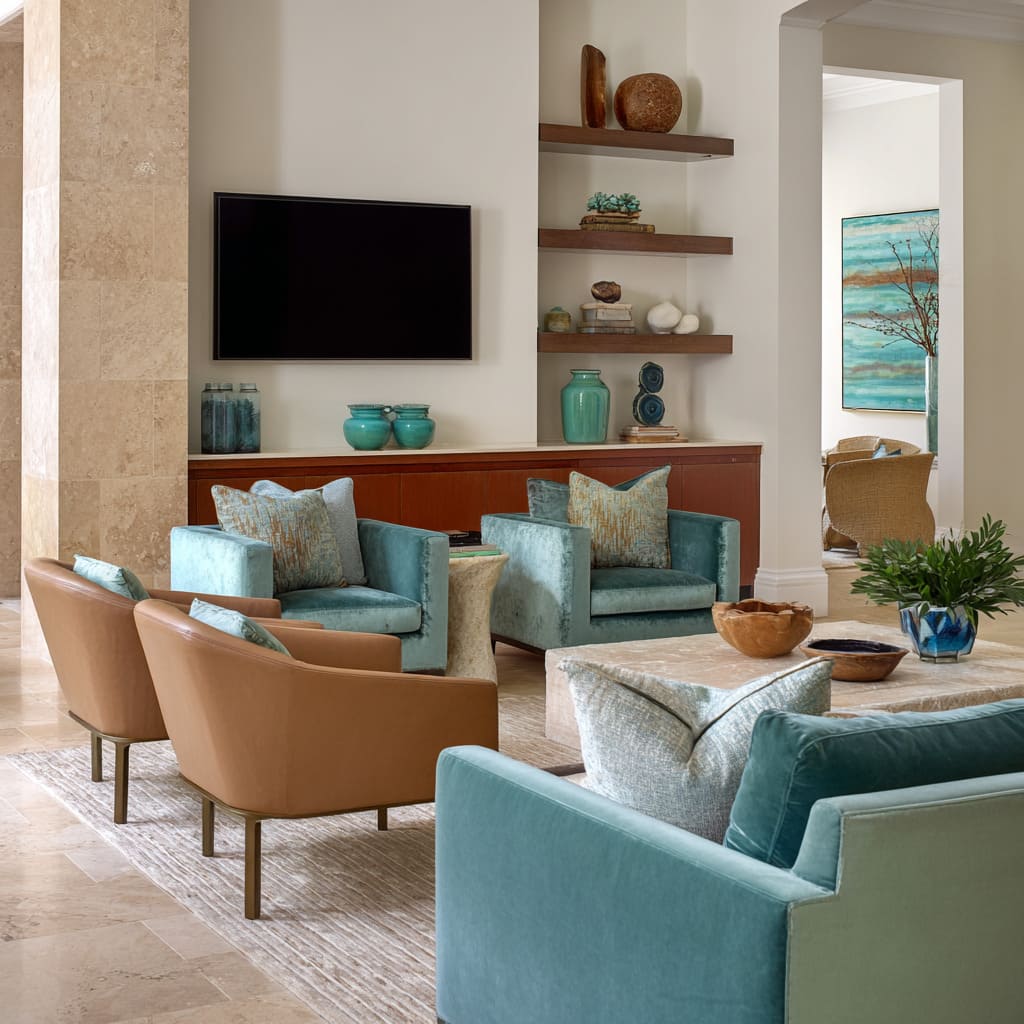
Interior spaces that use these two colors tend to assign them different “roles” in the design. Terracotta often shapes the environment itself—chimneys, wall planes, columns, hearth bands, plaster screens, or leather seating that echoes clay tones.
Teal usually becomes the softer, more touchable counterweight—sectionals, club chairs, glass vessels, muted ceramics, and occasionally art.
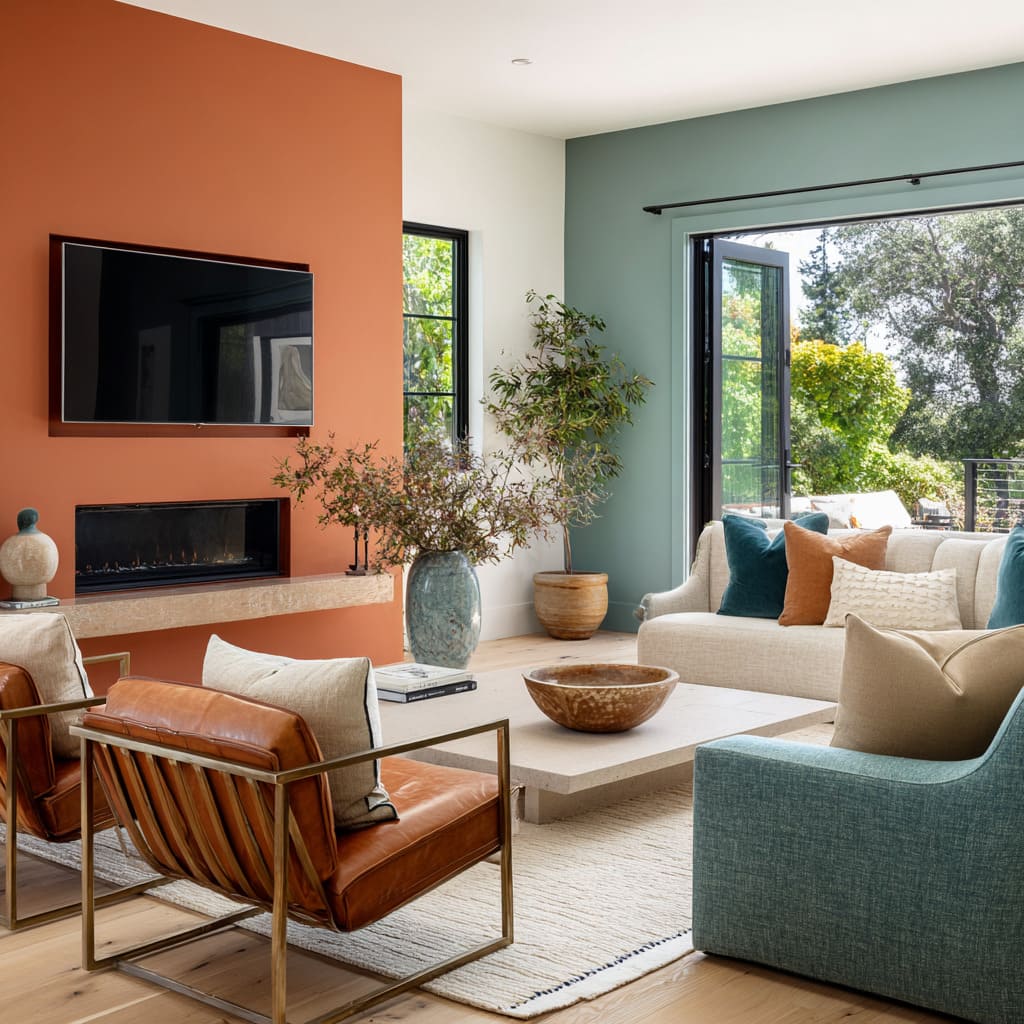
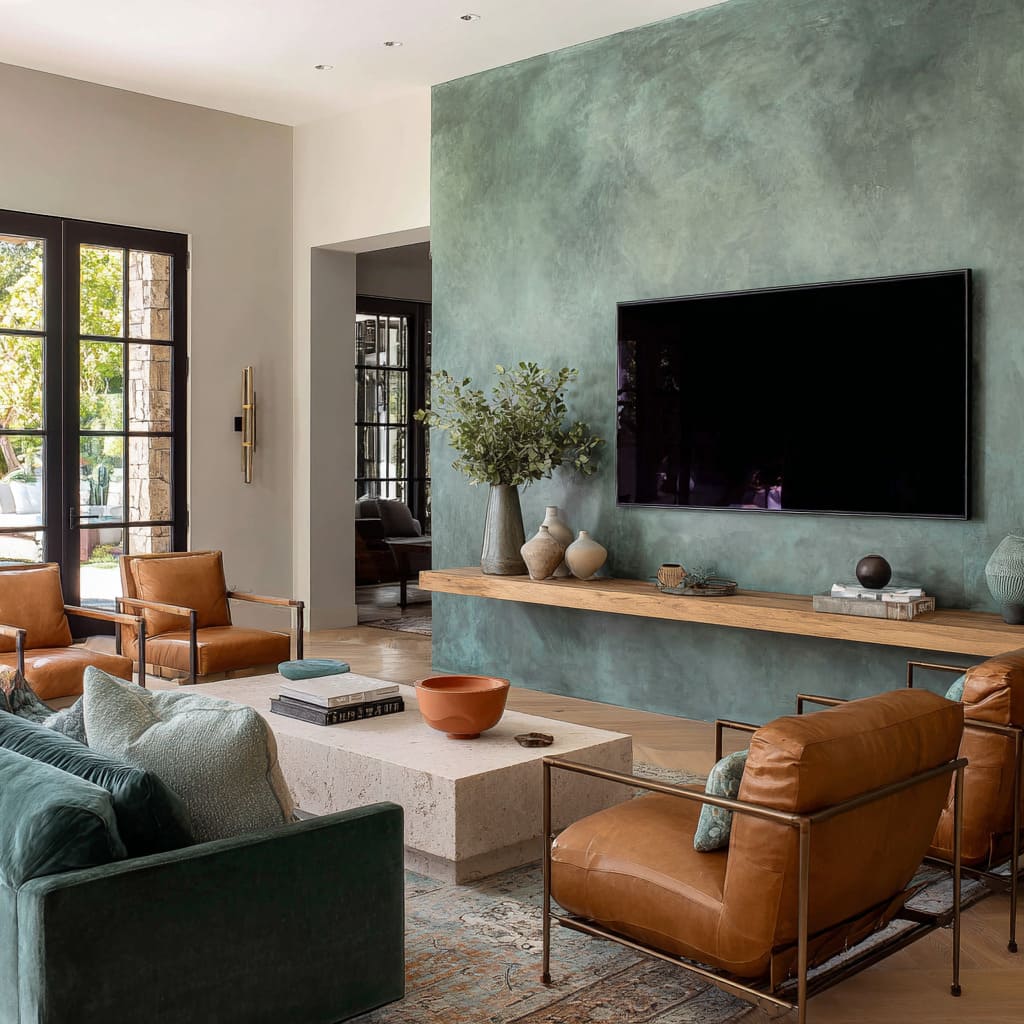
This hierarchy forms a consistent pattern: terracotta behaves like a warm backdrop that sets the emotional temperature, while teal moves through the space in softer forms, adding coolness, shade, or visual calm. In scenes where this relationship reverses—such as a teal plaster TV wall—terracotta appears in smaller, tactile accents that bring warmth back into the frame.
When grouped, the two colors create a landscape effect where terracotta resembles earth, sunlit surfaces, or warm rock, and teal aligns with water, foliage shadows, or cool sky reflections. This creates depth, not only by contrast but by the way each color “feels” in motion as someone walks through the design.
Shade Families of Terracotta and Their Aesthetic Behaviors
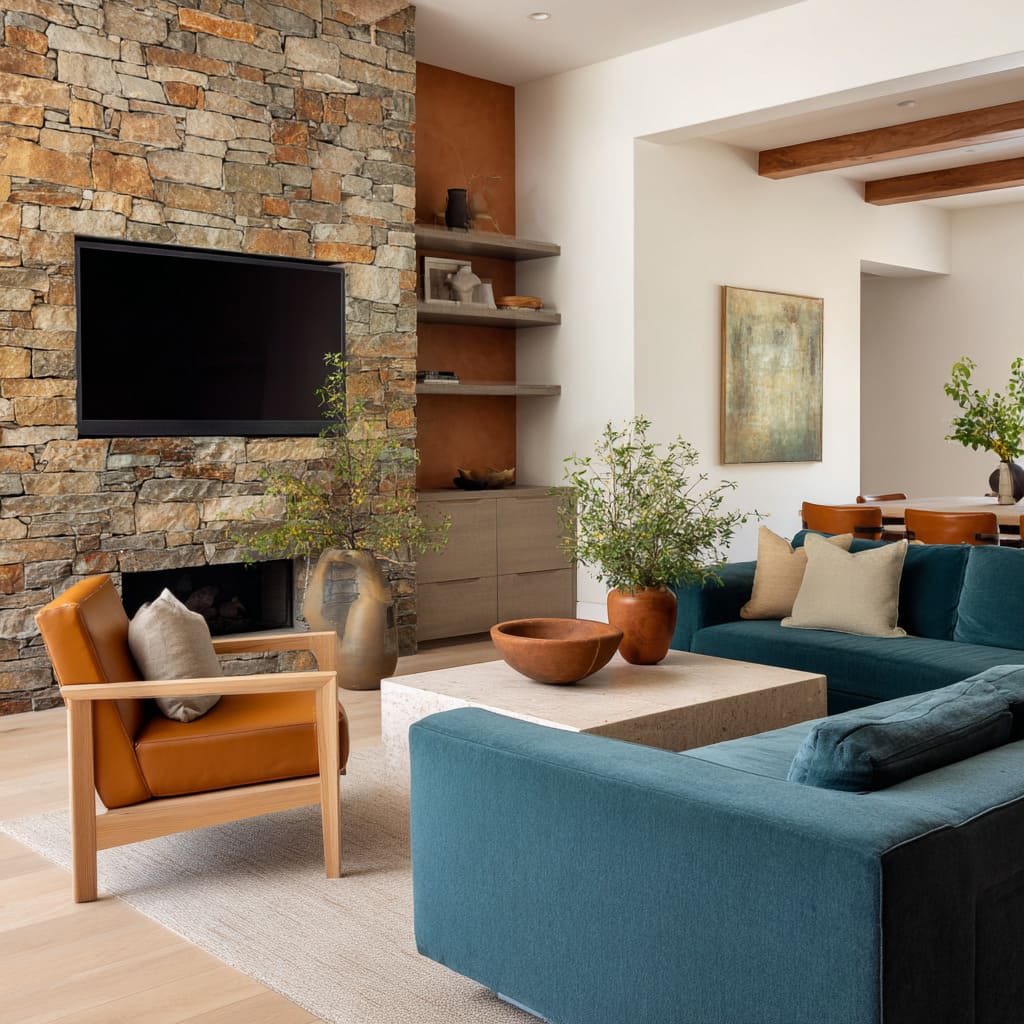
Terracotta is not a single color—its spectrum includes clay-pink tones, paprika shades, burnt-sienna depths, biscuit hues, and muted brick notes. Each group changes the atmosphere of the space in a distinct way.
Below is a clear breakdown of the most common families:
Clay-Blush Terracotta
- Soft, powdery appearance
- Often used in gentle plaster walls
- Works well for interiors aiming for an airy mood
- Harmonizes with sea-glass teals, pale timbers, and light stone
Paprika and Rust Terracotta
- Richer, deeper, more saturated
- Holds strong against cool teal velvets
- Creates the visual effect of warm light captured on a wall
- Good when paired with neutral rugs or soft stone tables
Biscuit and Brick Terracotta
- Earthy and warm, but more muted than redder versions
- Often used in lower architectural bands (hearth ledges, benches)
- Introduces warmth at floor level without overwhelming the vertical field
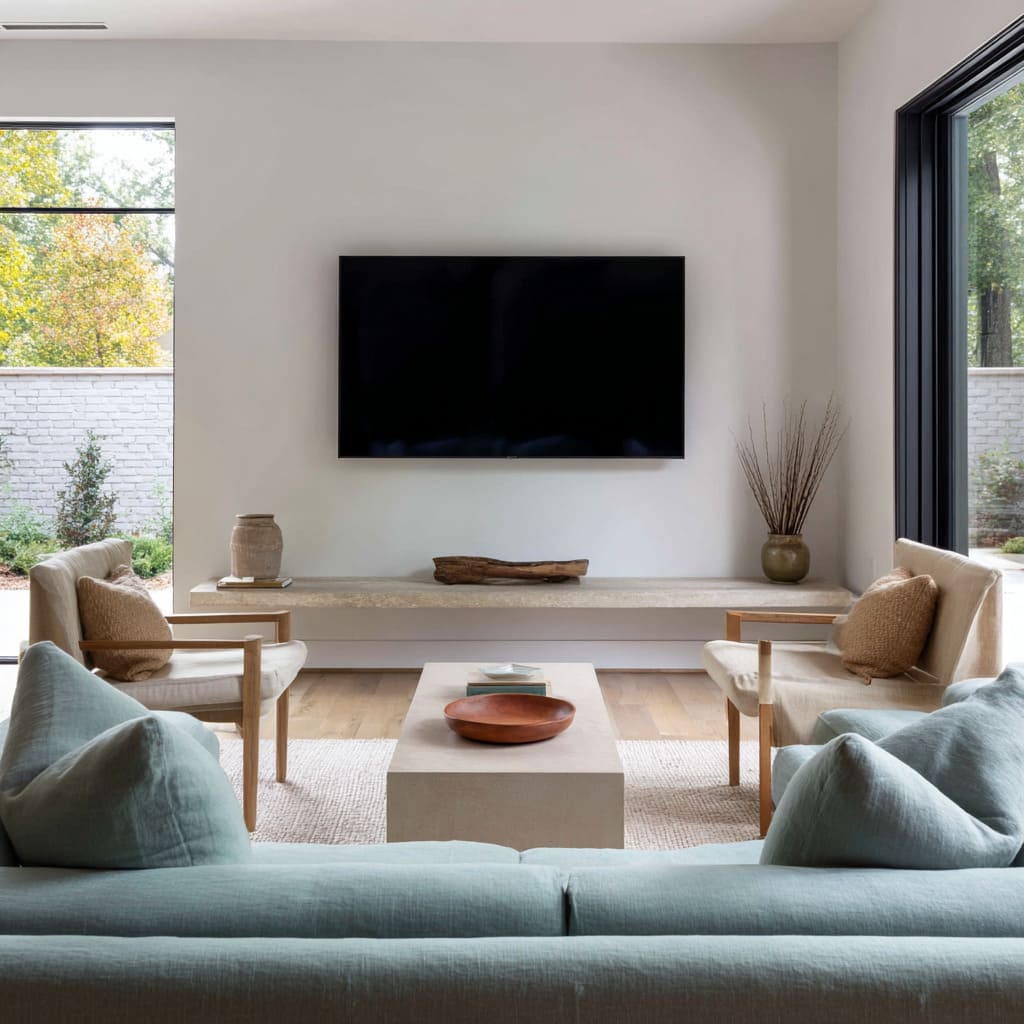
- Matches well with linen-like teal tones
Cognac and Saddle (Leather Terracotta)
- Terracotta translated into seating and tactile surfaces
- Feels lived-in and textural rather than architectural
- Acts as a mid-level bridge between wall color and upholstery
- Integrates naturally with matte teals, greenery, and pale stone surfaces
Each shade family shapes mood differently. Clay-toned versions keep the environment soft and lifted; paprika shades feel late-afternoon and full-bodied; leather terracotta tones feel approachable and human.
When used together, they create interior “micro-climates” in which warm and cool hues interact through both contrast and texture.

The Teal Spectrum: From Sea-Glass Softness to Deep Velvet Depths
Teal shifts widely depending on undertone and material. Its influence changes dramatically depending on which of its many personalities appears in the space.
Some shade groups include:
Sea-Glass and Washed Teal
- Linen or linen-blend fabrics
- Slightly muted, with wisps of grey or sage
- Presses the palette into a breezy, softened zone
- Works harmoniously with pale terracottas or light clay accents
Misty Velvet Teal
- Plush velvet or chenille
- Varied tone depending on angle of light
- Creates a plush, enveloping effect without heaviness
- Integrates well with mottled terracotta plaster
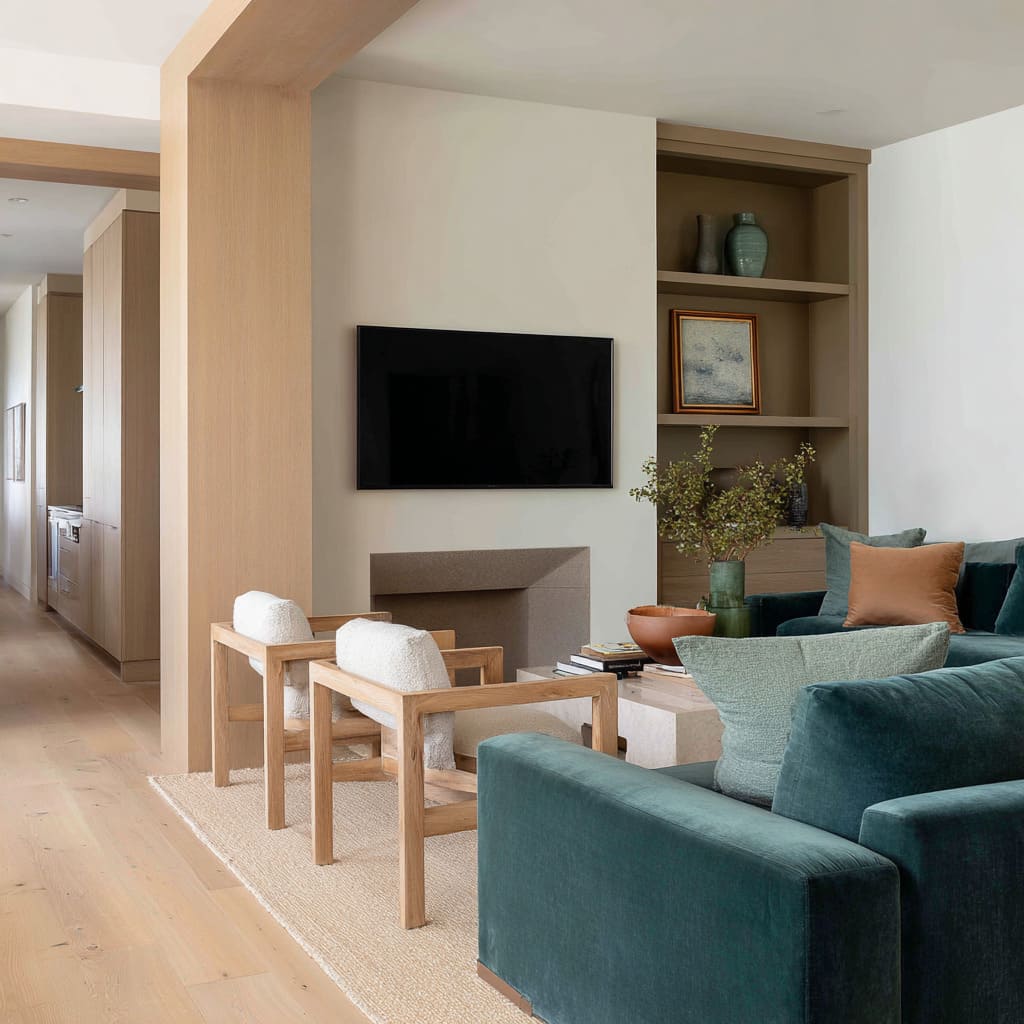
Deep Jewel or Inky Teal
- Highly saturated, dramatic
- Works well with rust terracotta and darker wood grains
- Best supported by stone surfaces or off-white rugs to keep the design bright
- Adds a sense of depth to large furnishings
Aqua and Icy Teal
- Lightest version, sometimes used in barrel chairs or accent pieces
- Works beautifully with strong terracotta walls because it cools them
- Feels crisp and refreshing but never sharp
- Achieves softness through curved forms and velvety or leather finishes
Teal in Ceramics and Glass
This category is important because it changes how teal interacts with light rather than just surface color:
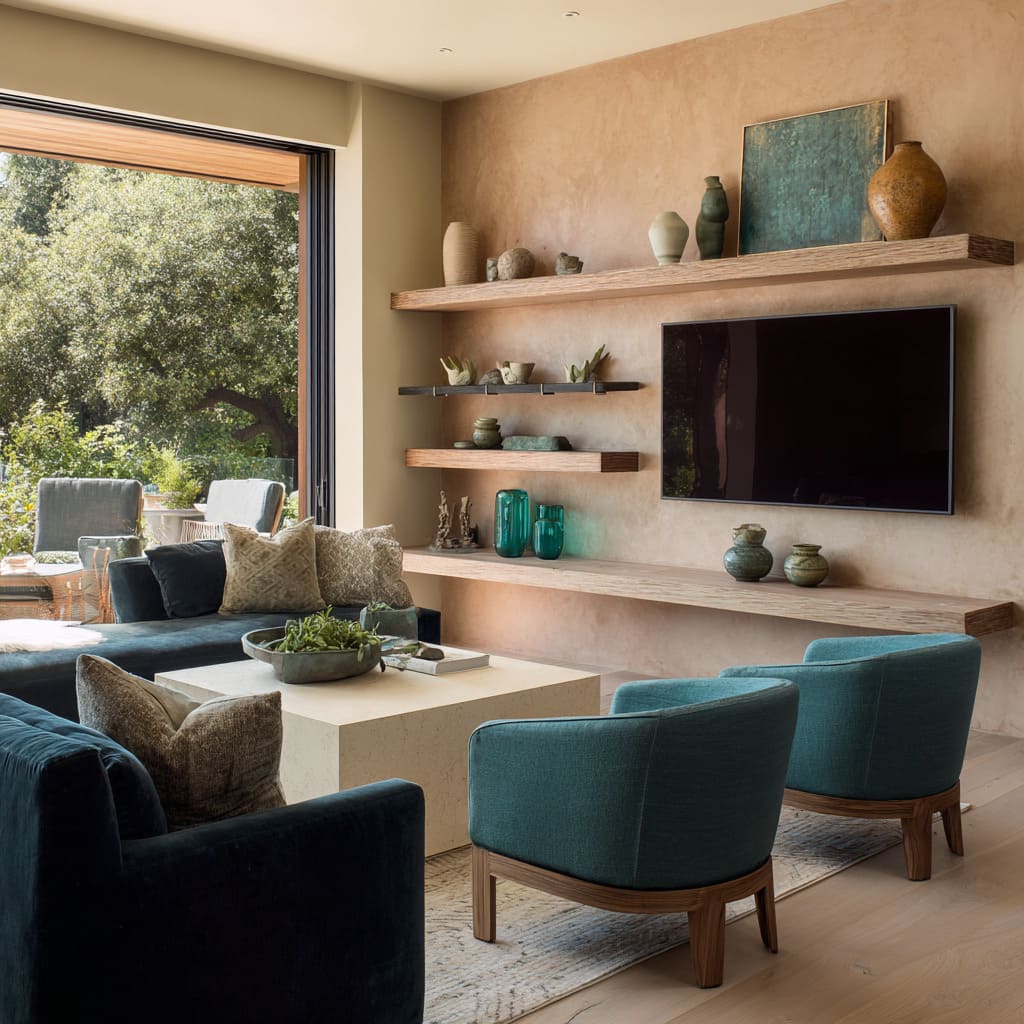
- Teal glass vases glow against terracotta
- Matte ceramics in blue-green provide muted counterparts to velvet upholstery
- Speckled glazes create transitions between bold and subtle parts of the design
These variations allow the same hue to appear in multiple forms while producing different emotional readings.
Vertical and Horizontal Placement: How Height Shapes the Palette
Terracotta and teal can be used at different heights to guide the eye. This vertical logic defines how each color influences the mood of the design.
Terracotta in Vertical Roles
Terracotta often rises vertically:
- On tall chimneys
- On feature TV walls
- On slender architectural columns
- Along split stone facades
These elements stretch upward and give terracotta an almost “sun-washed” presence, as if light has shaped the wall into a warm surface.
Terracotta in Horizontal Forms
At other times, terracotta remains at floor or seat level:
- Hearth ledges
- Low brick bands
- Long media cabinets with clay-toned panels
These ground the design, creating a warm base that anchors pale stone tables, timber furniture, or teal seating.

Teal’s Height Strategy
Teal moves mostly at seat and object level:
- Sofas and sectionals
- Lounge chairs
- Bowls and vases
- Art with teal backgrounds or brushstrokes
Occasionally it climbs upward into plaster walls or tall shelving vases, but usually it behaves like a “cool layer” that rests around human height. This keeps the palette calm, especially in designs with warm architectural elements above.
This height-based interplay is one of the key reasons such designs feel carefully balanced even before any furniture is arranged.

Material Variations That Transform the Mood
The combination of color and material changes how each shade appears. Terracotta behaves differently as plaster, tile, leather, or clay object, while teal shifts with velvet, linen, glass, and ceramics.
Terracotta Material Forms
- Plaster: introduces soft movement, gentle tone drifting, cloud-like patches
- Tile or Brick: small-scale texture, rhythmic joints, subtle shadows
- Leather: warm depth with natural creases and slight shine
- Clay Ceramics: rounded shapes, matte finishes, organic silhouettes
Teal Material Forms
- Velvet: deep color shifts, plush surface, soft sheen
- Linen: washed appearance, slight texture, casual feel
- Glass: glowing translucency, reflective qualities
- Ceramics: tactile matte or semi-gloss, color variations through speckles
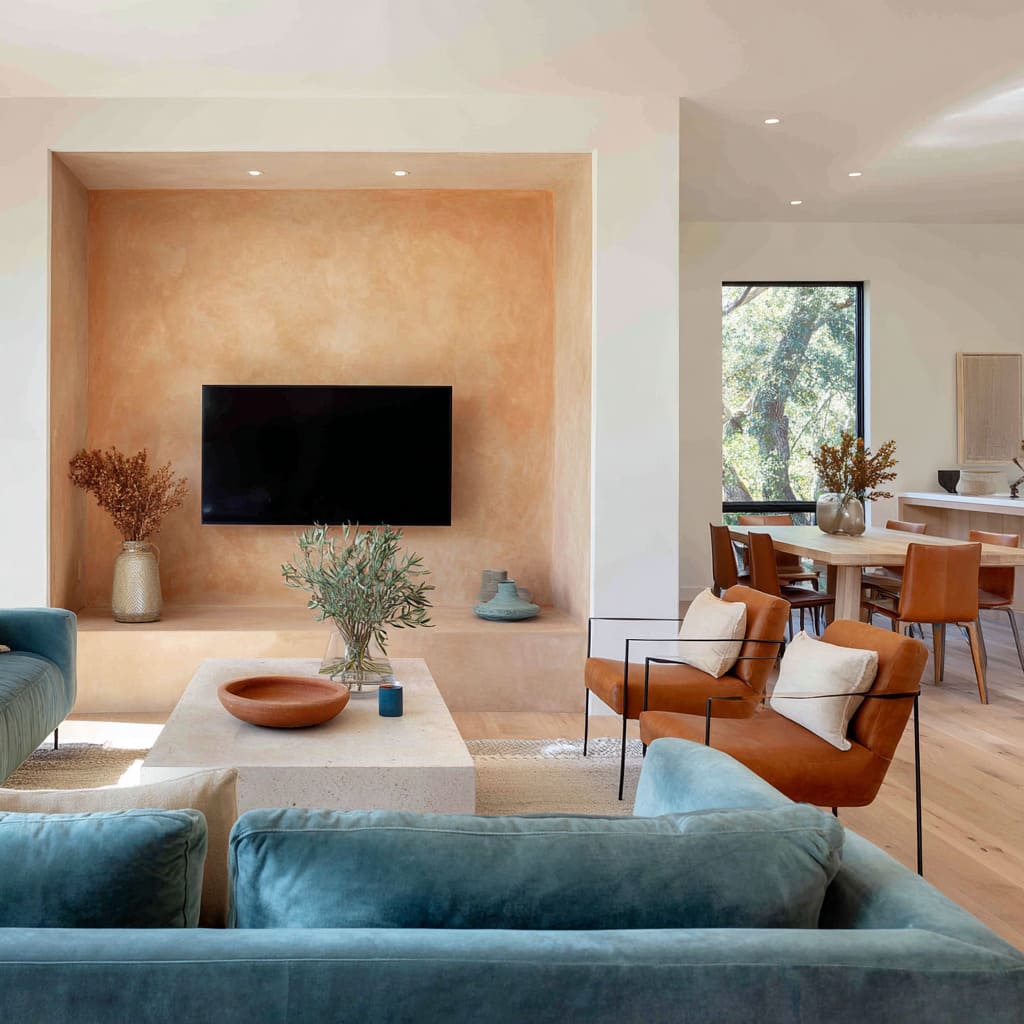
The real subtlety comes from mixing these versions. A terracotta plaster wall paired with teal velvet seating creates softness against depth.
A terracotta leather chair placed beside teal glass objects adds warmth in a tactile way. These combinations produce layered designs with a lived-in feeling without depending on ornamentation.
Bridge Colors That Make the Palette Work
Between teal and terracotta lies a wide spectrum of transitional tones. These middle colors are crucial because they buffer the stronger hues and create visual continuity across the design.
Warm Bridge Tones
- Camel
- Toffee
- Honey wood
- Light tobacco shades
- Straw and dried-grass notes
They soften the step between terracotta and pale neutrals and help warm the space without needing additional bold color.
Cool Bridge Tones
- Sage
- Blue-grey
- Muted olive
- Soft aqua
- Greyed teal
These tones help step down teal softness into stone floors, pale rugs, or creamy walls. Used in cushions, rugs, or decorative objects, they create an interior rhythm where the palette feels gradual rather than abrupt.
Many designs also can use these tones in layered objects, such as:
- Off-white cushions with faint sage threads
- Rugs with rusty or teal hints woven into a neutral field
- Art pieces with faded blue-green washes
This structured layering keeps the design visually calm even when using saturated hues.
Compositional Geometry: Loops, Triangles, and Color Echoes
Often, color placement follows a form of visual geometry that organizes the palette without feeling rigid.
Color Loops
A loop appears when the same shade repeats across the design in different forms:
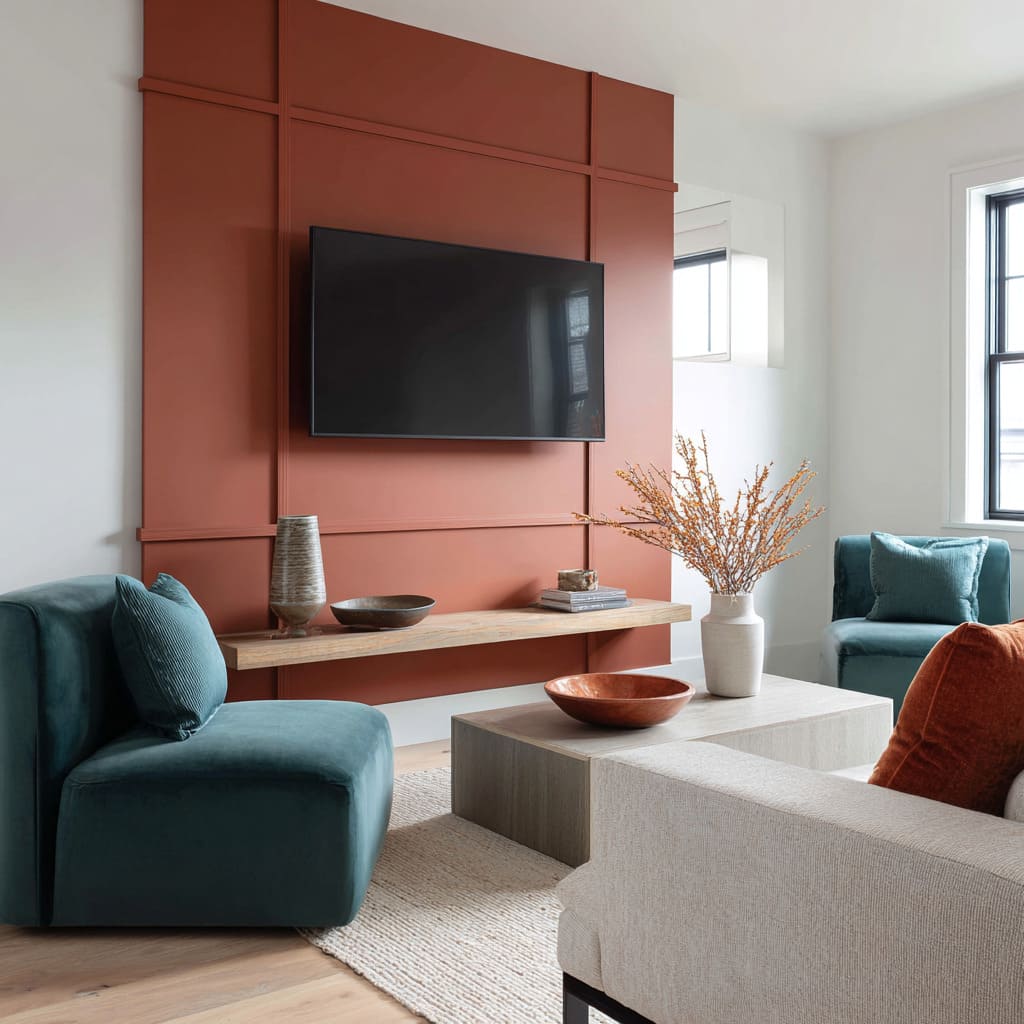
- Terracotta wall → terracotta cushion → terracotta bowl
- Teal sectional → teal vase → teal accent in art
Each repetition forms a circuit that guides the eye calmly around the space.

Color Triangles
Triangles form when three separate elements of a similar color sit at different points:
- Two teal chairs + one teal cushion
- A terracotta cabinet + terracotta vase + terracotta pillow
These arrangements stabilize the composition, even when the colors are contrasting.
Echoes and Miniatures
Larger gestures often produce smaller counterparts:
- A giant terracotta chimney paired with a tiny clay pot
- A deep teal sectional with muted teal ceramics
- A rich paprika wall with a simple rust-toned book on a shelf
These echoes reinforce the palette while ensuring visual softness.
Light Interaction and the Changing Behavior of Both Colors
Another idea is how sunlight transforms terracotta and teal throughout the day.
Terracotta Under Light
- Plaster surfaces create soft patches and tonal drifting
- Double-height walls capture sunlight in ways that mimic warm stone cliffs
- Small tiles reflect tiny highlights and deepen shadow lines
Teal Under Light
- Velvet shifts shade dramatically between highlights and shadows
- Glass objects glow in sun and darken when light moves behind them
- Teal plaster walls blend the TV screen into their surface instead of creating stark contrast
This relationship with daylight makes the palette dynamic without adding visual clutter.
Connection Between Interior Palette and Exterior Surroundings
The outdoor landscape often mirrors or influences the interior tones in these concepts.
Warm Exterior Elements
- Rusty or golden foliage
- Sunset reflections
- Clay-toned soil or stone
These echo terracotta interiors naturally.
Cool Exterior Elements
- Shaded tree canopies
- Water features
- Overcast sky reflections
These match teal tones and give the design continuity with the outdoors.
The designs often can be based on the same timber tones, stone hues, or greenery as the outdoor area, creating a subtle blending that makes the colors feel contextual rather than forced.
Multiple Interior Strategies for Teal and Terracotta Pairings
There are several overarching approaches.
A. Pale Architectural Envelope with Teal as the Centerpiece
Terracotta remains subtle in small objects or cushions, while teal dominates in the main sofa or chairs.
B. Terracotta Feature Walls Paired with Teal Seating
Clay-toned plaster walls or stone surfaces act as the warm vertical structure, with teal bringing a cool, plush counterweight.
C. Teal Walls with Terracotta Leather Seating
Teal forms a hazy, atmospheric backdrop, while terracotta enters through tactile forms like armchairs, bowls, or vases.
D. Split or Gradient Walls
Terracotta and pale stone or neutral halves meet side by side, with teal then layered across seating and accessories.
E. Teal-Dominant Interiors with Terracotta Details
Multiple teal fabrics in different textures define the design, with terracotta appearing in art, small ceramics, or low-level seating.
These strategies show how flexible the pairing can be, shifting from subtle to bold based on placement, texture, and light.
Closing Note
The interplay between teal and terracotta becomes especially rich when their many shade families, textures, and spatial roles are considered together. The interiors discussed earlier reveal a palette shaped not just by color but also by vertical placement, material behavior, daylight influence, and small-scale object relationships.
When these elements operate together, the result is a color story that feels atmospheric, layered, and deeply visual without relying on technical explanations or predictable contrasts.
Related Posts
Harmony Home Design brings 10+ years of residential interior design experience to the ideas shared here. We publish design concepts, layout thinking, and practical styling notes.