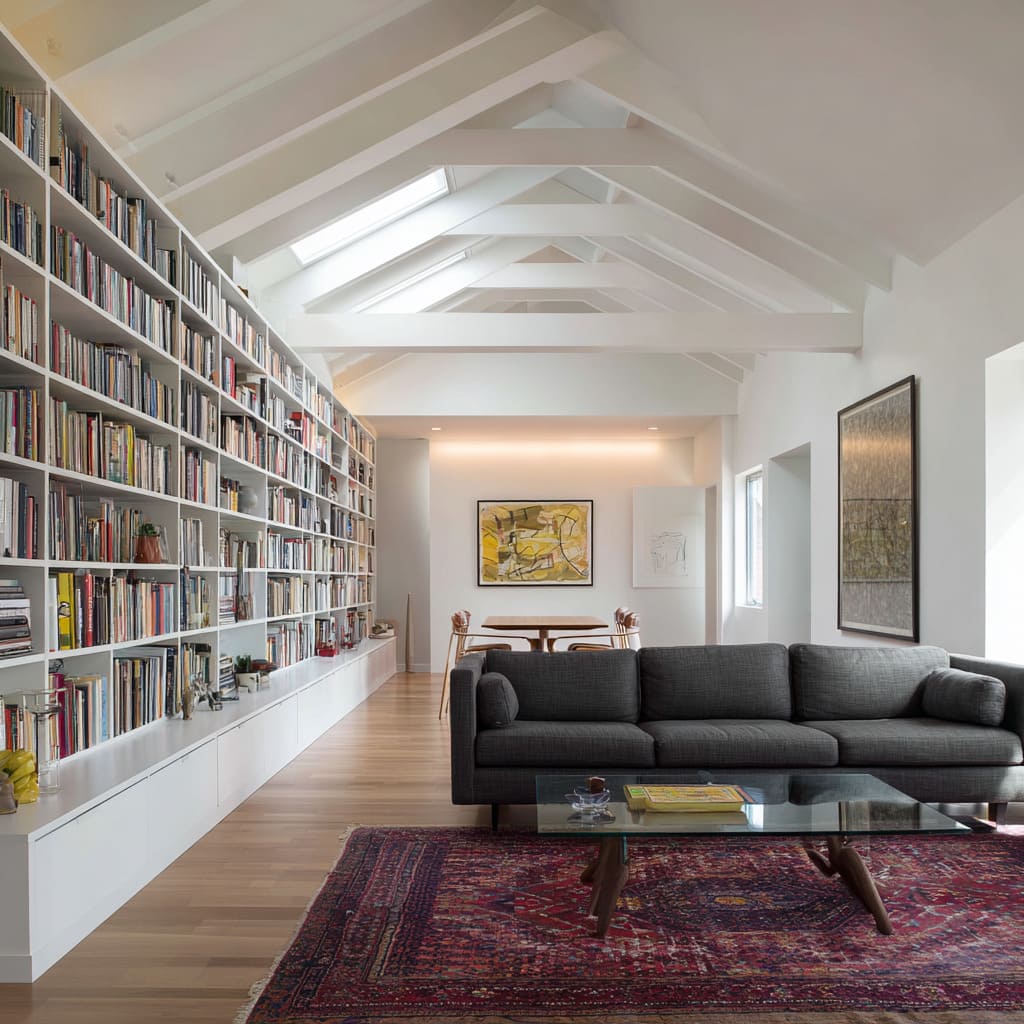
People looking for black sofa living room ideas often find they look simple on the surface, but the underlying question is usually the same: how can the darkest object in the room feel intentional, comfortable, and finished without making the space seem smaller, colder, or overly graphic? In many designs, black seating is less of a color choice and more of a compositional tool that controls weight, rhythm, and the emotional tone.
Important design questions
Most living room designs that feature black seating are solving one of three visual goals:
- Stability: giving a bright or large space a grounded base so it stops feeling empty.
- Identity: setting the mood quickly (library-like, gallery-clean, warm transitional, modern architectural).
- Connection: tying mixed finishes into one story so the room feels planned rather than collected by chance.
The reason black works so well is that it forces clarity: it makes the design declare where the visual weight sits, what stays quiet, and where detail is allowed to concentrate.
Quick-look combo snapshots
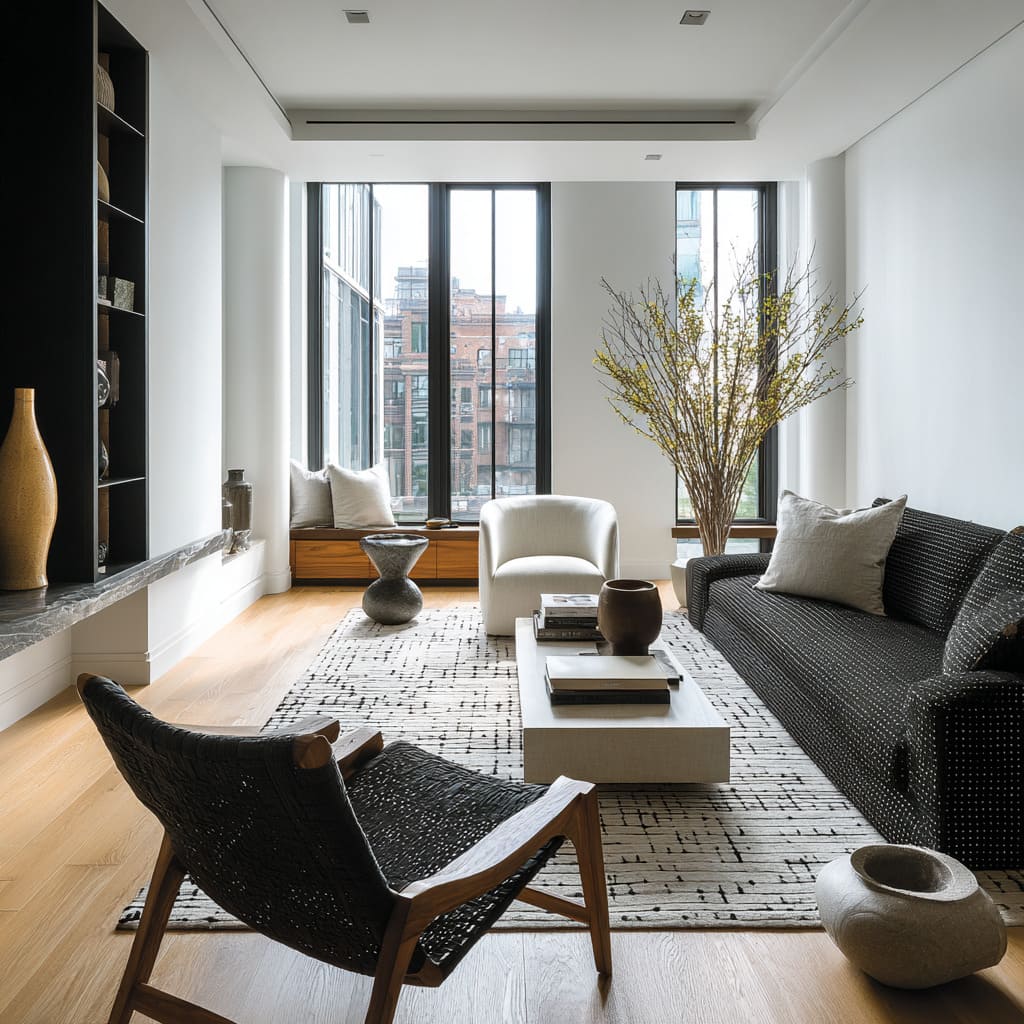
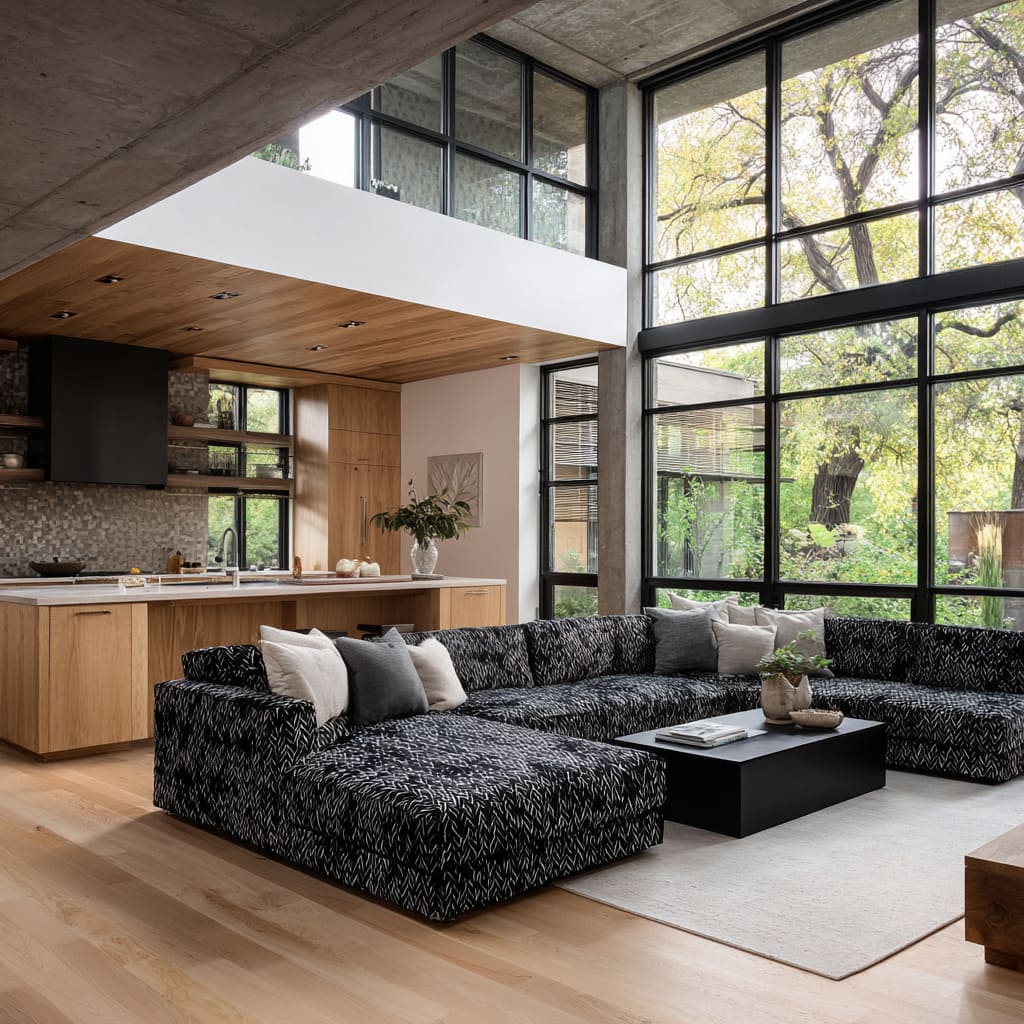
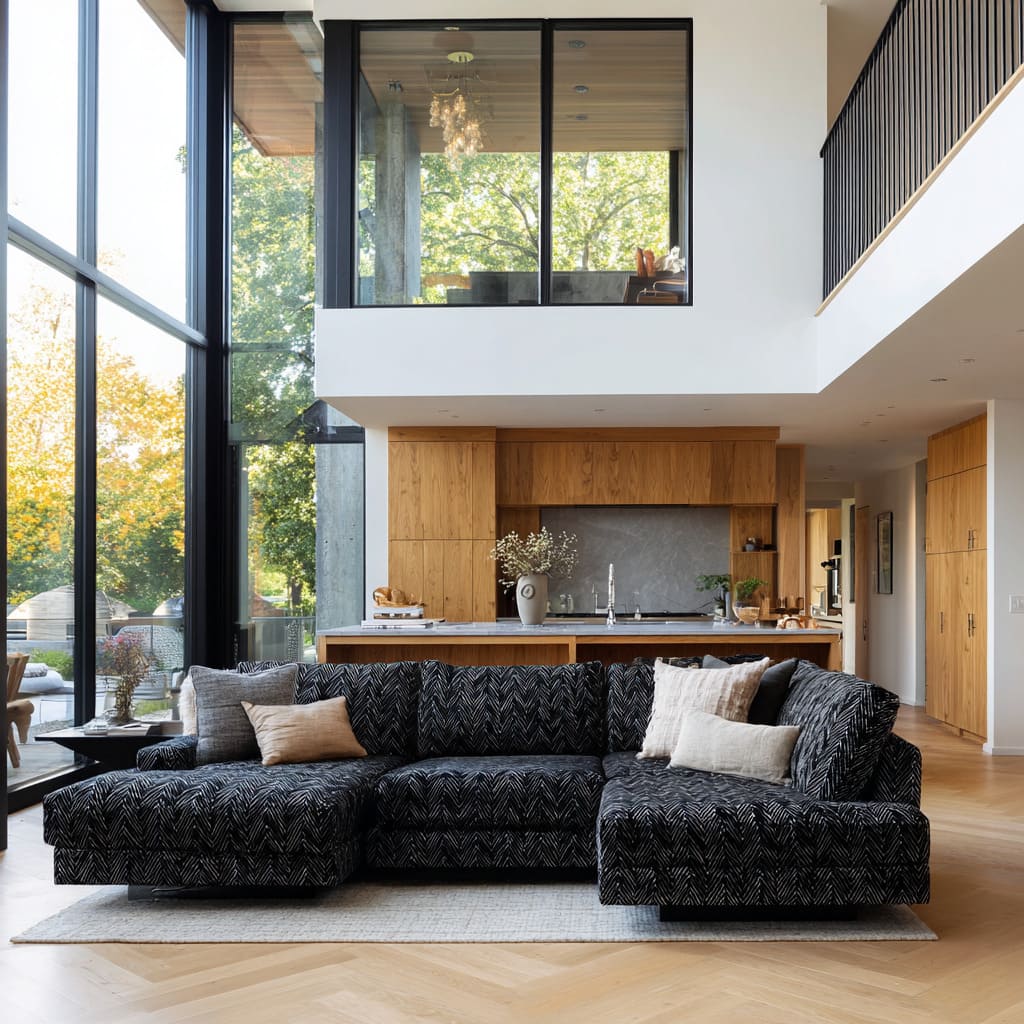
- Airy glass-wall modern: patterned black woven sofa + off-white/greige pillows + pale quiet rug + light oak floors + thin black window frames.
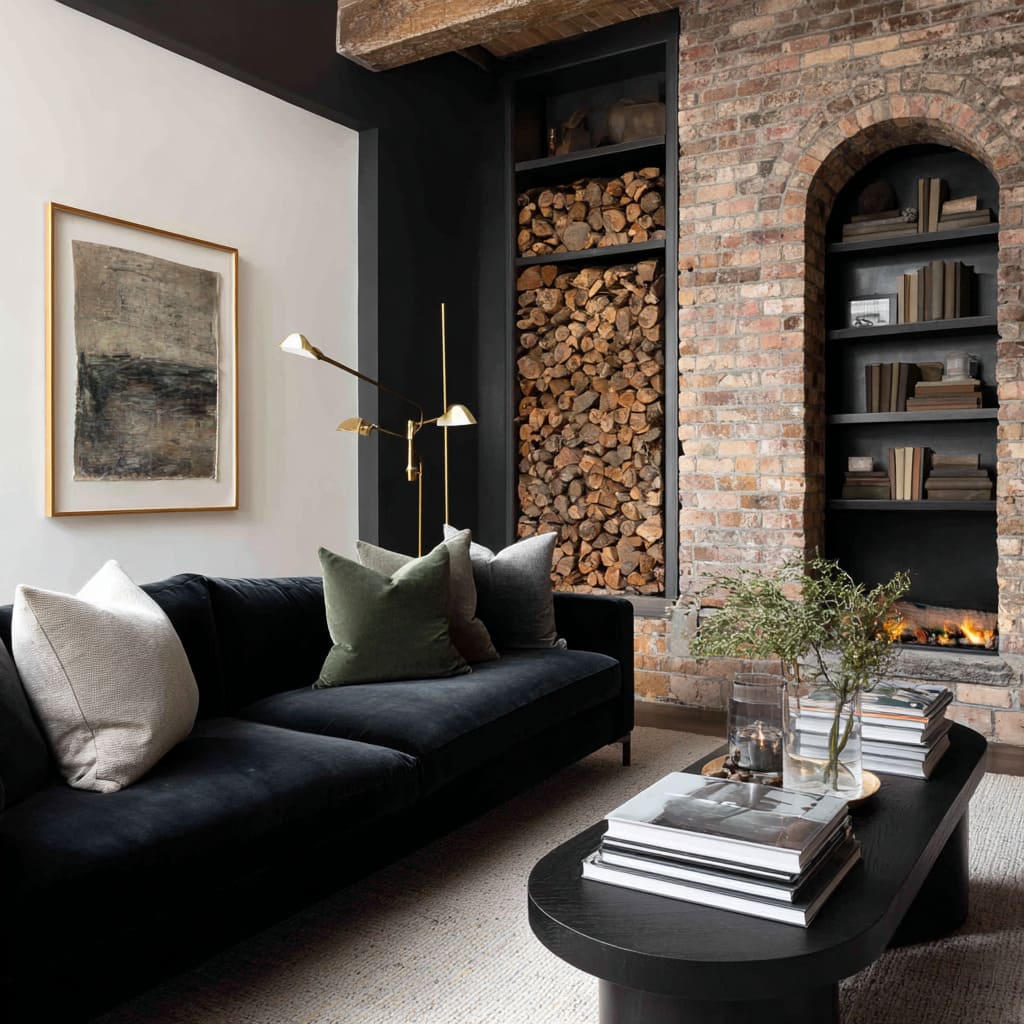
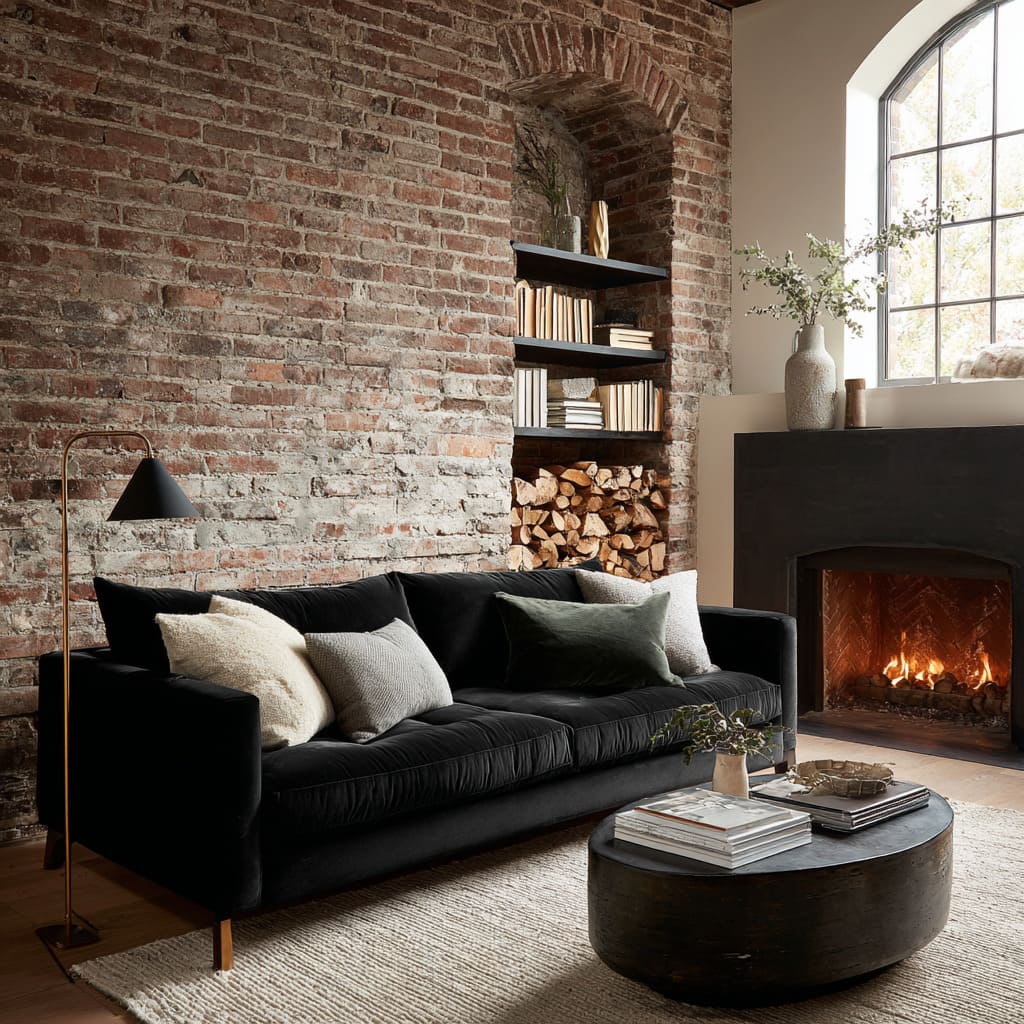
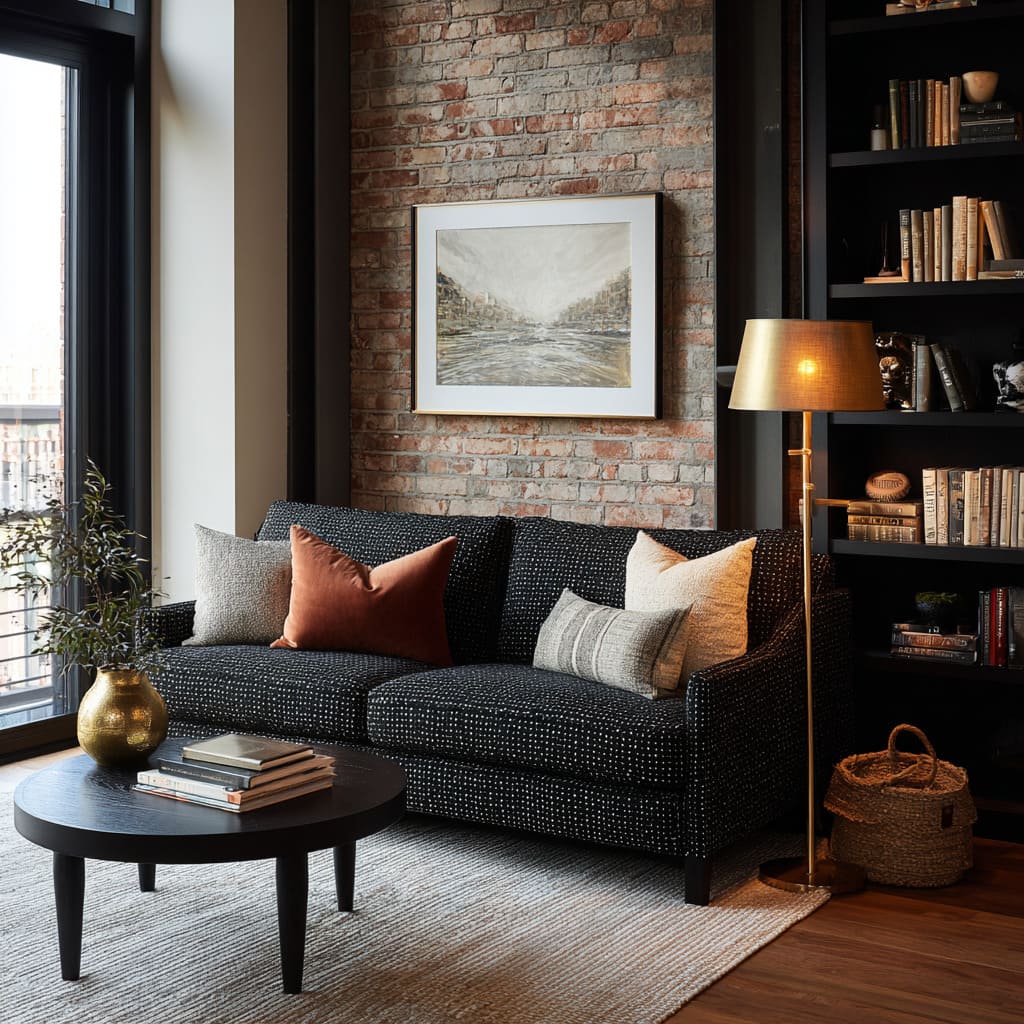
- Warm library mood: black textured sofa + brick wall + light neutral rug + round black table + one rust/caramel pillow + brass lamp glow.
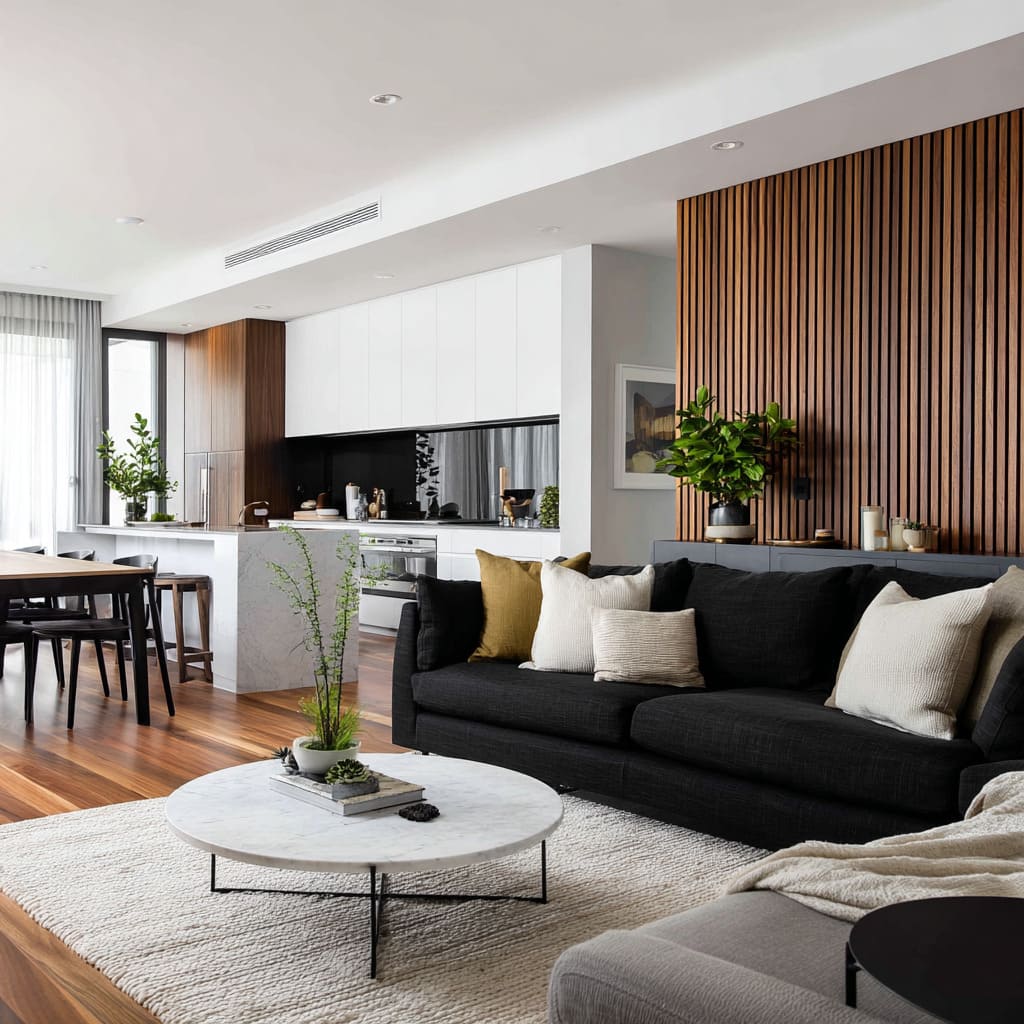
- Clean open-plan stripe: solid black sofa + warm wood slat wall + white kitchen run + long black backsplash band + round marble-top table with thin black legs + small green plants.
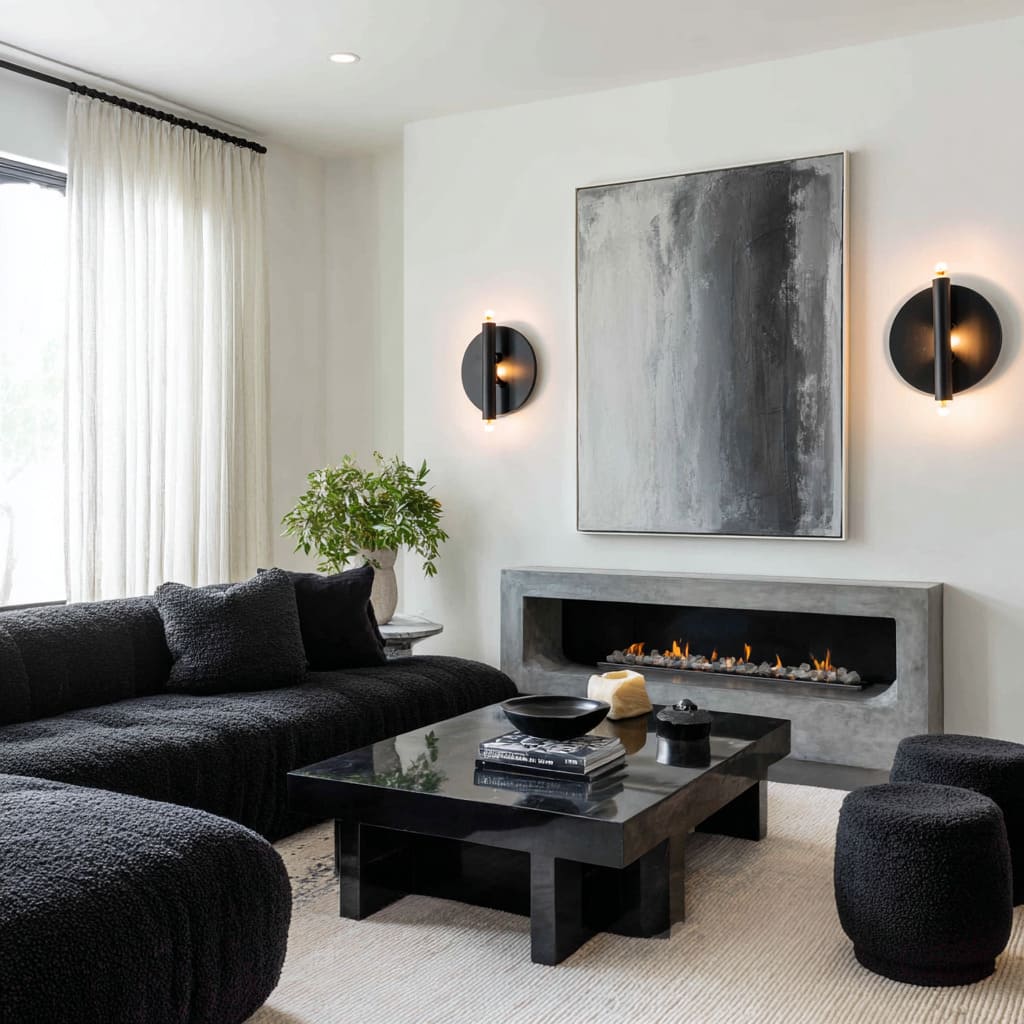
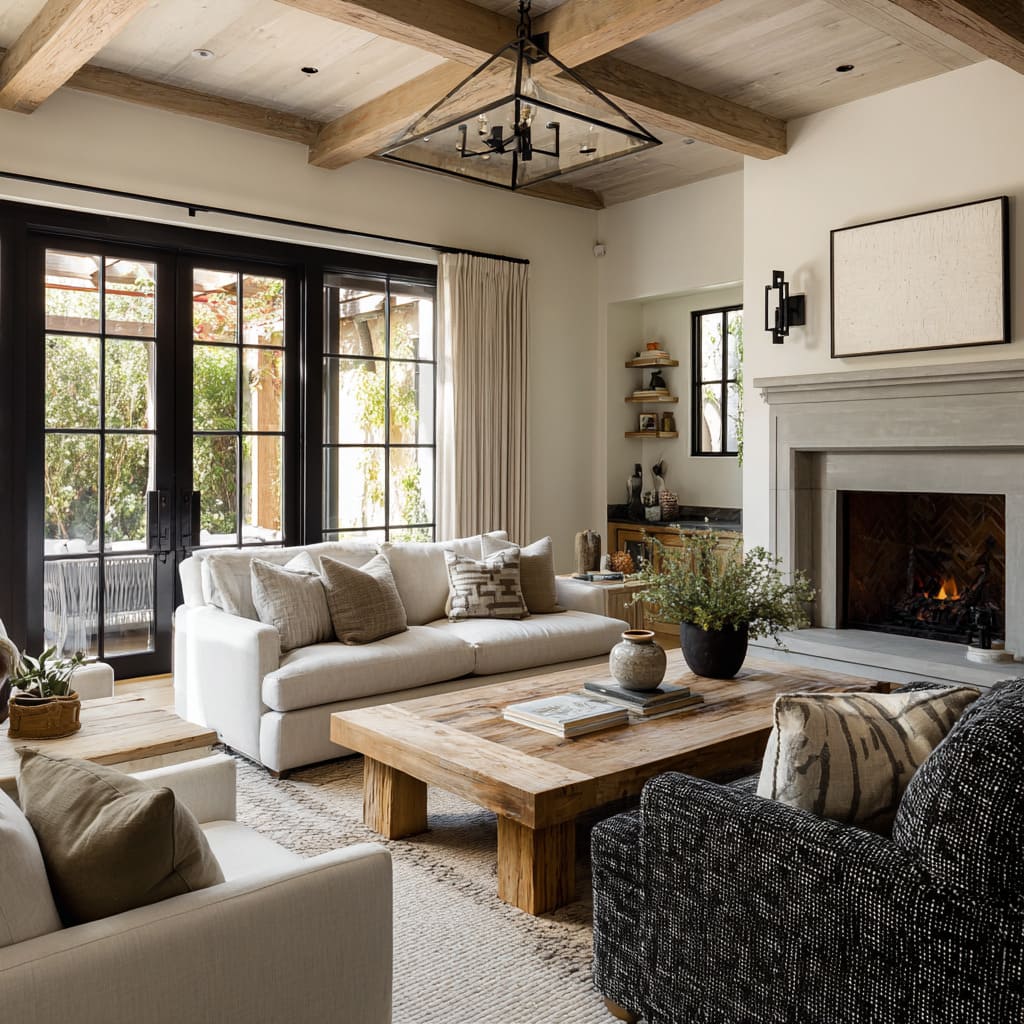
- Soft monochrome calm: nubby black seating + concrete-gray fireplace surround + soft white rug + sheer curtains + amber sconces/firelight.
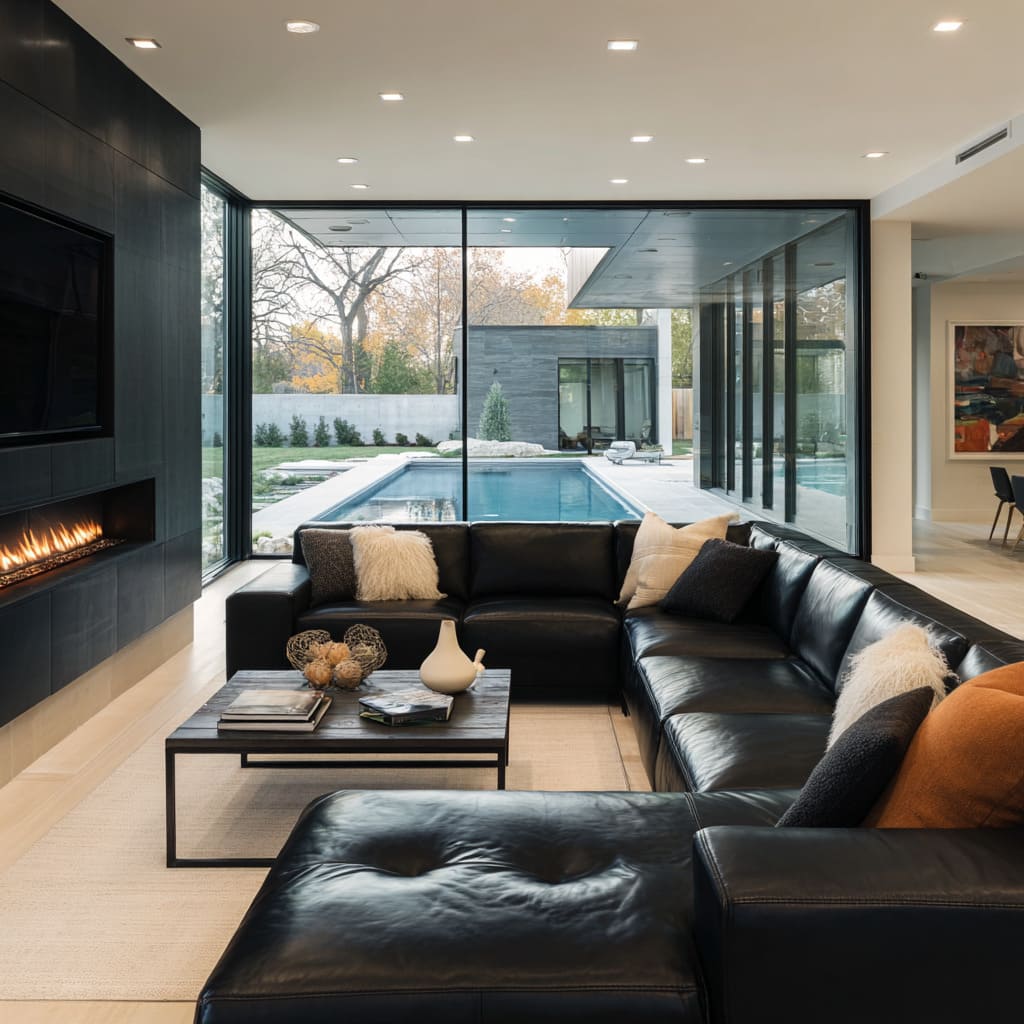
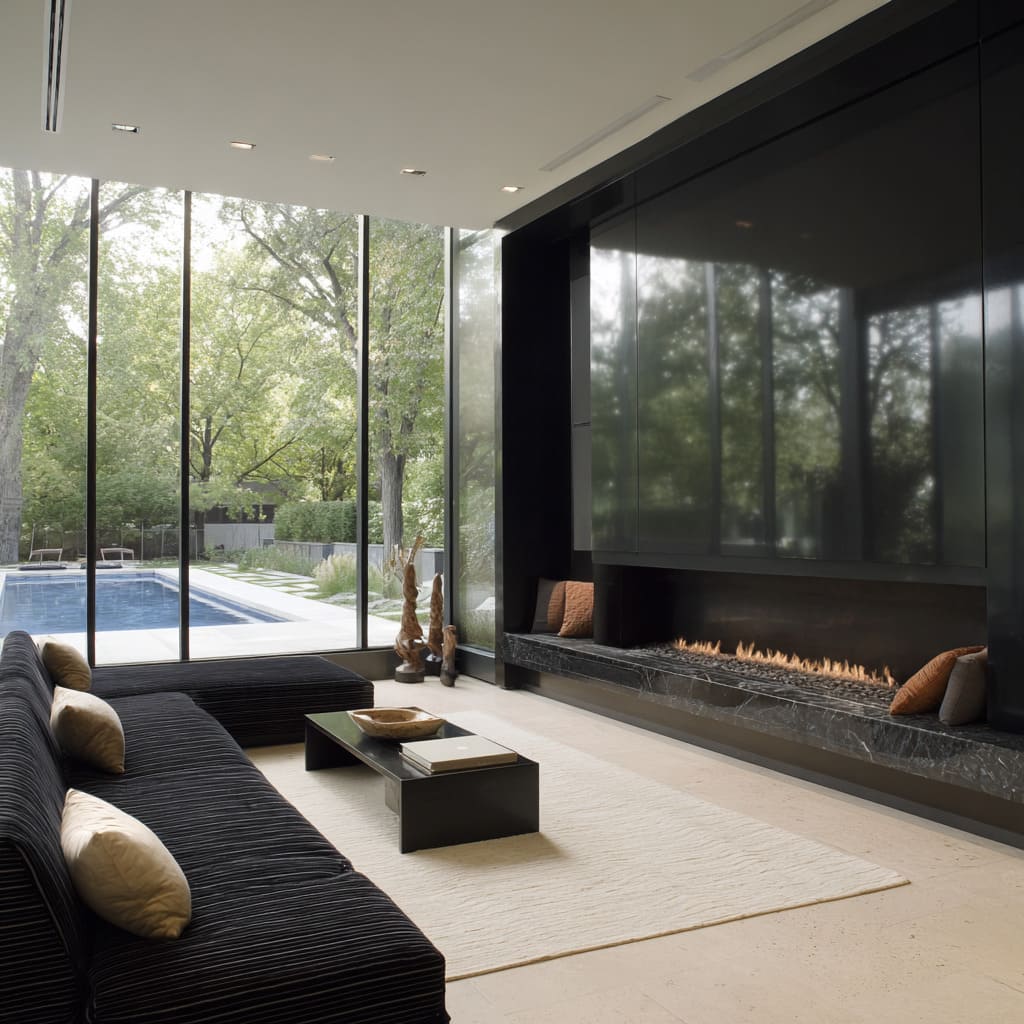
- View-first luxury: black leather sectional + large pale rug over light stone floor + low black table + minimal sculptural decor + tiny warm accents while greenery/blue water supply color.
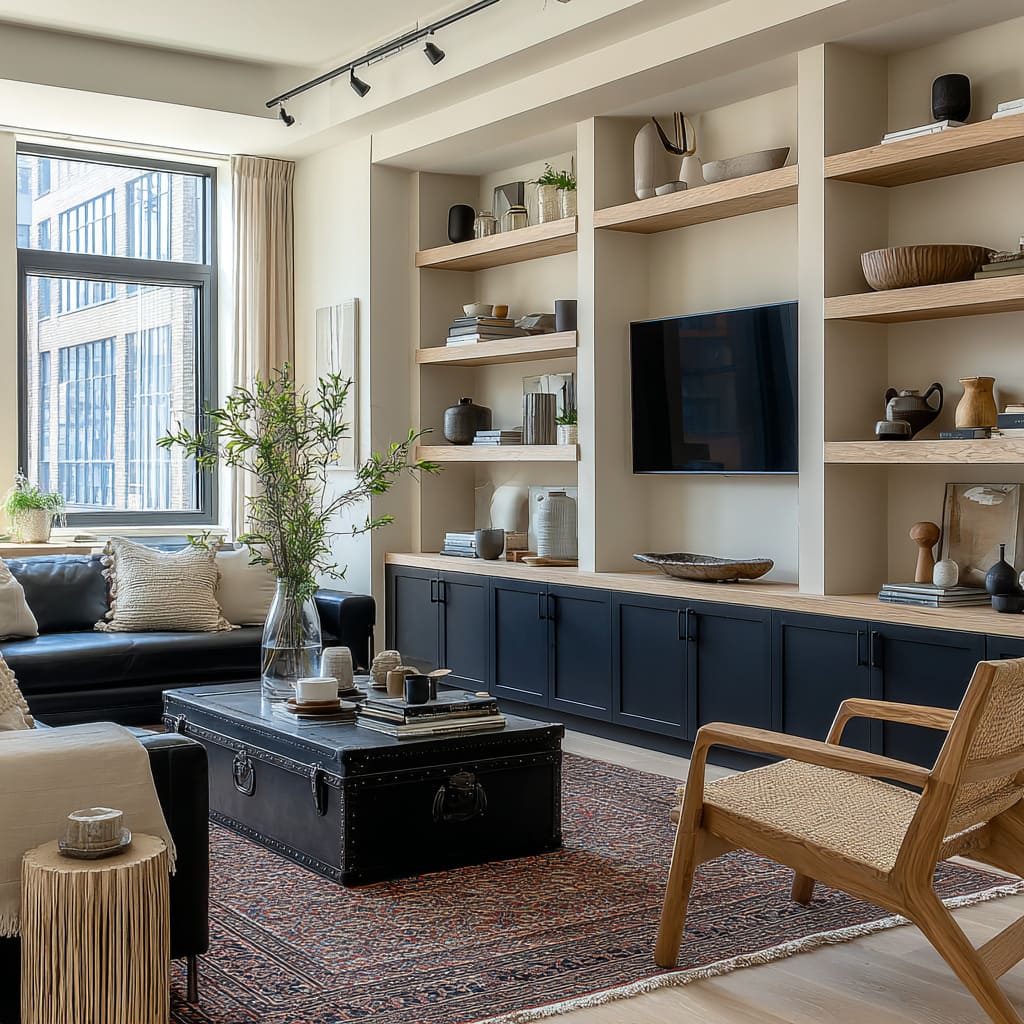
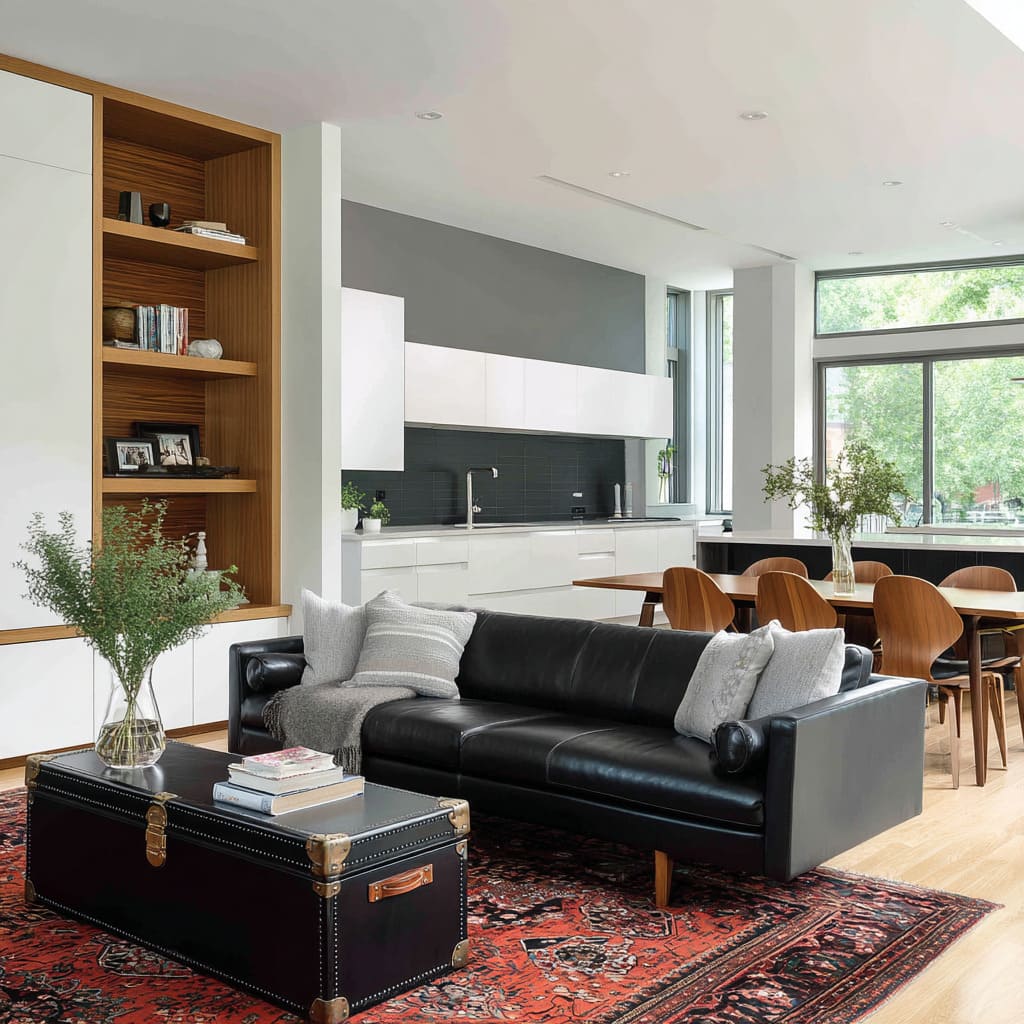
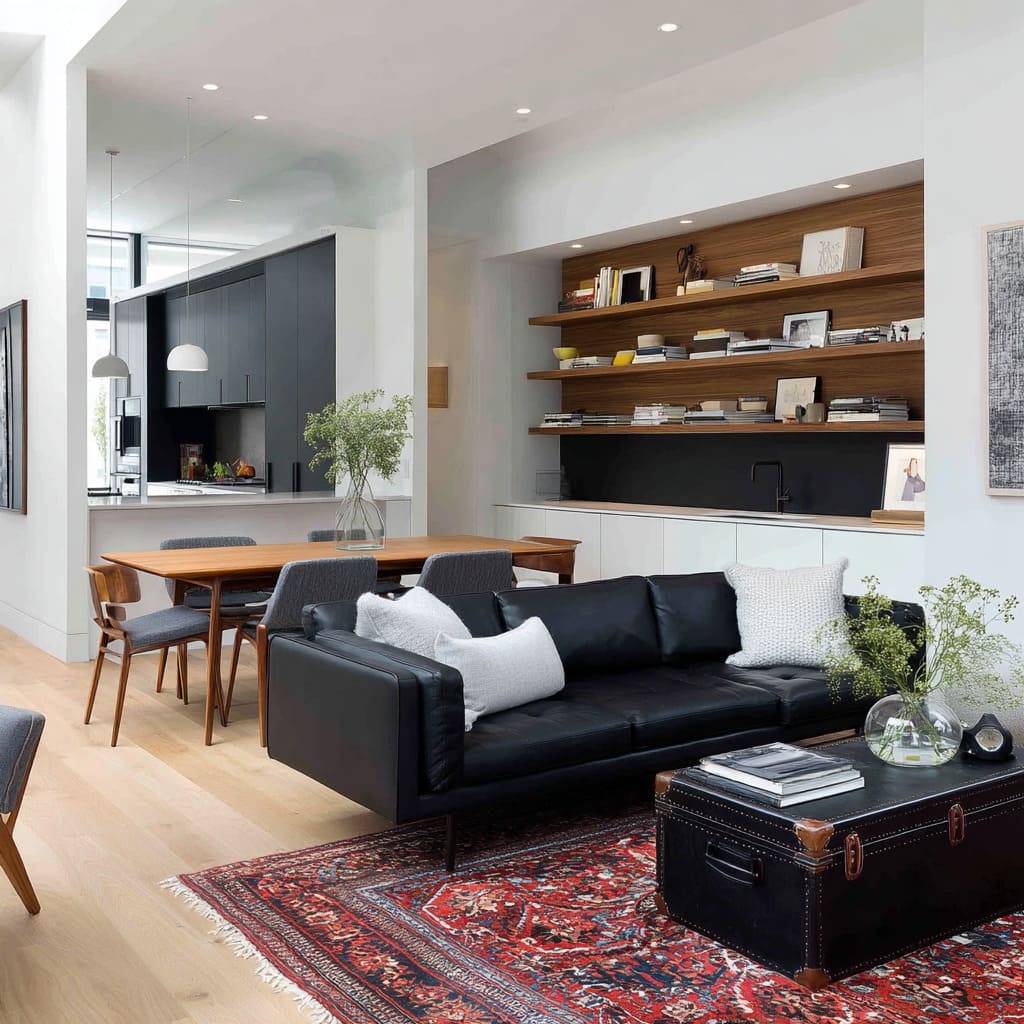
- Collected modern warmth: black sofa + warm oak shelving + muted red vintage-style rug + black trunk coffee table with metal hardware + airy branches/greenery for lift.
Eight roles black seating can play (and the specific look each role creates)
Role A — The weight that warms up bright architecture
In very airy designs with lots of daylight and pale surfaces, black seating often functions like a visual ballast. The main effect is psychological: the design stops reading like a bright shell and starts reading like a composed interior.
This role is strongest when the seating silhouette stays low and wide, forming a calm horizontal base under taller architectural lines.
Role B — The underline that sets the reading order of the room
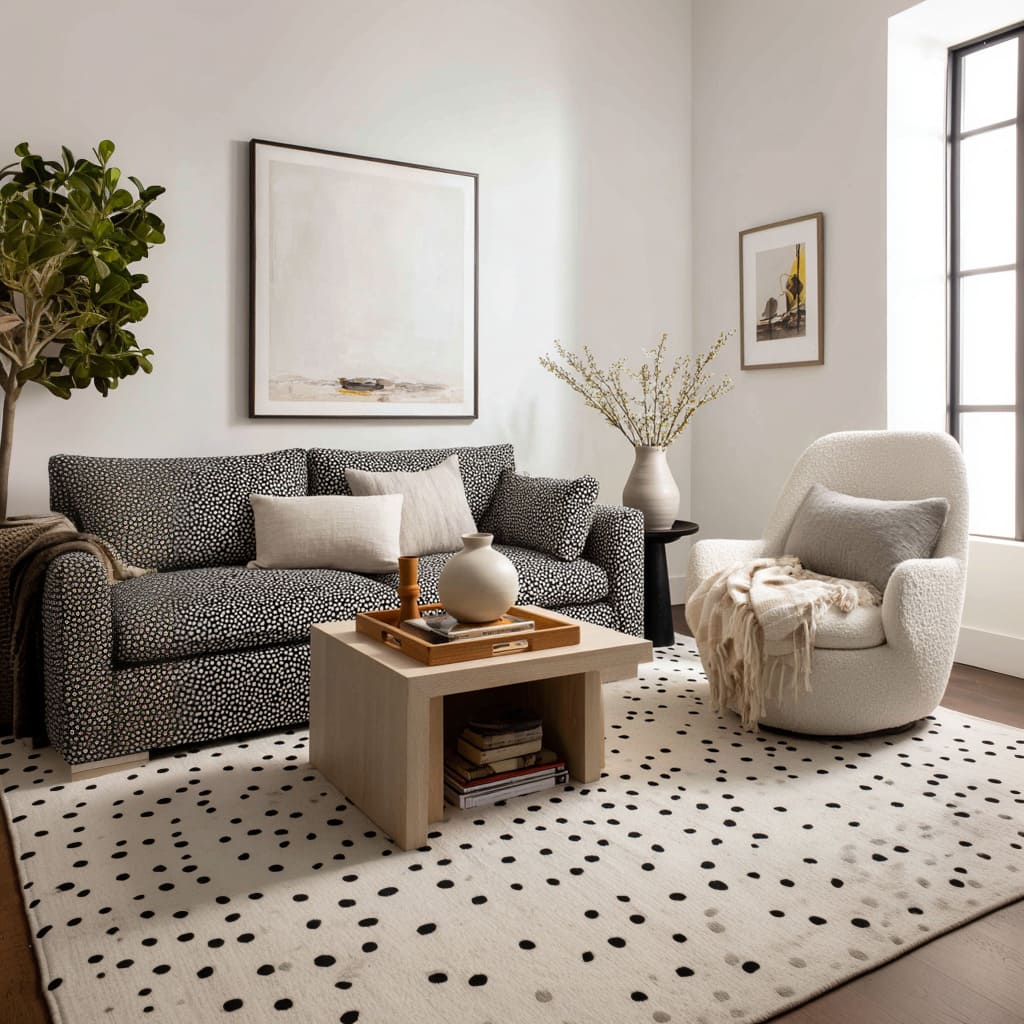
Black seating can quietly determine how the design is read. The eye tends to land on the darkest continuous element first, then move to warmer mid-tones (wood, stone), and finally lift to height and light.
This creates a controlled sequence that makes minimal designs feel curated even with restrained decor.
Role C — The soft counterpart to architectural black
A common high-end effect appears when black exists in more than one behavior: thin linear black in frames or railings, flat black in built-ins, and soft black in upholstery. The upholstery becomes the comfortable version of the architecture’s outlines, which makes the black feel integrated rather than inserted.
Role D — Patterned black as scale camouflage
Patterned black upholstery (micro-speckles, woven textures, subtle zigzags) changes what the eye reads first. Instead of perceiving one large dark mass, the viewer perceives rhythm and surface depth, and only later registers scale.
The room stays airy even when the seating is generous, because texture slows down the perception of heaviness.
Role E — The calm counterpoint to gritty or busy texture
In designs with brick, books, layered shelving, or visible grain and handmade surfaces, black seating often becomes a quiet base note. The key effect is editorial restraint: the sofa looks controlled and tailored, which lets the rougher textures feel richer rather than chaotic.
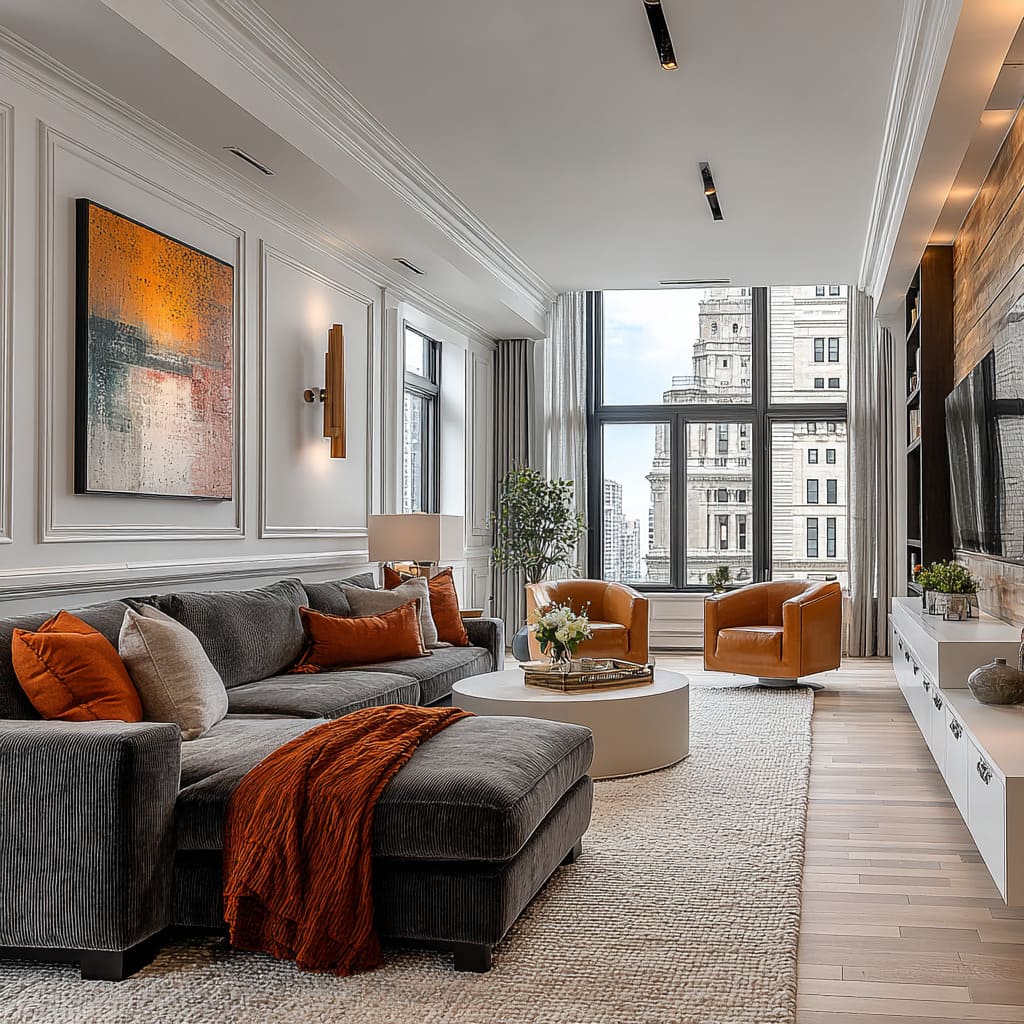
Role F — The pause between visually active zones
In open plans, the design often contains multiple active fields: linear cabinetry, slatted walls, glossy bands, repeated grids. A solid dark seating form can act as visual silence between these fields.
The look becomes calmer without removing character, because one continuous shape reduces information in the middle of the composition.
Role G — The zoning tool that turns open space into a room
Black seating frequently defines territory. A long, low dark form paired with a large rug creates a clear floor-stage, and a second horizontal element (a console, fireplace wall, backsplash band) often balances it.
This is why open plans can look coherent with fewer pieces: zoning happens through long lines and controlled weight distribution.
Role H — The cinematic foreground that intensifies the view
In designs with large glazing or strong outdoor greenery/blue water, black seating can act like a frame. It deepens the foreground so the exterior reads more vivid, and reflective dark surfaces can double that effect by softly mirroring outdoor color.
The interior stays restrained while still feeling lush.
Five control knobs that repeatedly create an expensive, intentional read
1) Texture scale choreography
A consistent strategy is alternating busy and calm surfaces: textured upholstery next to calmer rugs, patterned textiles next to smooth walls, and then a quiet object plane (a simple table top) to reset the eye. This prevents visual fatigue and makes black feel easier to live with.
2) Mid-tone buffers that soften high contrast
Many refined designs avoid a harsh jump between black and warm wood by inserting mid-tones: stone, soft gray, warm putty neutrals, or a muted mineral band. These buffers give black context, so it reads as designed contrast rather than sharp opposition.
3) Curves as tension relief
Round tables, soft-edged decor, and curved silhouettes often appear near black seating in designs dominated by rectangles and grids. The effect is emotional, not decorative: curves reduce severity, making a black-centered palette feel calmer and more welcoming.
4) The top-edge lightening gradient
Light pillows, throws, and pale textiles placed near the upper edge of black seating create a gentle light-to-dark fade. This changes the sofa’s presence from dark block to layered comfort, and it makes the seating read softer at first glance.
5) Multiple types of black, not one black
The strongest compositions treat black as a set of different notes: textile black (soft), architectural black (flat), and object black (small crisp accents like hardware or table legs). This variety prevents repetition from feeling heavy and makes the palette feel intentionally layered.
The core takeaway
Black seating tends to look expensive not because it is dramatic, but because it demands discipline. It pushes the design toward clear weight placement, controlled texture rhythm, and deliberate repetition.
When the surrounding surfaces stay calm and the supporting elements behave with restraint—through mid-tones, curve relief, and layered blacks—the result reads intentional, complete, and visually quiet even in rooms with strong contrast.
Related Posts

Harmony Home Design brings 10+ years of residential interior design experience to the ideas shared here. We publish design concepts, layout thinking, and practical styling notes.