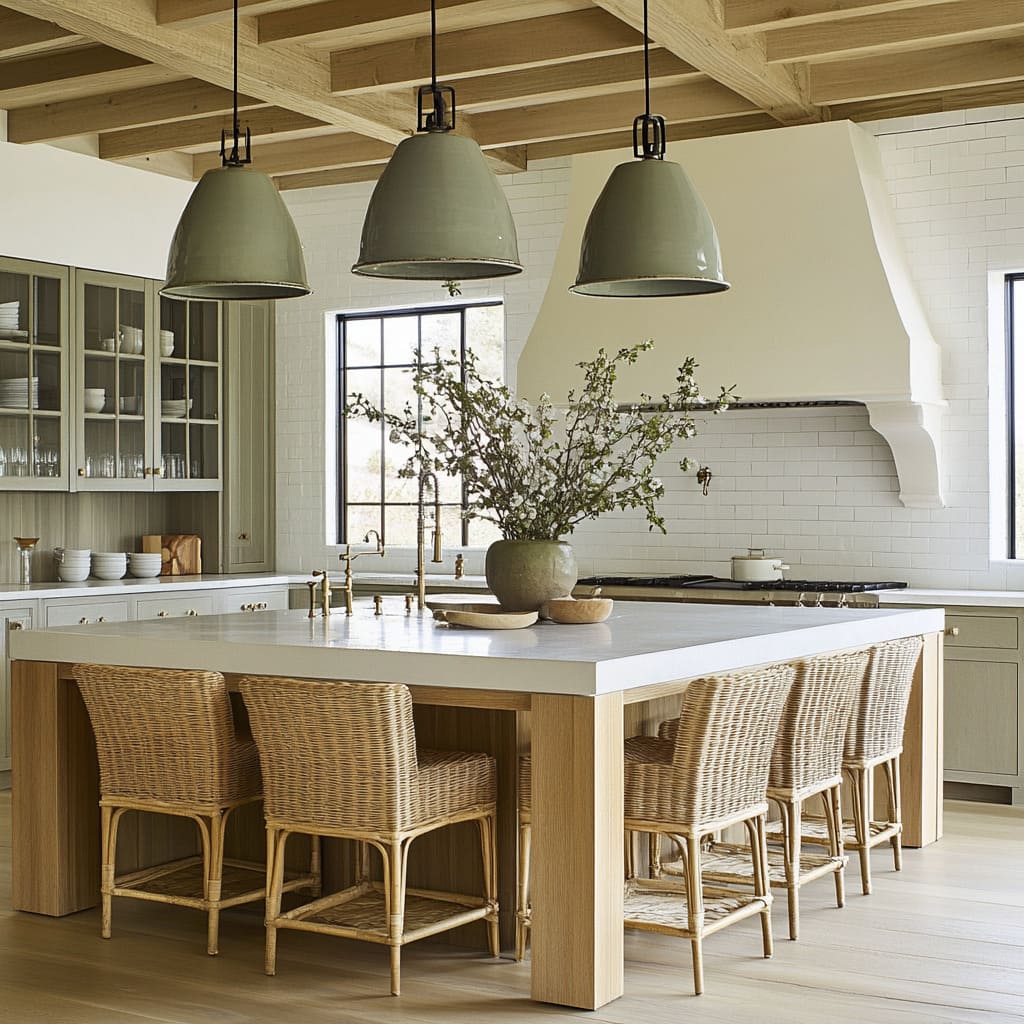
Modern farmhouse kitchens feel current when a few big anchors do the work: a clear cooking-wall feature, a grounded island, tight finish families, and texture kept to select zones for a clean, intentional look.
Dining
Modern Dining Room: How to Achieve a Luxurious Modern Look with Minimal Effort
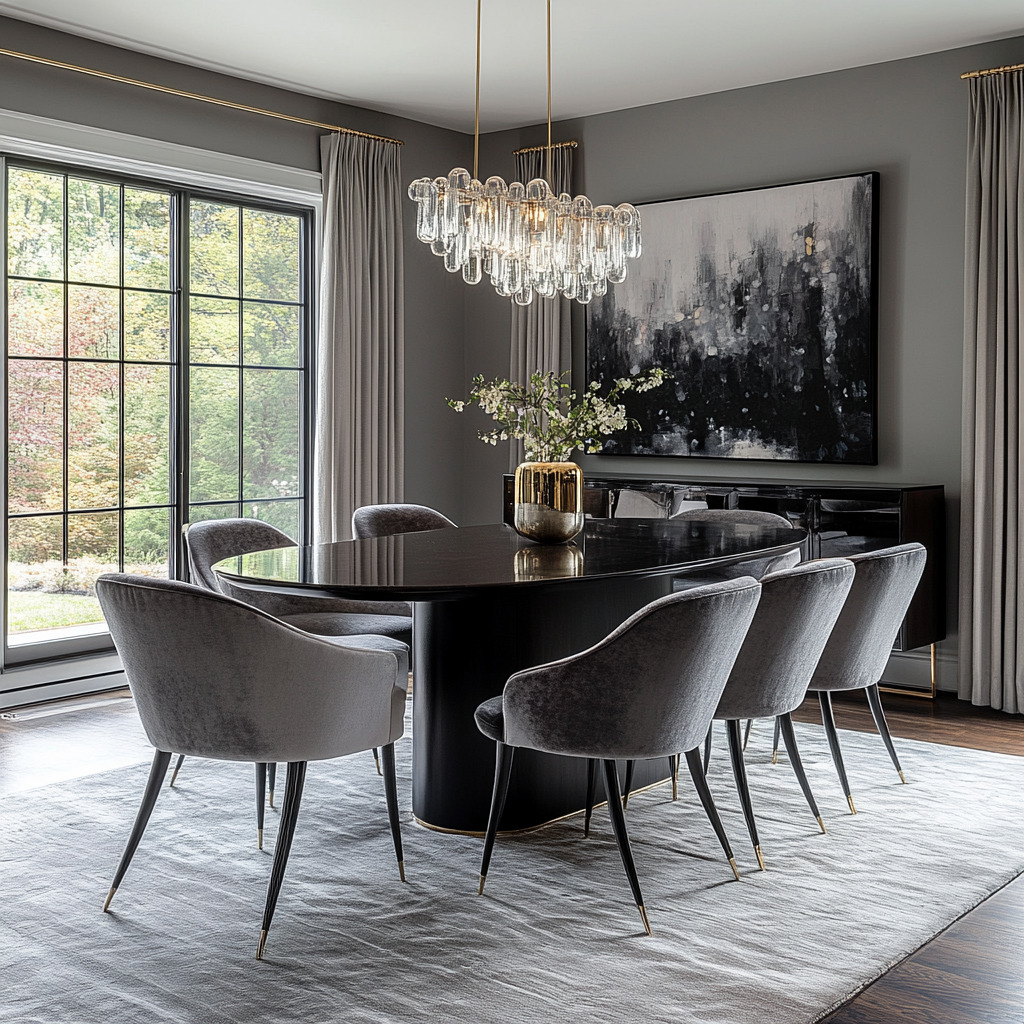
A luxurious modern dining room can look complete with very few pieces when structure does the work: one clear centerline, a pedestal table base, controlled shine balanced by one soft rug, and one oversized artwork over a long credenza.
Living rooms
Modern TV + Linear Fireplace Wall Ideas for Small Spaces
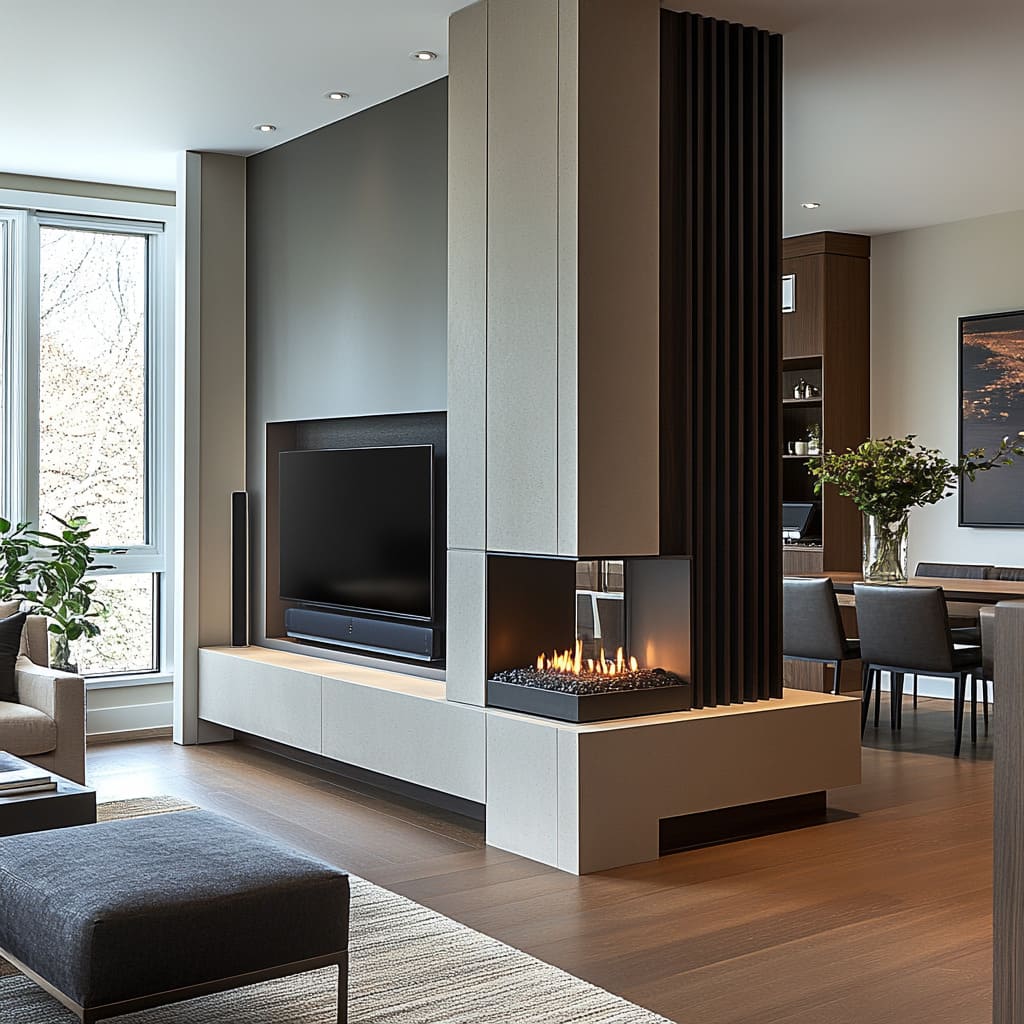
A compact room can handle a TV and linear fireplace on one wall by treating them as one composition: a calm main surface, thin dark cutouts, and a long floating bench that adds depth and hidden storage.
Hallways
Modern Hallway Design Ideas: Wall Panels, Floating Consoles, Mirrors, and Window-Seat Nooks
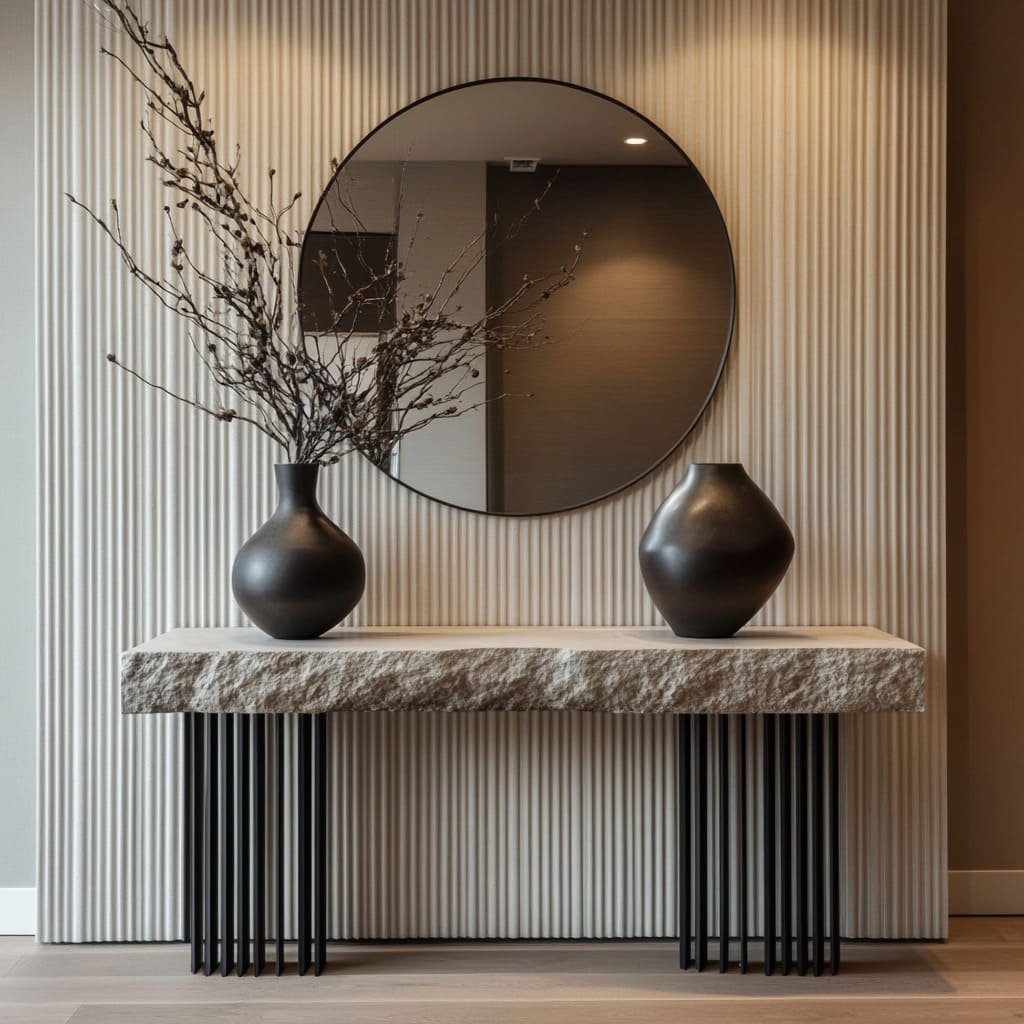
A modern hallway feels planned when one textured wall carries the length, a round or oval mirror breaks the vertical rhythm, and a slim console stays floor-clear, lit to show soft shadows.
Living rooms
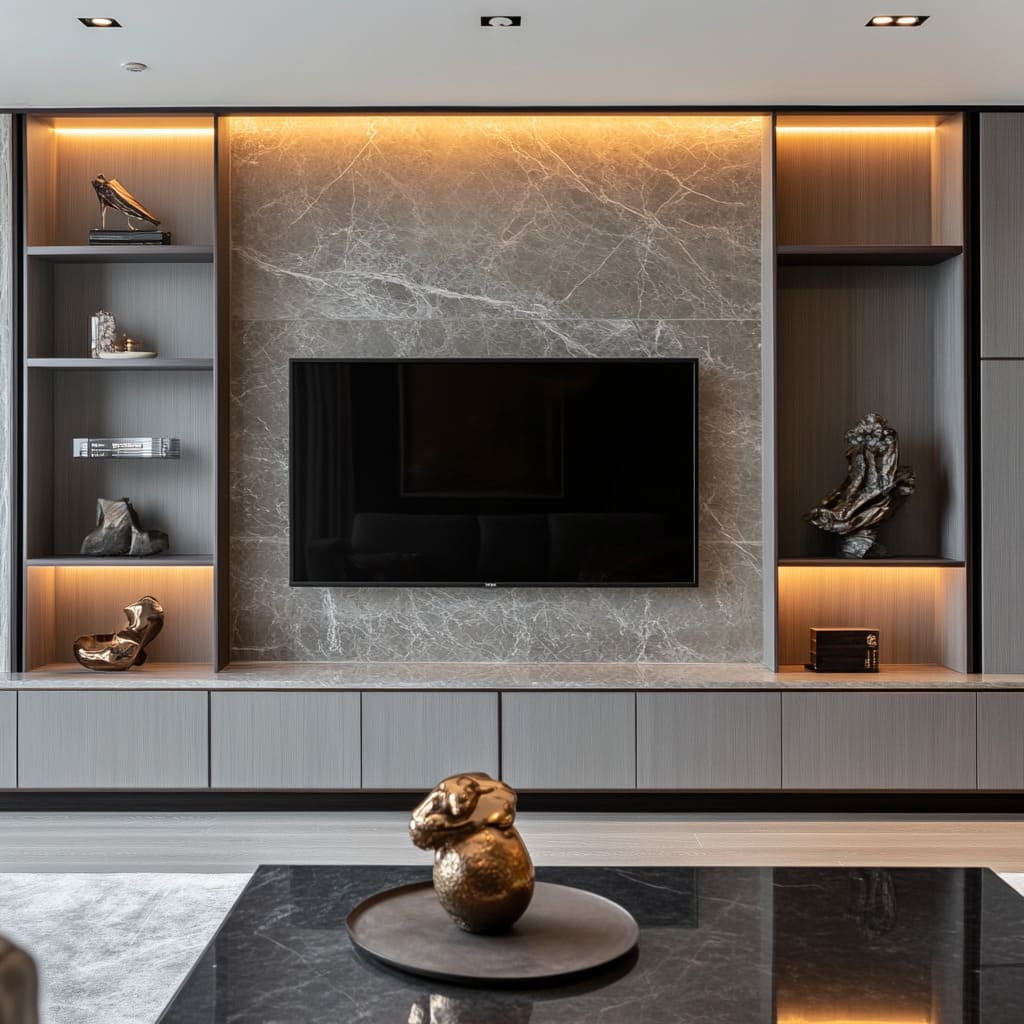
TV & Fireplace Feature Wall Ideas: Stone, Wood, Texture, and Light
A TV-and-fireplace wall feels finished when it acts like one built-in system: a strong main field, a few shadowed niches, and one long base line. Clear margins, repeated black accents, and warm layered lighting keep stone and wood cohesive.
Kitchen / Living rooms
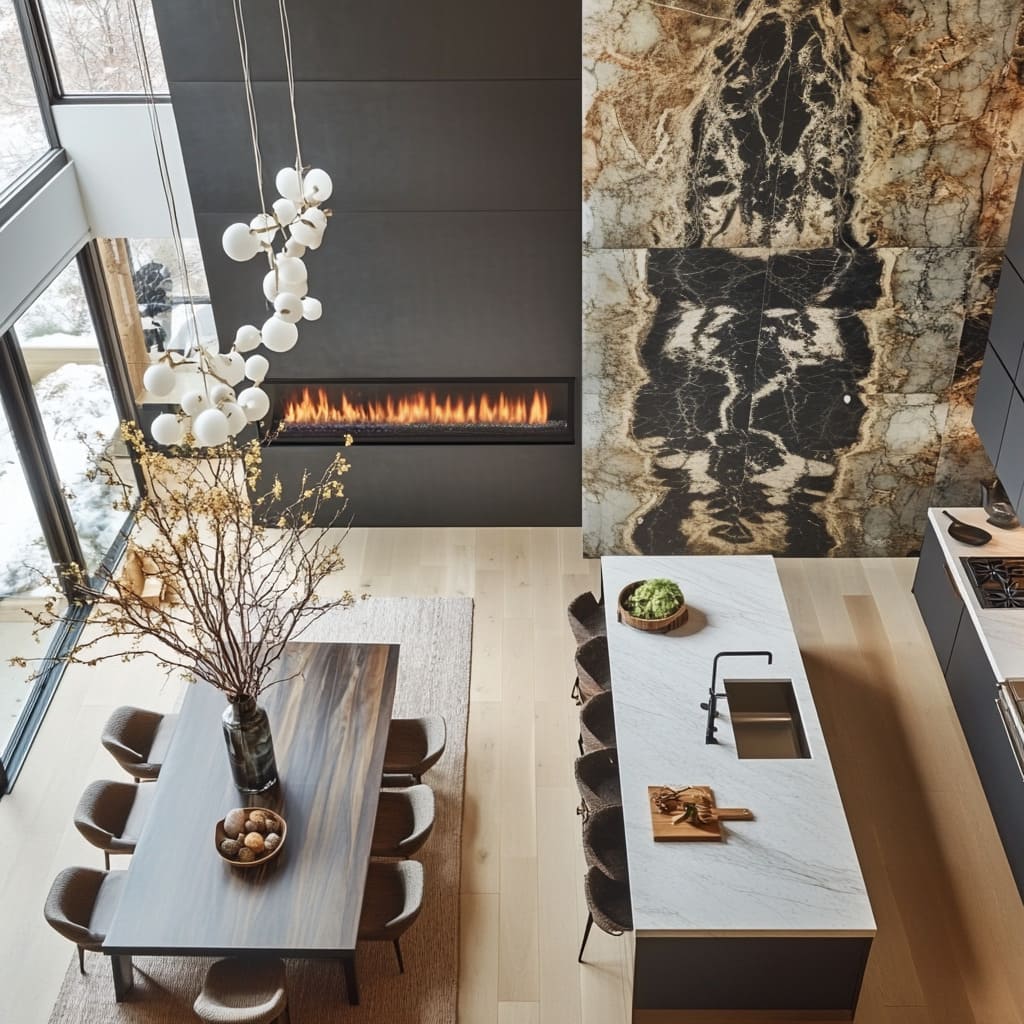
Modern Open-Plan Kitchens With Fireplaces: Layout, Material Pairings, and Lighting That Keeps It Cohesive
A modern open-plan kitchen feels cohesive when the island aims toward a linear fireplace, creating a clear visual axis. Large calm surfaces, one repeatable texture, and layered lighting keep kitchen, dining, and living zones connected.
Exterior
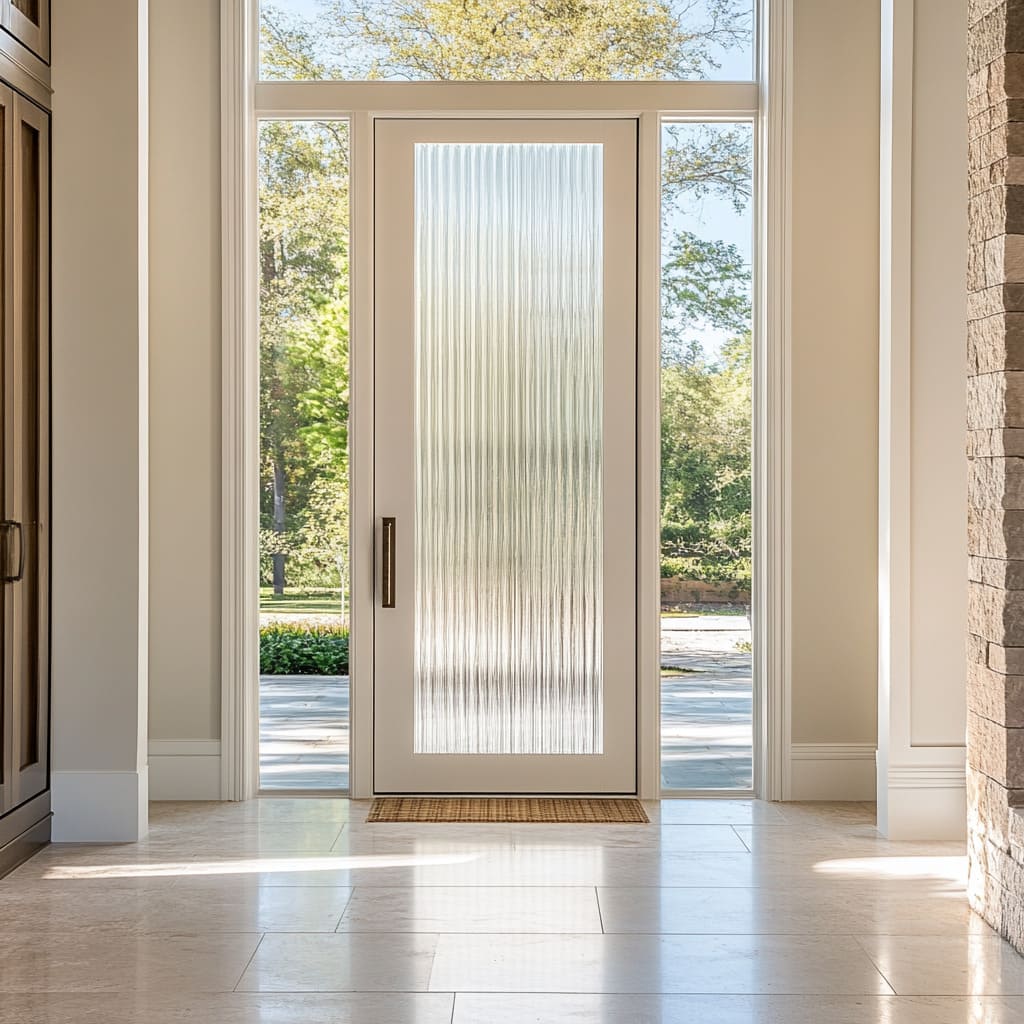
Textured Modern Front Door Ideas: Reeded Glass and Frosted Bands
Textured doors turn daylight into glow and handle privacy smartly: reeded glass at the center, clearer sidelights at the edges, and a transom above. Slim frames and pulls keep it modern.
Bedroom / Kitchen / Living rooms
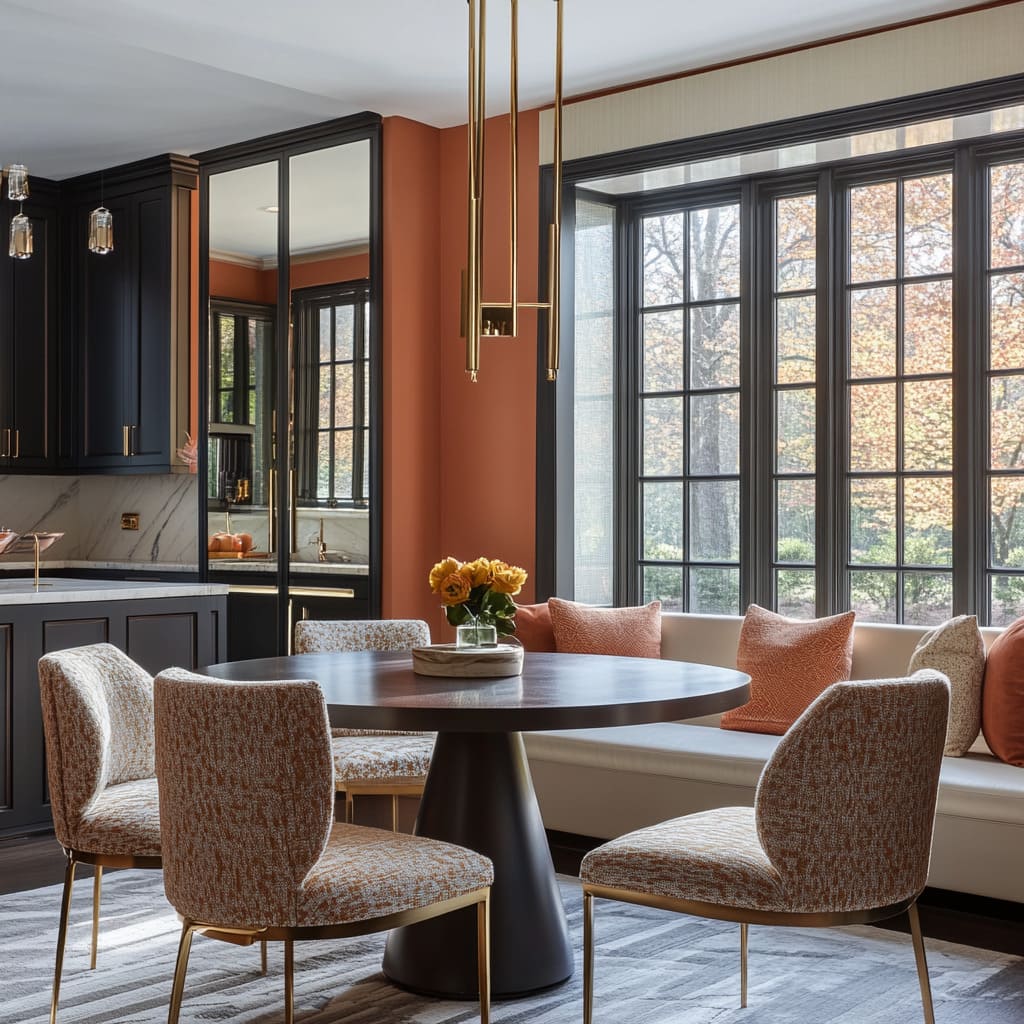
Warm Color Palette Interior Design with Contrast: Peach, Terracotta, Olive & Taupe
Peach, terracotta, olive, and taupe look crisp when warmth stays in lounging zones while black frames and bases outline the room. Marble cools the mix; brass highlights sit in lighting.
Living rooms
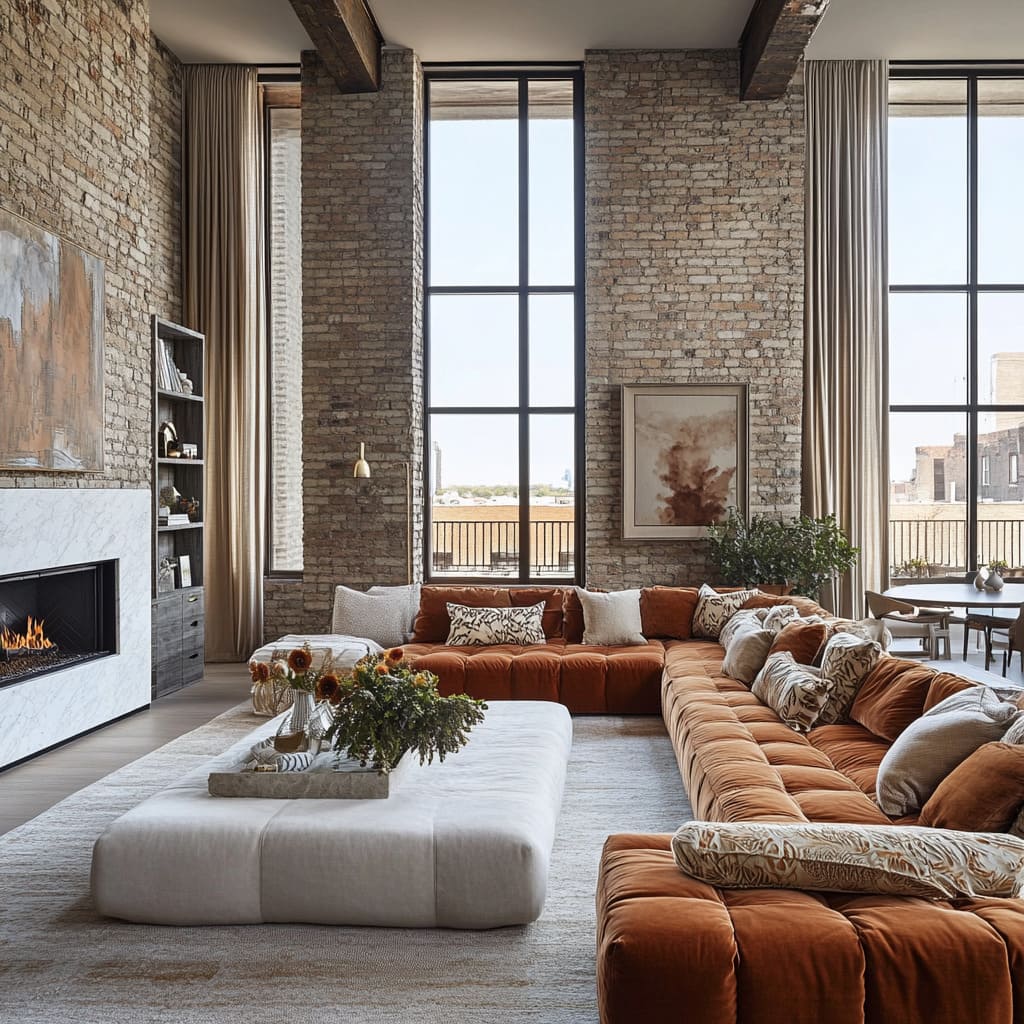
Luxury Living Rooms With Exposed Brick: Glam Brick Loft Style
Brick can feel raw or expensive depending on what sits beside it. Pair it with marble, velvet, warm brass, soft drapery, and layered lighting, and the wall becomes a luxe backdrop with depth.

Exterior
Modern Outdoor Rooms Under Pergolas: Ceiling-First Styling That Makes Patios Feel Like Living Spaces
Turn a pergola into an outdoor room by letting the roof grid set rhythm and shade, keeping surfaces simple, using layered lighting, planting borders, and slim fire or water lines.
Living rooms
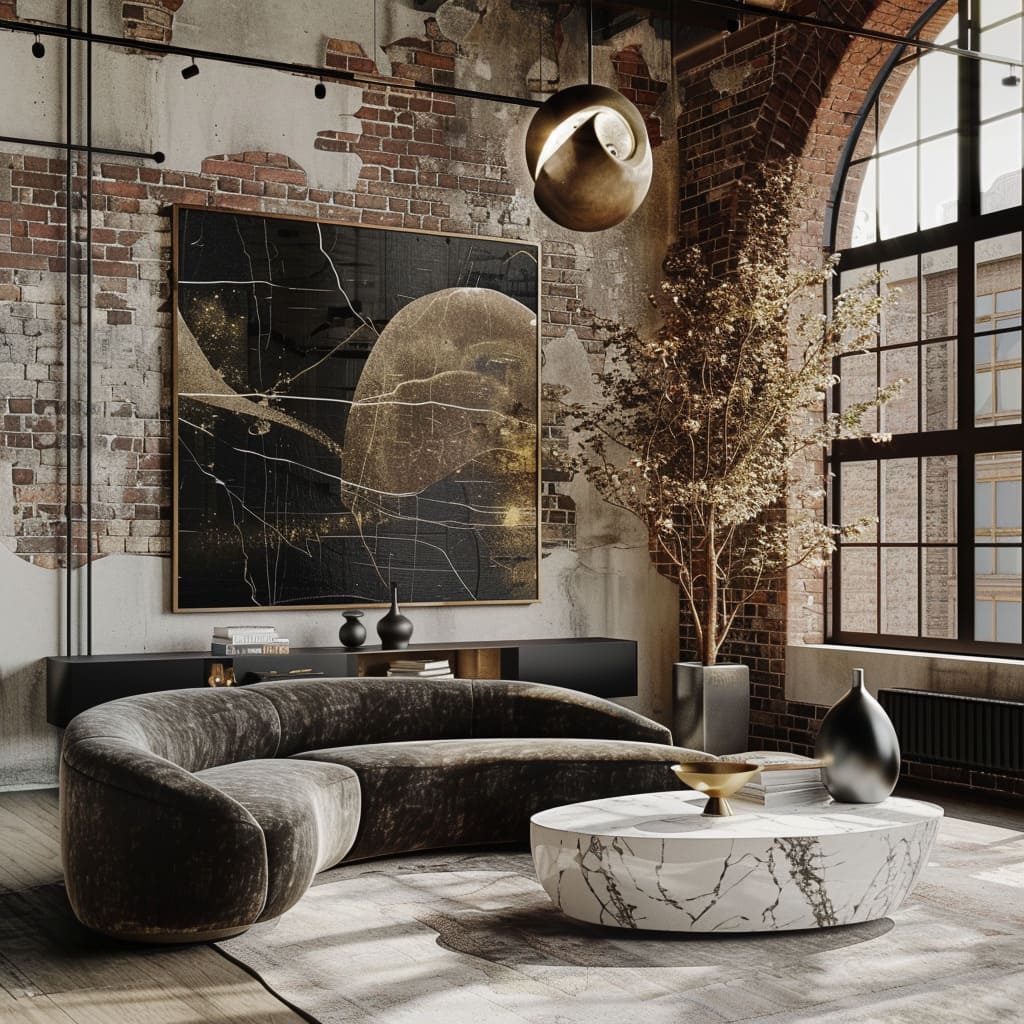
Curved Furniture Interior Design: Layout Rules for Sofas, Tables, and Open-Plan Flow
A practical guide to using curved and modular furniture in luxury interiors, focusing on layout, comfort, flexibility, and visual balance in modern homes.
Hallways
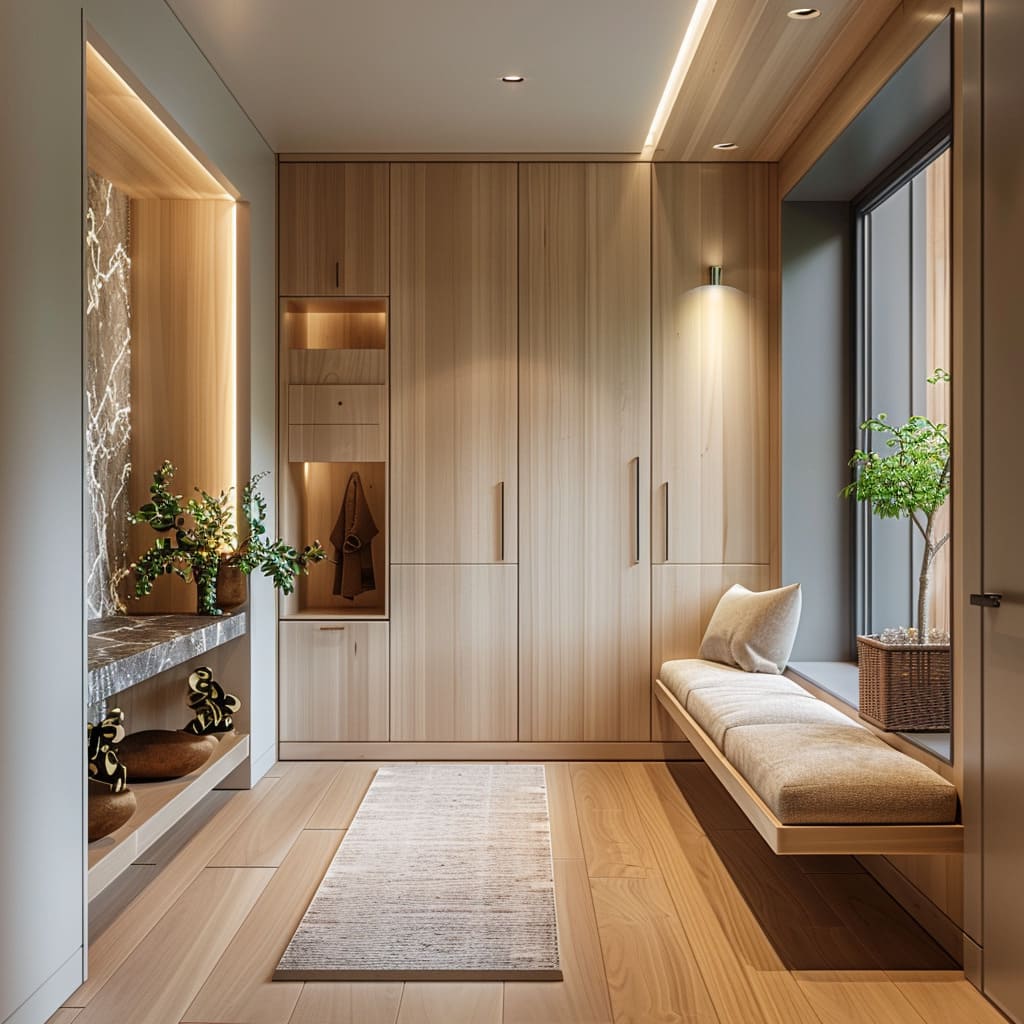
Scandinavian Entryway Design Ideas: Layout, Storage & Style
Luxury Scandinavian entryways rely on calm light and clear surfaces: marble panels stand in for art, backlit stone adds depth, and a floating bench glow makes arrivals feel intentional.
Bathroom / Kitchen / Living rooms
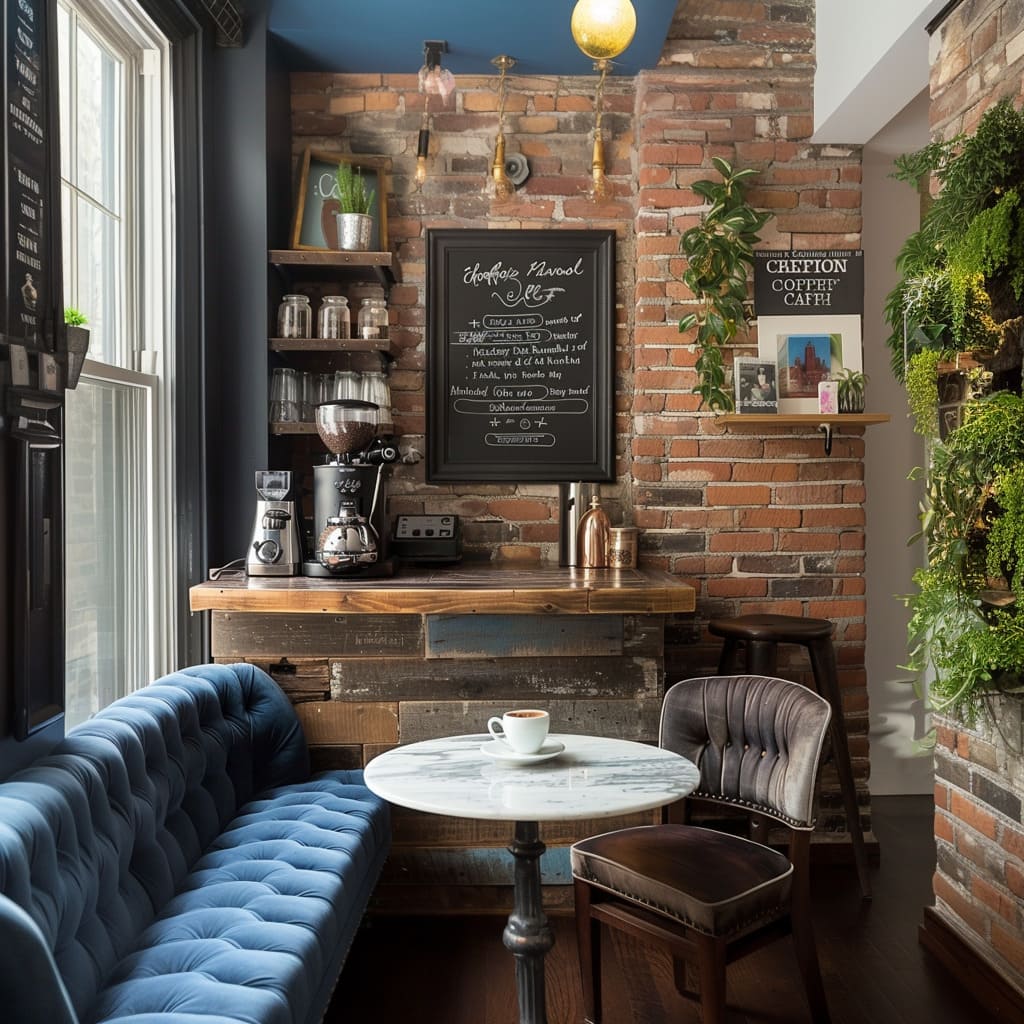
Cafecore at Home: Bring Café Experience And Look Into Everyday Rooms
A home can feel like a favorite café when it has a clear flow: a small entry pause, a practical drink-making surface, mixed seating, and layered warm lighting. With that structure in place, materials and styling fall into place naturally.
Kitchen / Living rooms
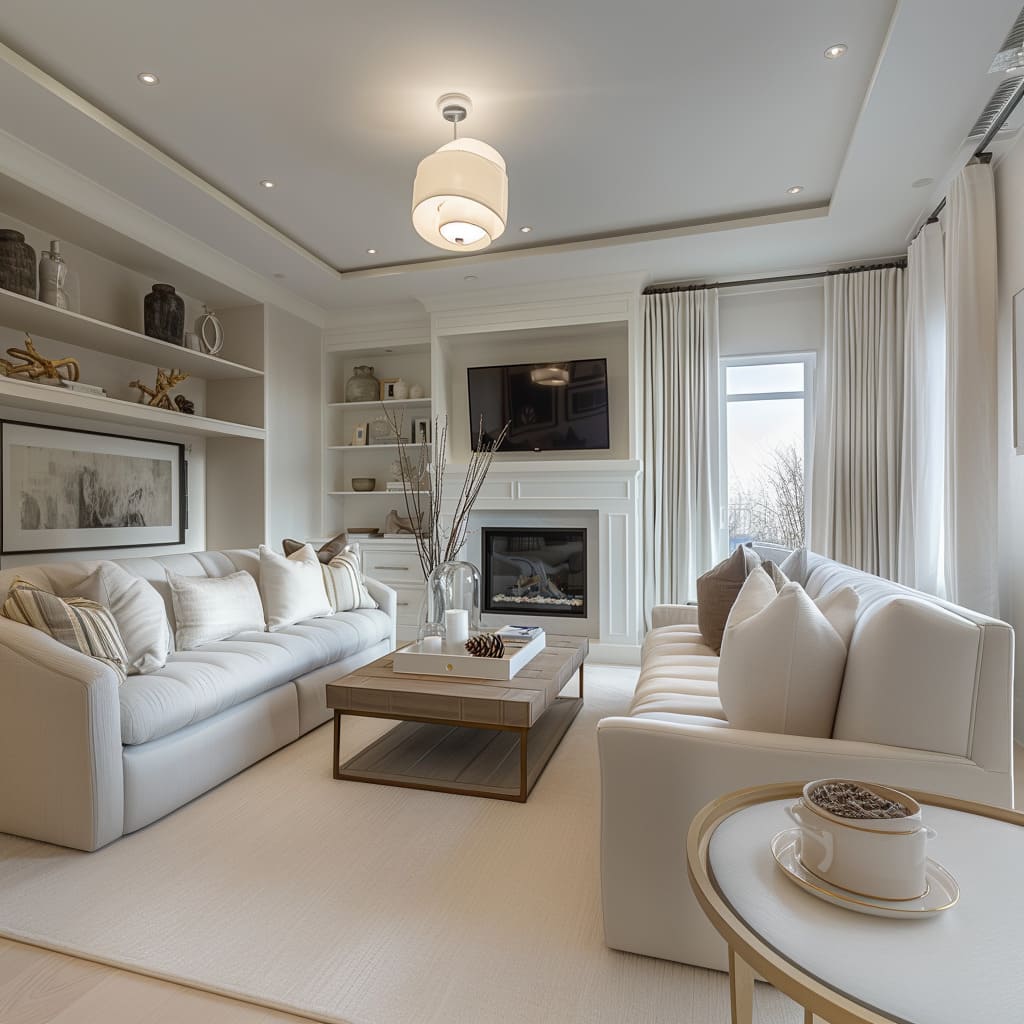
Ceiling Design: Coffers, Trays, Cove Glow, and Sparkle Fixtures That Add Depth to Neutral Interior
A neutral room can lose depth fast when everything sits in the same pale range. Coffers, trays, and cove glow add shadow, proportion, and a clear lighting order, while controlled sparkle fixtures bring micro-contrast that keeps evenings soft and rich.
Exterior
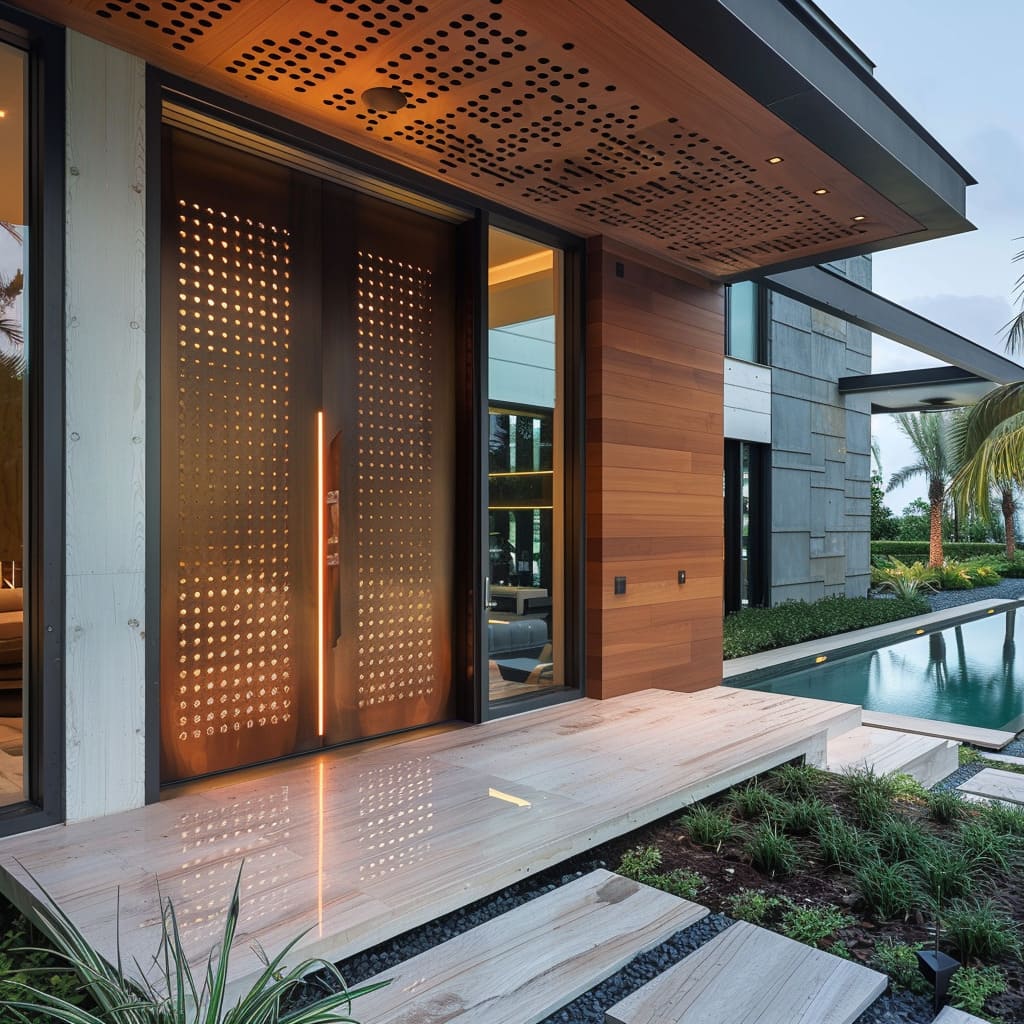
Creative Modern House Entrance Door Concepts: Deep Portals, Screen Doors, and Monolithic Slabs
A creative modern house entrance ideas with a few core moves—deep portal shadow, a clear door layer (slab or screen), a purposeful view beyond, and a ground plane that amplifies light, texture, and scale.
Exterior
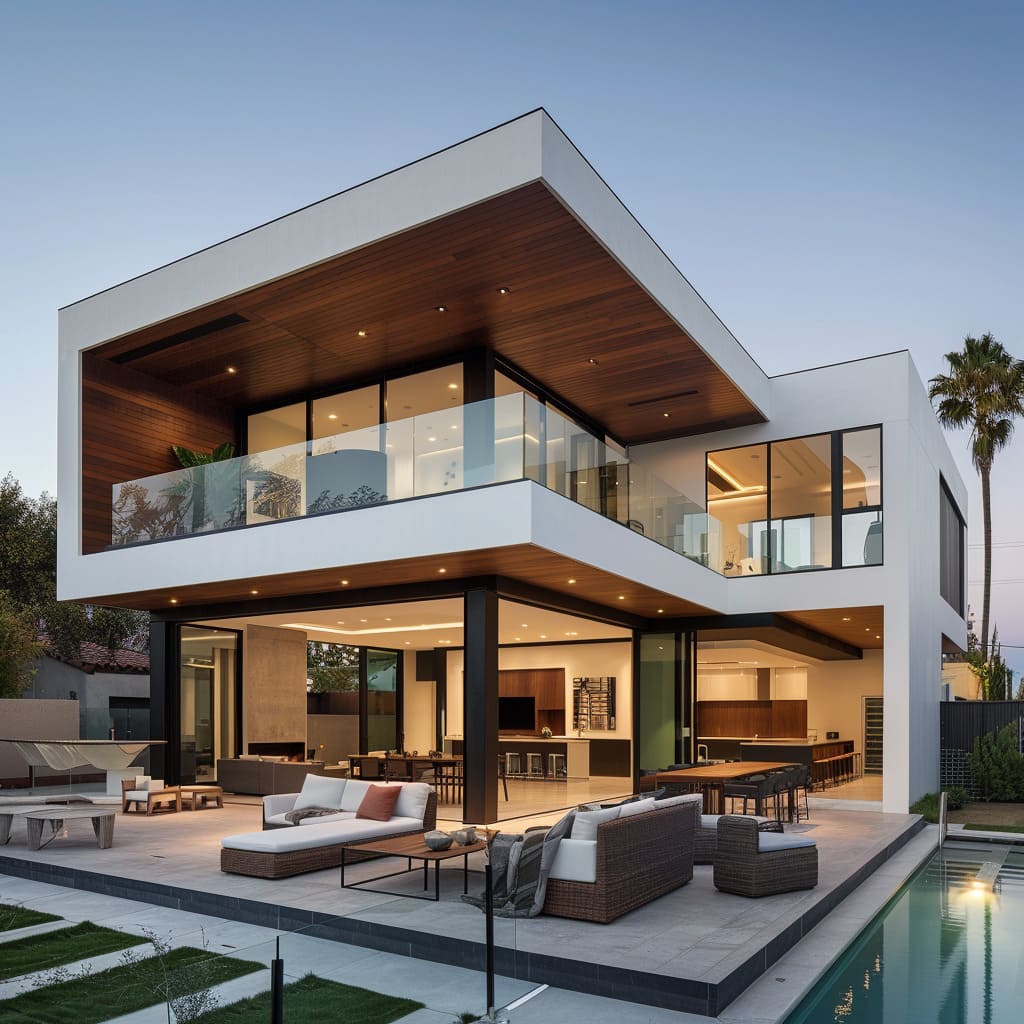
Modern Villa Exterior Design Ideas: Deep Overhangs, Wood Soffits, and Black Window Grids
A modern villa can look high-end with a tight palette: white planes for mass, warm wood soffits for shade, and black window grids for structure—repeated from facade to entry to pool terrace for a clean, consistent exterior.
Bedroom / Living rooms
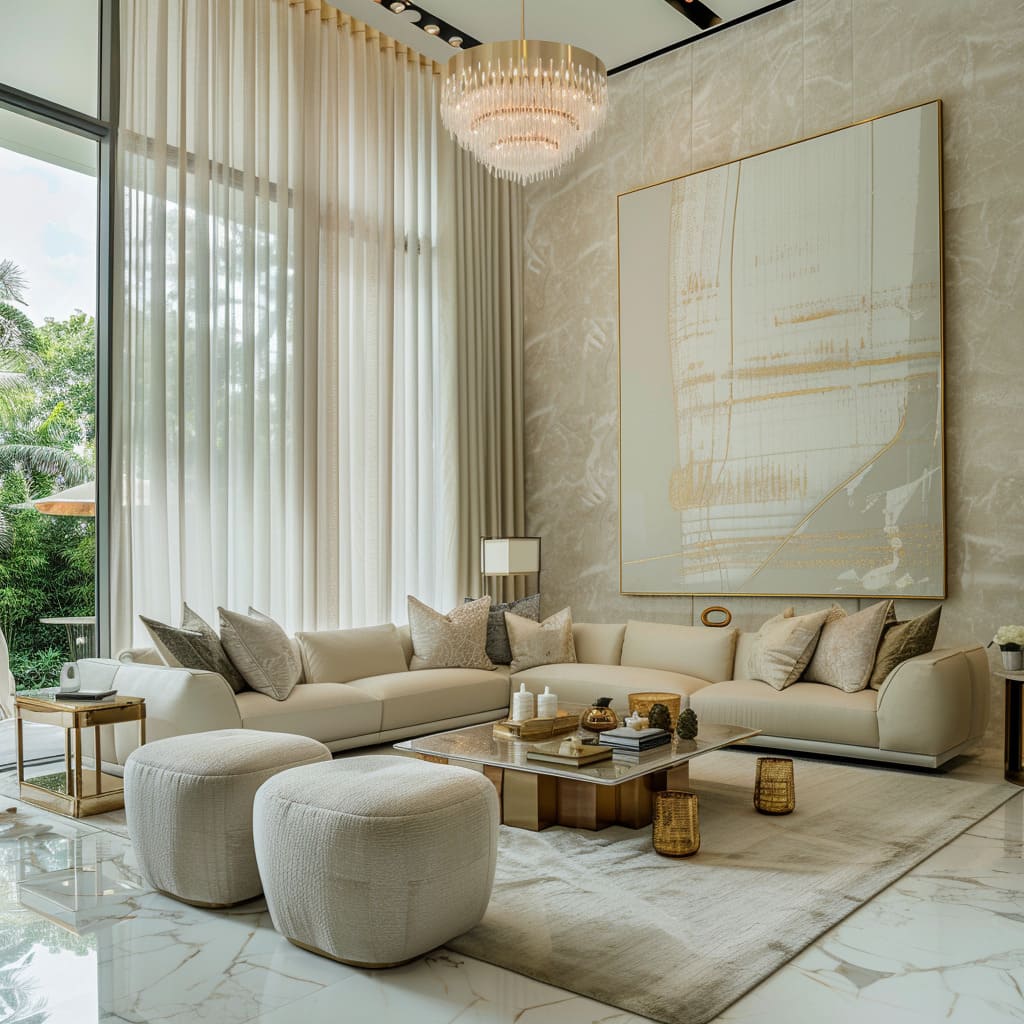
The Art-First Interior Design Approach: One Canvas to Set The Entire Design
An art-first approach in interior design: one large canvas sets the value range, warmth, and texture—so stone, metals, and textiles translate one source and stay cohesive.
Living rooms
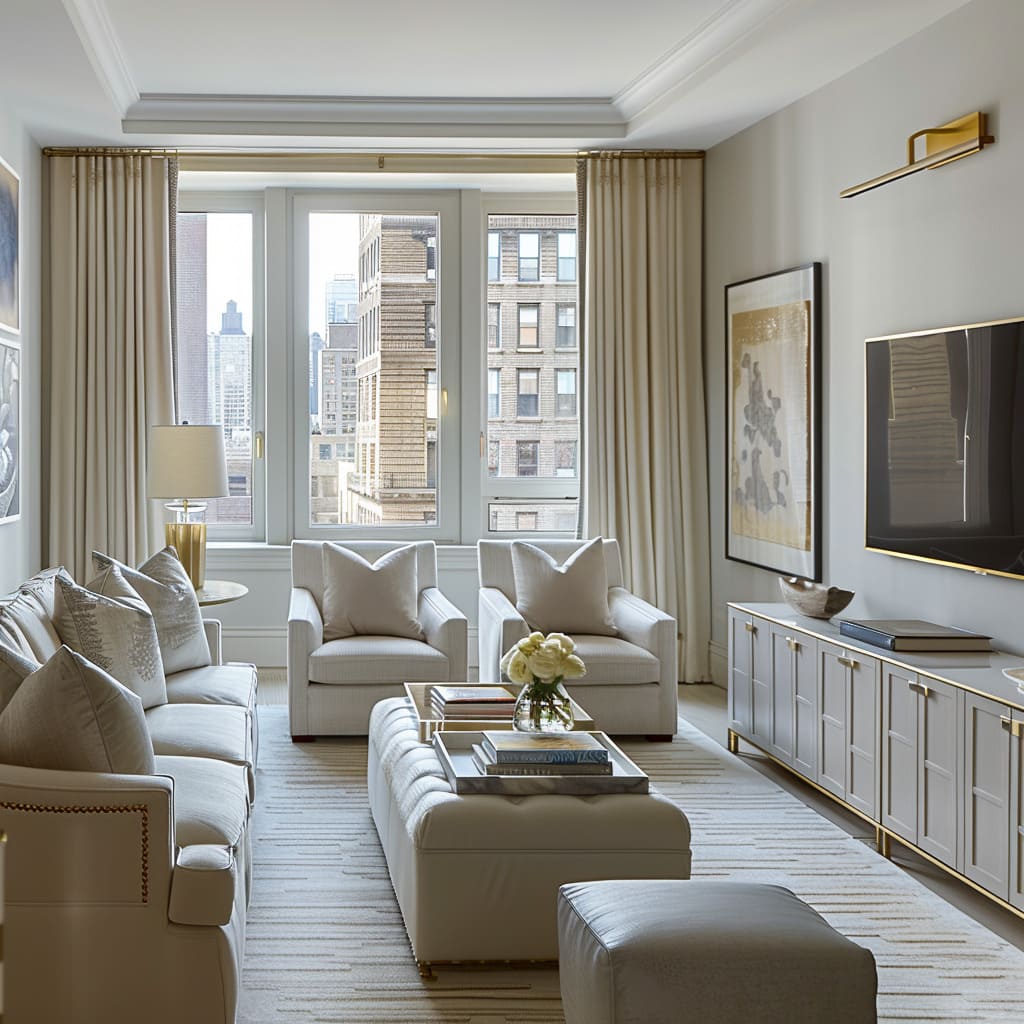
Why Some Greige Living Rooms Look Expensive: Micro-Contrast, Texture, and Low-Profile Styling
Greige can feel high-end when tiny tone shifts define edges, textures do the visual work, and styling stays low and grouped. This guide breaks down value steps, center anchors, and night-ready lighting.
Bathroom
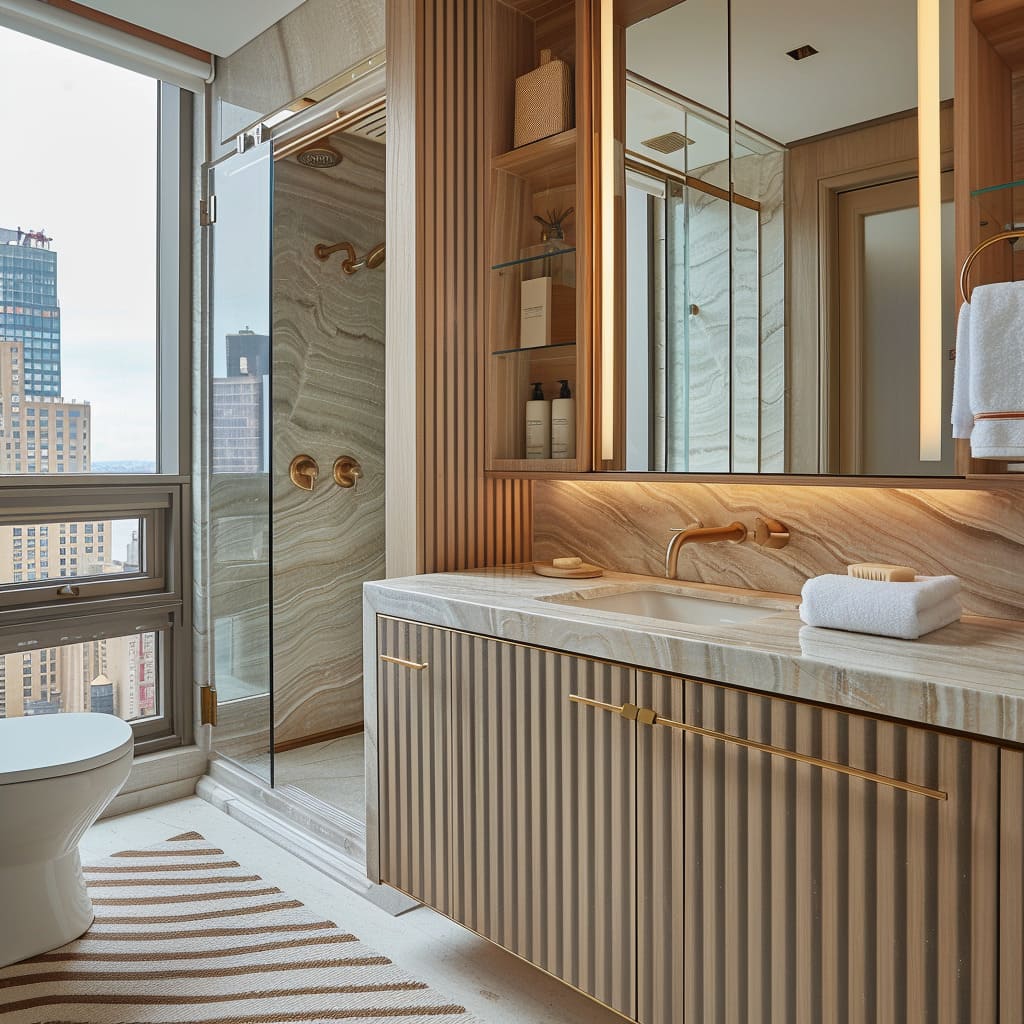
Small Bathroom Design Ideas That Read Bigger: Full-Height Mirrors, Long Sightlines, and Clean Storage
This guide breaks down small bathroom design ideas that make tight rooms feel open: full-height mirrors that stretch the wall, clear sightlines from door to shower, and storage that keeps counters empty.
Bathroom / Bedroom / Living rooms
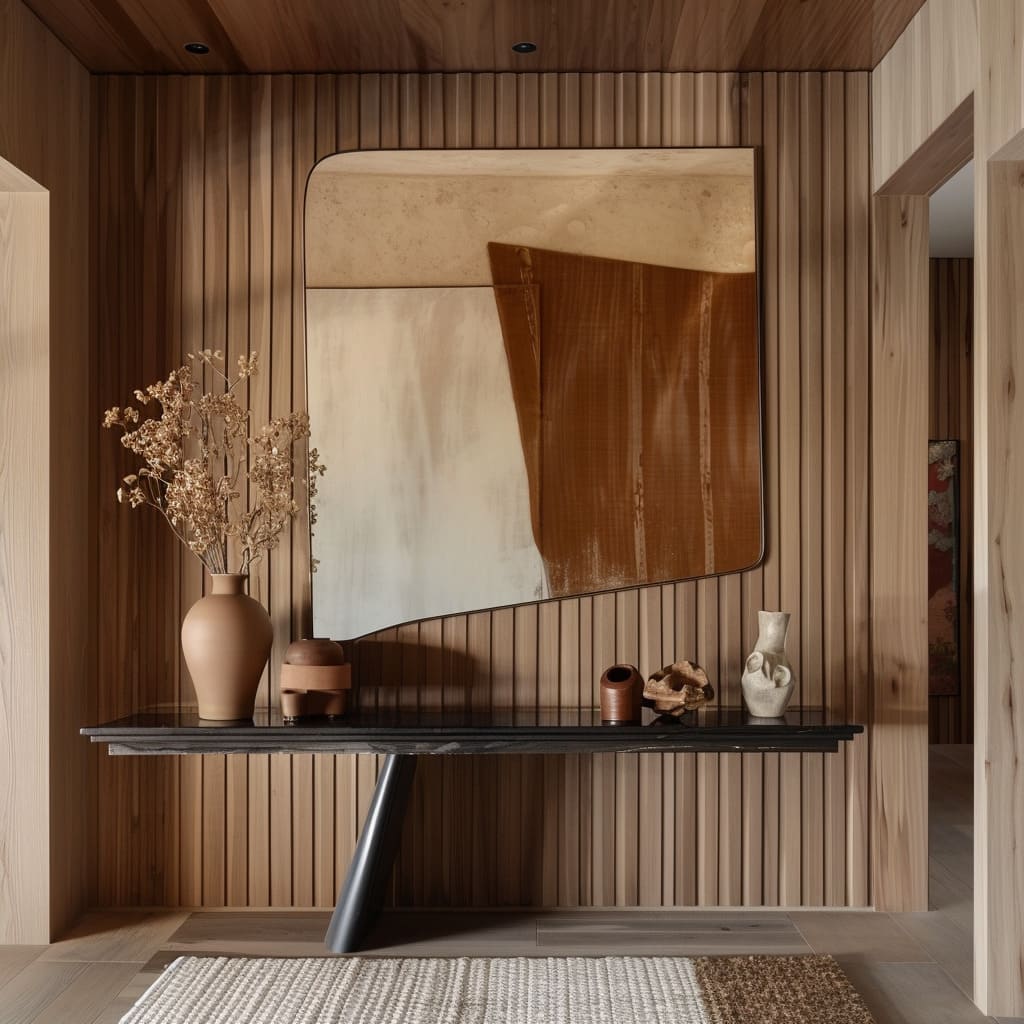
Japandi Style Interior Design Ideas: Bringing Natural Beauty
A clear guide to Japandi interior design, explaining how to combine Japanese calm and Scandinavian comfort using natural materials, simple forms, and thoughtful layouts.